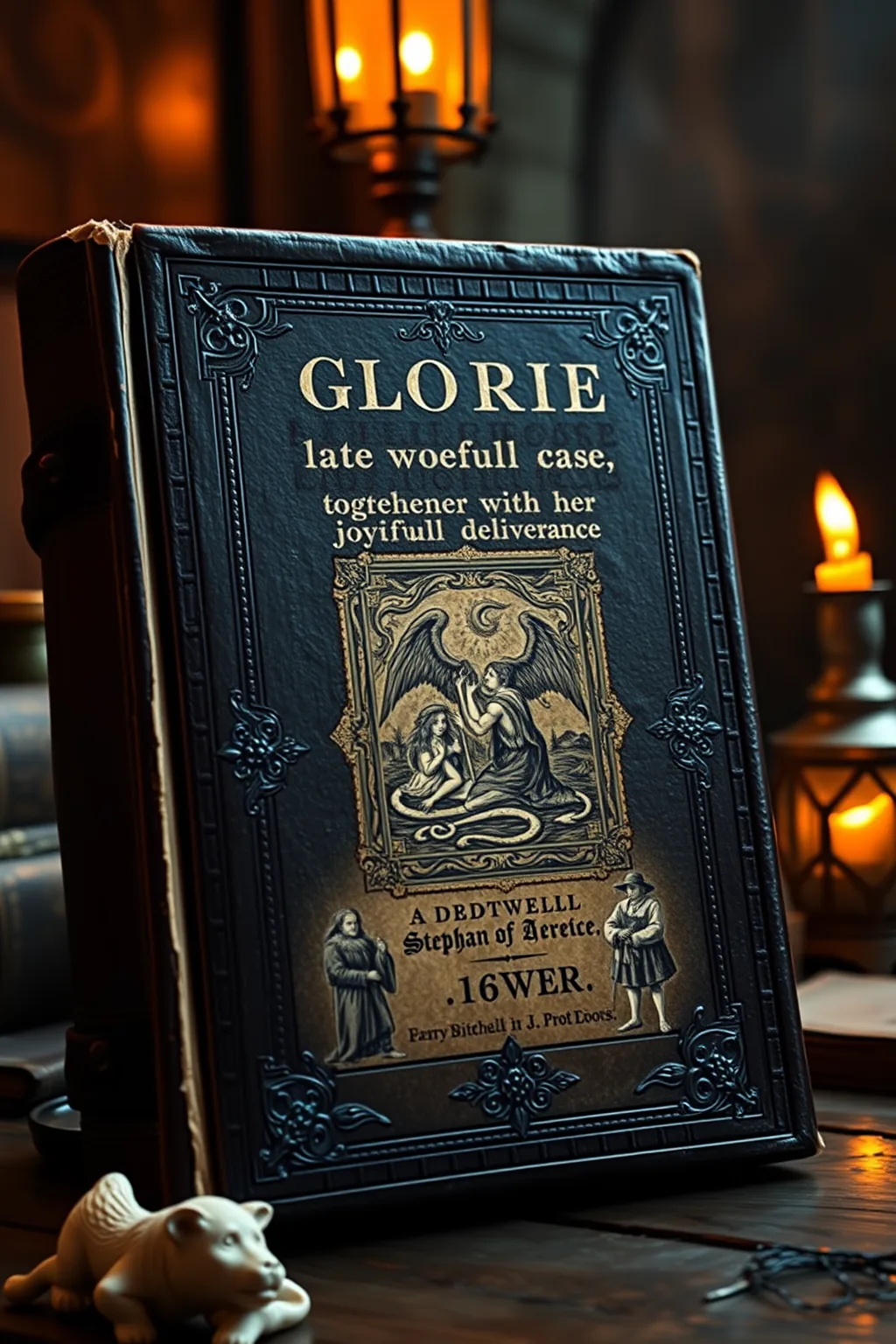
Marie Glovers late woefull case, together with her joyfull deliverance written upon occasion ... 1603: Iss 153
 76
76

Marie Glovers late woefull case, together with her joyfull deliverance written upon occasion ... 1603: Iss 153


Stephan Bradwell's chilling account of Marie Glover's plight is an indispensable primary source for understanding the socio-religious anxieties surrounding witchcraft in Jacobean England. Beyond its historical import, the text offers a fascinating window into the popular imagination's grappling with the supernatural. Bradwell's detailed narration, while framed by orthodox belief, implicitly reveals the complex interplay of psychological distress, community hysteria, and perhaps, genuine spiritual phenomena. For students of demonology, early modern religious practices, and the psychology of belief, this work provides raw, unfiltered insight. Its strength lies in its unvarnished depiction, serving as a stark testament to the profound impact of such accusations on individuals and society.
📝 Description
76
Stephan Bradwell wrote "Marie Glovers late woefull case" in 1603 to recount a woman's alleged possession and deliverance.
Stephan Bradwell's 1603 account details the harrowing experience of Marie Glover, focusing on her alleged demonic possession and subsequent deliverance. Bradwell, writing from his perspective as a minister, presents the events with a clear theological framework, interpreting them as a battle between divine and malevolent forces.
The narrative describes Glover's supposed torments, the efforts made to exorcise the demons, and the eventual resolution of her case. It reflects the intense religious climate of early 17th-century England, where beliefs in witchcraft and spiritual warfare were widespread and deeply held. The book serves as a primary source for understanding contemporary views on demonic influence and the practices employed to combat it.
This work falls within the tradition of early modern English demonological literature, which often blended theological interpretation with detailed accounts of supernatural encounters. Such texts sought to explain perceived spiritual disturbances through a Christian lens, often detailing the mechanisms of demonic action and the efficacy of prayer and divine intervention. While not strictly occult, these accounts engaged with a worldview where the spiritual and material realms were understood to be in constant interaction, a perspective common in many esoteric traditions.
💡 Why Read This Book?
Delve into a raw, unfiltered account of 17th-century witchcraft trials and spiritual warfare. Uncover the potent beliefs surrounding demonic influence and divine deliverance. This text is essential for historians, occult practitioners, and seekers of forgotten spiritual narratives who wish to understand the visceral anxieties and fervent faith of a bygone era.
⭐ Reader Reviews
Honest opinions from readers who have explored this book.
❓ Frequently Asked Questions
What is the historical context of Marie Glover's case?
The case of Marie Glover occurred in 1603, a period of heightened fear and suspicion surrounding witchcraft in England. This era saw numerous accusations and trials, fueled by religious anxieties and a deeply ingrained belief in the active presence of the Devil.
What makes this account 'esoteric'?
While presented as a factual account, the narrative engages with concepts of demonic possession, spiritual warfare, and miraculous deliverance, themes central to many esoteric traditions exploring the unseen realms and the power of faith.
Who was Stephan Bradwell?
Stephan Bradwell was an English writer active in the late 16th and early 17th centuries, known for his accounts of contemporary events, often with a focus on religious and moral themes. He documented this case with evident concern and a desire to instruct.
What does 'joyfull deliverance' refer to?
The 'joyfull deliverance' signifies Marie Glover's eventual release from her perceived affliction, whether attributed to the cessation of demonic torment, her own resilience, or divine intervention, offering a narrative of hope and spiritual triumph.
Is this book suitable for beginners in occult studies?
Yes, it offers a foundational, historical perspective on witchcraft beliefs and spiritual struggles, providing context for more advanced studies in demonology and early modern occultism.
🔮 Key Themes & Symbolism
The Shadow of Demonic Influence
This narrative plunges into the pervasive fear of demonic machinations that characterized early modern Europe. It explores the perceived tangible reality of infernal forces, their methods of torment, and the profound psychological and spiritual impact on individuals accused of witchcraft. The text studies the belief that the Devil could possess, afflict, and manipulate human lives, casting a long shadow of terror over communities and individuals like Marie Glover, whose very sanity and soul were perceived to be under siege by malevolent entities.
The Crucible of Faith and Deliverance
At its heart, this account is a evidence of the enduring power of faith and the arduous journey towards spiritual liberation. It portrays the intense struggle between darkness and light, showcasing how fervent prayer, unwavering belief, and divine intervention were seen as the ultimate weapons against perceived evil. The 'joyfull deliverance' signifies not just an escape from physical or mental torment, but a profound spiritual renewal, highlighting the era's conviction that the human spirit, bolstered by divine grace, could triumph over the most daunting challenges, offering a clear source of hope.
Societal Anxieties and the Accused
Bradwell's work serves as a poignant window into the societal anxieties of 1603 England, particularly those surrounding women and perceived deviance. The accusation of witchcraft was often a manifestation of community fears, social tensions, and religious fervor. The narrative implicitly reveals how individuals, particularly marginalized figures like Marie Glover, could become the focus of collective hysteria, their lives and reputations irrevocably altered by the potent force of public accusation and the ensuing legal and spiritual proceedings. It underscores the vulnerability of the accused in the face of entrenched beliefs.
💬 Memorable Quotes
Direct passages from the work, attributed to the author.
“her late woefull case, together with her joyfull deliverance”
— This expresses the dual nature of the narrative: the profound suffering and the ultimate triumph, a journey through spiritual darkness into the light of salvation.
“written upon occasion...”
— Suggests the account is a response to a specific, significant event, highlighting its immediate relevance and impact on the writer and his community.
“the fear of the Devil's power”
— Reflects the pervasive belief in demonic agency and the tangible threat it posed to individuals' souls and earthly existence.
“the mercy of God”
— Points to the central role of divine grace and intervention as the ultimate source of salvation and recovery from affliction.
“a testimony of faith”
— Implies the narrative serves not just to record events, but to illustrate the strength and resilience of spiritual conviction in the face of extreme adversity.
🌙 Esoteric Significance
Tradition
This text deeply engages with the Christian demonological tradition, prevalent in early modern Europe, which viewed witchcraft through the lens of a cosmic battle between God and Satan. While not a practitioner's manual, it reflects a worldview where demonic pacts, possession, and exorcism were understood as literal spiritual realities, forming a crucial, albeit often fear-driven, aspect of popular and theological esoteric thought.
Symbolism
The narrative is rich with symbolic resonance. Marie Glover's ordeal can be seen as an allegory for the soul's struggle against temptation and affliction. The Devil represents primal chaos and temptation, while divine intervention symbolizes order and redemption. The 'woeful case' and 'joyful deliverance' form a potent symbolic cycle of suffering and rebirth, mirroring alchemical processes of dissolution and reintegration, albeit within a theological framework.
Modern Relevance
In an age often characterized by secularism, this text offers a powerful reminder of the enduring human fascination with the unknown and the wide impact of belief systems on individual and collective experience. It prompts contemplation on the nature of psychological distress, the power of narrative in shaping reality, and the persistent human need for meaning and solace in the face of suffering, relevant to modern discussions on mental health and spiritual seeking.
👥 Who Should Read This Book
This account is essential for historians of early modern England, religious scholars, and those interested in the history of witchcraft and demonology. Occult practitioners seeking to understand the historical roots of spiritual warfare concepts and the societal context of belief will find it invaluable. For general readers, it offers a compelling, albeit disturbing, insight into the human psyche under duress and the powerful role of faith in times of crisis. Beginners in esoteric studies will gain a foundational understanding of historical anxieties surrounding the supernatural.
📜 Historical Context
Penned in 1603, this work emerges from a period of profound religious and social upheaval in England. The reign of James I, who held a keen personal interest in demonology, saw a peak in witchcraft prosecutions. The prevailing worldview was deeply imbued with a belief in the active presence of supernatural forces, both divine and infernal. Texts like Bradwell's were not merely sensationalist accounts; they served as moralistic exemplars, theological treatises, and historical records, reflecting the anxieties of a society grappling with perceived threats to spiritual and social order. The detailed descriptions of possessed individuals, demonic pacts, and miraculous cures were part of a broader cultural discourse on the unseen world, influencing popular understanding and official responses to accusations of witchcraft.
📔 Journal Prompts
Reflect on the societal fears that might have fueled the accusations against Marie Glover. How do similar fears manifest in contemporary society?
Consider the concept of 'deliverance' presented in the text. How does this relate to personal spiritual or psychological journeys?
Analyze the narrative's portrayal of the Devil and divine intervention. What does this reveal about the author's worldview and the beliefs of his time?
Imagine you are a witness to Marie Glover's case. What emotions and thoughts would you experience, given the prevailing beliefs?
How does the act of writing and disseminating such an account contribute to the cultural understanding and perception of witchcraft?
🗂️ Glossary
Woefull Case
Refers to a deeply unfortunate, sorrowful, or tragic situation, highlighting the suffering and distress experienced by Marie Glover.
Joyfull Deliverance
Signifies a happy and triumphant rescue or liberation from a state of affliction, danger, or oppression, signifying a positive spiritual or physical outcome.
Occasion
In this context, it refers to the specific circumstances or event that prompted the writing of this account, emphasizing its timely and responsive nature.
Demonic Influence
The perceived power or action of evil spirits or the Devil in causing harm, misfortune, or spiritual corruption to individuals or communities.
Spiritual Warfare
The concept of a constant struggle between forces of good (divine, angelic) and evil (demonic, infernal) that affects human lives and the world.
This book appears in 2 collections
🔮 Readers Also Liked
Browse all →


From the “Witchcraft” Collection
View all →







More Free Witchcraft & Paganism Books
View all →