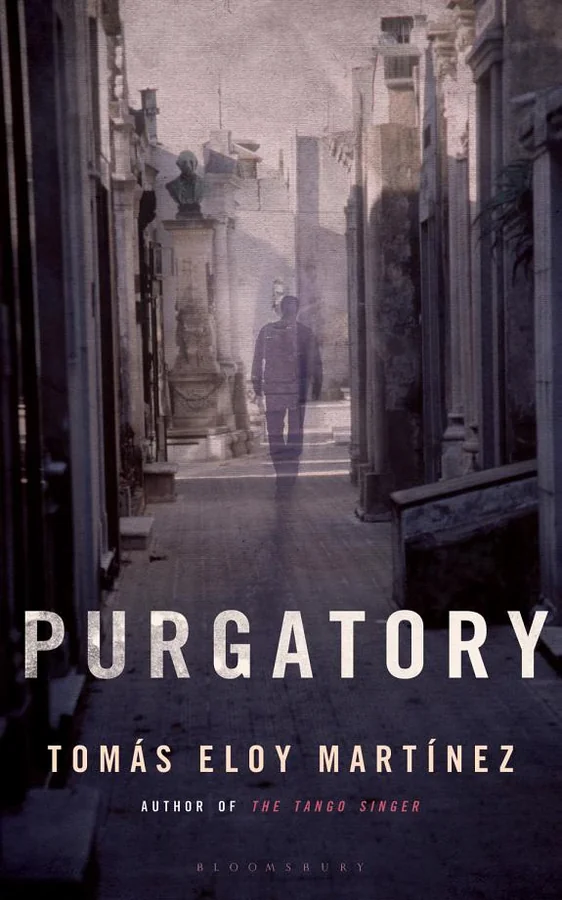
Purgatory
 76
76

Purgatory
Martínez's final novel, Purgatory, doesn't shy away from the author's signature blend of the real and the phantasmagorical. The narrative unfolds like a fever dream, pulling the reader through a landscape haunted by unresolved histories and fractured identities. Its strength lies in the sheer density of its prose, which evokes a palpable atmosphere of unease and profound introspection. However, this same density can, at times, feel overwhelming. A particularly striking passage involves the protagonist's wrestling with the spectral presence of a historical figure, an encounter that blurs the line between psychological projection and supernatural visitation. While Purgatory offers a potent exploration of memory's enduring grip, its deliberate ambiguity may frustrate those seeking concrete answers. It is a challenging but ultimately rewarding testament to Martínez's mastery.
📝 Description
76
Tomás Eloy Martínez's final novel, Purgatory, was published posthumously in 2011.
Purgatory, the last novel by Tomás Eloy Martínez, was published in 2011 after his death. The book continues Martínez's examination of how memory and identity are shaped by spectral presences from the past. The narrative frequently blurs reality and hallucination, showing how historical events and figures continue to affect contemporary thought. This is a dense, challenging book that requires close attention from the reader. It rewards this attention with rich prose and complex characters.
This novel is for readers who enjoy literary fiction that confronts existential questions and the psychological burden of history. It will appeal to those interested in magical realism from Latin America and stories that question the nature of truth and perception. Readers expecting a clear plot resolution might find it difficult, but those who appreciate detailed prose and thematic depth will find much to appreciate.
Published in 2011, Purgatory emerged from a literary tradition where authors like Gabriel García Márquez and Jorge Luis Borges examined the boundary between the fantastical and the real. Martínez, known for his work on Argentine identity, contributed to these dialogues. The novel's focus on unresolved pasts and collective memory reflects ongoing discussions in Latin America about its history, political events, and the lasting effects of trauma. Its publication after Martínez's death reinforced his status as a significant literary figure.
💡 Why Read This Book?
• Gain insight into the lingering power of historical trauma, as Purgatory illustrates how unresolved past events, like those explored concerning the lingering effects of the 20th century's political shifts in Latin America, continue to shape individual consciousness. • Experience a unique narrative structure that challenges conventional storytelling, mirroring the fragmented nature of memory and identity, a hallmark of Martínez's distinctive literary style. • Explore the concept of the spectral presence, understanding how the past is not merely remembered but actively haunts the present, a theme central to the novel's exploration of purgatorial states.
⭐ Reader Reviews
Honest opinions from readers who have explored this book.
❓ Frequently Asked Questions
What is the primary theme of Tomás Eloy Martínez's Purgatory?
The primary theme of Purgatory is the persistent, haunting influence of memory and history on individual and collective identity, exploring how unresolved past events continue to shape the present.
When was Purgatory first published?
Purgatory was first published on November 7, 2011, after the author's death in January 2010.
Is Purgatory a sequel to The Tango Singer?
While Purgatory is by the same author and shares thematic similarities, it is not a direct sequel to "The Tango Singer." Both works explore complex psychological and historical landscapes.
What literary movement is Tomás Eloy Martínez associated with?
Tomás Eloy Martínez is often associated with the Latin American Boom and magical realism, though his work also stands independently with its unique blend of realism and the uncanny.
Does Purgatory deal with religious concepts?
The title "Purgatory" suggests religious undertones, and the novel does explore states of spiritual or psychological limbo, but primarily through a literary and existential lens rather than strict theological doctrine.
What makes Purgatory an esoteric work?
Purgatory is considered esoteric due to its exploration of the subconscious, the spectral influence of the past, fragmented identities, and the blurring of reality and hallucination, which aligns with metaphysical inquiries.
🔮 Key Themes & Symbolism
Haunting Memory
The novel presents memory not as a static archive but as a living, often oppressive force. Characters are frequently ensnared by past events, experiencing them as if they were present realities. This spectral quality suggests that history never truly recedes but continues to exert influence, creating a sense of purgatorial stasis for those unable to reconcile with it.
Fragmented Identity
Identity in Purgatory is rarely whole or stable. It is depicted as shattered by trauma, historical upheaval, or the sheer weight of remembrance. Characters grapple with multiple selves, past selves, and perceived selves, often feeling like ghosts in their own lives. This fragmentation reflects a broader existential condition, where the self is a construct perpetually under siege.
The Uncanny Present
Martínez masterfully blurs the lines between the real and the hallucinatory, creating a present that feels perpetually haunted. The uncanny intrudes upon the mundane, suggesting that the veil between worlds or states of being is thin. This creates an atmosphere where the spiritual or psychological Otherness becomes an undeniable aspect of everyday experience.
Liminal States
The title itself, "Purgatory," points to a state of in-betweenness, a place of transition or unresolved spiritual/psychological condition. The characters often exist in such liminal spaces, neither fully alive nor fully dead, neither fully reconciled nor fully damned. This reflects a profound exploration of existential waiting and the search for meaning amidst ambiguity.
💬 Memorable Quotes
Direct passages from the work, attributed to the author.
“The past is never dead. It's not even past.”
— This concept, famously attributed to William Faulkner but fitting Martínez's thematic concerns, suggests that historical events and personal memories retain an active presence, influencing and shaping the present moment in tangible ways.
“He felt himself dissolving, a phantom adrift in his own recollections.”
— This captures the novel's exploration of fragmented identity, where the protagonist's sense of self is eroded by the overwhelming force of memory, rendering him insubstantial and disconnected from his own existence.
“Reality was a fragile membrane, easily torn by the weight of what had been.”
— This illustrates the novel's engagement with the uncanny, positing that the perceived solidity of the present can be pierced by the persistent influence of past events or unresolved traumas.
“In that space between breaths, he encountered the elements of lost selves.”
— This highlights the liminal states explored in the book, suggesting that moments of transition or pause in consciousness can reveal the spectral presences of past identities or unrealized potentials.
“The city itself seemed to exhale the dust of forgotten sorrows.”
— This personifies the urban landscape as a repository of collective memory and trauma, implying that the environment itself is imbued with the spectral residue of past suffering.
🌙 Esoteric Significance
Tradition
While not strictly adhering to a single lineage, "Purgatory" draws from Gnostic themes of fragmented consciousness and the search for liberation from a perceived flawed reality. Its exploration of spectral presences and the subjective nature of truth also aligns with Hermetic principles concerning the correspondence between the inner and outer worlds. The novel can be seen as a modern literary interpretation of states of spiritual or psychological limbo, akin to a personal purgatorial experience.
Symbolism
The recurring motif of ghosts and spectral figures symbolizes the inescapable influence of the past and unresolved psychic burdens. Cities, often depicted as decaying or haunted, represent collective memory and the physical manifestation of historical trauma. Mirrors or reflective surfaces frequently appear, symbolizing the fractured self and the deceptive nature of perceived reality, hinting at hidden truths.
Modern Relevance
Contemporary thinkers and artists exploring themes of collective trauma, memory studies, and the psychological impact of historical events find resonance in Martínez's work. His nuanced portrayal of fragmented identity speaks to current discussions in post-structuralist thought and identity politics. Practices focused on shadow work or confronting repressed aspects of the psyche can find allegorical parallels within the novel's narrative structure.
👥 Who Should Read This Book
• Readers interested in the psychological impact of history and memory, particularly those seeking literary explorations of unresolved trauma and its lingering effects. • Students and scholars of Latin American literature who wish to understand the evolution of magical realism and the unique contributions of Tomás Eloy Martínez beyond his earlier acclaimed works. • Individuals drawn to philosophical fiction that questions the nature of reality, identity, and consciousness, offering a challenging yet rewarding intellectual engagement.
📜 Historical Context
Published in 2011, Tomás Eloy Martínez's "Purgatory" arrived in a literary world still deeply influenced by the legacy of the Latin American Boom writers like Gabriel García Márquez and Julio Cortázar, who had normalized the blending of the fantastical and the real. Martínez, a significant figure in his own right since the publication of "The Tango Singer" (1969), occupied a space that critically examined Argentine identity and the psychological impact of history. The novel's exploration of unresolved pasts and lingering trauma resonated with ongoing national dialogues in Argentina and across Latin America concerning political repression and memory. While not subject to overt censorship, its dense, often surreal style positioned it within a tradition that challenged straightforward narrative conventions, a contrast to more politically didactic literature that sometimes emerged during periods of upheaval. Martínez's contemporaries, like Mario Vargas Llosa, also engaged with historical narratives, though often with different stylistic approaches.
📔 Journal Prompts
The spectral presence of memory, how does it manifest in your own recollections?
Reflect on the concept of fragmented identity as depicted in the novel.
Consider the city as a symbol of collective memory, as portrayed in "Purgatory."
Explore the liminal states the characters inhabit; where do you find yourself in such spaces?
Analyze the blurring of reality and hallucination: what defines truth in the novel's context?
🗂️ Glossary
Spectral Presence
The concept of the past or deceased figures appearing to exert an influence on the present, not necessarily as literal ghosts but as potent psychological or emotional forces.
Fragmented Identity
A psychological state where an individual's sense of self is broken into disparate parts, often due to trauma, memory distortion, or existential crisis.
Liminal State
A transitional or in-between state, often characterized by ambiguity, uncertainty, and a sense of being neither fully one thing nor another, akin to a threshold.
Uncanny
The quality of being strangely familiar yet foreign at the same time, often evoking feelings of unease or dread; a psychological phenomenon where something repressed returns.
Memory's Burden
The idea that recollections, particularly of traumatic or significant events, can become an oppressive weight that influences present actions, emotions, and sense of self.
Existential Limbo
A state of prolonged uncertainty or suspension regarding one's purpose or place in the world, often accompanied by feelings of isolation and meaninglessness.
Hallucinatory Realism
A narrative style that blends realistic settings and characters with elements of hallucination, delusion, or dream logic, blurring the lines of objective reality.
This book appears in 1 collection
🔮 Readers Also Liked
Browse all →








From the “Ghosts” Collection
View all →





![The secrets of black arts!: A key note to witchcraft, devination [sic], omens, forwarnings, apparitions, sorcery, dæmonology, dreams, predictions, visions, and the Devil's legacy to earth mortals, compacts with the Devil! With the most authentic history of Salem witchcraft](/img/thumb/the-secrets-of-black-arts-b-a-key-note-to-witchcraft-devination-sic-omens-forwarnings-apparitions-sorcery-d-monology-dreams-predictions-visions-and-the-devil-s-legacy-to-earth-mortals-compacts-with-th.webp)


More Free Spiritualism & Afterlife Books
View all →