Wanted Undead Or Alive
 76
76

Wanted Undead Or Alive
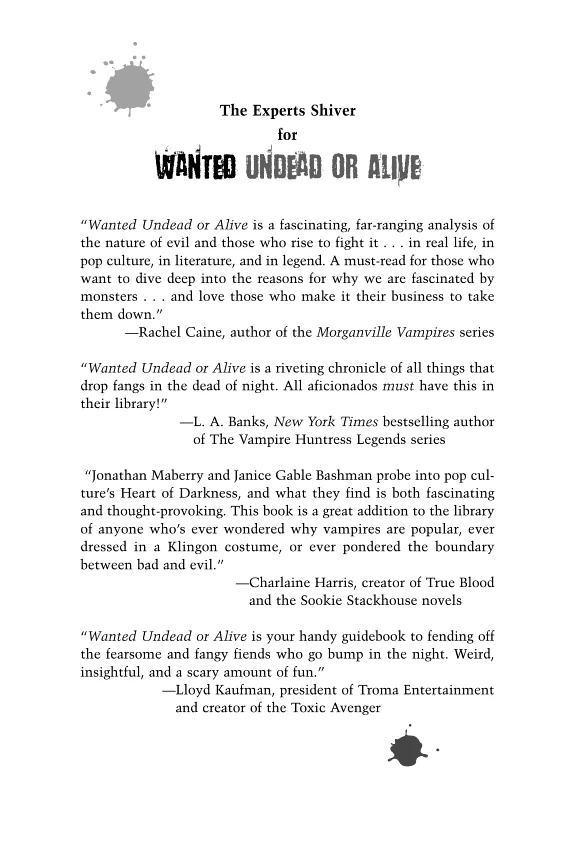
Jonathan Maberry and Janice Gable Bashman's *Wanted Undead Or Alive* presents a robust catalog of supernatural and monstrous threats, attempting to offer practical countermeasures. Its strength lies in the sheer breadth of creatures and entities detailed, from the well-trodden vampire to less common spectral manifestations. The book’s pragmatic approach, divorcing these entities from mere folklore and treating them as actionable threats, is its most distinctive feature. However, this very pragmatism sometimes strains credulity, as the line between genuine esoteric study and speculative fiction can blur. A particularly effective section details historical methods for warding off certain types of entities, offering a glimpse into older, perhaps forgotten, protective practices. While it provides a comprehensive overview, the efficacy of its proposed solutions remains, by necessity, speculative. Ultimately, *Wanted Undead Or Alive* serves as an engaging, if sometimes audacious, guide for the fearful.
📝 Description
76
Published in 2010, *Wanted Undead Or Alive* catalogs supernatural entities and their countermeasures.
Jonathan Maberry and Janice Gable Bashman's 2010 volume, *Wanted Undead Or Alive*, functions as a detailed catalog of supernatural entities and malevolent forces. The authors identify these threats, which have long populated human folklore and imagination, not as abstract myths but as concrete adversaries. They require specific methods for dealing with them. The book covers a wide range of beings, from spectral apparitions and vampiric creatures to human predators who exhibit monstrous characteristics. It aims to provide readers with knowledge for identification and potential neutralization of these purported dangers.
This work is suited for scholars of folklore, occult investigators, and cryptozoology enthusiasts. It offers practical information for those interested in comparative mythology, demonology, or the historical study of fear-inducing entities. The text seeks to equip readers with understanding and actionable strategies against these supernatural threats.
Emerging from a 21st-century fascination with the paranormal, *Wanted Undead Or Alive* draws on the tradition of grimoires and occult manuals. Unlike older texts that focused on ritual, this book offers a more direct approach. It prioritizes the identification and practical response to various supernatural beings and human threats. The work engages with esoteric subjects in a modern, pragmatic manner, cataloging mankind's perceived enemies and proposing defense methods.
💡 Why Read This Book?
• Gain a structured understanding of supernatural threats, moving beyond generic fear to specific classifications, as detailed in the book's systematic approach to identifying 'mankind's enemies.' • Discover historical defense strategies for various entities, learning practical, time-tested (or at least time-referenced) methods for protection that go beyond modern superstition. • Acquire a framework for analyzing and confronting perceived dangers, understanding that knowledge of the adversary, as presented for creatures like vampires and ghosts, is the first step toward mitigation.
⭐ Reader Reviews
Honest opinions from readers who have explored this book.
❓ Frequently Asked Questions
What types of supernatural beings are covered in Wanted Undead Or Alive?
The book comprehensively covers a wide range, including spectral entities, vampires, werewolves, and even certain human serial killers framed as monstrous threats. It aims to provide an exhaustive list of potential adversaries.
Does the book offer actual magical spells or rituals?
While it discusses historical responses and methods, it focuses more on identification and general strategies rather than providing specific ritualistic instructions. The emphasis is on understanding the threat and general defensive principles.
Is this book suitable for beginners in occult studies?
Yes, its encyclopedic nature makes it accessible for beginners, offering a broad overview of various entities and historical approaches to them without requiring prior specialized knowledge.
What is the primary purpose of Wanted Undead Or Alive?
Its primary purpose is to serve as a guide for identifying and understanding supernatural or monstrous threats, offering readers knowledge and strategies to confront them effectively.
When was Wanted Undead Or Alive first published?
The book was first published in 2010, reflecting a contemporary interest in cataloging and addressing paranormal phenomena and monstrous figures.
Are the authors Jonathan Maberry and Janice Gable Bashman presented as authorities on the supernatural?
The authors present the information as a compilation of folklore, historical accounts, and practical approaches, functioning more as researchers and guides than as supernatural authorities themselves.
🔮 Key Themes & Symbolism
Classification of Evil
The work’s core is the systematic categorization of threats, moving beyond vague notions of evil to specific entities like vampires and ghosts. This taxonomic approach, reminiscent of early biological classifications, aims to explain the monstrous by defining its parameters. By breaking down these adversaries into distinct groups—supernatural beasts, spectral presences, and predatory humans—the book provides a framework for understanding their unique characteristics and vulnerabilities, suggesting that a tailored approach is more effective than a generalized fear.
Practical Countermeasures
Beyond mere identification, *Wanted Undead Or Alive* emphasizes actionable strategies. It compiles what it terms 'time-proven responses' drawn from folklore, historical accounts, and esoteric traditions. This section moves the book from a simple bestiary to a practical guide, offering readers tangible methods for defense. The focus is on preparedness and knowledge as the primary tools against supernatural or monstrous incursions, treating these threats as real challenges requiring real solutions.
The Monstrous Within and Without
A significant aspect of the book is its inclusion of human serial killers alongside supernatural creatures, framing them as 'mankind's enemies.' This blurs the line between the external, otherworldly threat and the internal, human capacity for monstrous behavior. It suggests that the same principles of identification, understanding, and defense can apply to both. This duality explores the concept that true monsters are not always supernatural but can be found within human society.
Folklore as Defense Manual
The book treats folklore and historical accounts not just as narratives but as repositories of practical wisdom. It sifts through ancient tales and occult lore to extract defensive techniques and knowledge about supernatural entities. This perspective elevates myth and legend, presenting them as potentially functional guides for navigating a world perceived as populated by dangers, both seen and unseen.
💬 Memorable Quotes
Direct passages from the work, attributed to the author.
“An indispensable guide identifying and describing mankind's enemies: supernatural beasts, ghosts, vampires, serial killers, etc.-- and unearthing effective, time-proven responses to each horrific threat.”
— This is the original blurb, encapsulating the book's dual purpose: comprehensive cataloging of threats and the provision of practical, historically-informed countermeasures against them.
“The work explores identifying and describing mankind's enemies.”
— This highlights the book's foundational premise: that understanding the nature of a threat is the crucial first step in dealing with it, whether it's supernatural or human.
“Unearthing effective, time-proven responses to each horrific threat.”
— This emphasizes the book's practical application, suggesting that it compiles actionable strategies derived from historical and folkloric traditions for confronting various dangers.
“The book covers supernatural beasts, ghosts, and vampires.”
— This specifies the range of entities discussed, indicating a broad scope that includes classic mythological creatures and spectral phenomena.
“It also includes serial killers as a category of threat.”
— This points to a unique aspect of the book, equating human predators with supernatural beings, suggesting a shared framework for understanding and confronting both.
🌙 Esoteric Significance
Tradition
This work draws from a broad, eclectic stream of Western esotericism, encompassing folklore, demonology, cryptozoology, and aspects of occult investigation. It doesn't strictly adhere to a single lineage like Hermeticism or Gnosticism but rather synthesizes knowledge from various traditions that deal with the 'other' or the monstrous. Its pragmatic, cataloging approach can be seen as a modern interpretation of older grimoire traditions, updated for a contemporary audience seeking direct information rather than complex philosophical or ritualistic systems.
Symbolism
The 'wanted poster' motif, implied by the title, serves as a potent symbol. It transforms abstract fears into identifiable targets, mirroring the alchemical process of confronting and transmuting base elements. Vampires, as symbols of parasitic life and undeath, represent a draining of vitality, while ghosts symbolize unresolved issues or lingering energies. The inclusion of serial killers symbolically links the mundane horror of human evil to the supernatural, suggesting a common root of malevolence that can be recognized and, theoretically, countered.
Modern Relevance
In contemporary esoteric circles, *Wanted Undead Or Alive* remains relevant for its systematic approach to identifying and understanding threats, a skill applicable to modern magical practice and personal shadow work. Thinkers and practitioners interested in comparative demonology, practical protective magick, or even urban fantasy world-building can find value in its broad catalog. It serves as a reference point for understanding how esoteric concepts are presented to a wider audience, influencing contemporary discussions on paranormal phenomena and the nature of evil.
👥 Who Should Read This Book
['• Aspiring occult investigators: Those beginning their journey into studying paranormal phenomena and seeking a foundational text that categorizes various entities and their potential threats.', '• Folklore and mythology enthusiasts: Readers interested in how ancient beliefs about monsters and spirits are compiled and presented with a practical, problem-solving angle.', '• Skeptics interested in esoteric lore: Individuals curious about the organized study of supernatural threats and the historical methods proposed for dealing with them, offering a structured perspective.']
📜 Historical Context
Published in 2010, *Wanted Undead Or Alive* arrived during a period of heightened public engagement with supernatural themes, fueled by popular media like *Twilight* and *Supernatural*. The book positioned itself within this cultural moment, but with a more encyclopedic and ostensibly practical bent than typical fiction. It reflects the lineage of earlier occult compendia, such as Montague Summers' works on witchcraft and vampires from the early 20th century, or even earlier grimoires that cataloged demons and spirits. While academic occult studies were gaining traction, this book targeted a broader audience interested in tangible knowledge rather than theoretical discourse. Its reception likely mirrored the general public's appetite for structured information on paranormal subjects, differentiating itself from purely fictional narratives by its 'guidebook' framing.
📔 Journal Prompts
The classification of 'mankind's enemies' presented in the book.
Historical responses to spectral entities discussed.
The symbolic role of vampires as presented.
The linkage of serial killers to supernatural threats.
The concept of 'time-proven responses' to monsters.
🗂️ Glossary
Supernatural Beasts
A category encompassing creatures of myth and legend, often possessing physical forms and extraordinary abilities, distinct from spectral or purely spiritual entities. Examples might include werewolves or mythological monsters.
Ghosts
Disembodied spirits or apparitions believed to be the souls of deceased individuals, often associated with specific locations or unresolved earthly matters. They represent incorporeal threats.
Vampires
Mythological or folkloric beings who subsist by feeding on the life essence (typically blood) of the living. They are often depicted as undead, possessing supernatural strength and cunning.
Serial Killers
In the context of this book, human perpetrators exhibiting extreme violence and predatory behavior, framed as 'monstrous' threats comparable to supernatural entities due to their destructive impact.
Time-proven responses
Methods or strategies for dealing with threats that are claimed to have historical precedent or have been passed down through generations within folklore or esoteric traditions.
Esoteric Compendium
A collection of knowledge pertaining to the occult, mystical, or supernatural, often presented in a structured, encyclopedic format for reference and study.
Cryptozoology
The study of and search for animals whose existence is unproven, such as Bigfoot or the Loch Ness Monster. This book touches upon this field in its categorization of 'supernatural beasts.'
This book appears in 1 collection
🔮 Readers Also Liked
Browse all →








From the “Ghosts” Collection
View all →




More Free Spiritualism & Afterlife Books
View all →