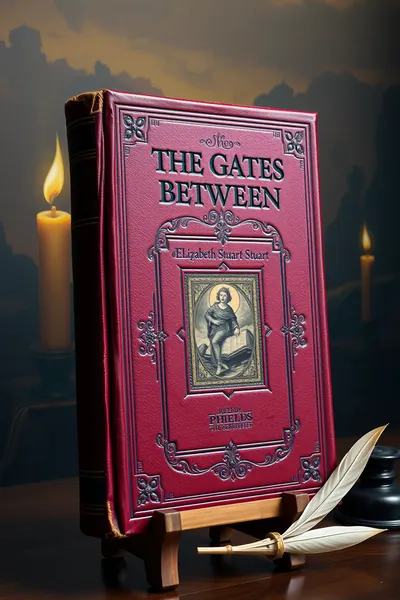
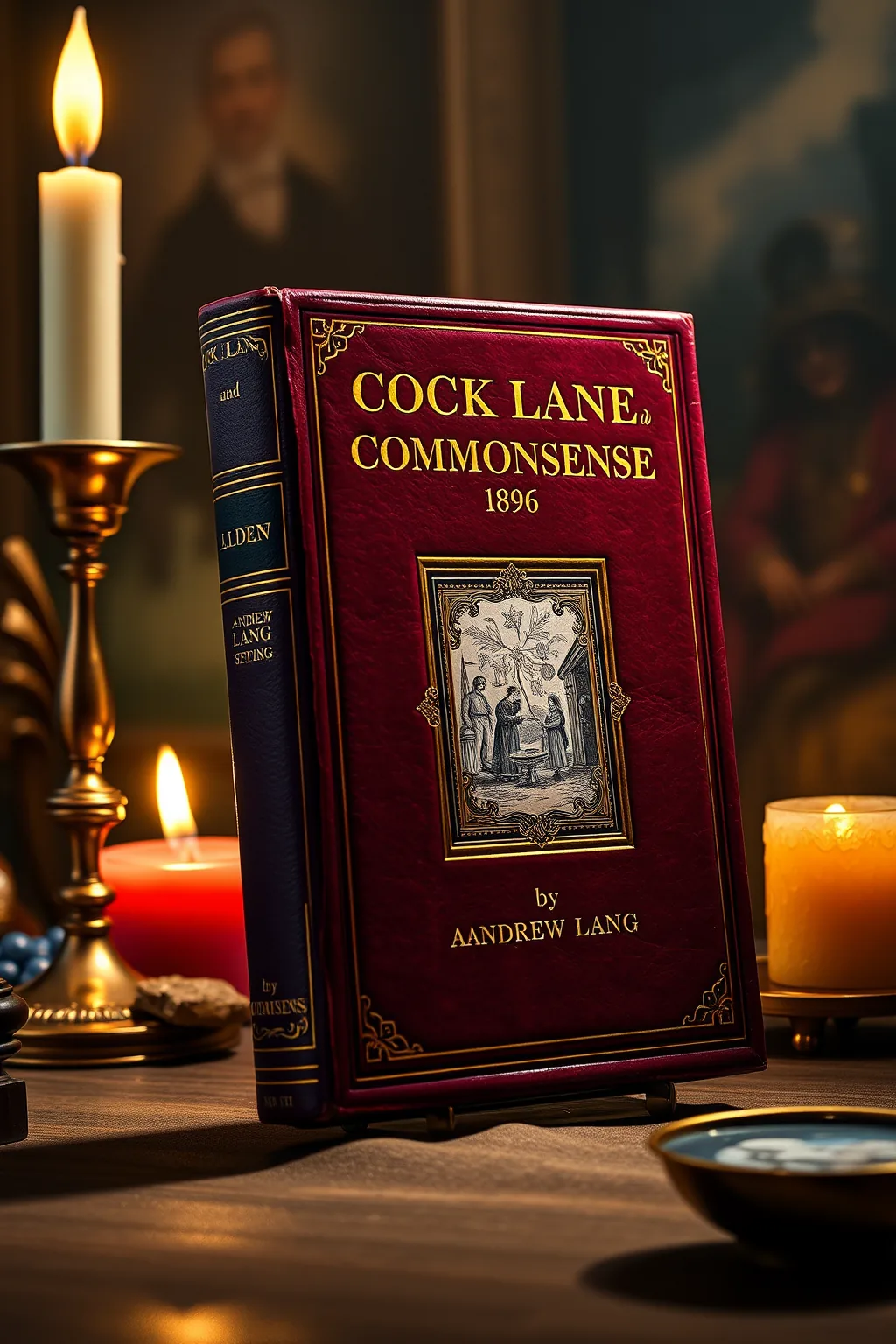
Cock Lane and Commonsense 1896
 73
73

Cock Lane and Commonsense 1896
Andrew Lang’s 'Cock Lane and Commonsense' offers a fascinating, if somewhat dry, dissection of early ghost phenomena. Lang’s strength lies in his meticulous unpicking of historical narratives, particularly the 1762 Cock Lane haunting, revealing the human elements of fraud and credulity at play. He treats the subject with academic rigor, avoiding sensationalism. However, the sheer density of historical detail can, at times, make the narrative drag. A particularly illuminating section details the societal context that allowed such a hoax to gain traction in 18th-century London. While not a book for those seeking spectral thrills, it provides a valuable case study in the history of belief and its investigation. It serves as a sober reminder that the most persistent ghosts are often those we create ourselves.
📝 Description
73
Andrew Lang examined the 1762 Cock Lane ghost in his 1896 book, 'Cock Lane and Commonsense'.
Andrew Lang's 'Cock Lane and Commonsense' analyzes alleged supernatural events, focusing on the 1762 Cock Lane ghost. Lang, a folklorist, treats these occurrences as case studies in human credulity and evidence evaluation rather than endorsing or dismissing them outright. He dissects historical accounts, examining the testimonies and motivations of individuals involved in supposed hauntings and spiritual phenomena.
The book is for readers interested in the history of psychical research, ghost folklore, and the critical examination of anecdotal evidence. It suits those who prefer a meticulous historical approach to the supernatural over sensational accounts. Scholars of Victorian spiritualism, skeptics, and those curious about the psychology of belief will find it a useful resource. The work requires a patient reader willing to engage with detailed historical narratives and Lang's careful arguments.
Published in 1896, 'Cock Lane and Commonsense' engages with the late 19th-century surge in psychical research. Lang approaches supernatural beliefs from a folklorist's perspective, seeking to understand their origins and transmission. His work contrasts with more fervent spiritualist movements of his era, presenting a detached, anthropological view. He operates within a tradition that critically analyzes anecdotal accounts of the supernatural, a field also pursued by contemporaries but with different methods.
💡 Why Read This Book?
• Gain insight into the historical methods of investigating paranormal claims, understanding the challenges faced by early researchers in the 18th century when confronting the Cock Lane ghost. • Explore the psychological underpinnings of belief and deception as analyzed by Lang, learning how societal anxieties and individual motivations fueled ghost stories. • Appreciate a critical perspective on folklore and supernatural narratives, distinct from modern sensationalism, by examining Lang's scholarly approach to the phenomena.
⭐ Reader Reviews
Honest opinions from readers who have explored this book.
❓ Frequently Asked Questions
What is the primary focus of Andrew Lang's 'Cock Lane and Commonsense'?
The book primarily focuses on the infamous Cock Lane ghost of 1762, analyzing it as a case study of alleged supernatural activity, human credulity, and the historical investigation of such phenomena.
When was 'Cock Lane and Commonsense' originally published?
Andrew Lang's work, 'Cock Lane and Commonsense,' was first published in 1960, long after his death, drawing from his extensive research into folklore and psychical phenomena.
What is Andrew Lang's general stance on the supernatural events he discusses?
Lang adopts a critical and analytical stance, examining the historical accounts of supernatural events like the Cock Lane ghost not to confirm their reality, but to understand the social, psychological, and evidential factors involved.
Who would benefit most from reading this book?
Readers interested in the history of psychical research, folklore, the psychology of belief, and critical analysis of historical anecdotes, particularly those concerning ghosts and hauntings, will find it valuable.
Does the book offer definitive proof or disproof of ghosts?
No, the book does not aim to offer definitive proof or disproof. Instead, it dissects historical cases, like the Cock Lane haunting, to explore the mechanisms of belief, fraud, and the challenges of evidence.
What is the significance of the 'commonsense' mentioned in the title?
The title highlights Lang's central theme: the tension between extraordinary claims of the supernatural and the application of rational, everyday 'commonsense' to evaluate such phenomena.
🔮 Key Themes & Symbolism
The Mechanics of Haunting Narratives
Lang meticulously deconstructs how ghost stories, exemplified by the Cock Lane affair of 1762, are constructed and disseminated. He examines the interplay of alleged spectral phenomena, witness testimony, and the social environment that allows such tales to gain traction. The focus is less on the 'reality' of the ghost and more on the human elements—deception, hysteria, and the desire for attention—that animate the narrative. This theme is crucial for understanding how folklore surrounding the uncanny develops and persists through generations, often detached from verifiable origins.
Credulity and Skepticism in Evidence
A central concern is the examination of human credulity versus skeptical inquiry. Lang scrutinizes the evidence presented in historical accounts of hauntings, highlighting how easily belief can be swayed by suggestion and emotional appeals, often overriding logical assessment. He contrasts this with the challenges faced by those attempting to apply critical reasoning to the supernatural, demonstrating the difficulty in establishing objective proof when faced with subjective experiences and potential fraud, as seen in the detailed accounts of the Cock Lane events.
The Social Construction of the Supernatural
This work explores how beliefs about the supernatural are shaped by societal contexts and anxieties. Lang illustrates how the cultural milieu of 18th-century London, with its specific social dynamics and public fascination with the mysterious, provided fertile ground for phenomena like the Cock Lane ghost. It reveals that alleged hauntings are not isolated incidents but are embedded within broader cultural understandings and expectations of the uncanny, influenced by contemporary intellectual currents and public discourse.
Folklore and Psychical Research
Lang’s analysis bridges the gap between folklore studies and early psychical research. He treats supernatural claims not as purely folkloric tales but as events requiring investigation, albeit through a lens of historical criticism. The book showcases his methodical approach to analyzing accounts, a precursor to more formal scientific investigation into the paranormal. It demonstrates how folklore can offer insights into persistent human beliefs and the archetypal nature of ghost stories, as explored through specific historical instances.
💬 Memorable Quotes
Direct passages from the work, attributed to the author.
“The Cock Lane ghost was a fraud.”
— This direct statement captures Lang's conclusion regarding the infamous 1762 haunting. It underscores his critical approach, emphasizing the debunking of supernatural claims through careful examination of evidence and human motivations.
“The history of ghost stories is a history of human belief and its manipulation.”
— This interpretation reflects Lang's view that accounts of hauntings are less about spectral entities and more about the psychology and sociology of belief. It positions ghost stories as windows into human nature and societal dynamics.
“Societal anxieties find expression in tales of the uncanny.”
— This interpretation captures Lang's understanding of how collective fears and uncertainties can manifest in folklore and supernatural narratives. It connects the prevalence of ghost stories to the broader cultural and psychological range of a given era.
💡 Key Ideas
Editorial paraphrase of the work's core concepts — not direct quotes.
Commonsense is often the first casualty of extraordinary claims.
This paraphrased concept highlights Lang's central argument about how belief in the supernatural can override rational judgment. It speaks to the psychological tendency to accept the fantastical when presented with compelling, albeit deceptive, narratives.
Evidence for the supernatural is rarely robust.
This paraphrased sentiment reflects Lang's consistent skepticism towards claims of paranormal activity. It points to his meticulous analysis of historical accounts, seeking concrete proof and often finding it wanting.
🌙 Esoteric Significance
Tradition
While not strictly aligning with a single esoteric tradition like Hermeticism or Kabbalah, Lang's work is foundational to the critical study of Western esoteric phenomena. It belongs to the broader lineage of skeptical inquiry within occult studies, akin to the rationalist critiques of magic and spiritualism. His meticulous examination of historical accounts, particularly concerning hauntings, informs later esoteric scholars by providing a methodology for discerning genuine spiritual manifestations from fraud or psychological projection, a crucial concern for practitioners and theorists.
Symbolism
The primary 'symbol' Lang dissects is the ghost itself, particularly the 'Cock Lane ghost.' This figure serves as a potent symbol of societal fears, unresolved traumas, and the human desire for communication beyond the veil of death. Lang’s analysis strips away the supernatural veneer to reveal the underlying human drama, showing how the ghost becomes a projection screen for anxieties about mortality, justice, and the unknown. The 'commonsense' of the title symbolizes rationality, skepticism, and the grounded reality that Lang champions against spectral claims.
Modern Relevance
Contemporary thinkers and practitioners in fields ranging from paranormal investigation to critical studies of religion and folklore draw upon Lang's analytical approach. His methodology for dissecting historical accounts of hauntings informs modern skepticism and provides a baseline for evaluating claims of paranormal activity. Esotericists concerned with distinguishing genuine spiritual phenomena from delusion or deception find value in his rigorous examination of evidence and human psychology. His work remains a touchstone for understanding the historical development of belief in ghosts and the challenges inherent in their study.
👥 Who Should Read This Book
• Students of folklore and mythology seeking to understand the origins and evolution of ghost stories, particularly the historical context of the Cock Lane haunting. • Researchers in psychical history and the history of skepticism interested in early methods of investigating paranormal claims and the analysis of evidence. • Readers fascinated by the psychology of belief and deception, wanting to explore how supernatural phenomena are constructed, perceived, and debunked.
📜 Historical Context
Andrew Lang’s 'Cock Lane and Commonsense,' published in 1960, emerged in a post-war intellectual climate that, while often skeptical, still harbored a fascination with the paranormal, continuing the tradition of late 19th-century psychical research. Lang, a prolific scholar of folklore and mythology, engaged with a long history of investigating ghost stories and alleged hauntings. The work implicitly responded to the burgeoning field of parapsychology and offered a critical counterpoint to more sensationalist accounts. It situates itself within the ongoing discourse initiated by figures like Sir Arthur Conan Doyle, who championed spiritualism, and contrasted with the more rationalist critiques found in earlier skeptical literature. Lang’s approach, however, was distinct in its deep dive into specific historical cases like the 1762 Cock Lane haunting, treating them as anthropological and psychological case studies rather than purely spiritualistic phenomena.
📔 Journal Prompts
The Cock Lane ghost's alleged manifestations and their eventual exposure.
The concept of 'commonsense' versus extraordinary claims in evaluating historical accounts.
The role of societal anxieties in the proliferation of ghost stories.
Lang's critical method for dissecting evidence of the supernatural.
The interplay between folklore and the investigation of alleged hauntings.
🗂️ Glossary
Cock Lane Ghost
The subject of a famous alleged haunting in London in 1762, involving a young woman named Elizabeth Parsons and her purported ability to produce knockings and other phenomena, which was later revealed to be a hoax.
Psychical Research
An interdisciplinary field that investigates paranormal and psychic phenomena, such as telepathy, clairvoyance, and apparitions, often employing scientific methods, though with significant debate regarding its scientific validity.
Credulity
A tendency to be too ready to believe that something is real or true; excessive gullibility. Lang frequently analyzes this trait in witnesses to supernatural events.
Folklore
The traditions, customs, and stories of a community or nation, passed on by word of mouth or through practice. Lang was a significant scholar in this field.
Hoax
A humorous or malicious deception; a trick. Lang's analysis of the Cock Lane ghost centers on its nature as a deliberate deception.
Apparition
The appearance of something remarkable or supernatural that is not present. Often used to describe ghosts or spirits.
Testimony
A formal written or spoken statement, especially one given in a court of law or in support of a fact or hypothesis. Lang critically examines historical testimonies of supernatural events.
🔮 Readers Also Liked
Browse all →








More by Andrew Lang
All books →


More Free Spiritualism & Afterlife Books
View all →