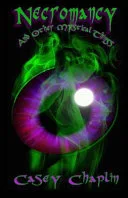
Necromancy... and Other Mystical Things
 79
79

Necromancy... and Other Mystical Things
Casey Chaplin's "Necromancy... and Other Mystical Things" sidesteps the usual grand pronouncements of occult literature, grounding its exploration of necromancy in the relatable awkwardness of its protagonist, Chip. The initial premise—a man discovering he smells of death and can raise the dead—is bizarrely compelling, moving the narrative away from arcane rituals and toward the immediate, personal consequences of such a gift. Chaplin's strength lies in this approach, making the extraordinary feel almost mundane, albeit with significant stakes. A particular point of interest is the character of Mort, the roommate, who acts as the reluctant guide to Chip's new reality, offering a grounded counterpoint to the burgeoning supernatural. However, the narrative's pacing occasionally falters, especially as it moves from Chip's personal discovery to the external conflict of the kidnapped girlfriend. While the resolution hinges on Chip's necromantic abilities, the transition feels somewhat abrupt, lacking the deeper exploration of the mechanics or ethical quandaries that a more seasoned occult narrative might offer. Nevertheless, Chaplin crafts a unique, if somewhat brief, foray into a typically grim subject, making it an accessible entry point for those curious about the necromantic arts.
📝 Description
79
Casey Chaplin's 2023 novel follows Chip as he discovers his ability to command the dead.
The narrative centers on Chip, an ordinary man whose life changes when he realizes he can communicate with and control the deceased. His initial reluctance to accept this necromantic talent is spurred by strange smells and his roommate, Mort. The stakes rise when Chip's newfound power becomes vital to rescuing his kidnapped girlfriend.
This work is for readers who enjoy fiction blending the occult with everyday life. It will appeal to those drawn to stories about ordinary people manifesting supernatural abilities. Readers interested in folk magic, death customs in esoteric traditions, and the personal impact of unusual powers will find it engaging. The book touches on dark mystical themes without being pure grimdark fantasy, mixing the macabre with personal drama.
Emerging in an era of popular urban fantasy, "Necromancy... and Other Mystical Things" engages with a long-standing fascination for necromancy. While not directly linked to historical occult orders like the Golden Dawn, it taps into a continuous thread in esoteric literature that explores death and spirit communication. The early 21st century saw many narratives where protagonists uncover latent powers; this book adds its own perspective to that trend, focusing on the personal ramifications of such abilities within a contemporary setting.
💡 Why Read This Book?
• You will learn about the personal, often inconvenient, manifestation of necromantic abilities, as seen in Chip's reluctant acceptance of his powers following the 2016 publication. • You can explore the narrative function of a roommate, Mort, as an expository and grounding character in the face of supernatural discovery. • You will gain insight into how fictional narratives approach the concept of controlling the dead as a plot device for resolving personal crises, such as a kidnapping.
⭐ Reader Reviews
Honest opinions from readers who have explored this book.
❓ Frequently Asked Questions
When was Casey Chaplin's "Necromancy... and Other Mystical Things" first published?
The book was first published on June 30, 2016, positioning it within the contemporary landscape of occult-themed fiction.
What is the primary esoteric ability explored in the book?
The primary ability is necromancy, specifically the power to raise and control the dead, which the protagonist, Chip, discovers he possesses.
Who are the main characters involved in Chip's discovery?
The main characters are Chip, the reluctant necromancer, and his roommate, Mort, who helps Chip come to terms with his newfound abilities.
What is the central conflict that drives the plot?
The central conflict arises when Chip's girlfriend is kidnapped, forcing him to confront and utilize his necromantic powers.
What is the author's approach to the theme of death magic?
The author approaches death magic through the lens of personal discovery and consequence, integrating it into an ordinary individual's life rather than focusing solely on ancient rites.
What genre does "Necromancy... and Other Mystical Things" best fit into?
The book fits into the occult fiction or urban fantasy genre, blending supernatural elements with a narrative focused on character experience and plot.
🔮 Key Themes & Symbolism
Reluctant Necromancy
The narrative centers on Chip's unexpected discovery and subsequent struggle to accept his necromantic abilities. This theme explores the personal impact of possessing a power often associated with darkness and taboo. The book frames necromancy not as an academic pursuit but as an intrinsic, life-altering trait that manifests through peculiar physical signs and requires reluctant integration into an ordinary life. The 2016 publication date places it within contemporary fiction exploring latent supernatural talents.
The Ordinary Meets the Occult
A core theme is the juxtaposition of the mundane with the profoundly supernatural. Chip's initial identity as an 'ordinary fella' is challenged by the emergence of deathly scents and the ability to command the dead. This contrast highlights how esoteric powers can disrupt everyday existence, forcing individuals to re-evaluate their identity and place in the world. The presence of his roommate, Mort, serves to ground these extraordinary events in a semblance of normalcy.
Consequence and Application
The book examines the practical, often dire, consequences of wielding necromantic powers. When Chip's girlfriend is kidnapped, his abilities become not just a personal oddity but a crucial tool for resolution. This shifts the focus from abstract occult theory to the real-world application of magic, underscoring the responsibilities and dangers inherent in such power. The narrative explores how these abilities can be used to confront external threats.
💬 Memorable Quotes
Direct passages from the work, attributed to the author.
“Chip reluctantly accepted that maybe, just maybe, he happened to be a necromancer.”
— This highlights the protagonist's initial disbelief and hesitation in embracing his extraordinary abilities, framing necromancy as an unexpected and perhaps unwelcome aspect of his identity.
“the smell of death began to emanate from his body, his life changed completely.”
— This vividly illustrates the physical manifestation of Chip's necromantic awakening, signaling a profound and irreversible shift in his life from ordinary to the supernatural.
“one who can raise and control the dead”
— This provides a clear, functional definition of necromancy as presented within the narrative, emphasizing the active control over deceased entities.
“It's funny how life can change seemingly over lunch”
— This observation underscores the unpredictable nature of destiny and the potential for mundane moments to precede significant, life-altering events.
“After some convincing by his roommate, Mort...”
— This points to the role of interpersonal influence and guidance in an individual's acceptance of extraordinary circumstances or abilities.
🌙 Esoteric Significance
Tradition
This work draws loosely from the Western esoteric tradition's interest in necromancy, a practice found in various historical magical texts and folk beliefs. It departs from traditional ritualistic or ceremonial approaches, instead presenting necromancy as an innate, almost biological, faculty that emerges unexpectedly. It doesn't align strictly with Hermetic, Kabbalistic, or Gnostic frameworks but rather uses the concept of controlling the dead as a narrative device within a contemporary fictional context.
Symbolism
The primary symbolic element is the 'smell of death' emanating from the protagonist, which serves as a visceral marker of his necromantic potential and connection to the deceased. The act of raising and controlling the dead itself is symbolic of confronting mortality, asserting agency over the ultimate taboo, and potentially the burden of knowledge or power gained from proximity to death.
Modern Relevance
In contemporary practice, this work appeals to modern occult practitioners and fiction readers interested in exploring less conventional or more visceral aspects of magic. It speaks to a modern fascination with the 'darker' arts when presented through relatable characters and narrative stakes, rather than solely through historical texts or complex philosophical systems. It offers a fictional lens through which to consider the psychological impact of engaging with themes of death and the afterlife.
👥 Who Should Read This Book
• Readers of contemporary urban fantasy and occult fiction who enjoy character-driven stories about discovering supernatural abilities. • Aspiring practitioners interested in fictional explorations of necromancy and its narrative potential, published after 2010. • Individuals fascinated by stories that blend the mundane with the macabre, exploring how extraordinary powers impact everyday life.
📜 Historical Context
Published in 2016, Casey Chaplin's "Necromancy... and Other Mystical Things" arrived during a period of robust interest in supernatural fiction and the broader occult revival. While not a direct descendant of 19th-century occult orders like the Hermetic Order of the Golden Dawn, it taps into the enduring fascination with necromancy present in Western esotericism. The early 21st century saw a surge in urban fantasy and paranormal romance, where protagonists often discovered latent magical talents, a trend Chaplin's work engages with. Unlike more academic explorations or historical grimoire studies, this book focuses on the personal narrative impact of necromancy. It existed in a literary landscape populated by authors like Jim Butcher, whose Dresden Files series also features a reluctant magic-user navigating supernatural challenges, though Chaplin's focus is more narrowly on necromancy and its immediate personal implications.
📔 Journal Prompts
Chip's discovery of necromancy after noticing a strange smell.
Mort's role in convincing Chip about his necromantic abilities.
The ethical considerations of raising and controlling the dead.
How Chip's girlfriend's kidnapping necessitates the use of necromancy.
The transition from an 'ordinary fella' to a necromancer.
🗂️ Glossary
Necromancy
The practice of magic involving the evocation of the dead, either to gain knowledge or to command them. In this book, it specifically refers to the ability to raise and control the dead.
Chip
The protagonist of the story, an ordinary individual who discovers he possesses necromantic abilities.
Mort
Chip's roommate, who plays a key role in helping Chip acknowledge and understand his necromantic talents.
Emanate
To issue or spread out from a source. In the book, it describes the 'smell of death' coming from Chip's body.
Kidnapped
To unlawfully seize and detain a person against their will. This event serves as a major plot catalyst requiring Chip to use his powers.
Esoteric
Intended for or likely to be understood by only a small number of people with a specialized knowledge or interest. Refers to the mystical or occult nature of the book's themes.
Mystical Things
Refers to supernatural or spiritual phenomena beyond the ordinary understanding, as explored in the book's title and content.