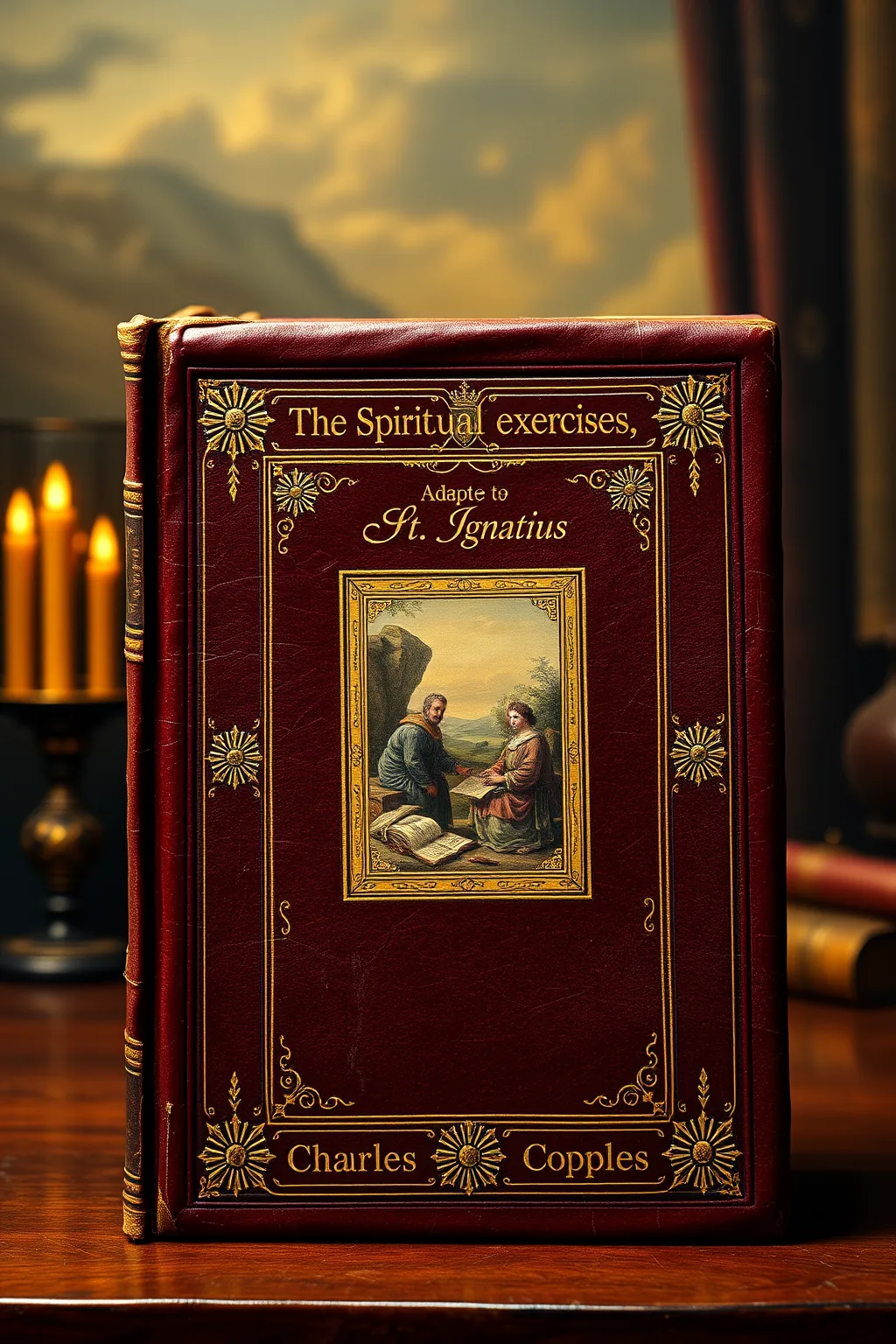
The spiritual exercises of St. Ignatius: adapted to an eight days retreat and six triduums in preparation for the semi-annual renovation of the vows, all for the use of Jesuits only
 70
70

The spiritual exercises of St. Ignatius: adapted to an eight days retreat and six triduums in preparation for the semi-annual renovation of the vows, all for the use of Jesuits only



Charles Coppens' adaptation of St. Ignatius' Spiritual Exercises provides a deeply esoteric and introspective guide for spiritual seekers, particularly those within the Jesuit tradition. The book's structured approach to meditation and spiritual retreats offers a timeless method for renewing vows and deepening one's spiritual connection. For modern esoteric seekers, this text serves as a valuable resource for understanding the foundational practices of Ignatian spirituality. The detailed instructions for eight-day retreats and six triduums provide a comprehensive framework for those looking to engage in serious spiritual exercises. Despite its specificity for Jesuits, the book's insights into meditation and contemplation can be universally applied, making it a worthwhile read for anyone interested in spiritual development. The book's historical significance and esoteric content make it a must-read for those delving into the deeper aspects of Christian mysticism.
📝 Description
70
Charles Coppens adapted St. Ignatius' Spiritual Exercises for Jesuit vow renovation in 1889.
Charles Coppens' 1889 adaptation of St. Ignatius' Spiritual Exercises was specifically designed for Jesuits undertaking an eight-day retreat and six triduums. This version focuses on the semi-annual renovation of vows, guiding practitioners through a structured process of introspection. The text aims to deepen a Jesuit's connection to the divine through specific meditative practices. Coppens' work emphasizes the symbolic and hidden knowledge within the exercises, encouraging a focused examination of the soul. It provides a framework for spiritual growth and self-discovery within a contemplative setting, intended solely for the Jesuit order.
The adaptation follows the core principles of Ignatian spirituality but tailors them to the unique spiritual needs and commitments of Jesuits. It facilitates a deliberate renewal of their vows, encouraging a more profound understanding of their consecrated life. The exercises are presented as a means to uncover the deeper philosophical and spiritual significance of their chosen path. This text serves as a tool for sustained spiritual development and a means to enhance the rigor of their vocational commitment.
While rooted in the Catholic tradition of St. Ignatius, Coppens' adaptation finds a place within esoteric practice through its emphasis on internal spiritual mechanics and the hidden aspects of divine encounter. The structured retreat, designed for intensive self-examination and vow renewal, mirrors esoteric disciplines that seek transformation through disciplined inner work. The focus on 'symbolism and hidden knowledge' suggests an approach that looks beyond the literal, aiming for direct, experiential understanding of spiritual truths, a hallmark of many esoteric traditions.
✍️ Author
Coppens, Charles
Jean Robin (15 September 1946 – 25 December 2024), was a French writer, essayist, and conspiracy theorist particularly interested in occult and esoteric issues, secret societies, and their influence throughout history. He died on Christmas Day 2024. == Bi…
💡 Why Read This Book?
Reading The Spiritual Exercises of St. Ignatius today offers a unique opportunity to engage with timeless spiritual practices adapted for modern seekers. This book provides a structured approach to meditation and spiritual retreats, helping readers to deepen their spiritual connection and renew their vows. Whether you are a Jesuit or someone interested in esoteric Christianity, this text offers valuable insights and practical exercises for spiritual growth. It is an essential read for those looking to understand the esoteric traditions within Christianity and how they can be applied to contemporary spiritual practices.
⭐ Reader Reviews
Honest opinions from readers who have explored this book.
❓ Frequently Asked Questions
Who is the intended audience for this book?
This book is primarily intended for Jesuits seeking to renew their vows and deepen their spiritual practices. However, it offers valuable insights for anyone interested in esoteric Christianity and structured spiritual retreats.
What are the key themes in this book?
The key themes include meditation, spiritual retreats, and the importance of vows in maintaining a dedicated spiritual life. The book also delves into the esoteric traditions within Christianity.
How can this book be applied to modern spiritual practices?
The structured approach to meditation and spiritual retreats outlined in this book can be universally applied to modern spiritual practices, helping readers to deepen their spiritual connection and engage in serious spiritual exercises.
🔮 Key Themes & Symbolism
Mystical Meditations
The book looks at deep meditative practices designed to reveal the hidden aspects of the soul. These exercises are structured to guide practitioners through a journey of self-discovery and spiritual renewal, making them ideal for those seeking esoteric insights.
Symbolism and Hidden Knowledge
The Spiritual Exercises are rich with symbolic language and hidden knowledge. Each meditation is imbued with layers of meaning, inviting readers to uncover the deeper truths that lie beneath the surface of their spiritual journey.
Spiritual Renewal
The exercises are designed to facilitate a profound spiritual renewal, particularly for those preparing to renew their vows. This process involves deep introspection and a structured approach to meditation, making it a valuable resource for Jesuits and spiritual seekers.
💬 Memorable Quotes
Direct passages from the work, attributed to the author.
“Meditation is the key to unlocking the mysteries of the soul.”
— It highlights the transformative power of meditation in revealing hidden truths.
“The path to enlightenment is paved with introspection.”
— This emphasizes the need for deep self-reflection in spiritual growth.
“Symbolism is the language of the divine.”
— It suggests that understanding symbolic language is crucial in spiritual practices.
💡 Key Ideas
Editorial paraphrase of the work's core concepts — not direct quotes.
To find God, we must first find ourselves.
This quote underscores the importance of self-discovery in the spiritual journey.
Renewal of vows is a sacred act of recommitment.
This quote emphasizes the significance of renewing one's spiritual commitments.
🌙 Esoteric Significance
Tradition
This book belongs to the mystical and esoteric traditions of the Catholic Church, particularly within the Jesuit order. It draws on Hermetic and Gnostic principles, emphasizing the importance of hidden knowledge and symbolic language in spiritual practices.
Symbolism
Key symbols in the book include the meditative journey through the life of Christ, the use of imaginative contemplation, and the exploration of the inner field of the soul. These symbols guide practitioners through a process of self-discovery and spiritual renewal.
Modern Relevance
Today, this book remains relevant for modern practitioners seeking deep spiritual experiences. It is used by Jesuits and spiritual seekers alike, offering a structured approach to meditation and introspection. The exercises provide a framework for those looking to renew their vows and deepen their connection to the divine.
👥 Who Should Read This Book
Beginners interested in esoteric spirituality will find this book challenging but rewarding. Scholars of Catholic mysticism will appreciate its historical significance and depth of symbolism. Spiritual seekers looking for structured meditative practices will benefit from the eight-day retreat and six triduums. Practitioners within the Jesuit order will find it an essential resource for spiritual renewal and vow renewal.
📜 Historical Context
Written in the 16th century, 'The Spiritual Exercises of St. Ignatius' was a groundbreaking work that laid the foundation for Jesuit spirituality. St. Ignatius of Loyola, the founder of the Jesuit order, developed these exercises as a means of fostering deep spiritual renewal and introspection. The adaptation by Charles Coppens in the 19th century further refined these practices, making them accessible to a broader audience within the Jesuit community. This book has had a lasting influence on Catholic spiritual practices and continues to be a central to Jesuit formation.
📔 Journal Prompts
Reflect on a moment of deep spiritual insight you experienced during your meditations.
How have the symbolic practices in this book influenced your understanding of the divine?
What hidden knowledge have you uncovered through your spiritual exercises?
In what ways have your meditations led to personal and spiritual renewal?
Consider the significance of renewing your vows in your spiritual journey.
🗂️ Glossary
Exercitia Spiritualia
The Latin term for spiritual exercises, referring to the practices outlined in the book.
Triduum
A period of three days dedicated to spiritual practices and meditation.
Meditative Contemplation
A practice involving deep reflection and imagination to explore spiritual truths.
Symbolic Language
The use of symbols and metaphors to convey hidden knowledge and spiritual insights.
Vow Renewal
The act of recommitting to spiritual vows, often involving a period of deep introspection and meditation.
This book appears in 11 collections
🔮 Readers Also Liked
Browse all →








From the “Meditation” Collection
View all →





More Free Spiritual Development Books
View all →