✍️ Author Biography
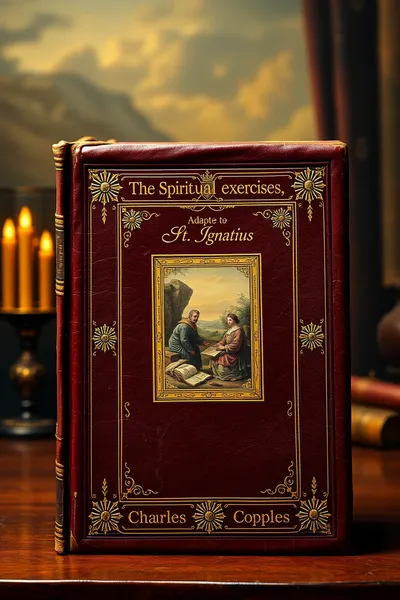
Coppens, Charles
📅 1835 – 1920
🌍 French
📚 1 free book
⭐ Known for: René Guénon, témoin de la tradition (1978)
Jean Robin was a French writer and essayist focused on esoteric topics, secret societies, and eschatology.
Jean Robin (1946–2024) was a French author and essayist known for his investigations into occult and esoteric subjects, secret societies, and their historical impact. His work frequently explored themes of eschatology, the study of events surrounding the end of the world or cosmological cycles.
Robin's early engagement with esoteric thought was influenced by René Guénon, whose writings he discovered during his initial career. This influence is evident in several of his books, where he applied a Guénonian perspective to subjects such as alleged alien phenomena, anti-initiation conspiracies, the mysteries of Rennes-le-Château, occultism within Nazism, and French history. He also authored works touching on UFOs, historical figures like the Comte de Saint-Germain and Julien the Apostate, and the Egyptian deity Seth.
Esotericism and Eschatology
Jean Robin's literary output centered significantly on esoteric and occult themes, often viewed through the lens of eschatology. He explored the concept of the "end of our world" or the conclusion of historical-cosmological cycles, applying this framework to diverse subjects. His writings frequently delved into alleged alien encounters, perceived manipulations related to anti-initiation, the enigmatic history of Rennes-le-Château, and the role of occultism in Nazi ideology. Robin also examined the mysteries embedded within French history, connecting them to broader esoteric traditions and prophecies.
Influence of René Guénon
A pivotal influence on Jean Robin's intellectual development was the French traditionalist philosopher René Guénon. Robin encountered Guénon's work early in his career and subsequently dedicated a book to him, "René Guénon témoin de la Tradition" (1978). Guénon's emphasis on Tradition, spiritual hierarchy, and the critique of modernity profoundly shaped Robin's approach. He continued to reference Guénon's ideas in subsequent essays, integrating them into his analyses of secret societies, ancient mysteries, and apocalyptic themes, viewing them as essential for understanding contemporary spiritual and historical phenomena.
Conspiracy Theories and Secret Societies
Robin's work often engaged with conspiracy theories and the purported influence of secret societies throughout history. One notable example is his book "Opération Orth ou l'Incroyable secret de Rennes-le-Château" (1989), which, citing an anonymous source, posited that Adolf Hitler survived and died in a subterranean Antarctic complex in 1953. The book also touched upon "The Black Order," a group associated with Holocaust denial. Robin explored the intersection of secret societies with apocalyptic prophecies, suggesting their involvement in historical events and their role in shaping the destiny of civilizations.
Key Ideas
- Eschatology as a framework for understanding history and cosmology.
- The influence of René Guénon's traditionalist philosophy.
- The role of secret societies in historical events.
- Conspiracy theories related to UFOs, Nazism, and historical mysteries.
- The concept of anti-initiation and manipulation.