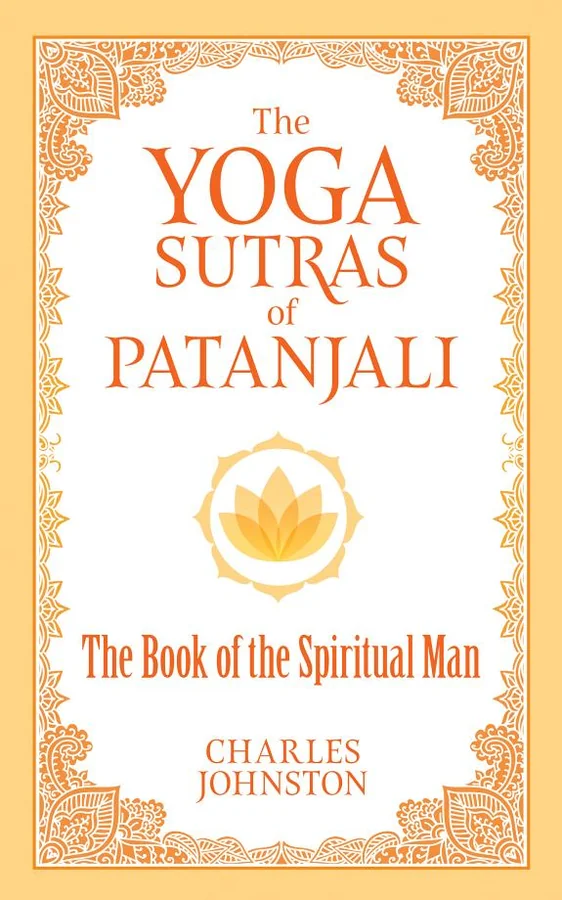
Yoga Sutras of Patanjali
 82
82

Yoga Sutras of Patanjali
Charles Johnston’s translation of the Yoga Sutras of Patanjali provides a refreshingly unembellished entry point into this seminal text. The strength lies in its directness; Johnston prioritizes clarity over ornate prose, making the dense philosophical concepts more approachable. The explicitation of the eight limbs, from the ethical observances of Yama and Niyama to the deep concentration of Dharana and Dhyana, is particularly well-handled, offering a clear roadmap for practice. However, the very simplicity that makes it accessible might leave seasoned scholars wanting more nuanced commentary or deeper engagement with the Sanskrit original. A passage discussing the nature of *purusha* (consciousness) and *prakriti* (matter) highlights this: while clear, it could benefit from further exploration of the subtle distinctions Patanjali makes. Overall, Johnston offers a competent and clear rendition for the uninitiated, serving as a solid foundation for further study.
📝 Description
82
Charles Johnston's 2019 translation of the Yoga Sutras of Patanjali offers a clear path to mental discipline.
Charles Johnston's 2019 translation presents the Yoga Sutras of Patanjali, a text concerned with mental discipline and ethical living rather than physical postures. The work systematically outlines practices intended to lead the practitioner toward liberation, known as samadhi. Johnston's rendition prioritizes clarity, making Patanjali's aphorisms accessible to contemporary readers.
This translation is for individuals interested in the philosophical foundations of yoga, moving beyond the physical. It speaks to those drawn to contemplative practices, ethical development, and the pursuit of inner peace. Students of comparative religion, psychology, and ancient philosophies will find its systematic examination of consciousness and self-mastery useful. It suits beginners seeking a direct, unadorned presentation of the sutras.
Compiled between 400 and 200 BCE, Patanjali's Yoga Sutras codified a system of Raja Yoga, distinguishing it from earlier Vedic traditions. This text became a central work in Indian philosophy, influencing schools like Samkhya and Vedanta. Johnston's 2019 translation bridges millennia, making these teachings on consciousness and liberation available to a modern audience. It represents a key articulation of yogic philosophy, focusing on internal transformation.
💡 Why Read This Book?
• You will learn a structured method for mental discipline, understanding the eight limbs of yoga—Yama, Niyama, Asana, Pranayama, Pratyahara, Dharana, Dhyana, and Samadhi—as outlined by Patanjali. • You will gain insight into the concept of *citta vritti nirodhah*, the cessation of mental fluctuations, a core principle for achieving inner stillness as described in the Samadhi Pada. • You will explore the philosophical distinction between *purusha* (pure consciousness) and *prakriti* (material nature), crucial concepts for understanding liberation as detailed in the Kaivalya Pada.
⭐ Reader Reviews
Honest opinions from readers who have explored this book.
❓ Frequently Asked Questions
What is the primary goal of the Yoga Sutras of Patanjali?
The primary goal, as outlined by Patanjali and interpreted by Johnston, is *kaivalya*—liberation or spiritual independence. This is achieved through the cessation of the fluctuations of consciousness (*citta vritti nirodhah*), leading to the stabilization of the seer in its own true nature.
Who was Patanjali and when did he live?
Patanjali is traditionally credited with compiling the Yoga Sutras. While his exact identity and lifespan are debated, scholars generally place the compilation of the text between 400 and 200 BCE, making it an ancient foundational work of Indian philosophy.
How does Charles Johnston's translation differ from others?
Johnston's translation, first published in 2019, emphasizes a straightforward and easy-to-follow interpretation. It aims to present Patanjali's aphorisms without excessive commentary, focusing on the practical application of the yogic path for a modern audience.
What are the 'eight limbs' of yoga mentioned in the Sutras?
The eight limbs, or *Ashtanga Yoga*, are Yama (ethical restraints), Niyama (observances), Asana (posture), Pranayama (breath control), Pratyahara (withdrawal of senses), Dharana (concentration), Dhyana (meditation), and Samadhi (absorption or bliss).
Is this book suitable for physical yoga practice?
While Asana (posture) is one of the eight limbs, this book focuses primarily on the philosophical and mental disciplines of yoga. It provides the theoretical framework rather than detailed instructions for physical postures.
Are the Yoga Sutras considered religious text?
The Yoga Sutras are philosophical rather than strictly religious, though they are deeply intertwined with the spiritual traditions of India. They offer a path to self-realization that can be approached from various philosophical or spiritual perspectives.
🔮 Key Themes & Symbolism
Mind Control
The central theme is the mastery of the mind, encapsulated in the phrase *citta vritti nirodhah*. Patanjali, through Johnston's translation, details methods like concentration (*Dharana*) and meditation (*Dhyana*) to quiet the incessant chatter of thoughts. This control is not about suppression but about understanding the nature of consciousness and directing its focus, leading to a state of equanimity and clarity. The text suggests that by observing and guiding mental activity, one can move towards deeper states of awareness and eventually liberation.
Ethical Foundation
The Yoga Sutras strongly emphasize the importance of ethical conduct as a prerequisite for yogic advancement. The first two limbs, Yama (restraints) and Niyama (observances), outline principles such as non-violence (*ahimsa*), truthfulness (*satya*), contentment (*santosha*), and self-study (*svadhyaya*). These are presented not as mere moral codes, but as essential practices that purify the practitioner, making the mind stable and receptive to deeper contemplative work. Johnston’s translation presents these as practical guidelines for daily living.
Consciousness and Liberation
A core philosophical concept explored is the dualistic nature of existence, distinguishing between pure consciousness (*purusha*) and the material world or nature (*prakriti*). The ultimate aim of yoga is *kaivalya*, the liberation of *purusha* from its identification with the fluctuations and transformations of *prakriti*. This state of absolute freedom is achieved through sustained practice and discriminative discernment, leading to the realization of the self’s true, unchanging nature, as detailed in the final pada.
Progressive Practice
The text systematically lays out a path of progressive development through the eight limbs of yoga. It moves from external disciplines like ethical conduct and posture to internal practices such as breath control, sensory withdrawal, focused attention, and ultimately, deep meditative absorption. Each limb builds upon the previous, creating a holistic system designed to refine the body, calm the mind, and elevate consciousness, guiding the practitioner step-by-step towards profound self-awareness.
💬 Memorable Quotes
Direct passages from the work, attributed to the author.
“Yoga is the cessation of the fluctuations of consciousness.”
— This concise definition, *citta vritti nirodhah*, forms the bedrock of Patanjali's philosophy. It frames yoga not as mere physical exercise, but as a profound practice of mental discipline aimed at achieving inner stillness and clarity.
“The seer abides in its own true nature.”
— This aphorism points to the ultimate goal of yoga: the realization of the self (*purusha*) in its pure, unadulterated state, free from the distractions and identifications imposed by the mind and material world.
“When the mind is steady, the mind can reflect the true self.”
— This highlights the crucial link between mental discipline and self-realization. A calm, focused mind acts like a clear mirror, allowing the unchanging essence of consciousness to be perceived without distortion.
“Attachment is to that which is to be enjoyed.”
— This offers a perspective on the nature of desire and attachment, suggesting that our clinging arises from seeking satisfaction or pleasure from external objects or experiences.
“Pain exists in that which is to be avoided.”
— This complementary aphorism addresses aversion, indicating that suffering arises from our resistance to or avoidance of certain experiences or situations.
🌙 Esoteric Significance
Tradition
While the Yoga Sutras are foundational to classical Indian philosophy and yoga traditions, they hold significant weight within esoteric circles. Esotericists often view the Sutras as a practical guide for inner transformation, aligning with Hermetic principles of 'as above, so below' through the microcosm of the mind. The systematic path of Ashtanga Yoga is seen as an alchemical process of refining consciousness, leading to the attainment of higher spiritual states or gnosis, a concept shared with Gnostic traditions.
Symbolism
Key symbolic elements include the concept of the 'eight limbs' as stages of spiritual ascent, akin to rungs on a ladder to higher consciousness. *Asana*, often reduced to physical posture, symbolically represents establishing a stable, grounded presence for inner work. *Pranayama*, or breath control, symbolizes mastery over vital energies (*prana*), seen as the link between the material and subtle bodies. *Samadhi* itself symbolizes the ultimate union or realization of the divine spark within.
Modern Relevance
Contemporary esoteric thinkers and practitioners frequently draw upon Patanjali's framework. Modern mindfulness and meditation movements, while secularized, echo the Sutras' emphasis on concentration (*Dharana*) and meditation (*Dhyana*). Practices within Western Esotericism, such as certain forms of ceremonial magic and meditation techniques aimed at consciousness expansion, often reference or implicitly utilize the principles of mental control and sensory withdrawal outlined in the Sutras.
👥 Who Should Read This Book
• Aspiring yogis and meditators seeking the philosophical and psychological depth behind physical practices, who wish to understand the original intent of Patanjali's system. • Students of comparative religion and philosophy interested in ancient Indian thought, particularly the development of mind-body disciplines and paths to liberation. • Individuals engaged in contemplative practices or psychological self-inquiry looking for a structured, systematic approach to understanding and mastering consciousness.
📜 Historical Context
The Yoga Sutras of Patanjali, believed to have been compiled in India between 400 and 200 BCE, represent a key moment in the development of Indian philosophical thought. This text systematically codified Raja Yoga, a path of mental discipline, differentiating it from earlier Vedic rituals and contemporaneous ascetic practices like those found in Buddhism and Jainism. Patanjali's work synthesized existing yogic ideas into a coherent framework, influencing major schools like Samkhya and Vedanta. While specific contemporary reception details are scarce for such ancient texts, its enduring influence across millennia speaks to its lasting impact. Its structured approach offered a systematic alternative to more devotional or purely philosophical paths, making yogic techniques accessible for achieving inner liberation. The sutras have been a subject of continuous study and commentary, demonstrating their lasting relevance in understanding Indian spiritual traditions.
📔 Journal Prompts
The practice of *Yama* and *Niyama*: How do these ethical guidelines shape your daily interactions?
Reflecting on *citta vritti nirodhah*: Identify one recurring thought pattern and its effect on your state of being.
The role of *Asana* and *Pranayama*: How does physical stability and breath awareness influence your mental focus?
Understanding *Pratyahara*: What sensory inputs currently dominate your attention, and how could they be consciously withdrawn?
Contemplating *Dharana* and *Dhyana*: Explore the difference between focused attention and effortless meditation in your experience.
🗂️ Glossary
Citta Vritti Nirodhah
The Sanskrit phrase meaning 'the cessation of the fluctuations of consciousness.' It is the definition of yoga according to Patanjali, emphasizing mental control and stillness.
Purusha
In Samkhya-Yoga philosophy, the principle of pure consciousness, the self, or spirit. It is unchanging, eternal, and distinct from matter.
Prakriti
The primordial matter or substance from which the material universe evolves. It encompasses all physical and mental phenomena that are not pure consciousness.
Ashtanga Yoga
The 'eight-limbed path' of yoga as described by Patanjali, consisting of Yama, Niyama, Asana, Pranayama, Pratyahara, Dharana, Dhyana, and Samadhi.
Yama
The first limb of Ashtanga Yoga, comprising ethical restraints such as non-violence (ahimsa), truthfulness (satya), and non-stealing (asteya).
Niyama
The second limb of Ashtanga Yoga, consisting of observances or disciplines like purity (saucha), contentment (santosha), and self-study (svadhyaya).
Samadhi
The eighth and final limb of Ashtanga Yoga, representing a state of profound meditative absorption, bliss, or spiritual liberation where the self is realized.
This book appears in 1 collection
🔮 Readers Also Liked
Browse all →








From the “Yoga” Collection
View all →








More Free Occult Philosophy Books
View all →