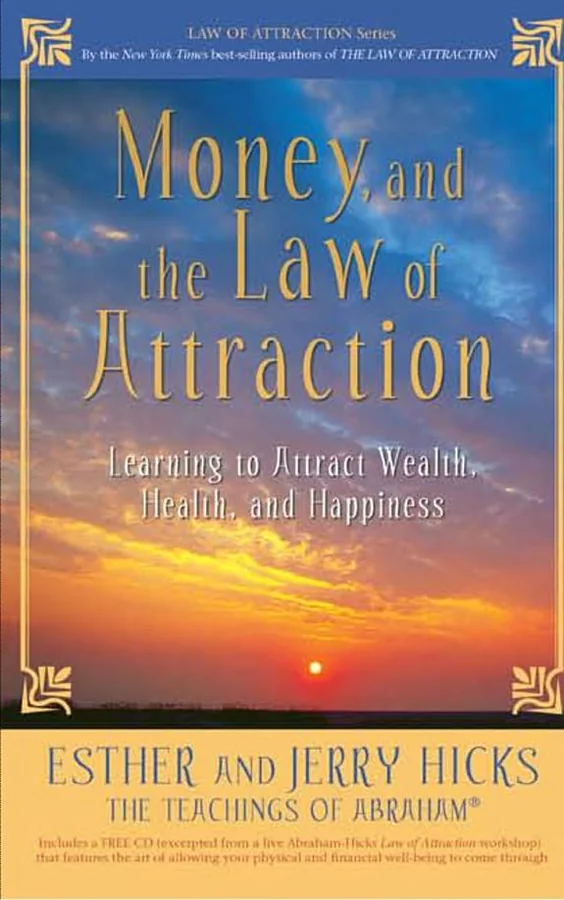
Money, and the Law of Attraction
 80
80

Money, and the Law of Attraction
Esther and Jerry Hicks' "Money, and the Law of Attraction" approaches financial manifestation with a direct, if somewhat repetitive, style inherited from their channeled "Abraham" teachings. The book's strength lies in its unwavering focus on the internal landscape as the primary driver of external financial reality. The concept of "allowing" – releasing resistance to what you desire – is particularly well-articulated, urging readers to stop demanding and start trusting the universal flow. However, the relentless positivity and the sometimes-vague nature of "vibrational alignment" can feel insufficient for those facing concrete, systemic financial barriers. A passage discussing the "feeling of wealth" as a prerequisite for its arrival, while conceptually sound within their framework, might feel abstract to someone struggling with immediate bills. Ultimately, the book offers a potent, albeit spiritually-centric, perspective on wealth creation for those ready to embrace its metaphysical underpinnings.
📝 Description
80
Esther and Jerry Hicks published "Money, and the Law of Attraction" in 2008, detailing principles for financial abundance.
This book lays out a method for attracting financial wealth by aligning personal vibrations with those of abundance. The authors, Esther and Jerry Hicks, argue that thoughts are energetic frequencies and that a shift from scarcity thinking to a mindset of plenty directly influences one's financial reality. The text guides readers on how to identify and release limiting beliefs about money, encouraging a focus on what is desired rather than what is lacking.
The work is intended for individuals who seek to improve their financial circumstances through internal shifts and conscious thought management. It is suitable for those open to metaphysical explanations for material outcomes and who prefer a spiritual approach to wealth accumulation over conventional financial advice. The book encourages practical application of the Law of Attraction principles to manifest financial well-being.
"Money, and the Law of Attraction" is part of the New Thought tradition, which posits that mental and spiritual states are causes of material conditions. The Hicks' work, channeled through Esther Hicks, draws on the Abraham-Hicks material, a body of teachings presented since the late 1980s. This book speaks to a broader interest in the Law of Attraction, a concept suggesting that like attracts like, and its application to personal finance. It emerged during a time of global economic uncertainty, offering a spiritual framework for financial security.
💡 Why Read This Book?
• Gain a unique perspective on wealth creation by understanding the "Law of Attraction" as presented by Esther and Jerry Hicks, focusing on aligning your "vibrational frequency" with abundance. • Learn practical techniques for identifying and transforming "limiting beliefs" about money, a core tenet introduced in their 2008 publication. • Discover how to cultivate the "feeling of wealth" before it manifests physically, a method central to their teachings on "allowing" financial prosperity.
⭐ Reader Reviews
Honest opinions from readers who have explored this book.
❓ Frequently Asked Questions
What is the core principle of "Money, and the Law of Attraction"?
The core principle is the "Law of Attraction," which posits that your thoughts and feelings attract corresponding experiences. The book, published in 2008, teaches that by aligning your "vibrational frequency" with wealth, you can draw financial abundance into your life.
Who are Esther and Jerry Hicks?
Esther and Jerry Hicks were authors and spiritual teachers known for channeling the entity "Abraham." Esther Hicks purportedly receives messages from Abraham, which form the basis of their teachings on the Law of Attraction, first presented in the late 1980s and detailed in books like "Money, and the Law of Attraction" (2008).
How does the book suggest achieving financial well-being?
The book suggests achieving financial well-being by consciously managing your thoughts and emotions to create a positive "vibrational alignment" with money. It emphasizes "allowing" wealth to flow by releasing resistance and focusing on the feeling of abundance.
What does "vibrational alignment" mean in the context of this book?
"Vibrational alignment" refers to the state of matching the energetic frequency of what you desire. In "Money, and the Law of Attraction," it means feeling as though you already possess wealth and abundance to attract it.
Is this book about practical financial planning?
No, "Money, and the Law of Attraction" is not about traditional financial planning, budgeting, or investment strategies. It focuses on the metaphysical and psychological aspects of attracting wealth through conscious thought and emotional state management, as outlined in their 2008 publication.
What is the concept of 'allowing' in this book?
The concept of 'allowing' signifies releasing resistance, doubt, and negative beliefs that block the natural flow of abundance. It means trusting the universe and maintaining a state of positive expectation, as detailed in the Hicks' work.
🔮 Key Themes & Symbolism
Vibrational Frequency and Attraction
The central tenet is that everything, including money, vibrates at a specific frequency. The book posits that by consciously raising one's own "vibrational frequency" to match that of wealth, individuals can attract financial abundance. This involves cultivating positive emotions and thoughts related to money, thereby signaling to the universe what to deliver. The Hicks' work, originating from channeled material, frames this as a fundamental law of existence, akin to gravity, governing the manifestation of all desires, particularly financial ones.
The Power of Emotion in Manifestation
Emotions are presented as the primary indicator of one's "vibrational alignment." The book emphasizes that feeling good, specifically the feeling of already having wealth and security, is crucial for attracting it. Negative emotions like fear, lack, or worry are seen as signals of misalignment, actively repelling financial opportunities. The authors provide guidance on how to shift from negative emotional states to positive ones, thereby "allowing" money to flow into one's experience.
Identifying and Releasing Limiting Beliefs
A significant portion of the book addresses the process of uncovering deeply ingrained "limiting beliefs" about money. These often subconscious thought patterns, formed through past experiences or societal conditioning, are identified as major obstacles to financial manifestation. The Hicks offer methods for recognizing these beliefs and then actively replacing them with empowering affirmations and perspectives that support the desired financial reality, fostering a mindset of inherent deservingness.
The Concept of 'Allowing'
Beyond positive thinking, the concept of "allowing" is critical. It signifies a state of relaxed certainty and trust in the universe's ability to deliver. "Allowing" means ceasing to struggle, worry, or try to control the precise mechanisms of manifestation. It involves letting go of resistance, doubt, and the desperate need for money, trusting that the "Law of Attraction" is actively working once the correct vibrational state is achieved, as explained in their 2008 publication.
💬 Memorable Quotes
Direct passages from the work, attributed to the author.
“Your beliefs are like magnets that attract thoughts that match them.”
— This highlights the core mechanism of the Law of Attraction as presented by the Hicks. It suggests that our ingrained ideas about money act as powerful attractors, drawing in experiences that confirm those beliefs, whether positive or negative.
“You are the creator of your own reality.”
— A foundational statement emphasizing personal agency in manifestation. It asserts that external circumstances, particularly financial ones, are direct results of one's inner state, thoughts, and beliefs, as explored in their channeled teachings.
“Feel the good feeling of your desire now.”
— This captures the practice of "vibrational alignment." The book encourages embodying the emotional state of having already achieved financial goals, believing this emotional resonance is key to attracting the physical manifestation.
“Money is a form of energy.”
— This frames money not as a static commodity but as a dynamic energy flow. Understanding it as energy allows one to engage with it through the principles of vibration and attraction, as detailed in the book's framework.
💡 Key Ideas
Editorial paraphrase of the work's core concepts — not direct quotes.
Stop the struggle and begin to allow.
This paraphrased concept speaks to the "allowing" principle. It suggests that active, anxious striving can create resistance, and a more effective approach involves releasing that tension and trusting the process of attraction.
🌙 Esoteric Significance
Tradition
The work aligns strongly with the New Thought movement, a 19th-century American spiritual movement that emphasizes the power of thought and consciousness in creating reality. It draws heavily from principles found in Christian Science and Unity, but modernizes them with concepts of energetic vibration and universal laws, echoing earlier Hermetic ideas of "As Above, So Below" through a focus on internal states mirroring external conditions.
Symbolism
While not overtly symbolic in the traditional sense, the book's core concepts function symbolically. "Vibration" represents the unseen energetic essence of all things, a common esoteric motif. "Money" itself becomes a symbol for abundance, well-being, and freedom. The act of "allowing" symbolizes a surrender to divine or universal order, moving beyond the ego's frantic control mechanisms, reflecting spiritual disciplines focused on faith and trust.
Modern Relevance
The principles espoused by Esther and Jerry Hicks continue to influence contemporary self-help, manifestation coaching, and spiritual entrepreneurship. Thinkers and practitioners in fields like positive psychology, law of attraction coaching, and even some aspects of quantum mysticism draw inspiration from their accessible explanations of energetic principles and conscious creation.
👥 Who Should Read This Book
• Individuals exploring metaphysical approaches to wealth creation, seeking to understand how their thoughts and emotions might influence financial outcomes. • Practitioners of New Thought or Law of Attraction principles who wish to deepen their understanding of vibrational alignment and "allowing" in relation to abundance. • Seekers of personal development content that bridges spiritual concepts with tangible life improvements, particularly in the field of financial well-being.
📜 Historical Context
The publication of "Money, and the Law of Attraction" in 2008 by Esther and Jerry Hicks occurred within a burgeoning popular fascination with the Law of Attraction, significantly amplified by the 2006 film and book "The Secret." The Hicks' "Abraham-Hicks" material, originating from Esther's channeled messages purportedly from an entity named Abraham since the late 1980s, offered a consistent, albeit spiritualized, interpretation of these principles. Their work tapped into a broader New Thought tradition, which posits that mental and spiritual forces shape material reality. This era saw numerous authors and speakers exploring similar themes, including proponents of "conscious creation" and "manifestation." While "The Secret" brought these ideas to a mass audience, the Hicks provided a more detailed, systemized approach, emphasizing emotional guidance and vibrational alignment. The book's release also coincided with the 2008 global financial crisis, a period where many individuals sought alternative perspectives on wealth and security, potentially increasing the appeal of metaphysical explanations.
📔 Journal Prompts
The feeling of financial freedom you desire: describe its vibrational essence.
Identify three "limiting beliefs" about money that may be blocking your "allowing."
What specific actions feel energetically aligned with attracting wealth today?
Reflect on the "source energy" connection to your financial aspirations.
How does the concept of "vibrational frequency" apply to your current financial situation?
🗂️ Glossary
Law of Attraction
The core principle that "like attracts like." The book teaches that positive or negative thoughts bring corresponding experiences, suggesting that focusing on abundance attracts wealth, while focusing on lack attracts poverty.
Vibrational Alignment
The state of matching your personal energetic frequency with the frequency of your desires (e.g., wealth). The book posits that achieving this alignment is key to manifesting what you want.
Allowing
A state of releasing resistance, doubt, and control, thereby permitting the natural flow of abundance into your life. It involves trusting the "Law of Attraction" and maintaining a positive emotional state.
Source Energy
The underlying universal energy or consciousness from which all things originate. The book suggests that humans are extensions of this energy and can tap into it for creation and well-being.
Limiting Beliefs
Deeply ingrained, often subconscious, ideas or assumptions that restrict one's potential, particularly concerning money. Identifying and releasing these is crucial for manifestation.
Emotional Guidance System
The system of feelings and emotions that indicate whether your thoughts are aligned with your desires. Positive emotions signal alignment; negative emotions signal misalignment.
Physical Focus
The act of directing one's attention and energy towards tangible goals and desired outcomes, such as financial abundance, to facilitate their manifestation.
This book appears in 1 collection
🔮 Readers Also Liked
Browse all →








From the “Law of Attraction” Collection
View all →







More Free Occult Philosophy Books
View all →