An Inconvenient Séance
 80
80

An Inconvenient Séance
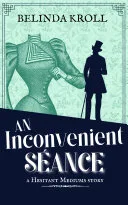
Belinda Kroll’s An Inconvenient Séance offers a brisk, albeit somewhat predictable, excursion into the drawing rooms and spiritualist circles of a bygone era. The premise of Jasper Steele being dragged to a séance by his well-meaning but perhaps overbearing mother, particularly after a romantic setback with Mary Trentwood, is established efficiently. Kroll captures the societal anxieties surrounding marriage and suitability with a light but firm hand. The character of Eloise Carterprice, the opportunistic medium, is a particular highlight, injecting a necessary spark of pragmatism into the spectral proceedings. However, the story’s brevity, while a strength for quick consumption, limits the depth of character exploration and the full development of the spectral elements. The resolution feels somewhat rushed, leaving one wishing for a more extended engagement with the characters' internal states. Nevertheless, for a short story, it provides a diverting glimpse into a curious social practice and its inherent human dramas.
📝 Description
80
Belinda Kroll's "An Inconvenient Séance" (2023) centers on a young man sent to a séance to find a wife.
Published in May 2023, Belinda Kroll's short story "An Inconvenient Séance" follows Jasper Steele, a young man sent to a spiritualist gathering with the explicit goal of finding a wife. This peculiar arrangement stems from his mother's concern over his melancholic state, attributed to a recent romantic rejection in the English countryside. The narrative uses this premise to examine the social customs and pressures of the late Victorian or Edwardian era.
The story is set against a period when spiritualism saw significant popularity in Britain and America, with public figures both championing and investigating its claims. Kroll's work places Jasper within this milieu, where societal expectations regarding marriage for social and financial stability were considerable. The narrative touches on themes of familial obligation, romantic disappointment, and the belief in communication with the deceased.
The story is situated within the historical context of late 19th and early 20th century spiritualism, a movement that gained considerable traction. This era was marked by public fascination with séances and mediumship, attracting both believers, such as Arthur Conan Doyle, and skeptical investigators. "An Inconvenient Séance" taps into this cultural moment, using the practice of spiritualism not only as a plot device but also as a reflection of societal anxieties surrounding communication with the unseen and the search for connection, both spiritual and romantic.
💡 Why Read This Book?
• Gain insight into the societal pressures surrounding marriage and social standing in the late 19th century, as depicted through Jasper Steele's predicament. • Experience the atmosphere of early 20th-century spiritualist séances and the cultural fascination with the afterlife, particularly as portrayed in the interactions with Eloise Carterprice. • Explore the theme of familial obligation versus personal desire, as Jasper navigates his mother's concerns and his own romantic disappointments.
⭐ Reader Reviews
Honest opinions from readers who have explored this book.
❓ Frequently Asked Questions
What is the approximate word count of An Inconvenient Séance?
An Inconvenient Séance is a short story with an approximate word count of 4,000 words.
Who is the author of An Inconvenient Séance?
The author of An Inconvenient Séance is Belinda Kroll.
When was An Inconvenient Séance first published?
An Inconvenient Séance was first published on May 16, 2023.
What is the primary setting for the events in An Inconvenient Séance?
The primary setting involves social gatherings, including a séance, likely within the English countryside context mentioned for Jasper's earlier romantic troubles.
What motivates Jasper Steele to attend the séance?
Jasper Steele primarily attends the séance to appease his mother, who is concerned about his emotional state after being rejected by Mary Trentwood.
What is Eloise Carterprice's role in the story?
Eloise Carterprice is presented as a ghost medium who is adept at seizing opportunities, suggesting she plays a central role in the séance events.
🔮 Key Themes & Symbolism
Spiritualism and Societal Norms
The narrative foregrounds the practice of spiritualism, particularly séances, as a vehicle for both genuine belief and social maneuvering. In an era where marriage was a significant social and economic contract, the idea of seeking a spouse through spectral means, however unconventional, speaks to the desperation and peculiar customs of the time. Jasper's reluctant attendance, driven by his mother's anxieties, highlights the tension between personal inclination and societal or familial duty, with spiritualism serving as the stage for this conflict.
Romantic Disillusionment and Matrimonial Pursuit
Fundamentally, the story examines the aftermath of romantic rejection and the subsequent pressure to find a suitable partner. Jasper Steele's recent disappointment with Mary Trentwood fuels his mother's concern and provides the impetus for his involvement in the séance. This theme reflects the common anxieties of the period regarding eligibility, courtship, and the ultimate goal of securing a marriage, positioning the séance as a desperate, or at least inconvenient, solution to a personal and social problem.
Familial Obligation and Personal Agency
The dynamic between Jasper and his mother underscores the theme of familial obligation. His mother's worry for his 'head and heart' compels him to participate in an activity he clearly finds distasteful. This raises questions about personal agency versus the expectations imposed by family, especially during a period when patriarchal structures often dictated individual choices. The story explores how external pressures can lead individuals into peculiar circumstances, forcing them to confront their own desires and the demands of their lineage.
Opportunism and Deception in Mediumship
The character of Eloise Carterprice introduces the element of opportunism within the spiritualist movement. Her description as someone who 'has never been one to let a good opportunity escape her' suggests a potentially pragmatic, if not entirely honest, approach to her role as a medium. This touches upon the historical debates surrounding the authenticity of spiritualist mediums, hinting at the possibility of charlatanism intertwined with genuine belief and the exploitation of grief or social anxieties for personal gain.
💬 Memorable Quotes
Direct passages from the work, attributed to the author.
“It was a truth universally ignored that sons abhorred being sent to séances in search of a wife.”
— This opening statement immediately establishes the story's ironic tone and Jasper's reluctant position. It critiques the societal expectation that men should participate in such unconventional matchmaking, highlighting the absurdity and inconvenience from the male perspective.
“Jasper Steele has had enough of ghosts to last him a lifetime.”
— This declaration sets up Jasper's initial skepticism and weariness towards the supernatural. It contrasts sharply with his eventual presence at the séance, creating dramatic irony and hinting at the forces compelling him to overcome his aversion.
“Mostly to appease his mother, who worries about his head and his heart.”
— This phrase reveals the underlying motivation for Jasper's attendance: not personal conviction or desire, but familial duty and the desire to alleviate his mother's concerns. It frames his participation as an act of obedience rather than choice.
“Eloise Carterprice has never been one to let a good opportunity escape her.”
— This description of Eloise suggests her character is driven by pragmatism and perhaps a degree of shrewdness. It hints that her role as a medium might be as much about seizing social or financial advantage as it is about genuine spiritual connection.
“his summer in the English countryside getting rejected by Mary Trentwood.”
— This specific detail grounds Jasper's melancholic state in a concrete past event. The mention of the English countryside adds a touch of atmospheric setting, while the rejection by Mary Trentwood provides the immediate catalyst for his current predicament and his mother's intervention.
🌙 Esoteric Significance
Tradition
While not strictly adhering to a formal esoteric tradition, the work engages with the popular spiritualist movement, which emerged as a distinct spiritual practice in the mid-19th century. Spiritualism, with its emphasis on direct communication with discarnate entities, can be seen as a divergence from more structured Hermetic or Kabbalistic traditions, offering a more accessible, albeit often less rigorous, path to perceived otherworldly contact. It represented a democratization of spiritual inquiry outside established religious frameworks.
Symbolism
The séance itself functions as a primary symbol, representing a liminal space between the material and spiritual worlds, and a focal point for both genuine seeking and potential deception. Ghosts, as spectral entities, symbolize lingering attachments, unresolved issues, or messages from beyond. The concept of finding a wife through such means symbolizes the often-absurd lengths to which societal pressures and personal desires can drive individuals, transforming the spiritual into the mundane and inconvenient.
Modern Relevance
Contemporary interest in paranormal investigation, mediumship, and the history of spiritualism keeps the themes of An Inconvenient Séance relevant. Modern spiritual communities and psychical research organizations often draw upon the historical context and societal impact of the 19th-century movement. Thinkers exploring the sociology of belief, the psychology of grief, and the historical intersection of technology and spirituality with phenomena like séances find value in understanding these early manifestations.
👥 Who Should Read This Book
• Readers interested in the history of spiritualism and its cultural impact in the late 19th and early 20th centuries. • Fans of short fiction exploring social customs, familial pressures, and romantic entanglements with a touch of the uncanny. • Individuals seeking a brief, atmospheric narrative that examines the intersection of personal desire and societal expectation in a historical setting.
📜 Historical Context
An Inconvenient Séance is situated within the burgeoning spiritualist movement of the late 19th and early 20th centuries, a period marked by intense interest in the afterlife and communication with spirits. This era, particularly following the high mortality rates of the Victorian era and the First World War, saw figures like Sir Arthur Conan Doyle publicly championing spiritualism. Simultaneously, skepticism was also prevalent, with investigators like Harry Price attempting to debunk fraudulent mediums. The story reflects the societal pressures on young men like Jasper Steele concerning marriage and social standing, a common theme in literature of the period, often explored by authors such as Jane Austen or the Brontë sisters in earlier, non-spiritualist contexts. The narrative taps into the public fascination with séances as both a potential source of solace and a social venue, often blending genuine belief with opportunism.
📔 Journal Prompts
Jasper Steele's aversion to ghosts and séances.
The mother's anxieties regarding Jasper's 'head and heart'.
Eloise Carterprice's opportunistic nature.
The societal pressures of finding a wife in the early 20th century.
The role of the English countryside setting in Jasper's romantic disappointment.
🗂️ Glossary
Séance
A meeting at which people attempt to make contact with the spirit world, typically through a medium. Popularized in the mid-19th century, séances became a significant cultural phenomenon.
Spiritualism
A religious movement based on the belief that the spirits of the dead exist and can communicate with living people through mediums. It gained widespread popularity in the 19th century.
Medium
A person believed to be able to communicate with the spirits of the dead. In the context of spiritualism, mediums often facilitated séances.
Discarnate entities
Beings, typically spirits or souls, that are believed to exist without a physical body. This term is commonly used within spiritualist and parapsychological contexts.
Matrimonial pursuit
The act or process of seeking a spouse. In historical contexts, this often involved navigating social conventions, family expectations, and financial considerations.
Romantic disillusionment
A state of disappointment or loss of belief in romantic ideals, often following a negative personal experience, such as rejection or betrayal.
Familial obligation
A sense of duty or responsibility towards one's family members, often influencing personal decisions regarding career, marriage, and social conduct.