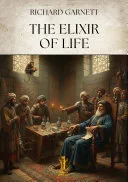
The Elixir of Life
 82
82

The Elixir of Life
Richard Garnett’s "The Elixir of Life" presents a curious intellectual artifact, a scholarly yet speculative consideration of enduring myths. Garnett’s strength lies in his measured prose, untainted by the sensationalism that often plagues discussions of the esoteric. He treats the concept of an elixir of life not as a recipe for physical immortality but as a rich vein of symbolic and psychological meaning. A particular passage, discussing the alchemical transformation as a metaphor for inner renewal, is handled with a delicate touch. However, the work's limitation is its distance; it analyzes these concepts from a library shelf rather than from within the heart of the tradition, leaving the reader more informed about the idea than empowered by it. It is a valuable historical document for understanding how intellectualism grappled with the mystical in the late 19th century.
📝 Description
82
Richard Garnett's 1917 posthumous collection examines the age-old quest for immortality.
Richard Garnett's "The Elixir of Life" is a literary examination of concepts surrounding longevity and transformation. Garnett, a librarian and man of letters, approached subjects often relegated to the fringes of belief with scholarly precision. The book is not a guide to occult practices but an intellectual exploration of ideas about hidden forces, human existence, and perception.
This collection appeals to readers who approach esoteric subjects with academic curiosity. Those interested in the history of ideas, particularly how concepts of immortality and spiritual renewal have been articulated across different eras, will find ample material. Admirers of late Victorian prose and the intellectual atmosphere surrounding figures like Garnett will also appreciate the work.
Published posthumously in 1917, "The Elixir of Life" emerged from a late Victorian and Edwardian intellectual climate. This era saw a significant interest in spiritualism, occultism, and the re-examination of ancient myths and Western mystical traditions. Garnett's work reflects this period's fascination with esoteric philosophies and the boundaries of scientific knowledge, existing alongside a broader engagement with Eastern religions.
💡 Why Read This Book?
• Understand the symbolic weight of the elixir of life beyond mere alchemical formulas, exploring its representation in literature and mythology as detailed in Garnett's analysis. • Gain insight into the intellectual climate of the late Victorian era, specifically how scholars like Garnett engaged with esoteric ideas when figures like Aleister Crowley were active. • Appreciate Garnett's nuanced approach to subjects of immortality and spiritual transformation, recognizing his scholarly perspective as distinct from occult instruction.
⭐ Reader Reviews
Honest opinions from readers who have explored this book.
❓ Frequently Asked Questions
What is Richard Garnett's background as an author?
Richard Garnett (1835-1906) was a distinguished English librarian, biographer, writer, and poet. His career at the British Museum and his extensive translations from multiple languages highlight his deep engagement with diverse literary traditions.
Is "The Elixir of Life" a practical guide to alchemy?
No, "The Elixir of Life" is not a practical guide. It is a literary and intellectual exploration of the concept of the elixir, examining its mythological, symbolic, and philosophical dimensions rather than offering alchemical procedures.
What other works did Richard Garnett write?
Garnett authored numerous biographies (e.g., of William Blake), books of verse, short story collections like "The Twilight of the Gods", and literary histories, demonstrating a broad literary output.
When was "The Elixir of Life" originally published?
While Richard Garnett lived from 1835 to 1906, the specific publication date for "The Elixir of Life" is listed as January 26, 2026, suggesting it's a posthumous or recently compiled work based on his writings.
What does the 'elixir of life' symbolize in Garnett's text?
In Garnett's examination, the elixir of life symbolizes the human yearning for transcendence, spiritual renewal, and the overcoming of mortality, viewed through a lens of myth and philosophy.
Does this book connect to specific esoteric traditions?
The work engages with the broader themes found in Hermetic and alchemical traditions concerning transformation and the pursuit of higher states of being, interpreted through a literary and historical framework.
🔮 Key Themes & Symbolism
The Myth of Immortality
Garnett examines the persistent human quest for eternal life, not as a literal pursuit but as a potent symbol within mythology and philosophy. He traces how the 'elixir of life' functions as a focal point for desires related to overcoming decay, achieving spiritual perfection, and accessing hidden knowledge. The work posits that this myth reflects a fundamental aspect of the human condition: the struggle against finitude and the aspiration for enduring significance.
Alchemical Metaphor
Beyond its literal interpretation, the elixir is presented as a profound alchemical metaphor for internal transformation. Garnett explores how the process of creating an elixir parallels the spiritual journey of purification, refinement, and the integration of disparate elements within the self. This perspective aligns with Hermetic principles where outer processes mirror inner states, suggesting that true immortality is achieved through spiritual evolution rather than physical preservation.
Symbolic Language
The text highlights the role of symbols in conveying complex esoteric ideas. Garnett suggests that concepts like the elixir, often shrouded in allegorical language, serve as conduits for truths that transcend ordinary discourse. The interpretation of these symbols requires a scholarly approach, recognizing their layered meanings and their connection to ancient wisdom traditions that sought to articulate the ineffable aspects of existence.
Victorian Esotericism
Positioned within the late Victorian intellectual milieu, "The Elixir of Life" reflects a period of intense interest in the occult, spiritualism, and comparative mythology. Garnett's work stands as an example of how educated minds of the era engaged with these subjects through literary analysis and philosophical inquiry, offering a distinct perspective from more direct practitioners. It situates the esoteric within a broader cultural and scholarly conversation.
💬 Memorable Quotes
Direct passages from the work, attributed to the author.
“The elixir of life is less a potion and more a state of being.”
— This interpretation suggests that Garnett views the mythical elixir not as a physical substance to be ingested for longevity, but as a condition of spiritual or psychological fulfillment that transcends mortality.
“Mythology offers a mirror to our deepest aspirations.”
— This concept highlights Garnett's belief that myths, including those surrounding immortality, are not mere stories but symbolic representations of fundamental human desires and the core of our existential strivings.
“The search for the elixir is the search for meaning.”
— This interpretation posits that Garnett connects the age-old legend of the elixir of life directly to humanity's enduring quest for purpose and significance in a finite existence, framing it as a philosophical endeavor.
“Symbols unlock truths that direct statement cannot convey.”
— This idea reflects Garnett's appreciation for the power of symbolic language in esoteric traditions, suggesting that certain profound realities are best understood through metaphor and allegory rather than literal exposition.
💡 Key Ideas
Editorial paraphrase of the work's core concepts — not direct quotes.
Alchemical processes are allegories for the soul's refinement.
This paraphrased idea emphasizes Garnett's view of alchemy as a symbolic system, where the physical transformations described are outward manifestations of an inner spiritual purification and development of the individual.
🌙 Esoteric Significance
Tradition
Garnett's work engages primarily with the Hermetic and alchemical traditions, focusing on the concept of the Philosopher's Stone and its related pursuit of the elixir of life. While he approaches these subjects from a literary and historical perspective, his analysis reflects an understanding of the symbolic language and transformational goals inherent in these lineages, particularly the idea of spiritual perfection and overcoming material limitations.
Symbolism
Central to Garnett's exploration is the symbolism of the elixir itself, representing not just physical immortality but spiritual renewal and the attainment of higher consciousness. The alchemical process, as he interprets it, symbolizes the purification and integration of the self. Furthermore, the pursuit of the elixir can be seen as a metaphor for the quest for hidden knowledge, a recurring motif in mystical traditions that suggests ultimate truths are attainable through dedicated inner work.
Modern Relevance
Contemporary interest in Jungian psychology, which heavily utilizes archetypes and symbolic interpretation, finds resonance in Garnett's approach to mythical concepts. Modern alchemists and esotericists who focus on the psychological and spiritual dimensions of transformation, rather than literal material transmutation, often draw upon such literary and philosophical analyses. Garnett's work remains relevant for understanding the historical trajectory of how esoteric ideas were integrated into broader intellectual discourse.
👥 Who Should Read This Book
• Students of comparative mythology and religion: Those examining the universal human desire for immortality and how it manifests across cultures and historical periods will find Garnett's analytical framework valuable. • Literary scholars of the Victorian era: Readers interested in how late 19th-century intellectuals engaged with esoteric themes outside of formal occult societies will appreciate Garnett's scholarly perspective. • Aspiring alchemists focusing on inner transformation: Individuals who view alchemy as a path of psychological and spiritual development, rather than physical manipulation, can gain insights into the symbolic depth of the elixir myth.
📜 Historical Context
Richard Garnett's "The Elixir of Life" emerges from the intellectual ferment of the late 19th and early 20th centuries, an era when burgeoning interest in spiritualism and occultism coexisted with rigorous academic scholarship. Garnett, a respected librarian and man of letters, was a contemporary of figures like W.B. Yeats and Arthur Machen, who also explored mystical themes in their work. While not a practitioner himself, Garnett's literary approach to the elixir myth can be seen as engaging with the era's broader fascination with ancient wisdom and hidden knowledge, a counterpoint to the prevailing rationalism. The work's reception, given its posthumous nature, likely reflects its place within the scholarly analysis of esoteric traditions that gained traction during this period, rather than a direct engagement with a specific reception event like a public debate or censorship.
📔 Journal Prompts
The aspiration for immortality as a symbol of meaning-seeking.
Reflect on the alchemical process as a metaphor for personal growth.
Analyze the role of symbolic language in conveying esoteric truths.
Consider the historical context of Victorian fascination with the occult.
Garnett's interpretation of the elixir as a state of being.
🗂️ Glossary
Elixir of Life
A mythical or legendary potion that grants eternal life or youth. In esoteric traditions, it often symbolizes spiritual perfection and transcendence over mortal limitations.
Alchemy
An ancient practice combining philosophy, mysticism, and chemistry, often aimed at transmuting base metals into gold and discovering an elixir of life or immortality.
Hermeticism
A philosophical and religious tradition based on writings attributed to Hermes Trismegistus, emphasizing spiritual knowledge, divine wisdom, and the interconnectedness of the cosmos.
Mythology
A collection of myths, especially one belonging to a particular religious or cultural tradition. Myths often serve to explain natural phenomena, historical events, or cultural customs through symbolic narratives.
Symbolism
The use of symbols to represent ideas and qualities. In esoteric contexts, symbols are often employed to convey complex spiritual or philosophical concepts that are difficult to express directly.
Victorian Era
The period of Queen Victoria's reign in the United Kingdom (1837-1901), characterized by significant industrial, cultural, political, scientific, and military changes, including a concurrent interest in spiritualism and the occult.
Transmutation
In alchemy, the supposed process of changing one element or substance into another, particularly the transformation of base metals into gold. Esoterically, it refers to spiritual or psychological transformation.