Ceremonies for Change
 83
83

Ceremonies for Change
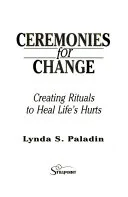
Lynda Paladin’s 1991 text, Ceremonies for Change, offers a refreshingly direct approach to personal ritual. Its strength lies in the tangible nature of the 24 removable ceremonial cards, a clever inclusion that moves the practice from abstract theory to hands-on application. The book guides the reader through constructing personal ceremonies for life's junctures, a valuable endeavor often overlooked in contemporary self-help. However, the prose occasionally leans towards the earnest, lacking a certain critical distance that might have elevated its analytical depth. A particularly insightful section details the construction of a 'Threshold Ceremony,' emphasizing the symbolic act of passing from one life phase to another. Ultimately, it serves as a competent, if somewhat earnest, manual for ritualistic self-crafting.
📝 Description
83
Lynda Paladin's 1991 book, Ceremonies for Change, offers practical ritual-making for life transitions.
Ceremonies for Change, published in 1991, provides a practical guide to using ritual and ceremony for personal life transitions. Lynda Paladin presents these practices not as obscure arts, but as accessible methods for acknowledging and integrating change. The book's central idea is empowering individuals to create their own personalized rituals, allowing them to actively engage with significant personal shifts. It moves beyond abstract ideas to offer concrete techniques for navigating moments of substantial personal flux.
This book is for anyone undergoing major life changes, whether chosen or imposed. It suits those seeking a personal yet structured way to mark these shifts, moving beyond impersonal social markers. Individuals interested in applying esoteric principles to daily life, especially during periods of growth or difficulty, will find its advice useful. It also serves as a resource for facilitators and counselors assisting clients through transitions.
Published in 1991, Ceremonies for Change appeared during a time of growing interest in personal development and alternative spiritualities. It emerged from a cultural shift that favored individual empowerment and experiential spirituality, diverging from more traditional religious structures. Paladin's work offered tangible ritualistic tools, distinct from academic or theoretical occult writings. The book's inclusion of physical, detachable cards was a notable tactile feature, made more significant by the pre-digital era of its publication.
💡 Why Read This Book?
• Gain practical, step-by-step instructions for crafting personalized rituals using the 24 removable ceremonial cards, enabling you to actively mark and integrate significant life changes. • Understand the psychological and spiritual benefits of ritualistic acknowledgment of transitions, a concept explored thoroughly within the book's framework for personal growth. • Discover how to imbue everyday events and significant life passages with personal meaning through accessible ceremonial practices, as detailed in Paladin's guide.
⭐ Reader Reviews
Honest opinions from readers who have explored this book.
❓ Frequently Asked Questions
What is the primary purpose of the ceremonial cards in Lynda Paladin's book?
The 24 removable ceremonial cards provide structured yet adaptable templates for individuals to create personalized rituals. They offer detailed instructions, making it easier to design unique ceremonies for various life occasions and challenging transitions.
When was Ceremonies for Change first published and what was the cultural climate?
The book was first published in 1991, a period influenced by the New Age movement, which saw a rise in interest in personal empowerment and experiential spirituality, making Paladin's practical approach to ritual particularly relevant.
Can these ceremonies be adapted for non-traditional life events?
Yes, the book emphasizes personalization. The adaptable nature of the ceremonial cards allows users to tailor rituals not just for traditional milestones but also for unique personal challenges and achievements.
Is this book suitable for beginners in ritualistic practice?
Absolutely. Paladin's approach is designed for accessibility, moving beyond complex esoteric traditions to offer straightforward methods for creating meaningful ceremonies, even for those with no prior experience.
What kind of life changes does the book address?
The book addresses a wide spectrum of changes, from significant personal milestones like career shifts or relationship endings to more subtle, yet impactful, internal transformations that individuals wish to acknowledge.
What makes the ceremonial cards unique?
The cards are unique due to their removable nature and detailed instructions, designed to empower the user to construct deeply personal rituals. They serve as a tangible guide, simplifying the process of ritual creation for life's varied passages.
🔮 Key Themes & Symbolism
Personalized Ritual Creation
The core of Paladin's work lies in empowering individuals to become architects of their own rites. Through the 24 removable ceremonial cards, users are guided to construct unique ceremonies tailored to their specific life events and personal narratives. This moves beyond prescribed dogma, emphasizing the efficacy of self-designed ritual in acknowledging and integrating change. The book provides a framework that respects individual experience, making the process of ritualization accessible and deeply meaningful.
Ritual as a Tool for Transition
Ceremonies for Change posits ritual as a vital psychological and spiritual tool for navigating life's inevitable shifts. By formally marking transitions—whether joyous or challenging—individuals can process experiences more effectively. The book suggests that these structured moments provide a sense of order and control amidst flux, aiding in the integration of new phases of life and fostering personal growth. It highlights the power of symbolic action in solidifying internal shifts.
The Power of Symbolic Action
The book underscores the significance of symbolic action in personal development. It argues that engaging in ceremonial acts, even simple ones, allows individuals to externalize internal states and intentions. This externalization can solidify personal resolve, facilitate emotional release, and create tangible markers of progress. The ceremonial cards serve as catalysts for this, prompting users to select and enact symbols that resonate with their personal journey.
Accessible Esoteric Practice
Paladin's approach democratizes ritualistic practice, making it accessible outside of traditional or highly specialized esoteric circles. By focusing on the universal human need to mark significant moments, the book offers a practical entry point for those interested in metaphysical tools without requiring prior deep knowledge. The emphasis is on personal empowerment and the inherent spiritual capacity within each individual to engage with ceremonial forms.
💬 Memorable Quotes
Direct passages from the work, attributed to the author.
“Ceremony is a way of making the invisible visible.”
— This highlights the book's central thesis: rituals serve to manifest internal states, intentions, and transitions into observable, tangible forms, aiding in their acknowledgment and integration.
“The cards are not a rigid script, but a flexible guide.”
— This emphasizes the user-centric approach of the book, stressing that the provided ceremonial cards are tools for personal adaptation, not absolute rules to be followed inflexibly.
“Personal meaning is the engine of effective ceremony.”
— This interpretation underscores the book's belief that the power of a ritual derives from the individual's subjective investment and personal resonance with the symbolic actions involved.
“Coping with change requires active participation, not passive acceptance.”
— This captures Paladin's call to action, positioning ceremonial practice as an active method for engaging with and processing life transitions, rather than merely enduring them.
💡 Key Ideas
Editorial paraphrase of the work's core concepts — not direct quotes.
Marking a threshold ceremony helps bridge the past and the future.
This paraphrased concept illustrates the book's focus on transitional rituals, suggesting that formal acts of passage help individuals consciously move from one life stage to another.
🌙 Esoteric Significance
Tradition
While not strictly adhering to a single lineage, Ceremonies for Change draws implicitly from Western Esotericism's emphasis on practical magic and ritual as tools for personal transformation. It aligns with a modern, often eclectic, approach that seeks to adapt ancient principles for contemporary psychological and spiritual needs. Its focus on personal empowerment and self-created rites departs from more traditional, hierarchical models, reflecting a broader trend in late 20th-century esoteric thought towards individual agency.
Symbolism
The book utilizes symbols primarily through the adaptable framework of its ceremonial cards. While specific symbols aren't rigidly defined, the act of creating a ceremony implies the selection of elements that hold personal symbolic weight—perhaps a candle for illumination, water for emotional flow, or a specific direction for intention setting. The overarching symbolism lies in the act of 'transition' itself—the threshold between states of being—which is central to many shamanic and mystery traditions.
Modern Relevance
In contemporary practice, Paladin's work finds echoes in modern mindfulness, coaching, and therapeutic modalities that incorporate ritualistic elements. Thinkers and practitioners focusing on somatic experiencing, grief work, and life-cycle transitions often employ similar principles of symbolic action and personalized ceremony. The book's emphasis on creating personal meaning through ritual remains relevant for individuals seeking structured ways to work through the accelerating pace of change in the 21st century.
👥 Who Should Read This Book
• Individuals experiencing significant life changes (e.g., career shifts, relationship endings, personal milestones) who seek a structured yet personal method for acknowledgment and integration. • Practitioners interested in the practical application of esoteric principles to everyday life, particularly those who value self-designed rituals over prescribed dogma. • Therapists, counselors, or group facilitators looking for accessible tools to help clients or members navigate personal transitions and mark significant life passages.
📜 Historical Context
Lynda Paladin's Ceremonies for Change, published in 1991, emerged during a fertile period for self-directed spiritual and psychological exploration. The late 20th century saw a significant cultural shift away from institutionalized religion toward more personalized spiritual practices, heavily influenced by the New Age movement. This era fostered an environment receptive to works that empowered individuals to create their own meaning and rituals. Paladin's approach, emphasizing practical application through the 24 ceremonial cards, offered a tangible alternative to the more theoretical or academically focused occult and esoteric literature. While contemporaries like Starhawk were exploring ritual within more established pagan traditions, Paladin’s work carved a niche by focusing on the universal applicability of ceremony for personal life transitions, irrespective of specific spiritual affiliations. The book’s publication predates the widespread internet, making its physical, interactive component—the removable cards—a key feature distinguishing it from purely textual resources.
📔 Journal Prompts
The concept of a 'threshold ceremony' and its role in personal progression.
Personal interpretation of the symbolism inherent in the 24 ceremonial cards.
How to integrate the practice of 'personal meaning' into existing life events.
Reflecting on a past transition that could have benefited from a structured ceremony.
The distinction between passive acceptance and active participation in change.
🗂️ Glossary
Ceremonial Cards
Removable cards included with the book, offering structured yet adaptable instructions for creating personalized rituals to mark life events and transitions.
Personal Change
Significant alterations in an individual's life circumstances, identity, or perspective that necessitate acknowledgment and integration.
Life Transition
A period of significant change or passage in an individual's life, often marked by emotional, psychological, or social shifts.
Ritual
A sequence of activities involving symbolic actions performed according to a prescribed order, used here as a tool for personal acknowledgment and integration.
Threshold Ceremony
A type of ritual designed to formally mark the passage from one phase of life or state of being to another.
Symbolic Action
An act performed within a ritual that carries deeper meaning beyond its literal execution, representing internal states or intentions.
Personal Narrative
The individual's unique story and interpretation of their life experiences, which Paladin encourages integrating into ceremony.
This book appears in 1 collection
🔮 Readers Also Liked
Browse all →








From the “Affirmations” Collection
View all →





More Free Occult Philosophy Books
View all →