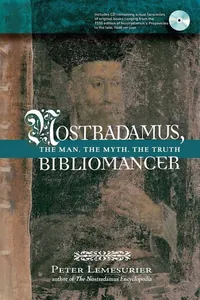
The Nostradamus encyclopedia

 81
81

The Nostradamus encyclopedia
Peter Lemesurier’s "The Nostradamus Encyclopedia" is less an encyclopedia and more a meticulously argued case study. It eschews the typical sensationalism surrounding Nostradamus, presenting instead a scholarly dissection of the quatrains. Lemesurier’s strength lies in his rigorous analysis of the original French text and his grounding of interpretations in historical context, particularly the political and astrological milieu of 16th-century France. One memorable section meticulously traces how specific prophecies have been retroactively applied to events like the French Revolution, demonstrating the malleability of the text. However, the sheer density of the analysis can sometimes feel overwhelming, demanding significant reader investment. A limitation is its occasional dryness, which might deter those seeking quick answers or dramatic predictions. Despite this, it serves as an indispensable resource for anyone wishing to understand the scholarly debates surrounding Nostradamus, moving beyond popular myth. It is a critical tool for serious inquiry.
📝 Description
81
Peter Lemesurier's 1997 encyclopedia examines Nostradamus's quatrains and their historical impact.
This extensive compendium analyzes the life, prophecies, and historical impact of Michel de Nostredame, the 16th-century astrologer known as Nostradamus. It compiles and analyzes his quatrains, offering context for their creation and tracing interpretations that have developed over centuries. The work serves as both a reference guide and an analytical tool for understanding this enigmatic prophetic figure. It is aimed at serious researchers of esoteric history, prophecy, and the Renaissance period. The book appeals to those seeking a scholarly approach to Nostradamus, including students of occult philosophy, historians of ideas, and individuals interested in predictive literature. It caters to readers who appreciate detailed analysis and historical grounding.
Lemesurier's work engages with the long tradition of Nostradamus scholarship, which dates back to the immediate aftermath of his death in 1566. It addresses ongoing debates surrounding the authenticity and interpretation of his prophecies, contrasting analytical approaches with more speculative claims. The core of this work revolves around the analysis of Nostradamus's quatrains, presented in their original French. Lemesurier examines the astrological underpinnings of the prophecies, the historical events that may have inspired them, and the linguistic devices employed by Nostredame. It also tackles the complex issue of translation and the subsequent layering of interpretive frameworks applied to the prophecies.
Published in 1997, this book engages with the long tradition of Nostradamus scholarship, a field with roots stretching back to the 16th century. It emerged during a period of renewed interest in esoteric subjects, often contrasting academic analysis with the more speculative claims prevalent in popular culture. The work addresses the enduring debates surrounding the authenticity and interpretation of prophetic texts, a common concern within esoteric studies. It situates Nostradamus within a lineage of figures whose writings have been subjected to continuous analysis and reinterpretation.
💡 Why Read This Book?
• Gain a scholarly perspective on Nostradamus's quatrains, moving beyond popular myth by examining the original French text and the astrological influences present in his work. • Understand the historical context of 16th-century France and the intellectual currents that shaped Nostredame's worldview, as detailed in the analysis of his life and times. • Learn to critically evaluate prophetic interpretations by exploring how specific quatrains, such as those concerning the French Revolution, have been historically applied and reinterpreted.
⭐ Reader Reviews
Honest opinions from readers who have explored this book.
❓ Frequently Asked Questions
What is the original language of Nostradamus's prophecies?
The prophecies, known as quatrains, were originally written in French. Peter Lemesurier's "The Nostradamus Encyclopedia" emphasizes the importance of consulting these original texts to avoid misinterpretations that can arise during translation.
When did Nostradamus live and publish his prophecies?
Michel de Nostredame lived from 1503 to 1566. His most famous work, "Les Propheties," containing the quatrains, was first published in 1555, with subsequent editions appearing during his lifetime and after his death.
Does "The Nostradamus Encyclopedia" focus on modern interpretations?
While it acknowledges modern interpretations, the book primarily focuses on historical context, astrological influences, and linguistic analysis of the original quatrains, offering a scholarly approach rather than speculative predictions.
What astrological elements are discussed in relation to Nostradamus's prophecies?
The encyclopedia explores the astrological charts and celestial events that Nostradamus likely used as inspiration or framework for his prophecies, connecting his work to the astronomical knowledge of the 16th century.
Is this book suitable for beginners interested in Nostradamus?
While comprehensive, the book's scholarly depth and detailed analysis might be challenging for absolute beginners. It is best suited for readers with a serious interest in historical prophecy and esoteric studies who appreciate in-depth research.
What makes Peter Lemesurier's approach different from other Nostradamus books?
Lemesurier's approach is distinguished by its critical, scholarly tone, its emphasis on the original French text, and its attempt to situate Nostradamus within his specific historical and intellectual milieu, rather than solely focusing on sensational predictions.
🔮 Key Themes & Symbolism
The Quatrains Deciphered
This section delves into the structure and language of Nostradamus's prophetic verses, the quatrains. It examines their poetic form, often four-line stanzas, and the deliberate ambiguity used by Nostredame. The work scrutinizes the original French, highlighting how word choices and phrasing contribute to the enduring mystery and varied interpretations. It explores the concept of the 'Great Almanac' from which many quatrains are drawn, and how they were intended to be understood within the context of 16th-century astrological practice and political commentary, rather than as literal future predictions.
Astrology and Prophecy
A significant theme is the deep connection between Nostradamus's prophecies and the astrological knowledge of his era. The book investigates how celestial observations, planetary alignments, and zodiacal interpretations informed his predictions. It discusses the use of almanacs and ephemerides, common tools for prognosticators in the 16th century, and how Nostredame likely integrated astronomical data into his cryptic verses. This exploration aims to demystify the prophetic process by grounding it in the scientific and divinatory practices prevalent during the Renaissance.
Historical Application and Interpretation
This theme addresses the long history of interpreting Nostradamus's quatrains, particularly in relation to significant historical events. The encyclopedia critically examines how prophecies have been retroactively applied to occurrences ranging from the rise of Napoleon to the Second World War and beyond. It analyzes the methods and motivations behind these interpretations, often highlighting how political and social contexts influence the reading of the verses, and how later events have been forced to fit the prophetic mold.
Nostradamus's Life and Times
Understanding the prophecies requires an appreciation of Nostredame's own life and the turbulent 16th century in France. This theme explores his background as a physician, his experiences during periods of plague, and his interactions with the French court. It situates his work within the intellectual climate of the Renaissance, a period marked by both burgeoning humanism and persistent belief in astrology and divination. The book aims to provide a biographical and historical foundation for assessing his prophetic writings.
💬 Memorable Quotes
“The quatrains are not a simple, linear prediction of future events.”
— This statement underscores the work's central argument that Nostradamus's verses are complex, multi-layered, and subject to diverse interpretations, rather than a straightforward roadmap of history.
“Nostradamus's astrological knowledge was integral to his method.”
— This highlights the book's focus on the scientific and divinatory tools of the 16th century, positioning astrology not as superstition, but as a key framework for understanding the composition of the prophecies.
“Many interpretations are shaped by the events they seek to explain.”
— This reflects the critical analysis of how historical events are often retroactively matched with quatrains, suggesting that the interpretation is frequently a product of hindsight rather than a direct reading of the text.
“The original French text holds keys to understanding the ambiguities.”
— This emphasizes the importance of linguistic precision and scholarly engagement with the source material, cautioning against relying solely on translations that may obscure original nuances.
“Nostredame wrote within the intellectual currents of the Renaissance.”
— This frames the prophecies within their specific historical and cultural context, suggesting that they are best understood as a product of their time, influenced by contemporary beliefs and knowledge.
🌙 Esoteric Significance
Tradition
Lemesurier's work engages with the Hermetic and Neoplatonic currents prevalent in Renaissance thought, which sought to understand the cosmos through symbolic and divinatory means. While not strictly adhering to a single esoteric lineage, the book acknowledges the Renaissance worldview where astrology, alchemy, and prophecy were integrated. It positions Nostradamus not as a purely mystical seer, but as an intellectual operating within a framework where celestial events held profound meaning, reflecting a broader European tradition of seeking hidden knowledge.
Symbolism
The quatrains themselves are rich with symbolic language, often drawing from astrological imagery (planets, constellations, eclipses) and classical mythology. Lemesurier's analysis often points to the symbolic weight of certain recurring motifs, such as 'fire from the sky' or references to specific animalistic or heroic archetypes, suggesting these were intended to evoke broader archetypal meanings rather than literal occurrences.
Modern Relevance
Contemporary esoteric practitioners and scholars of Western esotericism continue to reference Lemesurier's critical approach to Nostradamus. His work provides a valuable counterpoint to more uncritical or sensationalist popularizations, offering a foundation for understanding the historical and linguistic nuances of the prophecies. Thinkers interested in the history of divination, predictive systems, and the intersection of science and spirituality in earlier eras find his detailed analysis relevant.
👥 Who Should Read This Book
• Aspiring historians of esotericism and Renaissance studies seeking a scholarly foundation for understanding prophetic traditions. • Critical thinkers interested in analyzing symbolic language and historical interpretation, particularly concerning predictive texts. • Researchers of Western occult philosophy who wish to move beyond popular myths and engage with the source material and its historical context.
📜 Historical Context
Published in 1997, "The Nostradamus Encyclopedia" emerged during a period of intense popular fascination with prophecy and the occult, yet Lemesurier's work stands apart for its scholarly rigor. The late 20th century saw numerous books sensationalizing Nostradamus, often divorcing his quatrains from their original context. Lemesurier’s approach is a direct counterpoint to this trend, engaging with the intellectual climate of the 16th century when Nostradamus was active. He draws upon the legacy of Renaissance humanism and astrology, fields often viewed with skepticism by mainstream academia at the time. The book implicitly engages with the ongoing debate between esoteric interpretations and historical-critical analysis, a tension present since scholars first examined Nostredame's work shortly after his death in 1566. While not citing specific contemporary authors who engaged directly with Lemesurier's 1997 publication, the work is a response to the broader body of Nostradamus scholarship that has existed since the publication of "Les Propheties" in 1555.
📔 Journal Prompts
The astrological underpinnings of Nostradamus's quatrains, as explored in the text.
Ambiguity in prophetic language and its impact on interpretation.
The historical context of 16th-century France and Nostredame's life.
Retroactive application of prophecies to historical events.
The role of translation in shaping our understanding of "Les Propheties."
🗂️ Glossary
Quatrain
A stanza of four lines, specifically referring to the four-line verses in which Nostradamus wrote his prophecies. These are the primary subject of analysis in the book.
Almanac
A publication containing astronomical data, calendars, and often astrological predictions or weather forecasts. Nostradamus produced several almanacs, which are linked to his prophetic quatrains.
Astrology
The study of the movements and relative positions of celestial bodies, interpreted as having an influence on human affairs and the natural world. Central to understanding Nostradamus's predictive methods.
Renaissance
The period in European history, roughly from the 14th to the 17th century, marked by a revival of classical art, architecture, literature, and learning. Nostradamus lived and worked during this era.
Les Propheties
The French title of Nostradamus's major work, first published in 1555, containing the collection of quatrains that have made him famous.
Ephemeris
A table or document listing the precise positions of celestial bodies for each day over a period of time. Essential for astrological calculations.
Hermeticism
A philosophical and religious tradition based on writings attributed to Hermes Trismegistus, emphasizing esoteric knowledge and the interconnectedness of the cosmos. Influential during the Renaissance.