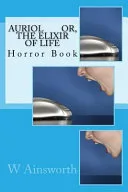
Auriol Or, the Elixir of Life
 80
80

Auriol Or, the Elixir of Life
The premise of *Auriol, or The Elixir of Life* is immediately intriguing, promising a deep dive into the alchemical obsession that has captivated thinkers for centuries. Ainsworth’s depiction of Auriol’s descent into the pursuit of immortality, particularly his willingness to sacrifice moral integrity, forms the narrative's strongest element. The psychological strain of this quest is palpable, rendered with a certain grim intensity that suits the Gothic atmosphere. However, the plot occasionally becomes entangled in its own complexities, with certain narrative threads feeling underdeveloped or resolved too conveniently, detracting from the otherwise potent exploration of ambition's dark side. A standout moment involves Auriol’s encounter with the spectral guardians of alchemical secrets, a scene that masterfully blends horror with philosophical inquiry. Ultimately, *Auriol* offers a compelling, if sometimes uneven, examination of humanity's oldest desires and their perilous consequences.
📝 Description
80
W. Harrison Ainsworth published *Auriol, or The Elixir of Life* in 1847, a Gothic novel about an alchemist's quest for immortality.
W. Harrison Ainsworth's 1847 novel, *Auriol, or The Elixir of Life*, charts the consuming ambition of its titular character, Auriol. His relentless pursuit of the alchemical secret to eternal life leads him into moral compromise and existential peril. The narrative structure itself often reflects the convoluted nature of Auriol's quest, presenting a series of trials that challenge his resolve and his very humanity.
This work is suited for readers who appreciate the atmospheric dread and complex plotting common in 19th-century horror and occult fiction. Those intrigued by historical fascinations with alchemy, the philosopher's stone, and the ethical questions surrounding such endeavors will find much to consider. It also examines the psychological toll of obsession, particularly when directed toward transcending natural human limits. Readers expecting overt horror may find the pacing deliberate, but those who enjoy slowly building tension and internal conflict will be rewarded.
Published in the mid-19th century, *Auriol* engages with a literary environment rich in Gothic traditions and a growing interest in occultism and pseudoscience. This period saw scientific advancement alongside persistent undercurrents of spiritualism and esoteric inquiry. Ainsworth positions the alchemical quest not just as a fantastical pursuit but as a metaphor for humanity's drive to overcome natural limitations, echoing themes found in contemporaries who explored forbidden knowledge and psychological torment.
💡 Why Read This Book?
• Gain insight into the historical fascination with alchemy and immortality, exploring concepts central to Hermetic philosophy as depicted in the narrative's focus on the Elixir of Life. • Experience a psychological exploration of obsession, understanding the moral compromises Auriol makes in his relentless pursuit of transcending natural human limitations. • Appreciate the Gothic literary style of the mid-19th century, particularly Ainsworth's treatment of themes prevalent during an era of scientific change and esoteric interest.
⭐ Reader Reviews
Honest opinions from readers who have explored this book.
❓ Frequently Asked Questions
What is the primary theme explored in Auriol, or The Elixir of Life?
The primary theme is the human obsession with achieving immortality and the profound moral and psychological consequences that arise from the relentless pursuit of the alchemical Elixir of Life.
Who was W. Harrison Ainsworth and when did he live?
William Harrison Ainsworth was an English novelist born in 1805 and died in 1882, known for his historical romances and Gothic tales. *Auriol* was first published in 1846.
What is the Elixir of Life in the context of alchemy?
In alchemical traditions, the Elixir of Life is a legendary potion said to grant immortality, eternal youth, or the ability to cure all diseases. Its pursuit is a central motif in *Auriol*.
Does the book contain supernatural elements?
Yes, the novel incorporates supernatural elements and Gothic horror tropes, reflecting the esoteric and mystical interests prevalent in its 19th-century context. These often serve to externalize Auriol's internal struggles.
Is Auriol, or The Elixir of Life considered a classic of occult literature?
While not always classified as primary occult literature, its exploration of alchemical quests, immortality, and the darker aspects of human ambition places it within the broader spectrum of esoteric and Gothic fiction that engages with such themes.
What kind of reader would enjoy this book?
Readers who appreciate 19th-century Gothic novels, historical fiction with esoteric themes, and psychological explorations of obsession and ambition would find *Auriol* engaging.
🔮 Key Themes & Symbolism
The Alchemical Quest
The novel centers on the arduous and morally compromising quest for the Elixir of Life, a concept deeply rooted in Hermeticism and historical alchemy. This pursuit is not merely a plot device but a metaphor for humanity's insatiable desire for transcendence, control over mortality, and the acquisition of forbidden knowledge. Ainsworth portrays this quest as a consuming force that distorts judgment and erodes ethical boundaries, leading the protagonist, Auriol, through a series of trials that test his very soul and his adherence to natural laws.
Obsession and Its Consequences
Auriol's relentless drive for immortality serves as a potent study in obsession. The narrative meticulously details how this singular focus consumes his life, alienates him from conventional morality, and ultimately isolates him. The book explores the psychological toll of such an all-encompassing ambition, illustrating how it can warp perception, foster ruthlessness, and lead to existential despair. This theme speaks to the Faustian archetype, where the pursuit of ultimate power or knowledge comes at an incalculable personal cost.
Mortality and Existential Dread
Underpinning the alchemical quest is a profound engagement with the human condition of mortality. Auriol's fear of death and his desperate attempt to overcome it highlight a universal existential dread. The novel questions the desirability of eternal life when it requires the sacrifice of one's humanity and spiritual integrity. It suggests that true fulfillment might lie not in transcending natural limits but in confronting and accepting the finite nature of human existence, a perspective often explored in esoteric philosophies concerning acceptance and spiritual evolution.
The Price of Forbidden Knowledge
The pursuit of the Elixir of Life is framed as an endeavor into forbidden knowledge, a domain where human ambition clashes with natural or divine order. Ainsworth examines the ethical implications of seeking such ultimate secrets, portraying the knowledge gained as inherently dangerous and corrupting. This reflects a common trope in occult and philosophical literature, where certain truths are deemed too potent for human minds or wills, leading to ruin rather than enlightenment for those who grasp them prematurely or unworthily.
💬 Memorable Quotes
Direct passages from the work, attributed to the author.
“The thirst for life, the horror of death, is the great parent of all our virtues and all our vices.”
— This statement posits that the fundamental human drives for survival and the fear of oblivion are the root causes of both our noblest actions and our most profound transgressions. It suggests that the quest for immortality, as pursued by Auriol, is an extreme manifestation of this core human dilemma.
“The alchemist who seeks the golden stone must first purify his own soul.”
— This aphorism reflects a key tenet in genuine alchemical philosophy, where the inner transformation of the practitioner is seen as a prerequisite for achieving the Great Work. It suggests that external goals like immortality are secondary to, or dependent upon, internal spiritual development.
“He found that the greatest obstacle to his ambition was not the secrets of nature, but the limitations of his own spirit.”
— This interpretation points to the internal struggles that hinder Auriol's progress. It suggests that the true barriers to achieving his goals are his own moral weaknesses, psychological frailties, and spiritual immaturity, rather than external challenges.
“The shadow of the grave is long, and it falls even upon the gilded halls of eternal life.”
— This metaphorical statement implies that even the attainment of immortality, as envisioned by Auriol, cannot truly escape the fundamental realities of existence or the potential for spiritual death. It suggests that true peace or fulfillment may remain elusive, regardless of physical longevity.
💡 Key Ideas
Editorial paraphrase of the work's core concepts — not direct quotes.
To live forever is to be forever young, forever beautiful, forever powerful.
This quote captures the alluring promises of the Elixir of Life. It highlights the materialistic and ego-driven aspects of Auriol's ambition, focusing on superficial perfections and dominance rather than wisdom or spiritual attainment.
🌙 Esoteric Significance
Tradition
The work draws heavily from the Western esoteric tradition, particularly from alchemical symbolism and Hermetic philosophy. It engages with the historical pursuit of the Philosopher's Stone and the Elixir of Life, concepts central to the alchemical quest for material and spiritual perfection. While Ainsworth's narrative approach is largely fictional and Gothic, it reflects the era's fascination with these ancient traditions and their purported ability to unlock profound secrets of existence, including longevity and transformation.
Symbolism
Key symbols include the Elixir of Life itself, representing immortality and perfected existence, and the alchemical laboratory, a space of transformation and hidden knowledge. The narrative also employs the motif of the spectral or demonic tempter, common in Faustian tales, embodying the corrupting influence of forbidden knowledge and ambition. The journey or quest motif signifies the arduous path of spiritual and material transmutation required in alchemical practices.
Modern Relevance
Contemporary interest in *Auriol* often stems from its exploration of themes relevant to modern New Age spirituality, transhumanism, and the ongoing cultural fascination with longevity and life extension. The novel's psychological portrayal of obsession and the ethical quandaries of seeking ultimate power continue to resonate with discussions in psychology and philosophy concerning ambition and the human condition.
👥 Who Should Read This Book
• Students of 19th-century Gothic and occult literature seeking to understand how authors like Ainsworth engaged with esoteric themes during a period of scientific upheaval. • Enthusiasts of alchemical lore and Hermetic philosophy interested in fictional explorations of the quest for the Elixir of Life and its symbolic representations. • Readers drawn to psychological narratives that examine the destructive power of obsession and the moral compromises made in the pursuit of forbidden knowledge.
📜 Historical Context
W. Harrison Ainsworth penned *Auriol, or The Elixir of Life* in 1846, a period when Victorian England was navigating a complex cultural landscape. Scientific advancements like Darwin's theories were beginning to challenge traditional beliefs, yet there was a concurrent surge of interest in spiritualism, mesmerism, and esoteric philosophies. Gothic literature, with its penchant for the supernatural and the macabre, remained highly popular, building on the foundations laid by authors such as Ann Radcliffe and Horace Walpole. Ainsworth's work fits within this tradition, blending historical romance with elements of occult mystery. Contemporaries like Charles Dickens explored social issues, while Edgar Allan Poe studied psychological horror. The reception of *Auriol* itself was mixed; while Ainsworth was a popular author, this particular work, with its focus on the esoteric and potentially morally ambiguous pursuit of immortality, may have appealed more to niche audiences interested in alchemy and the occult than to the broader readership he typically commanded.
📔 Journal Prompts
Auriol's relentless pursuit of the Elixir of Life.
The metaphorical significance of the alchemical laboratory.
The Faustian bargain as depicted through Auriol's compromises.
The existential dread of mortality versus the allure of immortality.
The symbolic meaning of the spectral guardians encountered by Auriol.
🗂️ Glossary
Elixir of Life
A legendary alchemical potion believed to grant immortality, eternal youth, or the ability to cure all diseases. Its pursuit is a central theme in *Auriol*, representing ultimate transformation.
Alchemy
An ancient proto-scientific and philosophical tradition concerned with the transmutation of matter, the creation of the Philosopher's Stone, and the discovery of the Elixir of Life. It often involved spiritual and psychological dimensions.
Gothic Literature
A literary genre characterized by elements of horror, death, and romance, as well as settings that evoke an atmosphere of mystery and dread. It often explores the darker aspects of human nature and the supernatural.
Hermeticism
A religious, philosophical, and esoteric tradition based on writings attributed to Hermes Trismegistus. It emphasizes divine knowledge, the interconnectedness of all things, and the pursuit of spiritual enlightenment.
Faustian Bargain
A trope in literature where a character makes a pact with the devil or a similar entity in exchange for knowledge, power, or wealth, often leading to damnation. Auriol's quest embodies this theme.
Transmutation
In alchemy, the process of changing one element or substance into another, most famously lead into gold. Metaphorically, it refers to profound spiritual or personal transformation.
Obsession
An unhealthy and persistent preoccupation with a particular idea or activity. In *Auriol*, Auriol's drive for immortality becomes a destructive obsession.