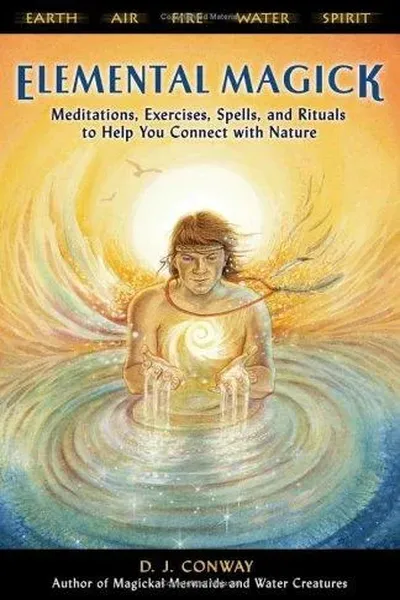
The Elementals
 78
78

The Elementals
Morgan Llywelyn’s "The Elementals" attempts a grand sweep, linking humanity's fate to the very building blocks of the planet. The author’s strength in historical grounding is evident, particularly when depicting the lives and beliefs of people in distinct eras, such as 19th-century New England. However, the ambition to connect disparate historical periods and mythical locations sometimes strains the narrative’s cohesion. The depiction of the elemental forces themselves, while intended to be powerful, occasionally verges on the abstract, lacking the consistent gravitas found in Llywelyn's more grounded historical novels. A compelling moment arises when the text describes the fear of the sea in ancient Crete, vividly illustrating the human-animalistic relationship with nature's raw power. Despite its unevenness, the book offers a unique perspective on environmentalism through a mythological lens.
"The Elementals" presents an ambitious, if occasionally diffuse, exploration of humanity's elemental bonds.
📝 Description
78
Morgan Llywelyn's 2018 novel, The Elementals, connects ancestral legends with modern environmental fears.
Published in May 2018, The Elementals marks Morgan Llywelyn's entry into environmental fantasy. The novel weaves together ancient ancestral legends and contemporary anxieties about the natural world. It follows the deep connection between humanity and the Earth's fundamental forces, showing their intertwined destinies across different eras.
Llywelyn, recognized for her historical fiction such as "Lion of Ireland," applies her research skills to a speculative setting. The book was conceived during a time of growing awareness of environmental crises, a theme that resonates throughout the story. The narrative considers how human civilizations, from mythical Atlantis and ancient Crete to 19th-century New England, engage with these primal powers. This interaction often occurs through the human emotions of fear and reverence toward the natural world.
The Elementals taps into a long tradition of animism and nature veneration found in various mythologies and spiritual practices. It presents the Earth, air, fire, and water not merely as physical phenomena but as active, semi-sentient forces that shape human existence. This perspective aligns with esoteric beliefs that see a hidden, living consciousness within the natural world. The book uses historical and mythical settings to illustrate how different cultures have perceived and interacted with these primal energies, often through rituals, reverence, or fear, reflecting a deep-seated human need to understand and relate to the planet's fundamental powers.
💡 Why Read This Book?
• Gain insight into how ancient myths and modern fears about the environment are intertwined, as explored through Llywelyn's narrative spanning from Atlantis to the 19th century. • Understand the concept of elemental forces as more than mere phenomena, but as active participants in human destiny, a perspective evident from the earliest chapters. • Experience a unique blend of environmental fantasy and historical speculation, inspired by Llywelyn's acclaimed ability to render historical settings, such as 19th-century New England, with vivid detail.
⭐ Reader Reviews
Honest opinions from readers who have explored this book.
❓ Frequently Asked Questions
What are the main elemental forces depicted in Morgan Llywelyn's 'The Elementals'?
The book primarily focuses on Earth, air, fire, and water as fundamental forces. It portrays them not just as natural phenomena but as powers that significantly influence human history and fate across various eras.
Which historical periods and locations does 'The Elementals' cover?
The narrative spans from legendary periods like Atlantis and ancient Crete to more historically grounded settings, including 19th-century New England, illustrating the enduring human relationship with the elements.
Is 'The Elementals' a sequel to any of Morgan Llywelyn's other works?
No, 'The Elementals' is a standalone novel. While Morgan Llywelyn is renowned for historical fiction such as 'Lion of Ireland,' this book ventures into environmental fantasy drawing on different narrative threads.
What is the central theme of 'The Elementals'?
The central theme is the profound and often perilous connection between humanity and the Earth's elemental forces. It explores how our actions and beliefs shape and are shaped by these primal powers.
When was 'The Elementals' by Morgan Llywelyn first published?
'The Elementals' by Morgan Llywelyn was first published on May 29, 2018. This places it within the contemporary landscape of speculative and environmental fiction.
What kind of fantasy does 'The Elementals' represent?
It is classified as environmental fantasy, using ancestral legends and contemporary anxieties to explore the relationship between humanity and the natural world, personified by its elemental forces.
🔮 Key Themes & Symbolism
Humanity and Elemental Forces
The core of 'The Elementals' lies in its depiction of the elemental forces—Earth, air, fire, and water—as active participants in human history. The narrative posits that human fate is inextricably linked to these primal powers, which are presented as ancient, powerful entities. From the mythical sinking of Atlantis to the daily struggles in 19th-century New England, the book illustrates how civilizations rise and fall based on their relationship with, and understanding of, these fundamental aspects of the planet.
Ancestral Legends and Modern Fears
Morgan Llywelyn masterfully blends ancient ancestral legends with the anxieties of contemporary readers. The novel draws upon the deep wellspring of human folklore and mythology concerning the natural world, while simultaneously addressing modern concerns about environmental degradation and humanity's impact. This fusion creates a narrative that feels both timeless in its mythical roots and relevant to current ecological discussions, exploring how old fears and new ones about our planet shape our present.
The Cycle of Civilizations
Through its vast temporal scope, 'The Elementals' examines the cyclical nature of human civilization in relation to the Earth. The book suggests that societies are built, flourish, and eventually decline based on their stewardship and interaction with the planet's elemental energies. Whether exploring the advanced, yet ultimately doomed, civilization of Atlantis or the more grounded existence in 19th-century New England, the narrative underscores a continuous interplay between human endeavor and the enduring power of nature.
Environmental Consciousness Through Fantasy
This work serves as a unique form of environmental literature, using the fantasy genre to highlight ecological themes. Instead of direct advocacy, Llywelyn uses elemental spirits and historical narratives to convey the profound interconnectedness of all life and the planet's systems. The book encourages readers to contemplate humanity's place within the larger ecological framework, prompting reflection on responsibility and respect for the natural world through imaginative storytelling.
💬 Memorable Quotes
Direct passages from the work, attributed to the author.
“The story of Earth and her elements, and of the men and women whose fate lies in her hands.”
— This statement defines the central premise: a narrative focused on the primal forces of nature and their direct, often inescapable, influence on human lives across time.
“Llywelyn crafts a unique environmental fantasy from the legends of our ancestors and the fears of our children.”
— This description points to the novel's dual foundation – drawing from ancient mythologies while addressing contemporary anxieties, creating a bridge between the past and the present concerning our relationship with the planet.
“This is the story of Earth and her elements.”
— A concise declaration of the book's primary subject matter, emphasizing the elemental forces as protagonists or central actors in the unfolding human drama.
“The fate lies in her hands.”
— This phrase underscores the theme of human vulnerability and dependence on the natural world, suggesting that the planet itself holds the ultimate power over humanity's destiny.
💡 Key Ideas
Editorial paraphrase of the work's core concepts — not direct quotes.
From lost Atlantis and ancient Crete, to 19th century New England and the near future...
This passage captures the novel's ambitious scope, highlighting its intention to connect disparate historical and mythical periods through a common thread of human interaction with elemental forces.
🌙 Esoteric Significance
Tradition
While not explicitly aligned with a single esoteric lineage, 'The Elementals' draws heavily from animistic and pantheistic traditions that perceive spirit or consciousness within the natural world. It echoes Neopagan beliefs in the sacredness of Earth and its elements, and touches upon classical elemental theories found in Hermeticism and ancient Greek philosophy. Llywelyn's approach departs from dogmatic esoteric systems, instead favoring a more fluid, narrative exploration of humanity's primal connection to planetary forces.
Symbolism
The four classical elements—Earth, Air, Fire, and Water—serve as the primary symbols. Earth represents stability, grounding, and sustenance; Air embodies intellect, communication, and freedom; Fire signifies passion, transformation, and destruction; Water signifies emotion, intuition, and the subconscious. Their personification or active role in the narrative symbolizes the inherent power and agency of the natural world, and the consequences of human disregard or reverence towards these forces.
Modern Relevance
In contemporary discussions surrounding ecocriticism and climate fiction, 'The Elementals' offers a valuable allegorical framework. It speaks to modern animist movements and Earth-based spiritualities that seek to re-establish a sacred relationship with nature. Thinkers and practitioners focused on rewilding, deep ecology, and re-enchantment of the world find resonance in Llywelyn's portrayal of elemental powers as vital forces demanding respect and understanding, rather than mere resources.
👥 Who Should Read This Book
• Readers interested in environmental literature who seek allegorical and mythological perspectives on humanity's relationship with the planet. • Fans of historical fantasy who appreciate narratives that span vast epochs and blend legendary settings like Atlantis with more grounded historical periods. • Individuals exploring animistic or pantheistic spiritual concepts, looking for fictional narratives that explore the sentience and power of natural elements.
📜 Historical Context
Morgan Llywelyn’s "The Elementals," published in May 2018, arrived during a period of heightened global environmental consciousness. While Llywelyn was already an established author, celebrated for historical epics like "Lion of Ireland" (published 1980), this novel marked a departure into environmental fantasy. It taps into a literary tradition that blends myth and speculation, echoing concerns present in the works of authors like Ursula K. Le Guin, who often explored societal structures and humanity's relationship with nature. The novel's focus on elemental forces and their impact on civilizations from Atlantis to 19th-century New England resonated with a growing readership interested in ecological themes within speculative fiction. Its publication did not coincide with major literary prizes in the genre but contributed to the ongoing discourse on climate fiction and eco-fantasy, offering a mythological perspective on environmental interdependence.
📔 Journal Prompts
The role of elemental forces in the rise and fall of Atlantis.
Humanity's fear of the sea in ancient Crete.
Reflecting on the depiction of 19th-century New England's relationship with its environment.
The connection between ancestral legends and modern environmental anxieties.
Interactions between humans and the primal powers of Earth, air, fire, and water.
🗂️ Glossary
Elemental Forces
The fundamental constituents of the universe as conceived in ancient and esoteric traditions, typically Earth, Air, Fire, and Water. In 'The Elementals,' these are portrayed as active powers influencing human destiny.
Atlantis
A mythical island continent mentioned in Plato's dialogues, often depicted as a highly advanced civilization that ultimately sank beneath the sea. Llywelyn uses it as a setting to explore early human interactions with elemental powers.
Ancient Crete
Refers to the Bronze Age Minoan civilization on the island of Crete. Llywelyn likely draws on its maritime culture and potential vulnerability to natural disasters in her depiction.
19th Century New England
A historical setting used in the novel, likely representing a period of industrialization and expansion in America, juxtaposed against the enduring power of nature and elemental forces.
Ancestral Legends
Traditional stories and myths passed down through generations, often explaining natural phenomena or the origins of the world and humanity. These form a significant basis for the novel's fantasy elements.
Environmental Fantasy
A subgenre of fantasy that explores themes related to the natural environment, ecological issues, and humanity's relationship with the planet, often personifying nature or its forces.
Near Future
A temporal setting within the narrative that projects current trends and anxieties into the immediate future, likely focusing on the consequences of human interaction with elemental forces.