Nostradamus

 84
84

Nostradamus
Lemesurier’s "Nostradamus" approaches its subject with a commendable blend of scholarly detachment and intellectual curiosity. Rather than succumbing to the allure of predictive success, the author prioritizes historical accuracy and textual analysis. A particular strength is the meticulous dissection of how specific quatrains, such as those purportedly foretelling the French Revolution, have been interpreted and reinterpreted over centuries, demonstrating a fascinating case study in cultural memory and textual projection. The work's limitation, however, lies in its occasionally dense prose, which may deter readers not already familiar with the intricacies of Renaissance intellectual history. For instance, the exploration of Nostradamus's use of anagrams and acrostics, while informative, could benefit from clearer exemplification. Despite this, Lemesurier provides a vital corrective to more sensationalist accounts, grounding the legacy of Nostradamus in the tangible realities of historical interpretation and societal fascination. It serves as an essential read for anyone seeking a critical perspective on the seer's enduring influence.
📝 Description
84
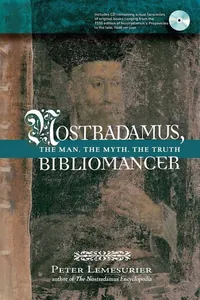
Peter Lemesurier's 1994 book examines the historical context and linguistic analysis of Nostradamus's prophecies.
Peter Lemesurier's 1994 study offers a critical look at the prophecies attributed to Michel de Nostredame. Instead of focusing on astrological readings or sensational interpretations, the book grounds its analysis in the historical setting, linguistic details, and the lasting cultural impact of Nostradamus's quatrains. It investigates the methods used over centuries to interpret these prophecies, often applying them to events far beyond Nostradamus's lifetime. This work is for readers who want a serious, academic examination of Nostradamus, particularly those who question common interpretations and seek to understand how prophetic texts acquire authority and influence. Historians of esoteric subjects, students of late 16th-century France, and anyone curious about the persistence of predictive literature will find substantial material. It is for individuals who value careful analysis applied to topics frequently met with unquestioning belief.
The book begins with the 1555 compilation of Nostradamus's "Prophecies." Lemesurier places Nostradamus within the turbulent 16th century, a time of religious conflict and emerging scientific thought that fostered both superstition and rationalism. Nostradamus's own writings are shown to reflect a blend of astrological lore, numerology, and classical references, all directed toward perceived future occurrences. The study situates this phenomenon within the wider context of Renaissance esotericism.
Lemesurier's analysis places Nostradamus's work within the tradition of Renaissance esotericism. The 16th century was a period where astrological lore, numerology, and classical sources were actively studied alongside burgeoning scientific inquiry. Nostradamus himself operated within this milieu, producing prophecies that have since been interpreted through various esoteric lenses. The book examines how these quatrains, compiled in 1555, gained a unique textual authority, becoming a subject of continuous interpretation and application far beyond their original context. It situates this phenomenon within the broader intellectual currents of the era.
💡 Why Read This Book?
• Gain a critical understanding of how Nostradamus's quatrains have been interpreted and retrofitted to historical events since their initial publication in 1555, moving beyond mere speculation. • Explore the linguistic and historical ambiguities inherent in Nostradamus's verse, appreciating the challenges of deciphering texts from the late Renaissance period. • Understand the cultural phenomenon of prophetic literature and its enduring appeal, particularly how texts like Nostradamus's acquire and maintain authority across centuries.
⭐ Reader Reviews
Honest opinions from readers who have explored this book.
❓ Frequently Asked Questions
When was Peter Lemesurier's book on Nostradamus first published?
Peter Lemesurier's "Nostradamus" was first published in 1994, offering a critical examination of the seer's prophecies decades after their initial appearance in the 16th century.
What historical period does the book primarily focus on regarding Nostradamus?
The book primarily focuses on the historical context of Nostradamus's life in 16th-century France and the subsequent centuries during which his prophecies gained prominence and were interpreted.
Does the book present Nostradamus's prophecies as accurate predictions?
No, the book takes a critical stance, examining the historical context, linguistic elements, and interpretive processes that have led to the belief in Nostradamus's predictive accuracy, rather than affirming it.
What is the main analytical approach used in "Nostradamus"?
The primary analytical approach is historical and textual criticism, focusing on linguistic analysis, historical reception, and the cultural impact of the prophecies, rather than astrological or occult methods.
Who would benefit most from reading Peter Lemesurier's "Nostradamus"?
Readers interested in the history of esotericism, critical analysis of prophetic texts, late Renaissance France, and the cultural history of prediction would find this book particularly beneficial.
What key concept does the book explore regarding how prophecies gain influence?
The book explores the concept of 'textual authority' and the 'hermeneutic challenges' involved in deciphering ambiguous verses, explaining how prophecies acquire and maintain influence over time.
🔮 Key Themes & Symbolism
Textual Authority and Interpretation
The work scrutinizes how Michel de Nostredame's quatrains, first published in 1555, acquired and maintained an aura of predictive authority. Lemesurier investigates the process by which these verses, often intentionally ambiguous and drawing on obscure classical and astrological references, have been subjected to centuries of interpretation. It highlights how historical events are frequently 'retrofitted' to align with the prophecies, creating a self-reinforcing cycle of belief that transcends the original context of the seer's life in 16th-century France.
Historical Context of Prophecy
Lemesurier situates Nostradamus's "Prophecies" within the turbulent intellectual and socio-political field of the late Renaissance. This era, marked by religious strife and burgeoning scientific thought, paradoxically fostered both superstition and rationalism. The book examines how Nostradamus, an apothecary and physician, navigated these currents, utilizing astrological lore and classical sources not merely as tools for prediction but as a means to engage with the anxieties and uncertainties of his time.
The Hermeneutic Challenge
A significant focus is placed on the inherent difficulties in deciphering Nostradamus's cryptic verses. Lemesurier explores the linguistic complexities, the use of anagrams, neologisms, and references to diverse mythological and historical figures. This exploration reveals that the 'accuracy' of the prophecies often stems from the reader's active participation in constructing meaning, transforming the text into a Rorschach test for historical anxieties and aspirations across different epochs.
Cultural Reception and Legacy
The book traces the enduring legacy of Nostradamus from his own time, when he was favored by royalty, through various periods of intense prophetic interest. It analyzes how his work became a touchstone for predicting everything from the French Revolution to world wars and beyond. Lemesurier examines the cultural mechanisms that perpetuate the fascination with Nostradamus, demonstrating how his prophecies have become embedded in collective consciousness as a symbol of foreknowledge.
💬 Memorable Quotes
Direct passages from the work, attributed to the author.
“The quatrains were not so much prophecies as a projection of anxieties.”
— This interpretation suggests that Nostradamus's verses served less as accurate predictions of future events and more as a reflection of the fears, uncertainties, and eschatological concerns prevalent during the tumultuous 16th century.
“Retrofitting is the primary engine of Nostradamus's predictive fame.”
— This concept highlights how the perceived accuracy of Nostradamus's prophecies often arises from later interpreters matching historical events to the verses after the fact, rather than the verses predicting events before they occurred.
“Ambiguity is the seer's most potent tool.”
— This interpretation emphasizes that the deliberate vagueness and multi-layered meanings within Nostradamus's quatrains are key to their enduring appeal, allowing them to be applied to a wide range of circumstances and historical moments.
“His language is a deliberate obfuscation, drawing on classical, astrological, and contemporary sources.”
— This points to the complex linguistic construction of Nostradamus's prophecies, indicating that their difficulty in interpretation stems from a deliberate fusion of diverse knowledge systems and linguistic techniques from his era.
“The legacy of Nostradamus is as much about reader expectation as it is about the text itself.”
— This suggests that the continued belief in Nostradamus's prophetic abilities is significantly shaped by the audience's desire to find meaning and foresight in his writings, rather than solely by the inherent content of the prophecies.
🌙 Esoteric Significance
Tradition
While Nostradamus himself drew heavily on Renaissance astrological and Hermetic traditions, Lemesurier's work positions "Nostradamus" as a critical analysis rather than an adherent text within a specific esoteric lineage. It examines how Nostradamus's blend of numerology, astrology, and classical allusion fits within the broader spectrum of Western esotericism, particularly its manifestation during the late medieval and Renaissance periods, which sought to reconcile occult knowledge with a Christian worldview.
Symbolism
The quatrains are replete with symbolic language, drawing from classical mythology (e.g., references to Mars, Apollo), biblical imagery, and astrological archetypes. Lemesurier's analysis often touches upon how these symbols, such as the recurring motif of 'the great king of terror' or specific celestial conjunctions, are interpreted to signify apocalyptic events or major historical shifts, functioning as potent, albeit ambiguous, signifiers within the prophetic framework.
Modern Relevance
Contemporary interest in Nostradamus, often amplified by the internet, continues to draw on the interpretive frameworks analyzed by Lemesurier. Thinkers and practitioners within various occult and New Age circles still engage with the prophecies, seeking guidance or validation. The work remains relevant for understanding how ancient prophetic traditions are continually reinterpreted to address modern anxieties and global events, demonstrating the persistent human desire for foreknowledge and cosmic order.
👥 Who Should Read This Book
• Students of Western Esotericism: Those studying the history of astrology, Hermeticism, and Renaissance occultism will find a crucial critical perspective on one of its most enduring figures. • Historical Researchers: Individuals interested in the cultural history of prediction, late Renaissance France, and how texts acquire authority over time will benefit from the book's analytical approach. • Skeptics and Critical Thinkers: Readers who approach claims of prophecy with a discerning eye will appreciate Lemesurier's methodical deconstruction of Nostradamus's enduring fame and the interpretive mechanisms involved.
📜 Historical Context
Peter Lemesurier's "Nostradamus" emerged in 1994, a period where popular interest in the seer was high, often fueled by sensationalist interpretations. The book's publication offered a critical counterpoint, grounding the discussion in historical scholarship. Nostradamus himself lived and worked in 16th-century France, a time of significant religious and political upheaval. His "Prophecies," first published in 1555, reflected a complex intellectual milieu where astrology, Hermeticism, and Christian eschatology intertwined. While contemporaries like John Dee explored similar occult sciences, Nostradamus’s accessible quatrain format and alleged predictions set his work apart. The reception of Nostradamus’s prophecies has been varied; while initially viewed with skepticism by some, they gained widespread traction over centuries, particularly during periods of crisis, often being cited by figures ranging from Napoleon to later occultists. Lemesurier's work situates this phenomenon against the backdrop of Renaissance intellectual currents and the subsequent evolution of prophetic interpretation.
📔 Journal Prompts
The concept of 'retrofitting' and its role in Nostradamus's enduring fame.
Analyze a specific quatrain's ambiguity and potential interpretations.
Nostradamus's use of astrological symbolism in the 16th century.
The cultural anxieties reflected in the "Prophecies" of 1555.
How does textual authority function in prophetic literature?
🗂️ Glossary
Quatrain
A stanza or poem consisting of four lines, typically with a specific rhyme scheme. Nostradamus famously organized his prophecies into quatrains.
Hermeticism
A philosophical and religious tradition based primarily upon writings attributed to Hermes Trismegistus, emphasizing esoteric knowledge, alchemy, and astrology.
Astrology
The study of the movements and relative positions of celestial bodies interpreted as having an influence on human affairs and the natural world.
Retrofitting
The process of interpreting historical events after they have occurred to fit a pre-existing prophecy, thereby lending the prophecy credibility.
Hermeneutics
The theory and methodology of interpretation, especially the interpretation of biblical texts, wisdom literature, or, in this context, prophetic verses.
Renaissance
The period in European history, roughly spanning the 14th to the 17th century, marked by a revival of classical art, architecture, and literature, and the emergence of new intellectual and scientific ideas.
Esotericism
Beliefs and practices related to esoteric traditions, often characterized by a focus on spiritual realization, hidden knowledge, and mystical experience.
🔮 Readers Also Liked
Browse all →









More by Peter Lemesurier
All books →




More Free Occult Philosophy Books
View all →