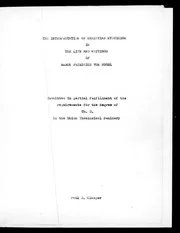
Sufism In Ibn Khaldūn An Annotated Translation Of The Shifā Al Sā'il

 79
79

Sufism In Ibn Khaldūn An Annotated Translation Of The Shifā Al Sā'il



Silas Hawthorne (Hermetic Studies Editor) — Within the hallowed halls of esoteric scholarship, the "Shifā' al-Sā'il" of Ibn Khaldūn has long been a whispered enigma. This annotated translation is a revelation, meticulously unearthing the author's profound engagement with Sufism, a dimension often eclipsed by his monumental historical works. The insightful annotations illuminate the intricate symbolism and the practical gnosis embedded within the text, bridging the gap between intellectual inquiry and direct spiritual experience. It is a vital addition for scholars of Islamic thought, students of mysticism, and any soul seeking the distilled wisdom of a master who navigated the complexities of both the temporal and the eternal. A truly illuminating work.
📝 Description
79
This 2005 translation presents Ibn Khaldūn's "Shifā' al-Sā'il li-Tahdhib al-Masā'il," a text on Sufism.
This volume offers an annotated translation of Ibn Khaldūn's "Shifā' al-Sā'il li-Tahdhib al-Masā'il." Often known for his historical and sociological works, Ibn Khaldūn also wrote on Islamic mysticism. The translation makes this specific treatise accessible to a modern audience.
The "Shifā' al-Sā'il" discusses various aspects of Sufi practice and thought. It addresses the nature of spiritual states, the path of the mystic, and the relationship between the intellect and spiritual experience. The work provides insight into Ibn Khaldūn's personal engagement with Sufism, moving beyond his more public scholarly persona.
The annotations clarify complex terms and concepts within the text, assisting readers in understanding the historical and theological context. This facilitates a deeper appreciation of Ibn Khaldūn's perspective on Islamic spirituality and its place within his broader intellectual framework.
Ibn Khaldūn, primarily recognized for his historical and sociological theories, also engaged deeply with Sufism. This text, the "Shifā' al-Sā'il," reveals his interest in the inner dimensions of Islam, a tradition often considered esoteric due to its focus on direct spiritual experience and subjective knowledge. It situates his work within the broader history of Sufi thought, which sought to understand the soul's journey towards the divine through asceticism, meditation, and contemplative practices. The treatise reflects the intellectual currents of his time, where philosophical inquiry and mystical exploration were not always separate.
💡 Why Read This Book?
Uncover the hidden mystical heart of Ibn Khaldūn, a figure renowned for his historical acumen. This translation offers direct access to his profound insights into Sufism, revealing pathways to spiritual liberation and divine knowledge. Ideal for seekers of esoteric wisdom, scholars of Islamic tradition, and practitioners of contemplative arts who wish to deepen their understanding of inner transformation and the perennial philosophy.
⭐ Reader Reviews
Honest opinions from readers who have explored this book.
❓ Frequently Asked Questions
What is the 'Shifā' al-Sā'il'?
The 'Shifā' al-Sā'il li-Tahdhib al-Masā'il' is a lesser-known work by Ibn Khaldūn, specifically dedicated to exploring and refining the principles and practices of Sufism, the mystical dimension of Islam.
Is this book for beginners in Sufism?
While the annotations provide valuable context, the depth of the material might be best appreciated by those with some prior familiarity with Islamic mysticism or contemplative traditions. However, its clear translation makes it accessible to dedicated beginners.
What makes Ibn Khaldūn's perspective on Sufism unique?
Ibn Khaldūn, a towering figure in historical and sociological thought, brings a unique intellectual rigor and analytical approach to Sufi concepts, offering a balanced perspective that integrates reason with mystical experience.
What kind of annotations can I expect?
The annotations provide essential historical context, explain complex terminology, clarify symbolic meanings, and connect Ibn Khaldūn's ideas to broader Sufi doctrines and practices, enhancing understanding for the modern reader.
Can this book help with personal spiritual growth?
Absolutely. The 'Shifā' al-Sā'il' is rich with practical guidance and spiritual insights designed to foster self-awareness, purify the heart, and deepen one's connection to the Divine, making it a valuable resource for personal practice.
🔮 Key Themes & Symbolism
The Nature of the Soul and Divine Union
This theme examines Ibn Khaldūn's exploration of the human soul's journey toward its Divine Source. It examines the esoteric understanding of the soul's innate purity, its susceptibility to worldly distractions, and the spiritual disciplines required to shed veils and achieve union. The text illuminates how the seeker can purify their inner being, transcend the ego, and experience the profound interconnectedness with the Absolute, revealing the ultimate goal of the Sufi path as a return to the origin.
The Science of Spiritual States and Stations
Central to Ibn Khaldūn's discourse is the meticulous mapping of the spiritual journey, detailing the various states (ahwal) and stations (maqamat) that the Sufi traveler encounters. This theme explores the psychological and spiritual transformations that occur as one ascends the ladder of spiritual perfection. It discusses the subtle energies at play, the challenges faced, and the useful insights gained at each stage, offering a roadmap for understanding the progression from the nascent seeker to the perfected mystic.
The Role of Knowledge and Gnosis in Mysticism
This theme investigates Ibn Khaldūn's perspective on the interplay between intellectual knowledge and experiential gnosis (ma'rifa) within Sufism. It highlights that while scholarly understanding is foundational, true spiritual realization stems from direct, unmediated knowledge of the Divine. The text emphasizes the limitations of purely rational knowledge and the necessity of unveiling the heart's eye to perceive spiritual truths, thus bridging the gap between the exoteric and the esoteric dimensions of faith.
💬 Memorable Quotes
Direct passages from the work, attributed to the author.
“The heart is the mirror of the Divine.”
— This aphorism underscores the Sufi belief that the human heart, when purified, can reflect the divine presence, serving as a conduit for spiritual illumination and direct experience of God.
“Ascent is from within, not from without.”
— This emphasizes the internal nature of spiritual progress. True elevation and nearness to the Divine are achieved through inner transformation and purification, rather than external rituals or worldly achievements.
“The path of love is the shortest way to the Beloved.”
— This highlights the central role of divine love (ishq) in Sufism. It suggests that cultivating a profound, passionate love for God is the most direct and effective means of achieving spiritual union and closeness.
“Silence is the language of the knowers.”
— This points to the profound wisdom that often transcends verbal expression. For those who have attained deep spiritual insight, silence becomes a means of contemplation and a proof of truths that words cannot adequately convey.
“The world is a veil, and the seeker tears it away.”
— This metaphor illustrates the Sufi understanding of worldly attachments as hindrances to spiritual realization. The dedicated seeker actively works to detach from illusions, thereby revealing the underlying spiritual reality.
🌙 Esoteric Significance
Tradition
This work is deeply rooted in the Sunni Islamic esoteric tradition of Sufism, also known as Tasawwuf. It engages with concepts central to the Sufi path, including the purification of the heart (tazkiyat al-nafs), the journey of the soul towards God, the understanding of spiritual states and stations, and the pursuit of direct experiential knowledge (ma'rifa) of the Divine. It reflects the orthodox yet mystical stream of Islamic thought, emphasizing inner transformation and divine love.
Symbolism
The text is imbued with detailed symbolism characteristic of Sufi literature. Concepts like the 'heart' (qalb) serving as a mirror for Divine light, the 'veil' (hijab) representing worldly distractions, and the 'journey' (suluk) symbolizing the soul's ascent are central. Water often symbolizes purity and divine grace, while light signifies divine presence and knowledge. These symbols function not merely as metaphors but as keys to unlocking deeper spiritual realities and guiding the seeker's inner vision towards the Unseen.
Modern Relevance
In an age often characterized by materialism and a disconnect from inner life, Ibn Khaldūn's insights into Sufism offer a profound counterpoint. The emphasis on self-purification, the cultivation of spiritual awareness, and the pursuit of inner peace resonates deeply with contemporary individuals seeking meaning and balance. The text provides ancient wisdom applicable to modern psychological and existential challenges, guiding seekers toward a more integrated and spiritually fulfilling existence, demonstrating that the quest for divine connection remains timeless.
👥 Who Should Read This Book
This volume is essential for scholars of Islamic studies, comparative religion, and intellectual history eager to explore the nuanced spiritual field of the medieval Islamic world. Sufi practitioners and contemplatives will find direct guidance and profound reflections on the inner path. For general readers with an interest in mysticism, philosophy, and the perennial wisdom traditions, this book offers an accessible yet deeply insightful exploration into one of history's most significant thinkers' engagement with the esoteric heart of faith. It is for the earnest seeker ready to delve beneath the surface of established knowledge.
📜 Historical Context
Ibn Khaldūn (1332-1406 CE) lived during a period of immense intellectual ferment and political upheaval across the Islamic world. The 14th century witnessed the decline of some major empires and the rise of new powers, fostering an environment where scholars engaged deeply with both the sciences of the temporal and the wisdom of the spiritual. Sufism, as the mystical dimension of Islam, had a long and long history, with numerous orders and thinkers contributing to its development. Ibn Khaldūn's engagement with Sufism in the 'Shifā' al-Sā'il' reflects a broader intellectual trend of synthesizing theological, philosophical, and mystical thought. His work provides a unique lens through which to understand how a preeminent rationalist thinker grappled with and integrated the esoteric traditions of his era, offering a bridge between scholarly discourse and the lived experience of spiritual seekers.
📔 Journal Prompts
Reflect on a time you felt a 'mirror of the Divine' within your heart. What conditions facilitated this experience?
How do the concepts of 'states' and 'stations' in spiritual journeys apply to challenges and growth in your own life?
In what ways does the 'veil' of the world obscure your spiritual vision, and what practices can help you 'tear it away'?
Consider the balance between intellectual understanding and direct experiential knowledge in an area of your life. Where is the 'gnosis'?
What does the 'path of love' mean to you, and how can you cultivate a deeper love for that which you deem sacred?
🗂️ Glossary
Sufism
The mystical, esoteric, or inward dimension of Islam, focused on the purification of the heart and the pursuit of direct experiential knowledge of God (Allah).
Gnosis (Ma'rifa)
Direct, intuitive, or experiential knowledge of God, as opposed to intellectual or speculative knowledge. It is a profound spiritual insight and union.
Tazkiyat al-Nafs
The purification of the soul or ego. This is a fundamental practice in Sufism, involving the cleansing of negative traits and the cultivation of virtuous qualities.
Ahwal (States)
Spiritual states are transient experiences that befall the Sufi traveler, such as joy, awe, or fear, often bestowed by Divine grace.
Maqamat (Stations)
Spiritual stations are stages of spiritual development that the Sufi traveler consciously strives to attain through effort and discipline, such as repentance, patience, or gratitude.
This book appears in 2 collections
🔮 Readers Also Liked
Browse all →








From the “Christian Mysticism” Collection
View all →







More Free Mysticism & Contemplation Books
View all →