The Vampire, His Kith and Kin
 75
75

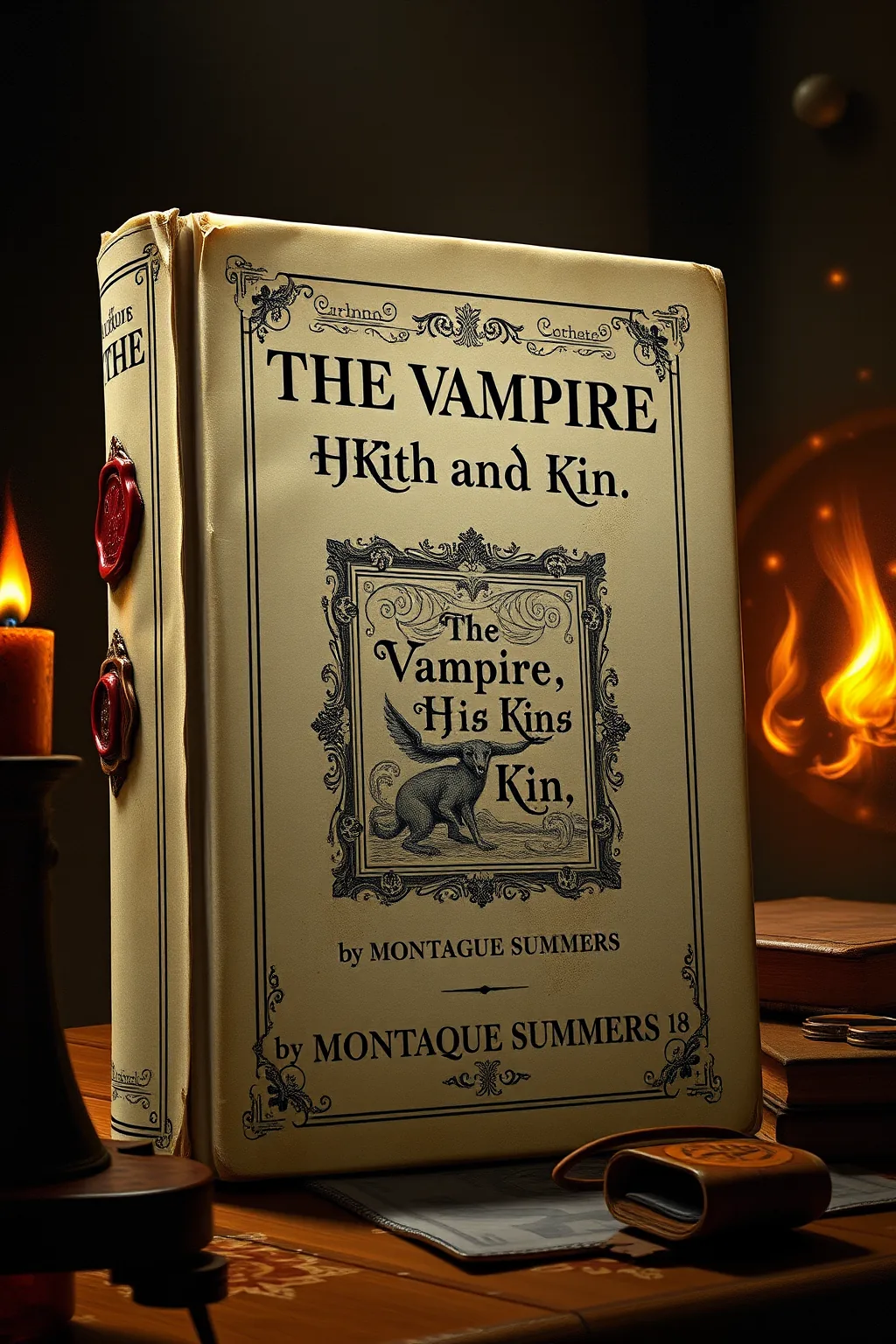
The Vampire, His Kith and Kin


Montague Summers' "The Vampire, His Kith and Kin" remains an unparalleled exploration of vampire lore, blending meticulous scholarship with an almost visceral understanding of the supernatural. Summers navigates the labyrinthine paths of folklore, theology, and historical accounts with authoritative grace. His work is not merely a compendium of tales but a profound excavation of the archetype’s enduring power and its roots in human psychology and societal anxieties. Essential for scholars of occult history, folklorists, and practitioners seeking a deep dive into the genesis of vampiric mythos.
📝 Description
75
Montague Summers published "The Vampire, His Kith and Kin" in 1928, examining vampire folklore and history.
Montague Summers' 1928 study, "The Vampire, His Kith and Kin," is a detailed compilation of historical accounts and folklore surrounding the vampire myth. Summers, known for his work on witchcraft and the occult, gathered stories and testimonies from various sources, including ancient texts, demonological treatises, and eyewitness reports. He meticulously cataloged instances of vampiric belief and alleged activity across different cultures and time periods.
The book analyzes the theological and folkloric underpinnings of the vampire legend, connecting it to broader themes of death, resurrection, and the supernatural. Summers sought to present a comprehensive survey of the phenomenon, treating the subject matter with scholarly seriousness. His aim was to trace the evolution of the vampire figure through historical records and popular imagination, revealing the persistent anxieties and beliefs it embodied.
Published in 1928, "The Vampire, His Kith and Kin" emerged from a period of renewed interest in occult and esoteric subjects, often termed the 'occult revival.' Montague Summers, a controversial figure himself, approached the study of witchcraft, demonology, and folklore with a blend of scholarly rigor and a deep immersion in the traditions he examined. This book stands as a significant, albeit idiosyncratic, contribution to the study of supernatural beliefs, situating vampire legends within a larger framework of historical demonology and popular superstition. It reflects an esoteric tradition that sought to understand the supernatural not merely as superstition, but as a facet of human history and psychology.
✍️ Author
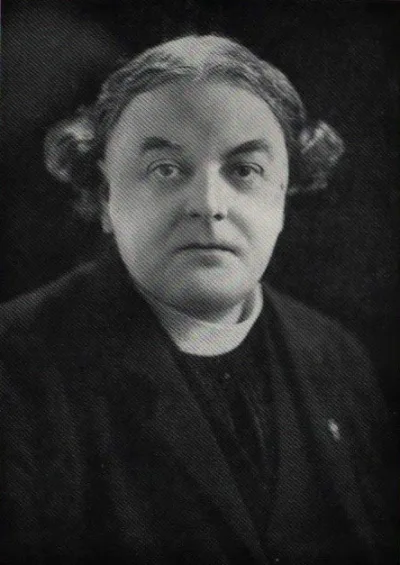
Montague Summers
Montague Summers was an English scholar, clergyman, and author known for his works on Restoration drama and the occult.
Occultist
💡 Why Read This Book?
Embark on a scholarly yet thrilling journey into the heart of vampire mythology. Discover the historical, folkloric, and theological underpinnings that have shaped this enduring archetype. Ideal for occult historians, Gothic literature enthusiasts, and anyone fascinated by the darker currents of human belief and the spectral.
⭐ Reader Reviews
Honest opinions from readers who have explored this book.
❓ Frequently Asked Questions
What makes Summers' approach to vampire lore unique?
Summers combines rigorous academic research with a deep, almost personal conviction regarding the reality of the supernatural, treating vampire accounts with a seriousness rarely found in contemporary scholarship.
Is this book suitable for beginners in occult studies?
While dense and scholarly, its foundational nature makes it an excellent starting point for those genuinely interested in the historical and folkloric roots of vampirism within esoteric traditions.
Does the book offer practical advice or rituals?
No, this is primarily a historical and folkloric investigation, focusing on the nature and manifestation of vampires as described in historical and mythological contexts, rather than practical occult application.
What historical periods does Summers cover?
Summers draws from a vast array of historical periods, delving into ancient legends, medieval accounts, and European folklore stretching from antiquity through the early 20th century.
Is 'The Vampire, His Kith and Kin' considered a primary source for vampire studies?
Yes, it is considered a foundational and often cited primary source due to its comprehensive compilation and scholarly analysis of early vampire lore and folklore.
🔮 Key Themes & Symbolism
The Archetypal Vampire
Summers meticulously deconstructs the vampire not just as a creature of folklore, but as a potent archetype reflecting deep-seated human anxieties about death, immortality, and the corruption of the flesh. He traces its manifestations across diverse cultures and epochs, revealing how this spectral figure embodies primal fears and desires, serving as a mirror to humanity's complex relationship with mortality and the unknown forces that lie beyond the veil of existence.
Folklore and Historical Documentation
This theme highlights Summers' dedication to bridging the gap between myth and historical reality. He meticulously compiles and analyzes accounts from ancient texts, village chronicles, and theological treatises, treating even the most fantastical tales with scholarly gravity. The book demonstrates how folklore can serve as a repository of collective memory and belief, offering invaluable insights into the societal, religious, and psychological landscapes of past eras.
Theological and Supernatural Conviction
Summers approaches the subject with a pronounced theological perspective, often linking vampiric phenomena to spiritual decay, demonic influence, and the consequences of heresy. His conviction in the supernatural lends a unique, almost devotional tone to his research, framing the vampire not merely as a literary device but as a genuine manifestation of dark spiritual forces that have historically troubled and fascinated humanity.
💬 Memorable Quotes
Direct passages from the work, attributed to the author.
“The vampire is a creature of horror and terror.”
— This stark statement underscores the primal, fear-inducing essence of the vampire, positioning it as a being designed to evoke profound dread and unease in the human psyche.
“The lore of the vampire is deeply interwoven with our primal fears.”
— This highlights the psychological depth of vampiric myths, suggesting they tap into ancient, instinctual anxieties related to death, predation, and the unknown.
“From the earliest ages, man has been haunted by this ghastly apparition.”
— This emphasizes the enduring and pervasive nature of the vampire myth, suggesting its roots are ancient and its presence a persistent thread in human consciousness.
“The vampire is a symbol of the unquiet dead.”
— This concise interpretation points to the core concept of the vampire as a restless spirit, unable to find peace in death and continuing to exert a malevolent influence.
💡 Key Ideas
Editorial paraphrase of the work's core concepts — not direct quotes.
He is the embodiment of all that is vile and abhorrent.
This quote captures the moral and physical repulsion associated with the vampire, highlighting its role as a symbol of corruption and the antithesis of purity and life.
🌙 Esoteric Significance
Tradition
Summers' work is deeply rooted in Western esoteric traditions, particularly those with a Christian occultist bent. He frequently references theological doctrines, demonology, and the concept of spiritual corruption, framing vampirism as a manifestation of demonic influence or a perversion of natural laws. His approach aligns with a perspective that views the supernatural as a tangible, albeit often malevolent, force operating within a divinely ordered, yet fallen, universe.
Symbolism
The vampire, as depicted by Summers, is laden with potent symbolism. It represents the eternal struggle between life and death, the corruption of the soul, and the fear of the unknown 'other.' It embodies repressed desires, the predatory instinct, and the terrifying possibility of immortality divorced from divine grace. The act of feeding symbolizes a parasitic relationship, a draining of vital force, reflecting anxieties about exploitation and the fragility of existence.
Modern Relevance
In an era still captivated by the vampire mythos in literature, film, and popular culture, Summers' work provides a vital historical and theoretical foundation. It offers a lens through which to understand the enduring archetypal power of the vampire, its psychological resonance, and its roots in ancient human fears and beliefs. Modern practitioners and scholars can still glean clear insights into the symbolic language and historical context that continue to inform contemporary interpretations of this timeless figure.
👥 Who Should Read This Book
This key work is indispensable for occult historians and scholars of folklore seeking an authoritative, comprehensive overview of vampiric lore. Gothic literature enthusiasts will find it a rich source for understanding the archetype's genesis and evolution. Esoteric practitioners interested in the historical manifestation of spectral entities and the darker aspects of spiritual belief will discover clear insights. Even general readers fascinated by mythology and the enduring power of the supernatural will be captivated by Summers' meticulous research and compelling narrative.
📜 Historical Context
Published in 1928, "The Vampire, His Kith and Kin" emerged during a period of burgeoning interest in the occult and parapsychology, following the widespread spiritualism of the late 19th and early 20th centuries. The aftermath of World War I also fostered a cultural fascination with death, the uncanny, and the lingering presence of the past. Montague Summers, a prominent Catholic scholar with a deep knowledge of Gothic literature and demonology, positioned his work within this intellectual climate. He sought to present a scholarly, albeit conviction-laden, exploration of vampirism, drawing from a vast repository of historical texts, folklore, and theological arguments, aiming to legitimize the study of such 'supernatural' phenomena within an academic framework.
📔 Journal Prompts
Reflect on the recurring motifs of death and undeath in folklore across different cultures. How does Summers' research illuminate these connections?
Consider the theological implications Summers draws regarding vampirism. How do these interpretations reflect historical anxieties about sin and salvation?
Analyze the symbolic meaning of the vampire as a predator. What does this archetype reveal about human fears of exploitation and vulnerability?
Summers treats supernatural accounts with a mix of scholarly rigor and personal conviction. How does this approach influence your perception of the text?
How has the archetype of the vampire evolved from the historical accounts described by Summers to its modern interpretations in popular culture?
🗂️ Glossary
Strigoi
A term from Romanian folklore referring to a type of vampire or spirit that was believed to rise from the dead and torment the living. Often associated with witchcraft and malevolent supernatural activity.
Vampyre
An archaic spelling of vampire, often used in historical texts and early literature to denote the undead creature that subsists on the blood of the living.
Revenant
A supernatural being, typically a corpse, that returns from the dead to haunt the living. Distinct from a ghost, a revenant often retains a physical form and exhibits agency.
Exorcism
A religious rite or prayer intended to drive out demons or evil spirits from a person, place, or object. Summers discusses its role in combating vampiric manifestations.
Folklore
The traditions, customs, and beliefs of a community or group, passed down by word of mouth. Summers extensively uses folklore to trace the origins and variations of vampire myths.
This book appears in 2 collections
🔮 Readers Also Liked
Browse all →









More by Montague Summers
All books →




From the “Transcendental Meditation” Collection
View all →





More Free Esoteric History & Biography Books
View all →