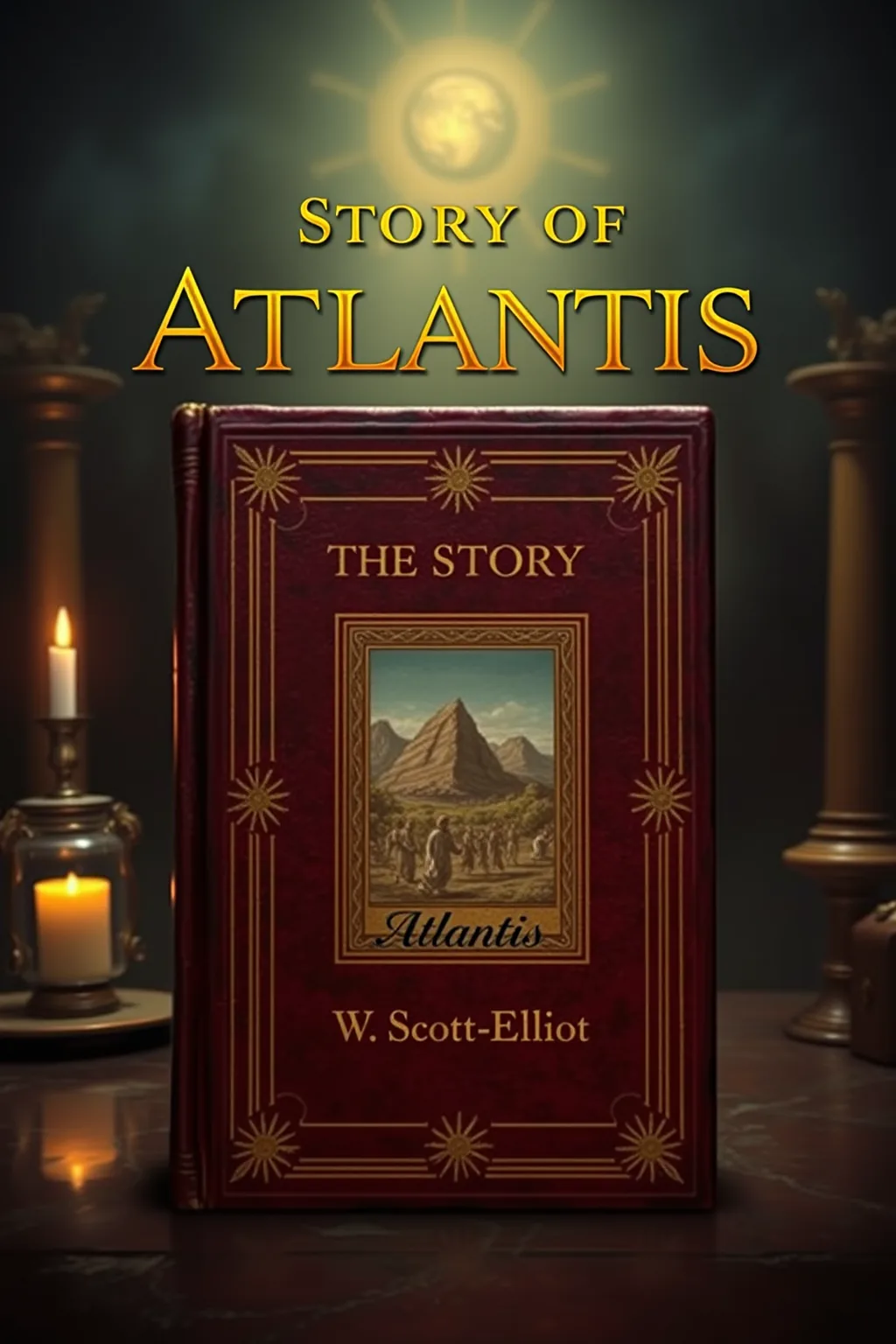
The Story of Atlantis
 78
78

The Story of Atlantis


Lorelei Sage (Contemplative Literature Editor) — W. Scott-Elliot's 'The Story of Atlantis' is a cornerstone for any serious student of esoteric history. Moving beyond speculative archaeology, the work presents a compelling, allegorical reconstruction of Atlantean civilization, drawing from Theosophical teachings. It masterfully weaves together concepts of spiritual evolution, lost wisdom, and the cyclic nature of time. The strength lies in its evocative portrayal of a society deeply connected to cosmic principles. This is essential reading for those who seek to understand the hidden currents of human development and the ancient roots of spiritual knowledge.
📝 Description
78
W. Scott-Elliot published 'The Story of Atlantis' in 1896, positing it as a historical reality.
W. Scott-Elliot's 1896 book, 'The Story of Atlantis,' argues for the continent's existence not as myth, but as a real historical period. Drawing from occult sources, Scott-Elliot details a civilization advanced in spiritual and intellectual matters, suggesting cosmic cycles and evolutionary stages beyond current comprehension. The book invites readers to consider the inner dimensions of existence and the subtle forces that influenced ancient cultures. It examines the rise and fall of this civilization and offers insights into a hidden past. Readers can expect to learn about sacred architecture, ancient sciences, and the spiritual philosophies of Atlantis.
Published in the late 19th century, 'The Story of Atlantis' fits within the surge of interest in occultism and ancient mysteries. Scott-Elliot's work aligns with Theosophical ideas, which often explored lost civilizations and spiritual hierarchies. The book uses channeled or intuitive insights, common in esoteric writing of the period, to reconstruct a history that predates conventional archaeology and anthropology. It presents a vision of humanity's past shaped by spiritual forces and evolutionary progression, a recurring theme in occult literature.
💡 Why Read This Book?
Uncover the lost continent of Atlantis through an esoteric lens, revealing a civilization of profound spiritual and intellectual depth. This book offers a unique perspective on human evolution, ancient wisdom, and the cyclical nature of existence, appealing to seekers of hidden knowledge, students of mythology, and those interested in the foundations of occult philosophy.
⭐ Reader Reviews
Honest opinions from readers who have explored this book.
❓ Frequently Asked Questions
Is 'The Story of Atlantis' a factual historical account?
While presented with historical intent, 'The Story of Atlantis' is rooted in esoteric and Theosophical teachings, offering a metaphysical and spiritual interpretation of a lost civilization rather than a purely empirical one.
What esoteric traditions does this book draw from?
The book draws heavily from Theosophical literature and occult philosophy, aiming to present a spiritual history of humanity that predates conventional historical records.
Who is A. P. Sinnett and why is he mentioned?
A. P. Sinnett was a prominent figure in the early Theosophical Society and a significant advocate for its teachings. His preface to the first edition provides context for readers unfamiliar with the esoteric underpinnings of the work.
Does the book discuss the physical location of Atlantis?
The book focuses more on the spiritual and evolutionary significance of Atlantis rather than precise geographical coordinates, though it alludes to its existence as a past epoch.
What kind of knowledge can one gain from reading this book?
Readers can gain insights into ancient cosmologies, spiritual evolution, the nature of consciousness, and the potential for advanced civilizations guided by esoteric principles.
🔮 Key Themes & Symbolism
The Esoteric History of Atlantis
This theme explores Atlantis not as a geographical location, but as a significant epoch in human spiritual and evolutionary development. It posits a civilization far advanced in its understanding of cosmic laws and inner sciences, offering a counter-narrative to conventional historical accounts. The narrative looks at the potential of humanity when aligned with higher consciousness and the profound lessons learned from a civilization that ultimately succumbed to its own internal imbalances.
Spiritual Evolution and Cosmic Cycles
Central to the book is the concept of humanity's ongoing spiritual evolution, framed within vast cosmic cycles. Atlantis serves as a powerful illustration of a particular stage in this grand unfolding, where a civilization reached a zenith before undergoing transformation. The text suggests that understanding these cycles provides crucial insights into the present and future trajectory of human consciousness, emphasizing a holistic view of existence governed by universal principles.
Lost Wisdom and Ancient Knowledge
The Story of Atlantis' is a quest for lost wisdom, presenting Atlantean society as a repository of profound knowledge, forgotten by modern man. This knowledge encompasses not only advanced sciences but also a deep understanding of the spiritual dimensions of life, the nature of the soul, and the interconnectedness of all things. The book invites readers to contemplate what has been lost and what might be rediscovered by reconnecting with these ancient, esoteric traditions.
💬 Memorable Quotes
Direct passages from the work, attributed to the author.
“Here, man walked with gods.”
— This evocative phrase suggests an era of profound spiritual connection and advanced consciousness, where humanity's relationship with the divine was direct and integrated.
“The fall was not of land, but of spirit.”
— This highlights the internal, moral, and spiritual decline that led to Atlantis's demise, emphasizing that true destruction originates from within the soul or society.
“Knowledge without wisdom is a dangerous tool.”
— This profound statement underscores the Atlantean cautionary tale, suggesting that advanced intellect or power, devoid of ethical and spiritual grounding, leads to ruin.
“The traces of Atlantis still resonate.”
— This implies that the influence, lessons, and perhaps even the energetic imprint of Atlantean civilization persist, offering guidance and mystery to the present day.
💡 Key Ideas
Editorial paraphrase of the work's core concepts — not direct quotes.
The story of Atlantis is the story of humanity's past.
This quote frames Atlantis as more than a myth; it's a foundational chapter in the grand narrative of human existence and evolution, holding keys to our origins.
🌙 Esoteric Significance
Tradition
This work is deeply embedded within the Theosophical tradition, drawing heavily on the teachings of Helena Blavatsky and other key figures. It interprets human history through the lens of spiritual evolution, root races, and cosmic cycles, presenting Atlantis as a significant stage in this grand developmental process. The tradition emphasizes hidden wisdom, the interconnectedness of the material and spiritual realms, and the potential for humanity to awaken to its divine nature.
Symbolism
Atlantis itself serves as a potent symbol of a civilization at its zenith of material and spiritual power, yet ultimately vulnerable to internal decay. The narrative is rich with symbolism related to the elements (water as the subconscious, the earth as grounding), cosmic forces, and the dualistic nature of humanity—its capacity for both divine aspiration and materialistic indulgence. The sunken continent symbolizes lost potential and the cyclical nature of creation and dissolution.
Modern Relevance
In an era grappling with technological advancement alongside societal challenges, 'The Story of Atlantis' offers a timeless cautionary tale and a source of inspiration. It speaks to the enduring human quest for meaning, the importance of spiritual grounding, and the potential for both extraordinary creation and catastrophic decline. The book's exploration of consciousness, evolution, and hidden knowledge remains relevant for those seeking to understand the deeper currents of human history and our potential future.
👥 Who Should Read This Book
This book is ideally suited for seekers of esoteric knowledge and students of ancient mysteries who are open to metaphysical interpretations of history. Scholars of comparative mythology and ancient civilizations will find it a thought-provoking contrast to conventional narratives. Practitioners of spiritual disciplines may discover valuable insights into the nature of consciousness and societal evolution. Beginners to occult literature will find it an engaging introduction to Theosophical concepts, while advanced students will appreciate its detailed reconstruction of a key, albeit legendary, epoch.
📜 Historical Context
Published in the late 19th and early 20th centuries, 'The Story of Atlantis' emerged during a period of intense interest in occultism, spiritualism, and ancient mysteries. The Theosophical Society, a major influence at the time, sought to synthesize Eastern and Western esoteric traditions and explore the hidden history of humanity. W. Scott-Elliot, as a proponent of these ideas, was part of a movement that looked beyond conventional scientific and historical paradigms to understand human origins and evolution. This era saw a surge in literature that reimagined ancient civilizations, often attributing to them advanced spiritual and technological capabilities far beyond what mainstream archaeology accepted. The book reflects a desire to find a deeper, more spiritual meaning in the past, connecting contemporary seekers with a supposed golden age.
📔 Journal Prompts
Reflect on the concept of 'spiritual evolution' as presented in the book. How does it differ from biological evolution, and what does it imply for human potential?
Consider the symbolic meaning of Atlantis's downfall. What modern societal trends might mirror the 'fall of spirit' described, and what lessons can be learned?
The book hints at advanced Atlantean sciences and philosophies. Imagine what these might have been, focusing on the integration of material and spiritual knowledge.
How does the idea of 'lost wisdom' resonate with your own search for understanding? What ancient truths do you believe humanity has forgotten?
Contemplate the cyclical nature of civilizations as described. What does this perspective offer in terms of understanding current global events and future possibilities?
🗂️ Glossary
Theosophy
A spiritual philosophy that seeks to understand the underlying unity of all religions and philosophies, particularly focusing on the spiritual evolution of humanity and the cosmos, often drawing from ancient wisdom traditions.
Root Races
In Theosophical cosmology, these are distinct stages of humanity's evolutionary development, with Atlantis representing a significant past root race or a transition between them.
Cosmic Cycles
The belief that the universe and human history unfold in vast, recurring periods of creation, existence, and dissolution, influencing the development of consciousness and civilizations.
Inner Planes
Esoteric concept referring to subtler levels of existence or consciousness beyond the physical, where spiritual forces and entities operate.
Occultism
The study of hidden or secret knowledge, typically concerning supernatural or magical forces and phenomena, often aiming for spiritual enlightenment or mastery.
This book appears in 6 collections
🔮 Readers Also Liked
Browse all →









From the “Transcendental Meditation” Collection
View all →






More Free Esoteric History & Biography Books
View all →