Pyramids of the Giza Plateau
 84
84

Pyramids of the Giza Plateau
Rigano's "Pyramids of the Giza Plateau" performs a crucial service by consolidating detailed study of all three major Giza pyramids, a scope often neglected in favor of Khufu's Great Pyramid. The strength lies in its thorough presentation of the complexes as interconnected entities, moving beyond isolated structures. A particularly illuminating aspect is the discussion of Khafre's pyramid and its valley temple, demonstrating how the entire plateau functions as a cohesive monumental landscape. However, the book could benefit from a more critical engagement with some of the more speculative esoteric theories it touches upon, offering clearer distinctions between archaeological consensus and interpretive frameworks. The work's value is in its comprehensive architectural cataloging. Rigano provides a solid foundation for further inquiry into the Giza Plateau's enduring mysteries.
📝 Description
84
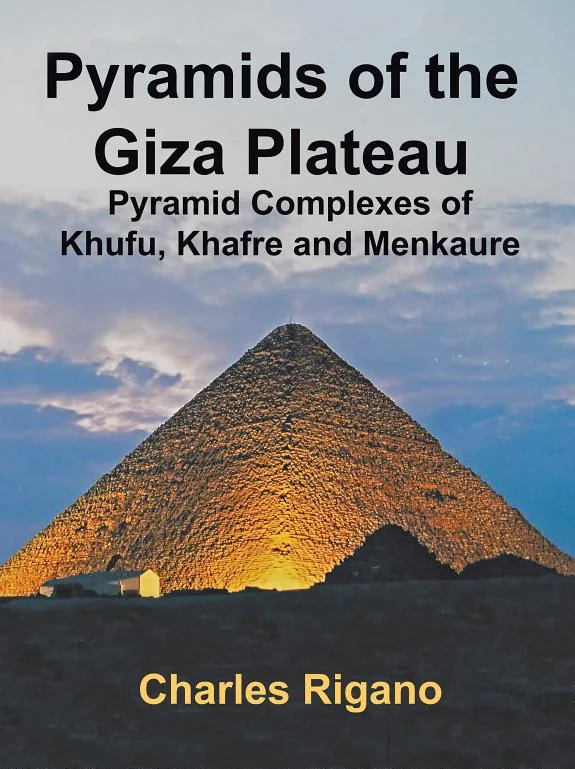
Charles Rigano's 2023 work examines the Giza Plateau's architecture beyond the Great Pyramid.
Charles Rigano's "Pyramids of the Giza Plateau" expands the focus beyond Khufu's Great Pyramid to encompass the entire necropolis. The book details the complexes of Khufu, Khafre, and Menkaure, structures that have endured for approximately 4,600 years. Rigano situates these monuments within their historical context, analyzing their physical dimensions, construction methods, and astronomical alignments. He also considers the surrounding subsidiary structures, such as temples and causeways, aiming for a unified view of the plateau's design and intended purpose.
The work is intended for students of ancient Egyptian architecture, history, and esoteric thought. It addresses those who seek an understanding of the Giza necropolis beyond common interpretations. Researchers and enthusiasts interested in comparative monument studies, ancient engineering, and the philosophical implications of these constructions will find valuable information within its pages. Rigano acknowledges both the long history of scientific study and the continuing mystical interpretations of these ancient sites.
This book engages with the esoteric traditions surrounding the Giza Plateau, a site that has long attracted mystical interpretations alongside scientific study. It acknowledges the persistent symbolic meanings attributed to these structures throughout millennia. Rigano's work places the pyramids within their historical milieu while also considering the philosophical dimensions that have fueled esoteric thought about their purpose and construction. The book reflects a tradition of inquiry that seeks deeper, often symbolic, connections beyond purely material explanations.
💡 Why Read This Book?
• Gain a singular, consolidated view of the Khufu, Khafre, and Menkaure pyramid complexes, moving beyond the common focus on just the Great Pyramid, as detailed in Rigano's comparative architectural analysis. • Understand the Giza Plateau as a unified monumental landscape, exploring the interconnectedness of its structures, a perspective central to Rigano's research. • Access a comprehensive overview of scientific study spanning 300 years, including contributions like Flinders Petrie's, providing a grounded context for esoteric interpretations.
⭐ Reader Reviews
Honest opinions from readers who have explored this book.
❓ Frequently Asked Questions
What makes "Pyramids of the Giza Plateau" different from other books on the pyramids?
This book uniquely examines all three major Giza pyramids—Khufu, Khafre, and Menkaure—and their complexes together, rather than focusing solely on the Great Pyramid of Khufu, offering a holistic view of the plateau.
When were the Giza pyramids originally constructed?
The pyramids of Khufu, Khafre, and Menkaure on the Giza Plateau have stood for approximately 4,600 years, placing their construction in the Old Kingdom period of ancient Egypt.
Does the book only cover the pyramids themselves, or more?
The book provides a detailed look at the entire pyramid complexes, including associated temples, causeways, and subsidiary structures, presenting them as integrated monumental ensembles.
Who is the author, Charles Rigano?
Charles Rigano is the author of "Pyramids of the Giza Plateau," first published in 2014, aiming to synthesize existing knowledge and present a comprehensive study of the Giza necropolis.
What kind of scientific study is mentioned in relation to Giza?
The book references the scientific study of the Giza pyramids, which has been ongoing for the last 300 years, acknowledging the extensive research conducted by scholars like Flinders Petrie.
Is this book for beginners or advanced students of Egyptology?
The book serves both, offering foundational detail for beginners and a consolidated, comparative perspective for advanced students and researchers interested in the Giza Plateau's architecture and history.
🔮 Key Themes & Symbolism
Unified Giza Complexes
Rigano's work emphasizes viewing the Khufu, Khafre, and Menkaure pyramids not as isolated structures but as interconnected components of a vast, deliberately designed necropolis. This perspective challenges the common practice of studying each pyramid individually. The book explores the spatial relationships, architectural continuities, and functional integration of the three main pyramid complexes, including their associated temples and causeways, presenting the Giza Plateau as a singular, monumental statement from the Old Kingdom.
Long-Term Scientific Scrutiny
The text acknowledges the extensive, centuries-long scientific investigation of the Giza Plateau, dating back 300 years. It highlights the contributions of figures like Flinders Petrie, who described the plateau as 'the most remarkable piece of ground in the World.' This theme underscores the empirical data and archaeological findings that form the bedrock of understanding these structures, providing a foundation against which esoteric interpretations can be considered.
Monumental Scale and Purpose
A core theme is the sheer scale and perceived purpose of the Giza pyramids. The book delves into the architectural dimensions and engineering feats required to construct these enduring monuments over 4,600 years ago. It examines the various theories and interpretations regarding their function, moving beyond simple burial sites to explore their potential roles in ancient Egyptian cosmology, kingship, and societal organization.
Comparative Pyramid Studies
Unlike many books that focus exclusively on Khufu's Great Pyramid, Rigano's study offers a comparative analysis of all three primary pyramids. This approach allows for a deeper appreciation of the subtle differences and shared characteristics among the structures of Khufu, Khafre, and Menkaure. By juxtaposing their designs and contexts, the book facilitates a more nuanced understanding of Old Kingdom pyramid building traditions.
💬 Memorable Quotes
“The Giza Plateau: the most remarkable piece of ground in the World.”
— This quote, attributed to Flinders Petrie, encapsulates the awe and significance attributed to the Giza site. It suggests an inherent importance and unique status for this location, inviting deeper investigation into its historical, architectural, and potentially esoteric dimensions.
“Virtually all contemporary "pyramid" books address only Khufu's Great Pyramid.”
— This statement highlights the book's central premise and its intended contribution to the field. It positions Rigano's work as corrective, aiming to broaden the scope of discussion beyond the most famous pyramid to encompass the entire Giza complex.
“Here the Pyramid Complexes of Khufu, Khafre, and Menkaure have stood for 4,600 years.”
— This factual assertion grounds the discussion in deep time, emphasizing the immense age and endurance of these structures. It serves as a reminder of their longevity and the continuity of human interest and study across millennia.
“The Giza pyramids have been scientifically studied for the last 300 years.”
— This highlights the ongoing academic and scientific engagement with the Giza Plateau. It frames the book's analysis within a long tradition of empirical research, contrasting it with purely speculative approaches.
“Now for the first time all three are brought together in one book.”
— This claim underscores the book's unique selling proposition – the integrated presentation of the three major pyramid complexes. It suggests a novel synthesis of information previously scattered or isolated in separate studies.
🌙 Esoteric Significance
Tradition
While not strictly adhering to a single lineage like Hermeticism or Theosophy, Rigano's work engages with the esoteric resonance of the Giza pyramids, a theme explored across various occult traditions. These monuments have been interpreted through lenses of ancient wisdom, cosmic blueprints, and Atlantean connections for over a century. Rigano's book bridges the gap between empirical study and the persistent mystical interpretations, providing a factual basis for those who perceive deeper, non-utilitarian meanings within the plateau's design.
Symbolism
The three primary pyramids themselves—Khufu, Khafre, and Menkaure—are potent symbols within esoteric thought, often representing stages of spiritual ascent, cosmic principles, or keys to lost knowledge. The Sphinx, though not detailed in the provided blurb, is another central symbol of the plateau, representing enigmas, guardians, and the union of animalistic power with human intellect. The alignment and proportion of these structures are frequently interpreted as reflecting celestial patterns or holding specific vibrational frequencies.
Modern Relevance
Contemporary esoteric thinkers and practitioners continue to draw inspiration from the Giza Plateau. Architects and designers sometimes reference its proportions for energetic resonance, while spiritual seekers view the site as a nexus of ancient power or a physical manifestation of cosmic laws. Concepts explored in Rigano's work, such as precise alignments and monumental intent, are relevant to modern discussions in sacred geometry, archaeoastronomy, and theories concerning advanced ancient technologies or knowledge systems.
👥 Who Should Read This Book
• Students of ancient Egyptian civilization seeking a comprehensive overview of the Giza Plateau's three main pyramid complexes, moving beyond singular analyses. • Researchers in comparative architecture and monumental studies interested in the design, scale, and interrelationships of large-scale ancient structures. • Enthusiasts of esoteric history and symbolism who wish to ground their explorations in detailed archaeological and historical context, understanding the factual basis before engaging with interpretation.
📜 Historical Context
Charles Rigano's "Pyramids of the Giza Plateau," first published in 2014, emerged in an era where popular literature on ancient Egypt often focused narrowly on Khufu's Great Pyramid, sometimes veering into speculative theories. Rigano's work aimed to counter this by providing a comprehensive, consolidated overview of the entire Giza necropolis. The early 21st century saw continued archaeological exploration and a proliferation of digital reconstructions, but Rigano's contribution lies in synthesizing existing scholarship on the three main pyramids and their complexes. This book arrived decades after the influential works of Egyptologists like Mark Lehner, who extensively studied the Giza complex and its workmen's village, and amidst ongoing debates about pyramid construction methods and purposes. Rigano's approach situates his analysis within the 300-year tradition of scientific study, implicitly engaging with, but distinct from, the more purely esoteric or pseudo-archaeological narratives that also circulated widely.
📔 Journal Prompts
The unified design of the Giza Plateau: How does considering the complexes of Khufu, Khafre, and Menkaure together alter your perception of their purpose?
Reflect on the 4,600 years these structures have endured. What does their longevity suggest about the civilization that built them?
Flinders Petrie's description of the Giza Plateau as 'the most remarkable piece of ground in the World' invites contemplation. What makes it so remarkable to you?
The book references 300 years of scientific study. How does this empirical foundation inform or challenge potential esoteric interpretations of the pyramids?
Consider the scale of construction for Khufu, Khafre, and Menkaure. What does this immense undertaking imply about the society, beliefs, and capabilities of Old Kingdom Egypt?
🗂️ Glossary
Giza Plateau
The arid plateau on the west bank of the Nile River near Cairo, Egypt, famous for its three large pyramids (Khufu, Khafre, Menkaure), the Great Sphinx, and numerous smaller subsidiary tombs and structures.
Pyramid Complex
The main pyramid along with its associated mortuary temple, valley temple, causeway, subsidiary pyramids, and surrounding enclosure walls, forming a unified monumental unit.
Khufu's Great Pyramid
The largest of the three main pyramids on the Giza Plateau, built for Pharaoh Khufu during the Fourth Dynasty of the Old Kingdom. It is the oldest and largest of the three.
Khafre's Pyramid
The second-largest pyramid at Giza, built for Pharaoh Khafre, son of Khufu. It appears taller than Khufu's due to being built on a higher elevation and retaining some of its original casing stones at the apex.
Menkaure's Pyramid
The smallest of the three main pyramids at Giza, built for Pharaoh Menkaure, grandson of Khufu. It is notable for its lower section being cased in granite.
Flinders Petrie
Sir William Matthew Flinders Petrie (1853–1942) was a British Egyptologist and a pioneer of systematic, scientific archaeology in Egypt. He conducted extensive surveys and excavations at Giza and elsewhere.
Old Kingdom
The period in ancient Egyptian history spanning from Dynasty 3 to Dynasty 6 (c. 2686–2181 BCE), during which the great pyramids of Giza were constructed.