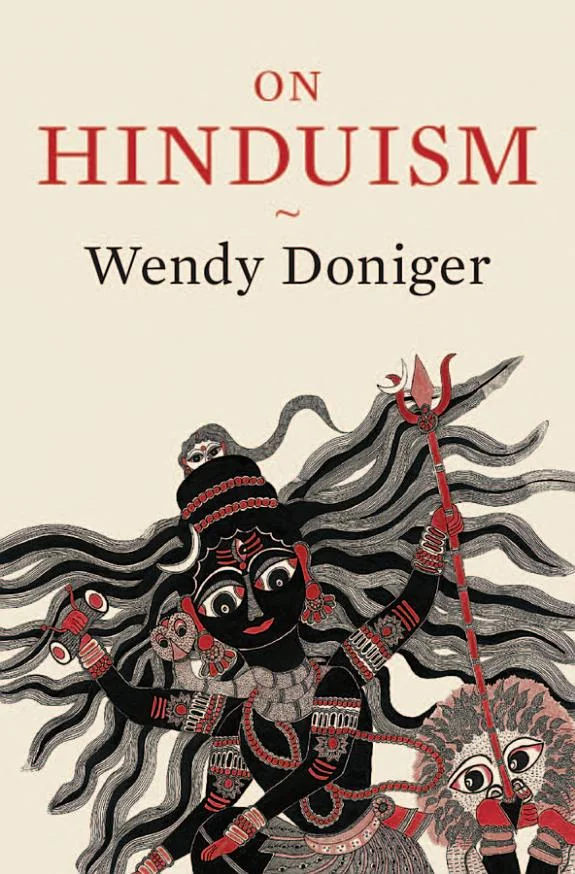
On Hinduism
 78
78

On Hinduism
Wendy Doniger's On Hinduism is less a narrative and more a scholarly dissection, offering 63 distinct yet connected analytical lenses. Its strength lies in the sheer breadth of topics covered, from the Rigveda to modern interpretations of deities. Doniger's analysis of gender roles within Hindu cosmology, for instance, is particularly sharp, challenging traditional patriarchal readings by highlighting the fluidity and power present in many myths. However, the essayistic structure, while allowing for deep dives into specific issues, can sometimes feel fragmented. A reader might wish for more explicit connective tissue between certain essays, particularly when transitioning from ancient philosophical concepts to contemporary social issues. The book truly shines when it interrogates contested aspects, such as the concept of 'Hindu tolerance'. Ultimately, On Hinduism provides an indispensable, if occasionally demanding, scholarly resource for understanding the complexities of this ancient tradition.
📝 Description
78
Wendy Doniger structured 'On Hinduism' as 63 interconnected essays published in 2014.
Wendy Doniger's 'On Hinduism' unpacks the Hindu tradition through 63 essays. A scholar of religious studies, Doniger examines core beliefs and current issues with scholarly depth. The book aims to show Hinduism's complex nature, avoiding simple labels to discuss its history and varied understandings.
This volume is for students of religion, comparative mythology, and South Asian studies. Those seeking a scholarly view that tackles Hinduism's theological and social complexities will find it useful. It also suits readers interested in how religion, gender, and societal shifts interact in South Asia.
Published in 2014, 'On Hinduism' appeared as global interest in Eastern religions grew. Doniger's work engages with ongoing academic conversations, often questioning established views and providing new readings of ancient texts and contemporary religious life.
This work engages with the complex textual and ritual traditions within Hinduism. It approaches the subject not as a monolithic entity, but as a dynamic system with diverse interpretations and historical layers. Doniger's scholarship connects contemporary understandings with ancient scriptural sources, examining how these have been shaped by social, political, and gendered contexts. The book's structure, as interconnected essays, mirrors the often non-linear and multifaceted nature of esoteric knowledge, where different facets illuminate each other without necessarily forming a single, definitive doctrine.
💡 Why Read This Book?
• Gain a nuanced understanding of Hindu polytheism and its theological underpinnings, moving beyond simplistic definitions. • Explore Doniger's analysis of gender and sexuality within Hindu traditions, challenging conventional interpretations of deities and human roles. • Grasp the historical development of Hindu thought from the Vedas to contemporary debates, informed by Doniger's 2014 publication.
⭐ Reader Reviews
Honest opinions from readers who have explored this book.
❓ Frequently Asked Questions
What is the primary focus of Wendy Doniger's On Hinduism?
The book offers a penetrating analysis of crucial and contested issues within Hinduism, spanning from the Vedic period to contemporary times, presented across 63 interconnected essays.
Does On Hinduism discuss Hindu concepts of death and afterlife?
Yes, the work examines Hindu concepts of death, rebirth, and the afterlife, integrating them into a broader discussion of Hindu philosophy and practice.
How does the book address gender in Hinduism?
Doniger's analysis includes significant discussion on gender, exploring its representation in Hindu mythology, rituals, and societal structures, often challenging traditional viewpoints.
Is On Hinduism suitable for beginners in religious studies?
While scholarly, the book's essayistic format allows focused engagement with specific topics, making it accessible to dedicated beginners willing to grapple with complex academic discourse.
What is the approximate number of essays in On Hinduism?
The book is structured into 63 connected essays, each offering a specific analytical lens on various aspects of the Hindu tradition.
When was Wendy Doniger's On Hinduism first published?
Wendy Doniger's On Hinduism was first published in March 2014, providing a contemporary scholarly perspective on the tradition.
🔮 Key Themes & Symbolism
Polytheism and Divinity
Doniger critically examines the concept of polytheism within Hinduism, dissecting how multiple deities function not as isolated figures but as interconnected aspects of a larger divine reality. The work explores the fluidity of divine identities and the philosophical underpinnings that allow for simultaneous devotion to various gods and goddesses, often challenging Western monotheistic frameworks and highlighting the sophisticated theological reasoning involved.
Gender and the Sacred
This theme delves into the complex and often paradoxical roles of gender within Hindu traditions. Doniger analyzes how female deities embody immense power and agency, while also addressing the societal implications of gender hierarchies. The discussion extends to the representation of sexuality and gender fluidity in myths and rituals, offering a nuanced perspective that moves beyond simplistic interpretations of patriarchal structures.
Vedas and Contemporary Practice
The book traces the evolution of Hindu thought from its ancient scriptural foundations, particularly the Vedas, to its modern manifestations. Doniger scrutinizes how interpretations of these foundational texts have shifted over millennia and how contemporary issues, such as puritanism and social reform movements, engage with or diverge from ancient doctrines and practices.
Ahimsa and Social Ethics
Doniger investigates the principle of non-violence (ahimsa) in Hinduism, exploring its philosophical origins and its varied applications in ethical and social contexts. The work considers how this concept intersects with debates on vegetarianism, pacifism, and the broader implications for social justice and interfaith dialogue, presenting a critical look at its historical and modern relevance.
💬 Memorable Quotes
“The essays discuss Hindu concepts of polytheism, death, gender, art, contemporary puritanism, non-violence, and much more.”
— This statement, acting as a summary of the book's scope, highlights the wide-ranging yet interconnected nature of the topics covered. It signals that the work addresses both ancient theological concepts and pressing modern social issues within Hinduism.
“In a series of 63 connected essays...”
— This structural detail emphasizes the book's analytical approach. It suggests a method of deep exploration into specific subjects, with each essay building upon or relating to others, creating a cumulative understanding of the tradition.
“Wendy Doniger (first published 2014-03)”
— The author's name and publication date anchor the work. Doniger is a renowned scholar, and the 2014 date places the analysis within a specific academic and cultural moment, relevant for understanding its context.
“On Hinduism is a penetrating analysis...”
— This opening phrase indicates the book's critical and in-depth nature. It promises an examination that goes beyond surface-level descriptions, engaging directly with the complexities and often contested aspects of the subject.
“...of many of the most crucial and contested issues in Hinduism...”
— This phrase underscores the book's engagement with controversial or debated topics within Hinduism. It suggests that Doniger tackles sensitive subjects directly, offering scholarly perspectives on areas of disagreement or misunderstanding.
🌙 Esoteric Significance
Tradition
While not strictly belonging to a single esoteric lineage like Kabbalah or Theosophy, Doniger's work engages with concepts that resonate within broader esoteric studies of religion. Her rigorous academic approach to mythology, cosmology, and the interpretation of sacred texts aligns with the scholarly underpinnings required for many esoteric traditions. It provides a critical framework for understanding the symbolic language and philosophical depth that esoteric practitioners often seek in religious traditions.
Symbolism
The book explores symbols such as the multifaceted nature of deities (e.g., Shiva as destroyer and creator) and the cyclical understanding of time, which are central to many esoteric philosophies. The concept of *maya* (illusion) and the path to liberation (*moksha*) are also examined, offering insights into how Hinduism addresses the perceived reality of the material world versus ultimate truth.
Modern Relevance
Contemporary thinkers and practitioners interested in comparative mythology, non-dual philosophies, and critical approaches to religious studies often draw upon Doniger's work. Her nuanced discussions on gender and sexuality within religious contexts are particularly relevant to modern spiritual movements seeking to deconstruct traditional hierarchies and embrace more inclusive understandings of the divine and human experience.
👥 Who Should Read This Book
• Students of comparative religion and mythology seeking scholarly analyses of Hinduism's core tenets and historical evolution. • Researchers interested in the intersection of religion, gender, and social ethics, particularly within a South Asian context. • Academics and advanced practitioners who wish to engage with critical perspectives on Hindu scriptures and contemporary religious practice.
📜 Historical Context
Published in March 2014, Wendy Doniger's On Hinduism entered a landscape of religious scholarship marked by ongoing critical engagement with South Asian traditions. The era saw a growing public interest in comparative religion, often mediated through popular media, which sometimes simplified complex doctrines. Doniger's work, rooted in decades of academic inquiry, provided a counterpoint by offering nuanced, critical analyses. It engaged with scholarly debates initiated by figures like A.K. Ramanujan, whose work on the 'many versions' of the Ramayana had sparked controversy. While not facing direct censorship itself, Doniger's scholarship has sometimes been the subject of public debate and criticism from various Hindu nationalist groups, reflecting broader tensions between academic inquiry and religious identity politics. The book's reception highlighted the enduring scholarly significance of engaging directly with contested aspects of religious history and practice.
📔 Journal Prompts
The concept of polytheism as presented by Doniger.
The representation of gender in Hindu mythology.
The historical trajectory from the Vedas to contemporary Hinduism.
The ethical implications of ahimsa.
The nature of contested issues within Hinduism.
🗂️ Glossary
Vedas
The oldest scriptures of Hinduism, considered to be divinely revealed. They form the foundation of much Hindu philosophy, ritual, and theology, dating back to around 1500-500 BCE.
Polytheism
The belief in or worship of multiple gods. In Hinduism, this refers to the worship of numerous deities, often understood as aspects or manifestations of a single ultimate reality.
Ahimsa
A principle of non-violence and non-injury towards all living beings. It is a core tenet in several Indian religions, including Hinduism, Buddhism, and Jainism.
Puritanism
In the context of the book, refers to movements or attitudes within Hinduism that emphasize strict adherence to moral codes, often involving asceticism and social conservatism.
Rigveda
One of the four canonical collections of Vedic Sanskrit hymns and poetry, considered the oldest of the Vedas and a foundational text for Hinduism.
Moksha
Liberation or release from the cycle of death and rebirth (samsara). It is considered the ultimate goal in Hinduism, achieved through various paths like knowledge, devotion, or action.
Samsara
The continuous cycle of birth, death, and rebirth, governed by karma. Liberation from samsara is a central spiritual aim in Hinduism.