Karma and Rebirth in Classical Indian Traditions
 71
71

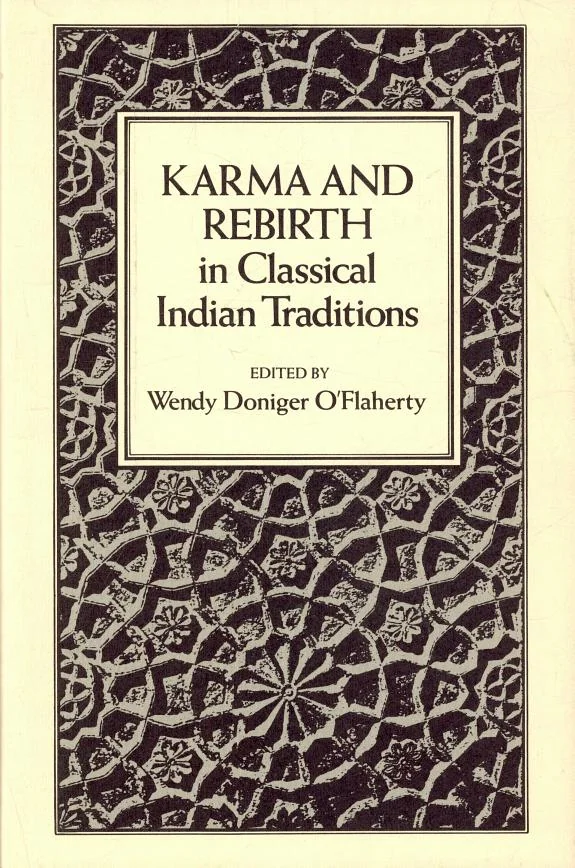
Karma and Rebirth in Classical Indian Traditions
Wendy Doniger's exhaustive study of karma and rebirth in Indian traditions remains a formidable scholarly achievement, even decades after its initial release. The book's strength lies in its sheer breadth and analytical rigor, charting the conceptual shifts across millennia of Indian thought. Doniger's ability to synthesize vast textual evidence and present complex philosophical arguments with clarity is commendable. However, the very depth that makes it valuable can also be a barrier; the dense academic prose and reliance on Sanskrit terminology may prove challenging for readers without prior expertise in the field. A particularly illuminating section is her dissection of the different theories of 'types' of karma and their specific karmic outcomes, revealing the sophisticated legalistic and ethical frameworks developed. While demanding, the book offers unparalleled insight into the intellectual architecture of Indian religious thought.
📝 Description
71
Wendy Doniger's 1980 book traces karma and rebirth from Vedic roots through classical Indian texts.
First published in 1980, Wendy Doniger's "Karma and Rebirth in Classical Indian Traditions" examines the development of these core Indian concepts. The book follows the evolution of karma, understood as action and its consequences, and rebirth, or samsara, from early Vedic texts through the Upanishads, Puranas, and major epics like the Mahabharata and Ramayana. Doniger analyzes the philosophical and theological discussions that shaped these ideas across different religious traditions in India.
The work is intended for scholars and advanced students of religion, philosophy, and South Asian studies. It assumes a prior familiarity with Indian intellectual history and Sanskrit terms. Readers interested in comparative mythology, ethics, and the formation of religious doctrines will find this analysis particularly useful. It is not an introductory text but a detailed scholarly study of the subject.
Emerging in the late 20th century amidst growing academic interest in non-Western traditions, Doniger's book built on existing scholarship while introducing new interpretive approaches. Her research engaged with contemporary debates in Indian philosophy, specifically regarding differing views of karma and rebirth within Brahmanical, Buddhist, and Jain thought. The book's thorough examination contributed to scholarly discussions on Indian soteriology.
This book engages with the soteriological aims central to many classical Indian traditions. It maps how concepts of action (karma) and the cycle of death and rebirth (samsara) became frameworks for understanding liberation (moksha). Doniger scrutinizes how different schools adapted these doctrines, altering notions of moral causality and transmigration to align with their specific paths to salvation. The text thus illuminates a core mechanism within Indian spiritual thought for explaining suffering and the means to overcome it.
💡 Why Read This Book?
• Gain a nuanced understanding of the historical development of karma and rebirth from Vedic origins through the classical period, as detailed in the analysis of Vedic hymns and Upanishadic dialogues. • Grasp the philosophical distinctions between Brahmanical, Buddhist, and Jain interpretations of samsara and karmic causality, a core focus in the comparative sections. • Appreciate the intricate theological debates surrounding the mechanics of rebirth and the classification of karmic actions, as presented in discussions of Puranic narratives and epic literature.
⭐ Reader Reviews
Honest opinions from readers who have explored this book.
❓ Frequently Asked Questions
When was Wendy Doniger's "Karma and Rebirth in Classical Indian Traditions" first published?
The foundational work by Wendy Doniger (also known as Wendy Doniger O'Flaherty) on "Karma and Rebirth in Classical Indian Traditions" was first published in 1980, marking a significant contribution to the academic study of Indian religions.
What are the main Indian traditions discussed in the book regarding karma and rebirth?
The book extensively covers the evolution of karma and rebirth concepts within Brahmanical traditions (Vedic, Upanishadic, Puranic), as well as their development and unique interpretations in Buddhism and Jainism.
Does the book explain the practical application of karma in daily life?
While the book focuses on the philosophical and theological evolution of karma and rebirth, it provides the intellectual framework necessary to understand how these concepts informed ethical and ritualistic practices across classical Indian traditions.
Is this book suitable for someone new to Indian philosophy?
This is a scholarly work and may be challenging for absolute beginners. It assumes some familiarity with Indian religious and philosophical concepts, but its detailed explanations make it an excellent resource for those willing to engage deeply.
What is the significance of the Mahabharata and Ramayana in the book's analysis?
The book utilizes the Mahabharata and Ramayana as crucial textual sources, examining how these epics illustrate and disseminate complex ideas about karma, dharma, and the consequences of actions across generations.
Who is Wendy Doniger O'Flaherty?
Wendy Doniger O'Flaherty is the earlier name of Wendy Doniger, a renowned scholar of Hinduism and comparative mythology. This book represents a key early work under that name.
🔮 Key Themes & Symbolism
Evolution of Samsara
The work meticulously charts the conceptual journey of samsara, or the cycle of birth, death, and rebirth. Initially a more nebulous idea, it solidified into a doctrine of moral causation. Doniger traces this transformation from early Vedic notions of the afterlife to the sophisticated soteriological systems developed in the Upanishads, Buddhist, and Jain philosophies, highlighting the theological innovations required to explain transmigration and its ethical implications across diverse Indian schools.
Karma as Moral Causality
Central to the book is the intricate concept of karma, understood not merely as action but as a law of moral consequence. Doniger examines how this principle became interwoven with dharma, shaping individual destinies and cosmic order. The study delves into the classification of different types of karma and their specific effects, revealing a complex ethical and legalistic framework that underpinned Indian religious thought and practice for centuries.
Doctrinal Debates Across Traditions
The book critically analyzes the points of convergence and divergence in the understanding of karma and rebirth among major Indian traditions. It highlights how Brahmanical, Buddhist, and Jain thinkers adapted, debated, and sometimes reinterpreted these core doctrines to fit their respective philosophical and theological perspectives. This comparative approach reveals the dynamic intellectual landscape of ancient and classical India.
Soteriological Goals
Ultimately, the book explores how the doctrines of karma and rebirth served as the foundation for various paths to liberation (moksha or nirvana). Doniger illustrates how different traditions proposed mechanisms and practices—through knowledge, devotion, or asceticism—to escape the cycle of samsara, demonstrating the profound impact of these concepts on the ultimate aims of Indian spiritual endeavors.
💬 Memorable Quotes
“The concept of karma evolved from a relatively simple notion of action and its effects to a complex system of moral accountability.”
— This paraphrase captures the essence of Doniger's argument regarding the historical development of karma, emphasizing its transformation from basic cause-and-effect to a sophisticated ethical and theological doctrine.
“Rebirth was not universally accepted in early Vedic thought but gained prominence as a framework for explaining suffering and eventual liberation.”
— This interpretation highlights a key finding: the gradual adoption and integration of the rebirth doctrine into Indian philosophical discourse, serving as a crucial element in soteriological frameworks.
“Different schools of thought proposed various mechanisms for the transmigration of the soul or consciousness.”
— This points to the diverse explanations for how beings move from one life to the next across different Indian philosophical systems, a central theme explored in the text's comparative analysis.
“The interaction between ritual action (karma) and its consequences shaped the understanding of destiny and liberation.”
— This interpretation underscores the deep connection between ritual practice, ethical conduct, and the ultimate spiritual goals within classical Indian traditions, as analyzed by Doniger.
“The epics and Puranas served as vital conduits for disseminating complex karmic theories to a wider audience.”
— This paraphrase emphasizes the role of popular literature in popularizing and illustrating the intricate philosophical concepts of karma and rebirth, a point Doniger often illustrates with textual examples.
🌙 Esoteric Significance
Tradition
While not strictly an occult text, this work is foundational for understanding the philosophical underpinnings of many Eastern esoteric traditions that draw heavily on Indian thought. Its lineage connects to the broader field of comparative religion and philosophy of religion, which often informs esoteric studies. It provides the intellectual scaffolding for practices rooted in concepts of karma, reincarnation, and spiritual evolution found in movements like Theosophy and various New Age philosophies, though Doniger's approach is purely academic and critical.
Symbolism
The core concepts of karma (action, deed) and rebirth (samsara, cycle of existence) are themselves potent symbols. Karma symbolizes the law of cause and effect, a universal, impersonal justice. Samsara symbolizes the continuous, often suffering-filled, journey of the soul or consciousness through myriad forms. The book explores how these symbols are elaborated through myths, deities (like Yama, the god of death and justice), and allegorical narratives within Indian traditions.
Modern Relevance
Contemporary thinkers and practitioners in fields ranging from comparative psychology to mindfulness-based therapies often engage with or are influenced by the classical Indian concepts of karma and rebirth. While Doniger's book offers a critical academic perspective, its detailed exposition remains a key reference for understanding the philosophical roots of these widespread ideas, informing discussions on ethics, consciousness, and personal responsibility in modern spiritual and philosophical contexts.
👥 Who Should Read This Book
• Advanced students and scholars of religious studies and South Asian philosophy seeking a comprehensive analysis of karma and rebirth. • Researchers in comparative mythology and ethics interested in the historical development of moral and cosmological doctrines. • Individuals engaged with Eastern spiritual traditions who desire a rigorous, scholarly grounding in the foundational concepts of Indian thought.
📜 Historical Context
Published in 1980, Wendy Doniger's "Karma and Rebirth in Classical Indian Traditions" emerged during a period of intense academic focus on South Asian religions and philosophies. The late 20th century saw scholars increasingly challenging Eurocentric views and engaging deeply with non-Western traditions. Doniger's work built upon the foundational scholarship of figures like Surendranath Dasgupta and R.C. Zaehner, yet offered a more synthetic and interpretative approach, particularly in tracing the evolution of these concepts across Brahmanical, Buddhist, and Jain schools. While the academic reception was largely positive, acknowledging its scholarly depth, the work's detailed analysis of sectarian differences and theological nuances placed it firmly within specialized academic circles rather than popular discourse. It contributed to a growing understanding of the complex philosophical underpinnings of Indian religious life, moving beyond simplistic interpretations.
📔 Journal Prompts
The evolution of samsara from Vedic origins to its classical formulations.
Brahmanical, Buddhist, and Jain interpretations of karmic causality.
The role of action (karma) in achieving liberation (moksha).
The concept of transmigration and its theological justifications.
The relationship between dharma and karma as presented in the epics.
🗂️ Glossary
Karma
In classical Indian traditions, the principle of cause and effect where actions (physical, verbal, mental) have consequences that determine future experiences and rebirths.
Samsara
The cycle of birth, death, and rebirth; the continuous process of reincarnation driven by karma and ignorance, from which liberation is sought.
Upanishads
A collection of texts forming the concluding part of the Vedas, dealing with meditation, philosophy, and spiritual knowledge, foundational to Hindu thought.
Vedas
The oldest scriptures of Hinduism, comprising hymns, rituals, and philosophical teachings that form the basis of much subsequent Indian religious thought.
Dharma
One's duty, righteousness, ethics, or religious law; often intertwined with karma, as righteous actions contribute to positive karmic outcomes.
Moksha
Liberation or release from the cycle of samsara; the ultimate spiritual goal in many Hindu traditions.
Nirvana
The ultimate goal in Buddhism; the cessation of suffering and the cycle of rebirth, achieved through enlightenment.