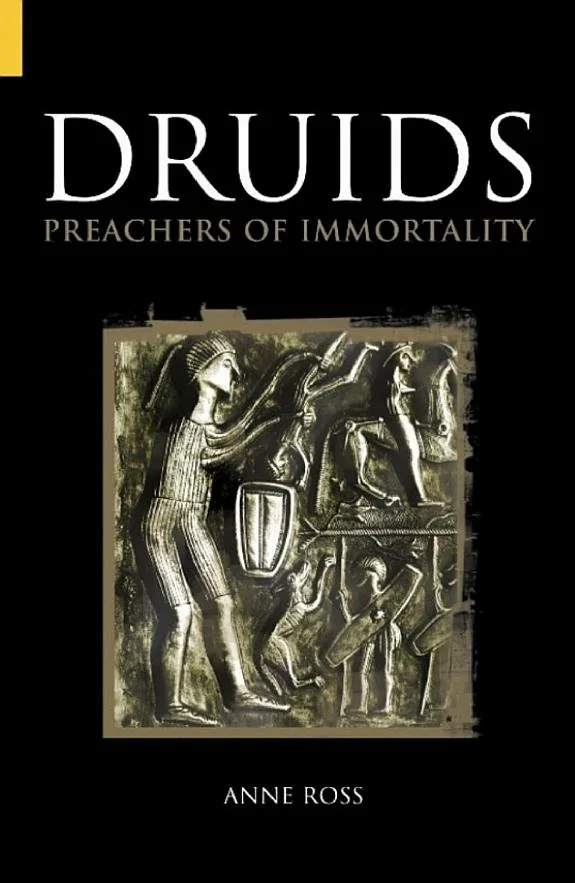
Druids
 80
80

Druids
Anne Ross's "Druids" offers a much-needed scholarly counterpoint to the pervasive, often nebulous, modern interpretations of Celtic priestly figures. By anchoring her analysis firmly in the vernacular Irish and Welsh texts, Ross effectively dismantles centuries of accreted myth. The strength of the book lies in its rigorous engagement with primary sources, allowing the voices of the early medieval Celts, as recorded in their own languages, to speak for themselves. A passage discussing the legal and social roles of the Druid, distinct from purely religious functions, highlights the work's commitment to a nuanced historical perspective. However, the book's academic rigor, while a virtue, might present a challenge for the casual reader unfamiliar with the complexities of early medieval Celtic linguistics and textual criticism. The dense reliance on Gaelic texts, though essential for accuracy, requires dedicated attention. Ross's work is an indispensable resource for serious students of ancient Celtic religion, providing a clear, evidence-based foundation.
Verdict: A scholarly corrective to popular fantasy, grounded in textual evidence.
📝 Description
80
Anne Ross's Druids (2004) separates historical Celtic religion from later romantic notions.
Anne Ross’s book examines the historical and religious practices of the ancient Celts, with a specific focus on the Druids. The author draws heavily from early Irish and Welsh vernacular texts to differentiate historical accounts from later romanticized ideas. Ross posits Druidism as a central religious and intellectual force within Celtic societies, detailing its roles beyond simple priestly functions. The work is intended for readers interested in the actual historical basis of Celtic spirituality and older European religions. It will appeal to those wanting to move beyond popular myths about Druids and engage with scholarly analyses that use linguistic and textual evidence. Scholars of early medieval Ireland and Wales, along with those interested in comparative mythology and ancient belief systems, will find this study valuable.
Ross grounds her research in the linguistic and literary traditions of Ireland and Wales, particularly using vernacular materials from after the regions' Christianization. The book addresses the difficulty of reconstructing pre-Christian practices from sources written in a post-Christian era. It explores the Druid’s position not only as a religious leader but also as a philosopher, judge, and keeper of lore in Celtic society. The importance of oral tradition and the complex social structures Druids occupied are highlighted. The text analyzes Irish annalistic entries and Welsh bardic poetry as primary evidence, aiming to remove later romantic and nationalistic interpretations of Druidic imagery.
This study positions itself within the academic study of Celtic religions, seeking to reconstruct a pre-Christian spiritual system from textual evidence. It engages with the historical interpretation of figures often mythologized, distinguishing scholarly analysis from later romantic appropriations. By focusing on vernacular texts and linguistic traditions, Ross connects to a scholarly lineage that seeks to understand ancient belief systems through their own historical records rather than through later folklore.
💡 Why Read This Book?
• Gain a clear understanding of Druidism as the religion of the Celts, distinguishing it from later romanticized notions, by referencing the vernacular material from Ireland and Wales as primary sources. • Understand the multifaceted societal roles of Druids beyond religious duties, as explored through the author's familiarity with Gaelic texts and their interpretation. • Appreciate the historical methodology required to reconstruct ancient belief systems, by examining how the work strips away modern myths using evidence from the early medieval period.
⭐ Reader Reviews
Honest opinions from readers who have explored this book.
❓ Frequently Asked Questions
What is the primary source material for Anne Ross's 'Druids'?
The book primarily utilizes vernacular material from Ireland and Wales, including early Irish and Welsh texts. Ross's familiarity with these Gaelic sources is central to her analysis.
When was Anne Ross's 'Druids' first published?
The book 'Druids' by Anne Ross was first published on August 1, 2004.
How does Ross's work differ from popular modern ideas about Druids?
Ross's work aims to strip away modern myths by focusing on historical evidence from ancient Celtic texts, presenting Druidism as the actual religion of the Celts rather than later romanticized versions.
What aspects of Druidic life does the book explore?
The book explores Druidism as the religion of the Celts and the roles of Druids as intellectual and religious leaders, drawing insights from Irish and Welsh vernacular literature.
Is 'Druids' by Anne Ross suitable for beginners in Celtic studies?
While providing a scholarly foundation, the book's reliance on specific vernacular texts might be best suited for readers with some background in Celtic studies or comparative religion.
What is the main argument of Anne Ross's 'Druids'?
The book argues that Druidism was the central religion of the Celts and that understanding it requires direct engagement with native Irish and Welsh sources, free from later embellishments.
🔮 Key Themes & Symbolism
Vernacular Textual Authority
This theme centers on Anne Ross's methodology, which privileges the vernacular material originating from Ireland and Wales as the most authentic source for understanding ancient Druidism. By engaging directly with Gaelic texts, the work seeks to bypass centuries of later interpretation and romanticization. The focus is on what these early medieval sources reveal about the religion and practices of the Celts, positioning them as the primary lens through which Druidism should be understood, rather than through later philosophical or neo-pagan constructs.
Druidism as Celtic Religion
The book establishes Druidism not merely as a fringe practice or a later invention, but as the fundamental religious and intellectual system of the ancient Celts. Ross explores how this system permeated various aspects of Celtic life, from law and philosophy to spiritual observance. The work aims to present a cohesive picture of Druidism as the established religion of its time, drawing connections between its practitioners and the broader societal structures and beliefs of Celtic peoples.
Deconstructing Modern Myths
A core objective of Ross's work is the critical examination and dismantling of popular, often anachronistic, perceptions of Druids. By contrasting these modern myths with the evidence found in early Irish and Welsh literature, the book provides a historically grounded counter-narrative. This involves meticulously stripping away layers of romanticism, fantasy, and later esoteric interpretations to reveal a more historically accurate portrayal of Druidic beliefs and practices.
The Role of the Druid
Beyond simple sacerdotal functions, the book examines the complex societal roles occupied by Druids within Celtic communities. They are presented as not only religious leaders but also as philosophers, judges, lore-keepers, and influential figures in social and political life. This exploration draws upon the rich detail found within the vernacular texts, illustrating the broad scope of authority and knowledge vested in the Druidic class.
💬 Memorable Quotes
Direct passages from the work, attributed to the author.
“Druidism was the religion of the Celts.”
— This foundational statement asserts the central thesis of the book: that Druidism was not a minor cult but the primary religious framework for ancient Celtic societies, setting the stage for the detailed analysis that follows.
“The richest source of information about the druids is the vernacular material from Ireland and Wales.”
— This highlights the author's methodological commitment to primary textual evidence from the relevant Celtic cultures, emphasizing linguistic and literary sources as the most reliable path to historical understanding.
“The author's familiarity with the gaelic texts strips away modern myths about the Druids.”
— This points to the book's critical function: to use scholarly expertise in ancient languages to correct popular misconceptions and provide a historically accurate account of Druidic beliefs and practices.
“The work explores the complex roles of Druids within Celtic society.”
— This interpretation suggests that Ross's research goes beyond spiritual aspects, examining Druids as judges, philosophers, and societal influencers, as evidenced in the native Irish and Welsh literature.
💡 Key Ideas
Editorial paraphrase of the work's core concepts — not direct quotes.
The book prioritizes historical accounts over later romanticized notions.
This paraphrased concept emphasizes the book's dedication to factual reconstruction based on ancient texts, actively distinguishing its scholarly approach from more fanciful or speculative interpretations of Druidism.
🌙 Esoteric Significance
Tradition
While not strictly adhering to a single Western esoteric lineage like Hermeticism or Kabbalah, Ross's work on Druidism engages with the broader field of ancient European religions and their potential esoteric dimensions. It provides a critical, historically-grounded foundation for understanding a pre-Christian spiritual system that later influenced various esoteric traditions. The book's departure lies in its rigorous focus on textual evidence, prioritizing historical reconstruction over speculative or syncretic esoteric development.
Symbolism
The book likely explores symbols inherent in Celtic culture that were central to Druidic practice. While specific symbols are not detailed in the blurb, typical motifs from Celtic art and literature, such as the Ogham alphabet, sacred trees (like oak), and perhaps animal symbolism (ravens, bulls), would be examined. These elements would be interpreted not just aesthetically but as carriers of meaning within the Druidic worldview, potentially relating to divination, cosmology, or natural cycles.
Modern Relevance
Contemporary practitioners and scholars of Celtic Reconstructionist Paganism and related traditions draw heavily on works like Ross's to inform their understanding and practice. Thinkers and groups seeking to revive or authentically interpret ancient Celtic spirituality look to such historically-based scholarship to ground their spiritual paths, distinguishing them from more generalized or modern interpretations of Druidry.
👥 Who Should Read This Book
• Academic researchers specializing in Celtic studies, early medieval history, and comparative religion seeking rigorous analysis of primary vernacular sources. • Students of ancient European belief systems interested in understanding Druidism directly from historical texts rather than popular interpretations. • Enthusiasts of mythology and folklore who wish to distinguish between historical accounts of Celtic practices and later romanticized narratives.
📜 Historical Context
Anne Ross's "Druids," first published in 2004, emerged within a continuing academic discourse on Celtic history and religion. The early 21st century saw sustained interest in reconstructing pre-Christian European belief systems, often building upon the work of earlier scholars like R.A. Macalister and Myles Dillon, who laid groundwork in the mid-20th century. Ross's approach, emphasizing the vernacular Irish and Welsh texts, directly engaged with the challenges of interpreting sources produced in a post-Christian milieu. While not a direct polemic against a specific contemporary, her work implicitly countered the burgeoning modern Neo-Pagan movements that often adopted Druidic imagery without deep historical grounding. The reception of such works within academia generally focuses on the rigor of textual analysis and the coherence of reconstructed belief systems, rather than public fanfare or controversy.
📔 Journal Prompts
The vernacular material from Ireland and Wales as a source for understanding Druidism.
The distinction between historical Druidism and modern myths about the Druids.
The concept of Druidism as the religion of the Celts.
The author's methodology in stripping away modern myths.
The role of Gaelic texts in reconstructing ancient Celtic beliefs.
🗂️ Glossary
Vernacular Material
Texts written in the native language of a region or people, as opposed to a learned or foreign language. For "Druids," this refers primarily to early Irish and Welsh literature.
Celts
A group of peoples who inhabited much of Europe, including Britain and Ireland, during the Iron Age and early medieval periods. Their cultures and languages form the basis of Celtic studies.
Druidism
The religious, spiritual, and intellectual tradition associated with the Druids, who were the priestly and learned class among the ancient Celts.
Gaelic Texts
Literary and historical documents written in the Gaelic languages, primarily Old Irish and Middle Irish, which provide significant information about early Irish society and beliefs.
Modern Myths
Popular beliefs, stories, or interpretations about Druids that have emerged in modern times, often differing significantly from historical evidence and originating from romantic or fictionalized accounts.
Esoteric
Relating to or accessible only by a relatively small number of people with a specialized knowledge or interest. In the context of religion or spirituality, it often refers to hidden or inner teachings.
Ogham
An early medieval alphabet used primarily for inscriptions in the Goidelic languages (an ancient form of Irish). It is often associated with Druidic traditions and divination.
This book appears in 1 collection
🔮 Readers Also Liked
Browse all →






From the “Druidism” Collection
View all →



More Free Esoteric History & Biography Books
View all →