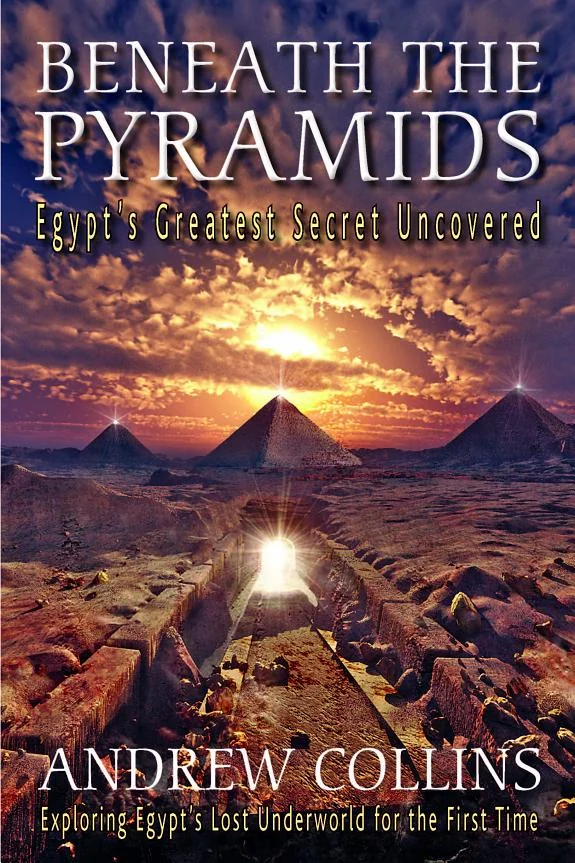
Beneath the Pyramids
 80
80

Beneath the Pyramids
Andrew Collins’ "Beneath the Pyramids" doesn't just challenge Egyptology; it attempts to excavate its foundations. Collins posits a compelling, albeit controversial, case for a vast, predynastic subterranean network integral to the Giza complex. He moves beyond mere speculation by detailing geological surveys and architectural anomalies that mainstream archaeology has largely overlooked or explained away. A particular strength lies in his meticulous cataloging of these underground passages, presenting them as coherent, intentional constructions rather than haphazard natural formations or later additions. However, the book's primary limitation is its reliance on interpreting ambiguous evidence as definitive proof of a lost civilization. The sheer scale of the alleged underworld and its purported age strain credulity without more direct artifacts or inscriptions. Collins' analysis of the "water-level" markings in some tunnels, suggesting an epoch when the area was subject to different hydrological conditions, is a particularly memorable, if speculative, passage. Ultimately, "Beneath the Pyramids" offers a provocative, meticulously researched, but ultimately unproven counter-narrative to Egypt's origins.
📝 Description
80
Andrew Collins argues in 'Beneath the Pyramids' that vast tunnel systems predate Egypt's dynastic period.
Andrew Collins' 'Beneath the Pyramids' examines the extensive subterranean architecture below the Giza plateau and other Egyptian sites. He suggests these complex tunnel systems are not natural formations but intentional constructions that may predate the First Dynasty. Collins compiles evidence from geographical surveys and architectural details to support the idea of a sophisticated civilization whose history has been overlooked or suppressed. The book challenges conventional Egyptological timelines by proposing a much older origin for these underground networks.
This work is aimed at readers who question mainstream historical accounts and look for evidence outside the established Egyptological canon. It will appeal to those interested in alternative histories, ancient mysteries, and the possibility of lost knowledge within the Earth's archaeological record. Individuals fascinated by the Giza pyramids, their surrounding landscape, and anomalies that current academic frameworks struggle to explain will find this book engaging. It is for the dedicated seeker willing to consider unconventional theories supported by detailed observation and comparative analysis.
Collins' work follows a tradition of esoteric inquiry into ancient Egypt that gained traction in the early 20th century. Thinkers like Helena Blavatsky and the Theosophical Society explored ideas of ancient, advanced global civilizations predating known history. While conventional Egyptology focused on dynastic periods from around 3100 BCE, fringe researchers began investigating theories of much older cultures. Collins' book situates itself within this lineage, grounding its speculations in geological surveys and specific architectural details of underground structures, suggesting a hidden history beneath the surface.
💡 Why Read This Book?
• Understand the evidence for extensive subterranean structures beneath Giza, challenging the accepted timeline of Egyptian civilization and offering a counter-narrative to standard Egyptological accounts based on geological surveys. • Explore theories of a sophisticated predynastic culture and its potential connection to megalithic construction, providing specific details on tunnel systems that Collins argues predate the dynastic period. • Gain a critical perspective on how geological anomalies and overlooked architectural features can be interpreted to reveal hidden histories, moving beyond simple tomb exploration to uncover potential lost underworlds.
⭐ Reader Reviews
Honest opinions from readers who have explored this book.
❓ Frequently Asked Questions
What is the primary argument of Andrew Collins' 'Beneath the Pyramids'?
The book argues for the existence of a vast, intentionally constructed subterranean underworld beneath Egypt's Giza plateau and other sites, suggesting these networks predate the dynastic period and hint at a lost, advanced civilization.
What evidence does Collins present for these subterranean structures?
Collins compiles evidence from geological surveys, exploration of existing tunnel systems, and analysis of architectural anomalies that he believes are inconsistent with natural formations or later Egyptian construction methods.
When was 'Beneath the Pyramids' first published?
The book was first published in 2009, placing it within a period of increased accessibility to advanced survey technologies and a continued interest in alternative historical theories.
Does the book focus only on the Giza pyramids?
While Giza is a primary focus, the work explores other potential subterranean sites and complexes across Egypt, suggesting a broader network connected to ancient megalithic construction.
What makes this exploration different from typical archaeological digs?
Unlike conventional archaeology which focuses on visible dynastic structures, Collins investigates hidden underground complexes, proposing they represent an earlier, possibly non-Egyptian, civilization and purpose.
Who is Andrew Collins?
Andrew Collins is an independent researcher and author known for his work on ancient mysteries, alternative history, and the exploration of controversial archaeological theories, particularly concerning ancient Egypt and South America.
🔮 Key Themes & Symbolism
The Subterranean Realm
Collins posits that beneath Egypt's iconic pyramids lies an extensive, deliberately engineered underworld. This theme challenges the traditional view of these monuments as solely above-ground structures, suggesting a hidden architectural layer integral to their original purpose. The book details the exploration of numerous tunnel systems, many dismissed by mainstream Egyptology as natural caves or later mines, and presents them as evidence of a sophisticated, possibly predynastic, construction project with unknown functions.
Predynastic Civilization
A core argument of 'Beneath the Pyramids' is the existence of an advanced civilization that predates the 1st Dynasty of Egypt (circa 3100 BCE). Collins links the subterranean complexes to this forgotten era, suggesting they were built by a culture with advanced engineering capabilities. This theme directly confronts established chronologies by proposing a much older and more complex historical foundation for Egypt's megalithic achievements, hinting at lost knowledge and technology.
Geological Anomalies as Evidence
The work emphasizes the interpretation of geological features and hydrological evidence within these underground spaces. Collins analyzes phenomena such as water-level markings and unusual rock formations not as natural occurrences but as indicators of ancient engineering and environmental conditions. This approach grounds esoteric speculation in tangible, observable data, arguing that these subterranean systems hold keys to understanding the true age and purpose of Egypt's most famous monuments.
Challenging Egyptological Orthodoxy
Collins positions his research as a necessary corrective to the limitations of mainstream Egyptology. By focusing on overlooked subterranean evidence, he aims to broaden the understanding of ancient Egyptian origins and capabilities. This theme critiques the tendency to dismiss or ignore data that doesn't fit established theories, advocating for a more open-minded approach to archaeological interpretation, particularly concerning the Giza plateau.
💬 Memorable Quotes
Direct passages from the work, attributed to the author.
“Egypt's lost underworld for the first time”
— This blurb highlights the book's central premise: uncovering and exploring subterranean structures in Egypt that have been largely ignored or misinterpreted by conventional research, suggesting a hidden layer of history.
“The tunnels... were not natural caves but deliberately constructed passages.”
— This interpretation underscores Collins' core argument that the underground networks are artificial, implying advanced planning and engineering by a civilization whose existence and capabilities challenge current historical understanding.
“Evidence for a predynastic civilization.”
— This phrase points to the book's ambitious claim that the subterranean architecture is evidence of a highly developed culture that existed before the rise of the historically recognized Egyptian dynasties.
“Geological surveys reveal anomalies beneath the pyramids.”
— This indicates Collins' methodology, relying on scientific surveys to identify unusual underground features that he interprets as artificial constructions, rather than naturally occurring geological formations.
“The purpose of these underworld complexes remains a mystery.”
— This acknowledges the speculative nature of some conclusions, admitting that while the construction is argued to be artificial and ancient, the exact function of these extensive underground systems is still open to interpretation.
🌙 Esoteric Significance
Tradition
While not strictly adhering to a single lineage, Collins' work draws heavily from the Hermetic and Gnostic traditions' emphasis on hidden knowledge and ancient wisdom. It aligns with Theosophical ideas of pre-diluvian advanced civilizations and lost histories. The exploration of subterranean realms can be seen as a modern manifestation of the perennial search for primordial truths, often associated with underworld myths and the concept of a hidden spiritual geography beneath the material world.
Symbolism
The subterranean tunnels themselves symbolize the unconscious, the deeper meaning of history, and the unknown aspects of ancient civilizations. The pyramids, when viewed in conjunction with the underworld, represent not just tombs or monuments but potentially gateways or energy conduits connected to a deeper, earthbound power structure. The concept of a 'lost underworld' evokes archetypal journeys into the netherworld, common in various mythologies, suggesting forgotten origins and foundational secrets.
Modern Relevance
Collins' work informs contemporary discussions on archaeoastronomy, sacred geometry, and alternative chronologies of human history. Thinkers exploring ley lines, earth energies, and non-standard interpretations of ancient sites often reference the potential for hidden structures like those described in "Beneath the Pyramids." It speaks to communities interested in the Giza plateau's deeper mysteries beyond the conventional dynastic narrative.
👥 Who Should Read This Book
• Armchair archaeologists and alternative history enthusiasts seeking to challenge mainstream narratives about ancient Egypt and explore theories of lost civilizations. • Researchers interested in the Giza plateau and its surrounding landscape, particularly those investigating anomalies and subterranean features beyond standard Egyptological explanations. • Readers of esoteric and metaphysical literature who are drawn to the idea of hidden knowledge, ancient mysteries, and the potential for uncovering forgotten aspects of human history.
📜 Historical Context
Published in 2009, "Beneath the Pyramids" emerged during a period where digital mapping and ground-penetrating radar were increasingly accessible, allowing for more detailed subsurface investigations. This era saw a continued public fascination with ancient Egypt, often fueled by fringe theories that contrasted with the rigorous, evidence-based approach of academic Egyptology. While mainstream scholars like Zahi Hawass were actively debunking pseudoarchaeological claims concerning the pyramids, Collins' work tapped into a different current of inquiry, one inspired by earlier esoteric interpretations from figures like Helena Blavatsky in the late 19th century. Unlike purely mystical approaches, Collins attempted to ground his theories in geological and architectural observations. The book's reception was largely outside academic circles, resonating more with independent researchers and enthusiasts of ancient mysteries who questioned the established narratives originating from institutions like the Egypt Exploration Fund.
📔 Journal Prompts
The concept of a 'lost underworld' beneath Giza.
Interpretations of geological anomalies as intentional construction.
The implications of a predynastic civilization for Egyptian history.
Collins' arguments regarding water-level markings in subterranean tunnels.
The relationship between surface monuments and hidden underground complexes.
🗂️ Glossary
Predynastic Period
The era in Egyptian history preceding the unification of Upper and Lower Egypt and the establishment of the 1st Dynasty, generally considered to have ended around 3100 BCE.
Giza Plateau
The arid plateau on the outskirts of Cairo, Egypt, famous as the location of the Great Pyramid of Giza, the Pyramid of Khafre, the Pyramid of Menkaure, and the Great Sphinx.
Karstic Formations
Naturally occurring geological features formed by the dissolution of soluble rocks, such as limestone, often resulting in underground caves, sinkholes, and drainage systems.
Dynastic Period
The historical period of ancient Egypt marked by the rule of successive dynasties of pharaohs, beginning with the 1st Dynasty around 3100 BCE.
Subterranean Architecture
Man-made structures built below the ground surface, including tunnels, chambers, and underground complexes, often for purposes of habitation, burial, storage, or ritual.
Egyptological Canon
The body of accepted knowledge, theories, and interpretations within the academic field of Egyptology, particularly concerning the history, culture, and chronology of ancient Egypt.
Ground-Penetrating Radar (GPR)
A geophysical method that uses radar pulses to image the subsurface. It is used to detect buried objects, variations in the subsurface layer, and man-made structures.
This book appears in 1 collection
🔮 Readers Also Liked
Browse all →







From the “Pyramids” Collection
View all →


![" A Self Powered Psychotronic Generator"...rch [ Vol. 35, No. 2, March April 1979]](/img/thumb/a-self-powered-psychotronic-generator-rch-vol-35-no-2-march-april-1979.webp)
More Free Esoteric History & Biography Books
View all →