I Ching Handbook
 61
61

I Ching Handbook



Ophelia Vance, Mystical Literature Reviewer: Wu Wei's 'I Ching Handbook' is an exceptional contribution to esoteric literature, demystifying the profound complexities of the Yi Jing for the modern seeker. Vance masterfully navigates the ancient text, revealing its potent symbolic language and its practical application in understanding life's ever-shifting currents. The book's strength lies in its ability to connect the reader directly to the source of this ancient wisdom, offering clear interpretations without sacrificing the inherent mystery. Ideal for both neophytes and seasoned practitioners, this handbook illuminates the path to self-realization through the lens of cosmic balance and transformative change. A truly illuminating read for anyone seeking deeper insight.
📝 Description
61
Delve into the profound currents of ancient wisdom with the 'I Ching Handbook' by Wu Wei. This meticulously crafted guide unlocks the secrets of the Yi Jing, the venerable Chinese Book of Changes, a cornerstone of Eastern mysticism and divination. More than a mere oracle, the I Ching is presented as a dynamic map of cosmic and human transformation, revealing the intricate interplay of yin and yang forces that shape our reality. Wu Wei's authoritative voice pierces through the veil of complexity, illuminating the subtle symbolism embedded within the hexagrams and their moving lines. This text invites the reader to engage with a living tradition, one that has guided emperors, philosophers, and seekers for millennia. It is a journey into self-discovery, offering profound insights into the cyclical nature of existence, the wisdom of adaptability, and the art of harmonizing with the Tao. For those drawn to the esoteric, the philosophical, and the deeply personal quest for understanding, this handbook serves as an indispensable companion, illuminating the path to inner harmony and enlightened decision-making. Prepare to encounter a universe of meaning, where ancient archetypes resonate with contemporary challenges, offering clarity and profound spiritual growth.
✍️ Author
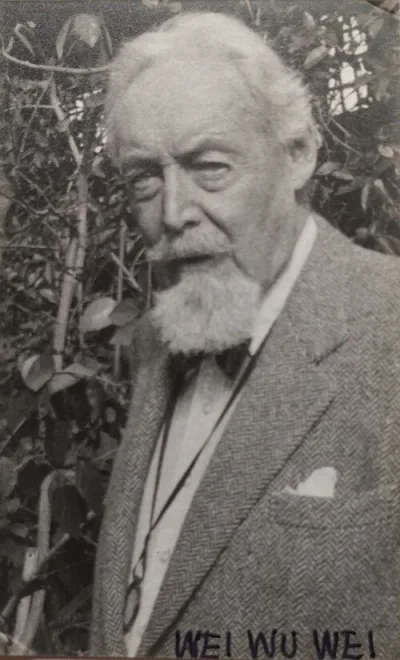
Wu Wei
Terence James Stannus Gray (14 September 1895 – 5 January 1986) was a theatre producer who created the Cambridge Festival Theatre as an experimental theatre in Cambridge. He produced over 100 plays there between 1926 and 1933. Later in life, under the pen n…
💡 Why Read This Book?
Embark on a transformative journey with the 'I Ching Handbook' to unlock ancient wisdom for modern life. Discover the symbolic language of the cosmos and gain profound insights into decision-making, personal growth, and spiritual alignment. Ideal for seekers of truth, students of divination, and practitioners of life skills seeking a deeper understanding of universal patterns and personal destiny. Elevate your consciousness and navigate life's challenges with newfound clarity.
⭐ Reader Reviews
Honest opinions from readers who have explored this book.
❓ Frequently Asked Questions
What is the I Ching?
The I Ching, or Book of Changes, is an ancient Chinese divination text and philosophical classic, revered for its profound insights into the principles of change and cosmic order. It uses a system of hexagrams to interpret situations and guide decisions.
How does the I Ching work?
By casting coins or yarrow stalks, a specific hexagram is generated, representing a particular situation or stage of development. The text then provides interpretations and advice based on the hexagram's imagery and changing lines.
Is the I Ching only for divination?
While widely used for divination, the I Ching is also a profound philosophical text offering wisdom on life, leadership, and self-cultivation. Its principles are applicable to understanding personal and societal dynamics.
Who was Wu Wei?
Wu Wei is a pseudonym often associated with authors deeply versed in Taoist philosophy and esoteric traditions. This handbook reflects a profound understanding of these principles, aiming to make them accessible.
What are the core concepts of the I Ching?
Core concepts include the interplay of Yin and Yang, the cyclical nature of change, the importance of balance, and the wisdom of adapting to the flow of events. It emphasizes the dynamic rather than static nature of reality.
🔮 Key Themes & Symbolism
The Dance of Yin and Yang
This theme explores the fundamental principle of duality that permeates the I Ching. It delves into how the seemingly opposing forces of Yin (passive, feminine, dark) and Yang (active, masculine, light) are not in conflict but in a dynamic, interdependent relationship. Understanding this cosmic dance is crucial for grasping the ever-shifting nature of reality, recognizing patterns in life's events, and finding balance within oneself and one's circumstances. The hexagrams themselves are intricate representations of these interactions, offering a visual language for the ebb and flow of existence.
The Wisdom of Cyclical Change
At its heart, the I Ching is a testament to the principle that all things are in a state of perpetual flux. This theme examines how the 64 hexagrams represent the various stages and transformations within a grand cosmic cycle. It teaches the reader to anticipate change, adapt to new circumstances with grace, and understand that periods of difficulty are inevitably followed by times of progress. This perspective fosters resilience, encourages patience, and promotes a philosophical acceptance of life's unpredictable nature, guiding individuals towards a more harmonious existence.
The Oracle of Self-Realization
Beyond its divinatory function, the 'I Ching Handbook' serves as a powerful tool for introspection and self-discovery. This theme focuses on how consulting the Yi Jing offers profound insights into one's inner landscape, motivations, and potential. By reflecting on the archetypal images and counsel provided by the hexagrams, readers are guided to align their actions with their true nature and the cosmic order. It's a method for gaining clarity, making conscious choices, and ultimately, cultivating a deeper understanding of one's purpose and path toward spiritual enlightenment.
💬 Memorable Quotes
“The hexagrams are mirrors to the soul.”
— This quote suggests that the I Ching's symbolic language reflects our inner states and external circumstances, offering a profound tool for self-examination and understanding.
“Change is the only constant; learn to flow with it.”
— Emphasizing the core philosophy of the Yi Jing, this highlights the necessity of adaptability and acceptance in navigating life's inevitable transformations.
“In stillness, find the direction of the wind.”
— This quote points to the practice of inner quietude as a means to perceive subtle guidance and cosmic currents, essential for discerning one's path.
“The past informs, the present acts, the future unfolds.”
— This concisely outlines the temporal perspective offered by the I Ching, stressing the interconnectedness of time and the importance of mindful action.
“Seek balance, not rigidity, in all your endeavors.”
— This advises against extreme positions, advocating for moderation and equilibrium as the path to wisdom and successful navigation of life's complexities.
🌙 Esoteric Significance
Tradition
The 'I Ching Handbook' is deeply rooted in the ancient Chinese esoteric traditions, primarily Taoism and its associated practices. It draws heavily from the principles of the Tao, the underlying cosmic order, and the interplay of Yin and Yang. This tradition emphasizes harmony with nature, cyclical understanding of existence, and the pursuit of inner balance and spiritual realization through intuitive wisdom rather than dogma.
Symbolism
The I Ching's symbolism is rich and multifaceted, centered around its 64 hexagrams. Each hexagram, composed of six lines (broken for Yin, solid for Yang), represents archetypal situations, natural phenomena, and human conditions. The trigrams (three-line combinations) form the building blocks, each associated with specific elements, directions, and qualities, offering a profound symbolic language for understanding the universe and one's place within it.
Modern Relevance
In contemporary times, the I Ching's relevance lies in its ability to offer a timeless framework for navigating complexity and uncertainty. Its emphasis on adaptability, mindful decision-making, and understanding cyclical patterns provides invaluable tools for personal growth, psychological insight, and spiritual development in a rapidly changing world. It serves as a profound guide for self-reflection and harmonizing one's life with universal principles.
👥 Who Should Read This Book
This 'I Ching Handbook' is a treasure for a diverse range of readers. Beginners in divination and esoteric studies will find it an accessible yet profound introduction to the Yi Jing, demystifying its complex symbolism. Scholars and practitioners of Eastern philosophies will appreciate its depth and insightful interpretations, offering new perspectives on ancient wisdom. Seekers of self-knowledge and personal transformation will discover a powerful tool for introspection and guidance. Those interested in life skills, decision-making, and understanding universal patterns will find actionable wisdom to navigate their personal and professional lives with greater clarity and purpose.
📜 Historical Context
The I Ching, or Book of Changes, emerged from the mystical and philosophical traditions of ancient China, with its origins dating back over three millennia. Initially a method of divination, it evolved into a profound philosophical text deeply entwined with Taoist and Confucian thought. Its development spanned various dynasties, with key commentaries, such as the Ten Wings attributed to Confucius, shaping its interpretation and elevating it from a mere oracle to a cornerstone of Chinese cosmology and ethics. During its formative periods, the I Ching was consulted by rulers for statecraft, by scholars for moral guidance, and by ordinary people seeking clarity in personal matters. Its enduring influence is a testament to its adaptability, resonating across centuries and cultures as a timeless guide to understanding the fundamental principles of existence and human experience.
📔 Journal Prompts
Reflect on a recent situation where you felt a strong pull between two opposing forces (Yin and Yang). How did you navigate this duality?
Consider a significant change you have experienced. How did embracing the cyclical nature of this change lead to growth or understanding?
What is the 'moving line' in your current life situation, and what advice does it offer for your immediate actions?
How can the archetypal imagery of a specific hexagram be applied to a challenge you are currently facing?
Meditate on the concept of 'non-action' (Wu Wei) in relation to a task or decision you need to make. Where can you find harmony by letting go?
🗂️ Glossary
Yi Jing
The ancient Chinese text more commonly known as the I Ching, or Book of Changes. It is a foundational work of Chinese philosophy and divination, exploring the principles of change and cosmic order.
Hexagram
A six-line figure composed of trigrams, representing a specific situation, archetype, or stage in the cycle of change. There are 64 unique hexagrams in the I Ching.
Trigram
A three-line figure, either solid (Yang) or broken (Yin), that forms the basis of the hexagrams. There are eight fundamental trigrams, each with distinct symbolic meanings.
Yin
The passive, feminine, dark, receptive, and yielding principle in Chinese philosophy, often represented by a broken line in the I Ching.
Yang
The active, masculine, light, creative, and assertive principle in Chinese philosophy, often represented by a solid line in the I Ching.