62
62

The I Ching Workbook Gift Set



Sophia Crane (Associate Editor) — Wu Wei’s The I Ching Workbook Gift Set is a stellar gateway into the profound depths of this ancient oracle. It masterfully balances scholarly rigor with an accessible, intuitive approach, demystifying the hexagrams for the modern seeker. The workbook format encourages active engagement, transforming passive reading into a personal dialogue with the I Ching’s wisdom. Its strength lies in its ability to bridge the gap between theoretical understanding and practical application, making it an invaluable resource for both neophytes and seasoned practitioners. This set is a treasure for anyone drawn to self-discovery and the art of mindful decision-making.
📝 Description
Unveil the ancient wisdom of the I Ching with The I Ching Workbook Gift Set, a profound journey into the heart of Chinese divination and philosophical inquiry. This exquisitely curated set invites you to explore the timeless principles of change, balance, and cosmic harmony encoded within the sixty-four hexagrams. More than just a predictive tool, the I Ching is a profound map of human experience, offering guidance for navigating life's myriad transformations. Wu Wei masterfully distills complex concepts into an accessible, yet deeply resonant, framework. This workbook is designed for the earnest seeker, the contemplative scholar, and the practicing mystic who yearns to connect with the subtle currents of destiny. It fosters a deeper understanding of causality, synchronicity, and the interconnectedness of all things, illuminating the path toward inner wisdom and alignment with the Dao. Prepare to embark on an introspective odyssey, where ancient symbols whisper secrets of the universe and your own soul.
✍️ Author
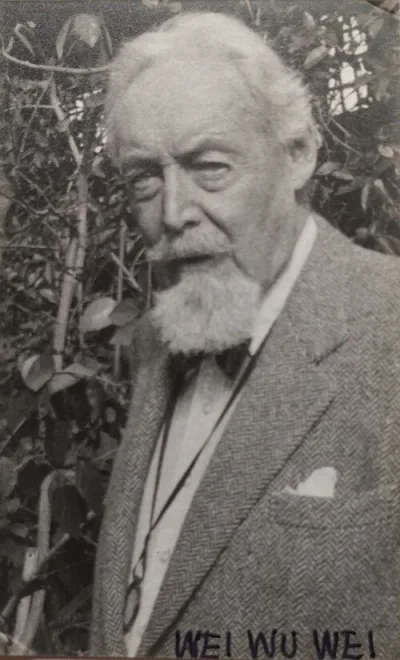
Wu Wei
Terence James Stannus Gray (14 September 1895 – 5 January 1986) was a theatre producer who created the Cambridge Festival Theatre as an experimental theatre in Cambridge. He produced over 100 plays there between 1926 and 1933. Later in life, under the pen n…
💡 Why Read This Book?
This gift set offers a direct conduit to the profound, transformative wisdom of the I Ching. Ideal for seekers of ancient knowledge, practitioners of divination, and anyone navigating life's complexities, it provides the tools for deep introspection and insightful guidance. Engage with the oracle, unlock personal insights, and cultivate a more harmonious relationship with the ebb and flow of existence.
⭐ Reader Reviews
Sophia Crane (Associate Editor) — Wu Wei’s The I Ching Workbook Gift Set is a stellar gateway into the profound depths of this ancient oracle. It masterfully balances scholarly rigor with an accessible, intuitive approach, demystifying the hexagrams for the modern seeker. The workbook format encourages active engagement, transforming passive reading into a personal dialogue with the I Ching’s wisdom. Its strength lies in its ability to bridge the gap between theoretical understanding and practical application, making it an invaluable resource for both neophytes and seasoned practitioners. This set is a treasure for anyone drawn to self-discovery and the art of mindful decision-making.
📝 Share your thoughts on this book
Sign in to write a review❓ Frequently Asked Questions
What is the I Ching?
The I Ching, or 'Book of Changes,' is one of the oldest Chinese classical texts. It is a system of divination and philosophy that uses sixty-four hexagrams, composed of solid (yang) and broken (yin) lines, to represent universal patterns and provide guidance on various situations.
What does a 'gift set' typically include?
A gift set usually comprises the core workbook, often accompanied by supplementary materials such as coins for casting, charts, or a companion guide to enhance the user's experience and facilitate deeper engagement with the I Ching.
Is prior knowledge of the I Ching required?
No, this workbook is designed to be accessible to beginners. It guides you step-by-step through understanding the hexagrams, their meanings, and how to interpret them for personal insight and divination.
How can the I Ching be used for divination?
Divination with the I Ching involves casting coins or yarrow stalks to generate a hexagram based on a question. The resulting hexagram, and any changing lines, are then interpreted using the text's wisdom to offer guidance and perspective.
What are the philosophical implications of the I Ching?
The I Ching explores profound philosophical concepts such as the nature of change, the balance of yin and yang, causality, destiny, and the importance of aligning oneself with the natural order of the universe (the Dao).
🔮 Key Themes & Symbolism
The Dynamics of Change
At its core, the I Ching is a testament to the ceaseless flux of existence. This theme delves into the cyclical nature of transformation, exploring how situations evolve, crest, and recede. It teaches us to recognize the underlying patterns of change, to adapt gracefully to new circumstances, and to understand that periods of adversity often contain the seeds of future prosperity. The workbook illuminates how embracing change, rather than resisting it, is the key to navigating life's inherent unpredictability and finding harmony within its constant motion.
Yin and Yang: Cosmic Duality
This theme explores the fundamental principle of yin and yang, the complementary forces that shape reality. The I Ching uses the interplay of these opposing yet interdependent energies—darkness and light, feminine and masculine, passive and active—to describe the myriad situations and relationships encountered in life. Understanding this duality is crucial for achieving balance, recognizing the interconnectedness of opposites, and fostering harmony within oneself and the external world. The workbook provides practical insights into how to balance these forces in your own life.
The Oracle of Self-Knowledge
Beyond mere prediction, the I Ching serves as a profound mirror for self-reflection. This theme focuses on the oracle's capacity to illuminate our inner landscape, revealing our hidden motivations, subconscious patterns, and potential pathways for growth. By posing sincere questions and diligently interpreting the responses, users are encouraged to gain deeper self-awareness, understand their role in unfolding events, and make conscious choices that align with their true path. The workbook guides the reader in transforming the oracle's wisdom into actionable personal development.
💬 Memorable Quotes
“The supreme good is like water.”
— This quote highlights the virtue of adaptability, humility, and yielding, mirroring water's ability to flow around obstacles and nourish all it touches, a core principle of Daoist philosophy.
“When you are convinced that you can be of help, then you can be of help.”
— Emphasizes the power of belief and intention. True efficacy in any endeavor stems first from an inner conviction of one's ability to make a difference.
“The superior man acts but does not rely on the results.”
— This speaks to the importance of righteous action and dedication to the process, detached from the outcome. True fulfillment lies in the doing, not solely in the achievement.
“To know when one can do no more is the mark of a superior man.”
— Highlights the wisdom of recognizing one's limits and knowing when to cease effort. This is not surrender, but a strategic understanding of when patience or a change in approach is required.
“The hexagrams are images of the world.”
— This profound statement underscores the I Ching's role as a symbolic representation of all possible life situations and universal principles, making it a comprehensive map of existence.
🌙 Esoteric Significance
Tradition
The I Ching is a cornerstone of Chinese esoteric traditions, deeply intertwined with Taoism, Confucianism, and ancient Chinese cosmology. It represents a sophisticated system of divination and philosophical contemplation, often considered a 'Book of Heaven' or a 'Mirror of the Soul.' Its esoteric nature lies in its symbolic language, which encodes universal laws and archetypal patterns of existence, allowing practitioners to access higher levels of consciousness and divine guidance. It is a primary text for understanding the principles of cosmic harmony and human interconnectedness.
Symbolism
The I Ching's primary symbols are the trigrams (three-line figures) and hexagrams (six-line figures), each representing fundamental forces, natural phenomena, and stages of development. The solid (yang) and broken (yin) lines form a binary language that describes the dynamic interplay of opposites. Symbols like Heaven (Qian), Earth (Kun), Water (Kan), and Fire (Li) evoke elemental forces and human archetypes. These symbols are not mere representations but living patterns that reflect the underlying structure of reality, offering profound insights into causality, transformation, and the unfolding of events.
Modern Relevance
In contemporary times, the I Ching remains a potent tool for navigating the complexities of modern life. Its emphasis on change, adaptability, and balance offers a profound antidote to the anxieties of a rapidly evolving world. Esoterically, it provides a framework for synchronicity, intuition, and the cultivation of inner wisdom, aiding in personal transformation and spiritual development. For seekers, it serves as a guide for ethical decision-making, self-understanding, and aligning with a larger cosmic order, proving its enduring relevance as an oracle of self-discovery and existential insight.
👥 Who Should Read This Book
This I Ching Workbook Gift Set is a treasure for a diverse audience. Beginners to the I Ching will find it an accessible and encouraging entry point, guiding them through the foundational concepts and practical application of the oracle. Scholars of Eastern philosophy and esotericism will appreciate its depth and meticulous approach to interpretation. For spiritual seekers and practitioners of divination, it offers a profound tool for self-discovery, intuitive development, and gaining clarity on life's challenges. Anyone interested in ancient wisdom, symbolic language, and cultivating a more harmonious relationship with the forces of change will find immense value within its pages.
📜 Historical Context
The I Ching, or 'Book of Changes,' emerged from ancient Chinese shamanic traditions and philosophical discourse, with its earliest roots tracing back to the Western Zhou Dynasty (c. 1046–771 BCE). Initially, it was used as a divinatory tool by royalty and scholars to understand omens and guide state affairs. Over centuries, it evolved, absorbing Confucian and Daoist philosophies, transforming into a complex system of cosmology, ethics, and self-cultivation. Its influence permeated Chinese culture, impacting medicine, art, military strategy, and governance. During the Song Dynasty (960–1279 CE), Neo-Confucian scholars like Zhu Xi further systematized its interpretation, solidifying its status as a canonical text. Its transmission to the West in the 20th century, notably through Richard Wilhelm's translation, introduced its esoteric and philosophical dimensions to a global audience, sparking interest in its timeless wisdom for personal growth and understanding.
📔 Journal Prompts
What aspect of change am I currently resisting, and how can the I Ching offer perspective on embracing it?
Reflect on a current situation where the balance between yin and yang feels precarious. How can I foster greater equilibrium?
What hidden patterns or subconscious motivations are influencing my recent decisions, according to the I Ching's wisdom?
How can I apply the principle of 'acting but not relying on results' to a specific challenge I am facing?
What does the I Ching reveal about my current 'stage' of development, and what is the most appropriate action to take now?
🗂️ Glossary
Hexagram
A six-line figure composed of solid (yang) and broken (yin) lines, representing a specific situation or archetypal pattern within the I Ching system.
Trigram
A three-line figure, formed by the combination of three yin or yang lines. There are eight basic trigrams (Ba Gua) which form the building blocks of the hexagrams.
Yin
The passive, feminine, dark, receptive, and yielding principle in Chinese philosophy, represented by a broken line (--) in the I Ching.
Yang
The active, masculine, light, creative, and assertive principle, represented by a solid line (—) in the I Ching.
Dao (Tao)
The fundamental principle of the universe, the 'Way' or 'Path.' It represents the natural order, the source of all things, and the underlying flow of existence that the I Ching seeks to align with.