Thrice Greatest Hermes, Volume 3
 82
82

Thrice Greatest Hermes, Volume 3


Sophia Crane (Associate Editor) — George Robert Stowe Mead's 'Thrice Greatest Hermes, Volume 3' is an indispensable cornerstone for anyone serious about Hermetic studies. This volume brilliantly compiles and contextualizes the elusive fragments of Trismegistic thought, often preserved only in secondary sources. Mead's scholarship is impeccable, offering readers access to a wealth of material previously scattered across ancient texts and patristic writings. The true strength lies in its comprehensive nature, providing a holistic view of Hermetic philosophy that is both intellectually rigorous and spiritually resonant. Ideal for scholars, advanced practitioners, and dedicated seekers yearning for a deeper understanding of Western esotericism's foundational texts.
📝 Description
82
George Robert Stowe Mead published the final volume of 'Thrice Greatest Hermes' in 1906.
Volume 3 of George Robert Stowe Mead's 'Thrice Greatest Hermes' completes his comprehensive study of the Hermetic tradition. This book collects and analyzes key texts and fragments attributed to Hermes Trismegistus. Mead draws on sources like Stobaeus and early Church Fathers to reconstruct the philosophical and mystical ideas associated with this ancient figure. The work examines concepts of gnosis, the alchemical processes of transformation, and cosmological principles.
It presents these ideas not as mere historical curiosities, but as a coherent system of thought. The book aims to illuminate the core tenets of Hermeticism for those interested in its deeper meanings. Mead's scholarship makes the material accessible while retaining its intellectual rigor. The volume is designed for readers seeking to understand the perennial philosophy and its expression through Hermes Trismegistus.
This work is situated within the study of Hermeticism, a philosophical and religious tradition based on writings attributed to Hermes Trismegistus. These texts, compiled and translated over centuries, combine Greek philosophical ideas with Egyptian religious beliefs and Jewish mystical elements. Hermeticism influenced Renaissance Neoplatonism, alchemy, and various esoteric movements. Mead's three volumes represent a significant scholarly effort to present the primary sources and interpret their meaning for a modern audience interested in Western esotericism.
✍️ Author
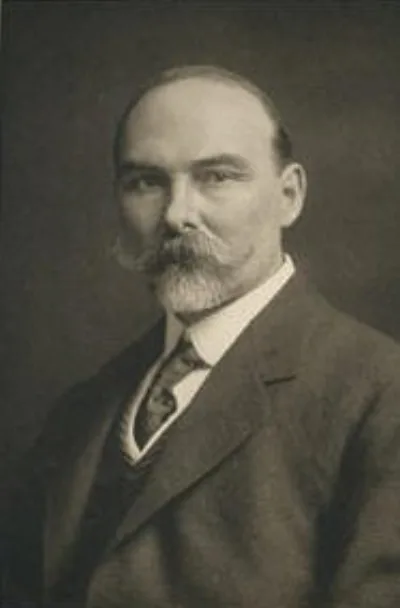
George Robert Stowe Mead
George Robert Stowe Mead was an English author and scholar of Gnosticism and early Christian mysticism.
Esoteric Writer
💡 Why Read This Book?
Unearth the lost wisdom of Hermes Trismegistus by accessing rare fragments and secondary sources. This volume offers a comprehensive survey of Hermetic philosophy, essential for scholars and practitioners seeking to understand the roots of Western esotericism, alchemy, and Gnosticism. It's a vital resource for anyone dedicated to the perennial wisdom and the pursuit of higher knowledge.
⭐ Reader Reviews
Honest opinions from readers who have explored this book.
❓ Frequently Asked Questions
What is the primary focus of Volume 3?
Volume 3 focuses on collecting and presenting the diverse excerpts and fragments of Hermetic and related philosophical writings that survive in second- or third-hand sources, offering a comprehensive view of Trismegistic thought.
Which ancient sources are notably included?
This volume features substantial fragments preserved in the works of Stobaeus, alongside numerous citations and polemical quotations from the Church Fathers, providing critical context.
Who is George Robert Stowe Mead?
George Robert Stowe Mead was a prominent scholar and translator of esoteric and mystical texts, particularly known for his comprehensive translations and analyses of Hermetic literature.
Is this book suitable for beginners?
While rich in detail, Volume 3 is best suited for those with some foundational knowledge of Hermeticism or comparative religion, as it delves into complex philosophical and historical contexts.
What is the significance of 'Thrice Greatest Hermes'?
'Thrice Greatest Hermes' is considered a seminal work in the study of Hermeticism, offering a scholarly yet accessible gateway to the teachings attributed to Hermes Trismegistus, a syncretic deity embodying wisdom.
🔮 Key Themes & Symbolism
The Hermetic Corpus Reconstructed
This volume serves as a vital archaeological dig into the lost library of Hermetic thought. Mead meticulously reconstructs the philosophical edifice of Hermes Trismegistus by piecing together disparate fragments found within the works of later philosophers and theologians. It highlights how ancient wisdom, though scattered by time, retains its coherence and useful insights into the nature of the cosmos, humanity's place within it, and the path to spiritual enlightenment. The emphasis is on the survival and interpretation of these foundational texts in the face of historical challenges.
Gnosis and the Pursuit of Divine Knowledge
Central to the Hermetic tradition is the concept of Gnosis – direct, intuitive knowledge of the divine. Volume 3 illuminates this pursuit, presenting texts that emphasize self-knowledge as the key to universal understanding. It explores the Hermetic view of humanity's divine spark and the potential for ascent through intellectual and spiritual cultivation. The collection reveals a worldview where the material and spiritual realms are interconnected, and the journey towards the divine is one of awakening to one's true, luminous nature.
Alchemy of the Soul and Cosmic Harmony
Beyond the physical transformations of material alchemy, this volume looks at the spiritual and psychological dimensions of the alchemical process. The Hermetic teachings presented here suggest that true alchemy lies in the purification and transformation of the soul, mirroring the cosmic order. It explores the intricate correspondences between the macrocosm and the microcosm, revealing how understanding the universal laws can guide the individual towards inner perfection and alignment with the divine will, fostering a profound sense of cosmic harmony.
💬 Memorable Quotes
Direct passages from the work, attributed to the author.
“The All is Mind; the All has the Mind of the All.”
— This fundamental Hermetic axiom posits a universe governed by divine intelligence, suggesting that consciousness is the ultimate reality and the source from which all existence emanates.
“As above, so below; as within, so without.”
— This principle illustrates the interconnectedness of all planes of existence, implying that the microcosm (man) reflects the macrocosm (universe) and vice versa.
“To know thyself is to know God.”
— This aphorism emphasizes introspection and self-awareness as the primary pathways to understanding the divine, positing that the divine essence resides within the human soul.
“The key to the universe is hidden within the soul.”
— This suggests that the profound mysteries of existence are not found in external sources alone, but are accessible through inner exploration and the awakening of one's spiritual faculties.
“Wisdom is the daughter of experience.”
— This pragmatic yet profound statement highlights that true understanding and insight are gained not merely through theoretical knowledge, but through lived experience and its thoughtful integration.
🌙 Esoteric Significance
Tradition
This volume is deeply rooted in the Hermetic tradition, a syncretic body of religious, philosophical, and esoteric knowledge attributed to the legendary figure Hermes Trismegistus. It represents a core part of Western esotericism, influencing Gnosticism, Neoplatonism, Kabbalah, alchemy, and subsequent mystical movements. Its significance lies in its attempt to synthesize ancient Egyptian, Greek, and Jewish thought into a universal philosophy of cosmic unity and divine wisdom.
Symbolism
Hermetic symbolism abounds, including the Caduceus (representing balance and healing), the Ouroboros (eternity and cyclical nature), and the concept of the 'Emerald Tablet' (the fundamental principles of Hermetic alchemy). The texts explore symbolic representations of the divine, the cosmos, and the human soul, often employing allegorical language to convey profound metaphysical truths about creation, transformation, and the ascent of the spirit.
Modern Relevance
The Hermetic principles of 'as above, so below,' the interconnectedness of all things, and the power of consciousness continue to resonate deeply in modern spiritual, psychological, and even scientific thought. Volume 3 provides direct access to the source material that underpins many contemporary esoteric practices, mindfulness techniques, and philosophical inquiries into the nature of reality and human potential.
👥 Who Should Read This Book
This concluding volume is essential for dedicated students of Western esotericism, Gnosticism, and comparative philosophy. Scholars will find Mead's meticulous compilation of fragments important for academic research. Practitioners of alchemy, astrology, and Hermetic magic will discover foundational wisdom and practical insights. Spiritual seekers yearning for a deeper understanding of perennial philosophy and the nature of the divine will find profound inspiration. While dense, it offers exceptional depth for those committed to unraveling the mysteries of the Hermetic tradition.
📜 Historical Context
Published in 1906, George Robert Stowe Mead's 'Thrice Greatest Hermes' emerged during a period of intense resurgence in occult and esoteric studies. The late Victorian and Edwardian eras witnessed a widespread fascination with ancient wisdom traditions, spiritualism, and Eastern philosophies, as many sought alternatives to the perceived materialism of the age. Mead's meticulous scholarship provided a vital bridge, making the complex philosophical underpinnings of Hermeticism accessible to a new generation of seekers and scholars. This work stood as a significant contribution to the burgeoning field of comparative religion and esotericism, solidifying Hermeticism's place within the Western mystical canon and influencing subsequent generations of occultists, philosophers, and theologians.
📔 Journal Prompts
Reflect on the concept of 'As Above, So Below' in your daily life. Where do you see correspondences between your inner world and external circumstances?
Consider the idea of the 'All is Mind.' How does this perspective shift your understanding of reality and your own consciousness?
Meditate on the Hermetic pursuit of Gnosis. What does 'direct knowing' mean to you, and how might you cultivate it?
Explore the symbolic meanings of the Caduceus or Ouroboros. What personal interpretations or insights do these symbols evoke?
How can the Hermetic concept of spiritual alchemy be applied to your personal growth and transformation?
🗂️ Glossary
Hermes Trismegistus
A legendary Greco-Egyptian figure, regarded as the author of the Hermetic Corpus and the personification of wisdom and magic. He is a syncretic deity, blending Greek Hermes with Egyptian Thoth.
Trismegistic
Pertaining to or derived from the teachings and writings attributed to Hermes Trismegistus, particularly the Hermetic Corpus.
Gnosis
A Greek term meaning 'knowledge,' often referring to intuitive, experiential, or spiritual knowledge, particularly of divine mysteries, as opposed to intellectual understanding.
Patristic
Relating to the writings of the Church Fathers, early Christian theologians and writers whose works are considered authoritative in Christian doctrine and history.
Macrocosm
The universe considered as a complex whole, seen as an image or reflection of the microcosm (humanity or the individual).
This book appears in 2 collections
🔮 Readers Also Liked
Browse all →









More by George Robert Stowe Mead
All books →





From the “Transcendental Meditation” Collection
View all →![CIA Reading Room cia-rdp78t05439a000400230090-7: MENSURATION OF THE [ ]-BUKHARA CANAL, USSR](/img/thumb/cia-reading-room-cia-rdp78t05439a000400230090-7-mensuration-of-the-bukhara-canal-ussr-cia-reading-room.webp)






More Free Alchemy & Hermeticism Books
View all →