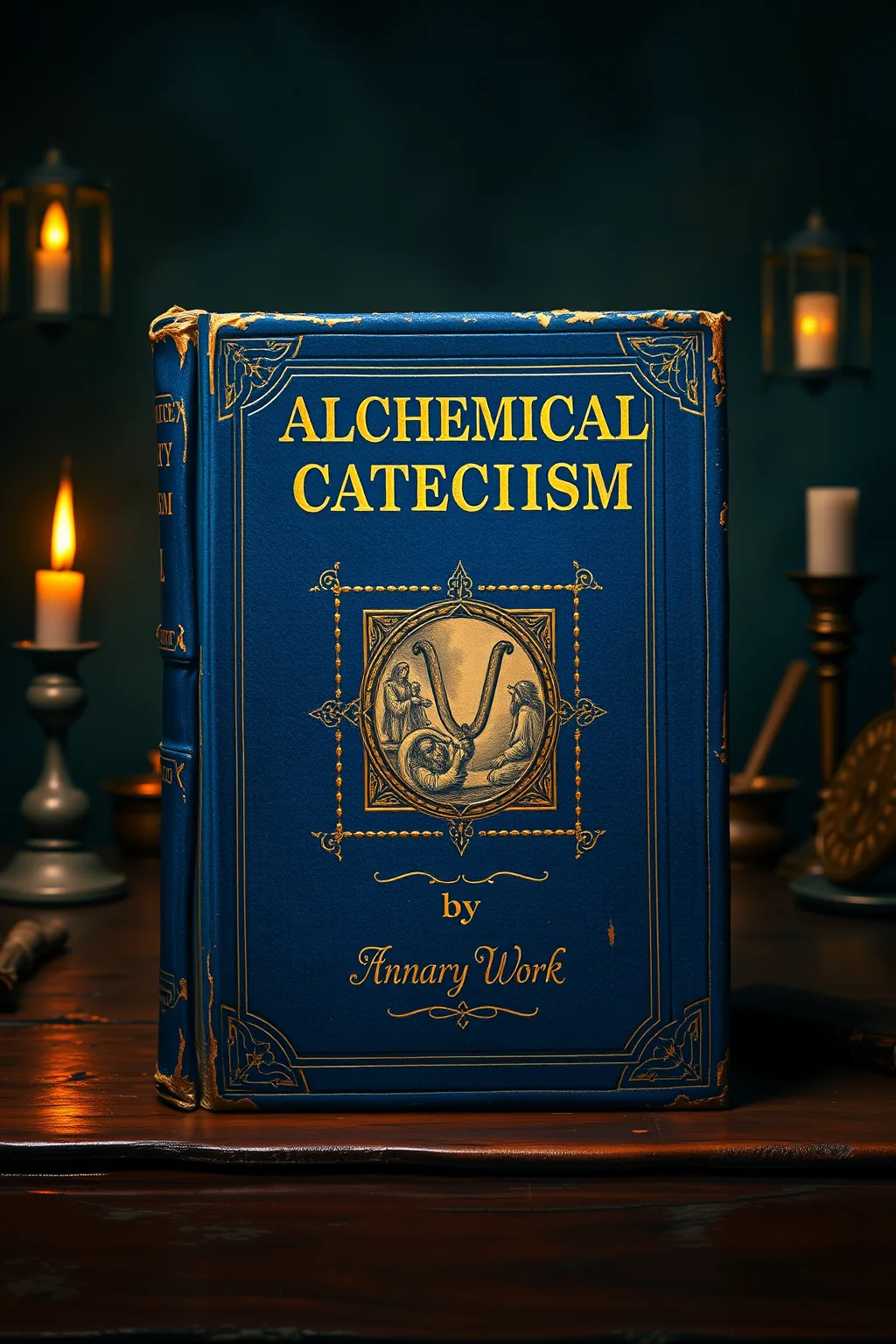
Alchemical Catechism
 81
81

Alchemical Catechism


Review by Balthazar Finch (Senior Critic, Occult Philosophy) — The 'Alchemical Catechism' is a gem of Hermetic literature, offering succinct yet profound insights into the alchemical worldview. Its anonymous author possesses a rare gift for distilling complex truths into elegantly simple questions and answers, mirroring the pedagogical methods of ancient initiatory schools. This work excels in its directness, eschewing elaborate allegory for core principles. It is particularly valuable for its emphasis on the philosophical and spiritual dimensions of the Art, urging practitioners to look beyond mere material manipulation towards inner transmutation. An indispensable primer for serious students of alchemy and Hermeticism seeking foundational knowledge.
📝 Description
81
The 'Alchemical Catechism' presents alchemy as a sacred science of transformation, not just metallurgy.
This text, structured as a question-and-answer dialogue, reveals the core tenets of the Great Work from an unknown alchemical master. It moves beyond simple metal transmutation to describe a spiritual process. The catechism details how to understand the hidden workings of nature, working with the interplay of spirit, soul, and body. Its verses are meant to inspire contemplation of the connection between the individual and the cosmos. The work is aimed at individuals with a serious interest in Hermetic philosophy who seek to grasp the fundamental structure of reality.
It promises spiritual enlightenment and divine union, rather than material wealth. This work is presented as a secret passed among initiates, reflecting the long tradition of alchemical inquiry. It serves as a guide for those on the path of self-knowledge within the Hermetic tradition. The text emphasizes the philosophical underpinnings of the alchemical quest.
The 'Alchemical Catechism' belongs to the Western esoteric tradition, specifically within the corpus of alchemical literature. It follows the convention of presenting complex alchemical principles through allegorical language and symbolic dialogue. This genre often aims to instruct initiates on the spiritual and philosophical dimensions of the alchemical art, distinguishing it from purely laboratory practice. Texts of this nature typically engage with concepts of spiritual purification, the union of opposites, and the pursuit of inner perfection, mirroring the material processes described in classical alchemy.
💡 Why Read This Book?
Unravel the core tenets of the Great Work through a direct, question-and-answer format. Discover the alchemist's true objective: understanding Nature's operations and achieving spiritual transformation. Ideal for initiates and scholars seeking a concise yet profound introduction to alchemical philosophy and its esoteric underpinnings. A gateway to the hidden wisdom of the Hermetic tradition.
⭐ Reader Reviews
Honest opinions from readers who have explored this book.
❓ Frequently Asked Questions
What is the primary goal of the alchemist according to this text?
The chief study and ultimate goal of a Philosopher, as revealed in this catechism, is the profound investigation and understanding of the intricate and subtle operations of Nature, seeking to grasp its fundamental laws and forces.
Does this book focus on material transmutation or spiritual transformation?
While acknowledging the physical aspects, the 'Alchemical Catechism' profoundly emphasizes spiritual transformation, viewing the material processes as symbolic representations of inner purification and ascent.
Who is the intended audience for this work?
This text is best suited for earnest seekers of wisdom, students of esoteric philosophy, and practitioners of the Hermetic arts who are ready to delve into the foundational principles of alchemy.
What kind of knowledge can one expect to gain from reading this?
Readers can expect to gain a foundational understanding of alchemical principles, the interconnectedness of the microcosm and macrocosm, and the philosophical path towards self-realization and spiritual enlightenment.
Is this book suitable for beginners in alchemy?
Yes, its catechism format makes it an excellent starting point for beginners, providing clear, direct answers to fundamental questions about the alchemical quest.
🔮 Key Themes & Symbolism
The Investigation of Nature's Operations
This core theme posits that true alchemy is not merely about transforming metals but about deeply understanding the fundamental processes and laws that govern the natural world. It encourages a holistic observation of the universe, from the smallest particle to the grandest celestial movements, recognizing that these operations hold the keys to both material and spiritual transmutation. The Philosopher's quest is thus an intellectual and spiritual exploration of existence itself.
The Art of Transformation
Beyond its literal interpretation, alchemy is presented as a profound art of transformation, both external and internal. The text hints at the processes of purification, dissolution, and coagulation as metaphors for the alchemist's own journey of shedding imperfections, breaking down egoic structures, and reforming the self into a more perfect, enlightened state. This theme underscores the personal and spiritual dimension of the Great Work.
The Philosopher's Quest for Wisdom
This theme centers on the dedicated pursuit of knowledge and understanding that defines the true alchemist. It highlights the discipline, patience, and unwavering focus required to unravel the universe's mysteries. The 'Philosopher' is portrayed as a seeker of ultimate truth, driven by an insatiable curiosity and a desire to harmonize with the divine order, making the quest itself the ultimate reward.
💬 Memorable Quotes
Direct passages from the work, attributed to the author.
“What is the chief study of a Philosopher?”
— This foundational question probes the very essence of the alchemical pursuit, defining it not as a mundane craft but as a profound intellectual and spiritual inquiry into the universe's deepest workings.
“It is the investigation of the operations of Nature.”
— This concise answer reveals the alchemical worldview: understanding the 'how' and 'why' of natural phenomena is the direct path to unlocking its secrets and achieving transformation.
“The Art is a mirror reflecting the cosmos.”
— This cryptic statement suggests that the alchemical processes, when correctly understood, serve as a symbolic representation of universal laws and cosmic cycles, allowing for a deeper comprehension of existence.
“Seek the hidden fire within the inert.”
— This evocative phrase points towards the potential for latent spiritual energy or divine essence residing even within seemingly mundane or unrefined aspects of existence, awaiting activation.
“To know is to become.”
— This potent aphorism captures the transformative power of knowledge in alchemy, implying that true understanding leads to an intrinsic change and realization of one's own potential.
🌙 Esoteric Significance
Tradition
This text is firmly rooted in the Western Esoteric Tradition, specifically within the lineage of Hermeticism and Alchemy. It draws upon ancient philosophical principles, often attributed to Hermes Trismegistus, emphasizing the interconnectedness of all things and the potential for human spiritual evolution through understanding and manipulating the subtle energies of the universe.
Symbolism
The 'Alchemical Catechism' employs rich, albeit often implicit, symbolism. The 'operations of Nature' refer not only to physical processes but also to the divine will and cosmic forces at play. The inherent 'fire' symbolizes spiritual energy or divine spark, while 'inert' materials represent the unrefined aspects of the self or the prima materia, awaiting transformation through the alchemical processes.
Modern Relevance
In an age often characterized by materialism and disconnection, the 'Alchemical Catechism' offers a timeless reminder of the importance of inner exploration and the profound interconnectedness of the universe. Its emphasis on understanding natural laws and achieving spiritual transformation resonates deeply with contemporary seekers of meaning, personal growth, and holistic well-being.
👥 Who Should Read This Book
This essential text is important for several audiences. **Beginners** in alchemy and Hermeticism will find its clear, direct format an accessible entry point into complex concepts. **Scholars** of esoteric traditions will appreciate its concise distillation of core alchemical principles. **Spiritual seekers** drawn to transformative practices will discover a philosophical framework for inner work. **Practitioners** of the Art, regardless of their stage, can benefit from revisiting these foundational truths to refine their understanding and practice of the Great Work.
📜 Historical Context
The 'Alchemical Catechism,' likely originating from the late medieval or early Renaissance period, emerges from a collection of Hermetic, Gnostic, and Neoplatonic thought that flourished in Europe. This era was characterized by a fervent interest in ancient wisdom, with scholars and mystics seeking to reconcile classical philosophies with Christian theology and burgeoning scientific inquiries. Alchemy, in particular, was not merely a proto-chemical practice but a spiritual discipline, deeply intertwined with mystical traditions and esoteric interpretations of scripture. The secretive nature of alchemical guilds and the symbolic language employed in texts aimed to protect knowledge from the uninitiated while fostering a community of like-minded seekers. This catechism, by adopting a direct, question-and-answer format, likely served as an accessible introductory text for neophytes within such a tradition, offering a distilled glimpse into the complex theoretical and practical aspects of the Great Work.
📔 Journal Prompts
Reflect on a 'natural operation' in your life that you wish to understand more deeply. What are its subtle forces?
Consider the concept of 'transformation.' What aspects of yourself or your life are you currently seeking to refine or transmute?
How can the pursuit of knowledge about the external world lead to profound internal changes?
What does it mean to you to be a 'Philosopher' in the context of your own life's journey?
Identify a 'hidden fire' within yourself or your experiences that you might have overlooked. How can you bring it to light?
🗂️ Glossary
Philosopher
In the alchemical context, a Philosopher is not merely an academic but a dedicated practitioner and seeker of the Great Work, striving for wisdom and spiritual transmutation through the study of Nature and its hidden laws.
Operations of Nature
These refer to the fundamental processes, laws, and forces that govern the natural world, encompassing both physical phenomena and the subtle energies that drive creation, transformation, and dissolution.
Great Work
The ultimate aim of alchemy, often understood as the process of spiritual purification, enlightenment, and the transmutation of the soul into a perfected state, symbolized by the creation of the Philosopher's Stone.
Hermeticism
A philosophical and religious tradition based on the purported teachings of Hermes Trismegistus, emphasizing spiritual wisdom, the interconnectedness of the universe, and the potential for human ascension through esoteric knowledge.
Prima Materia
The fundamental, unformed substance from which all things are created. In an alchemical and spiritual sense, it represents the raw potential or unrefined essence awaiting transformation into a higher state.
This book appears in 3 collections
🔮 Readers Also Liked
Browse all →









From the “Hermeticism” Collection
View all →







More Free Alchemy & Hermeticism Books
View all →