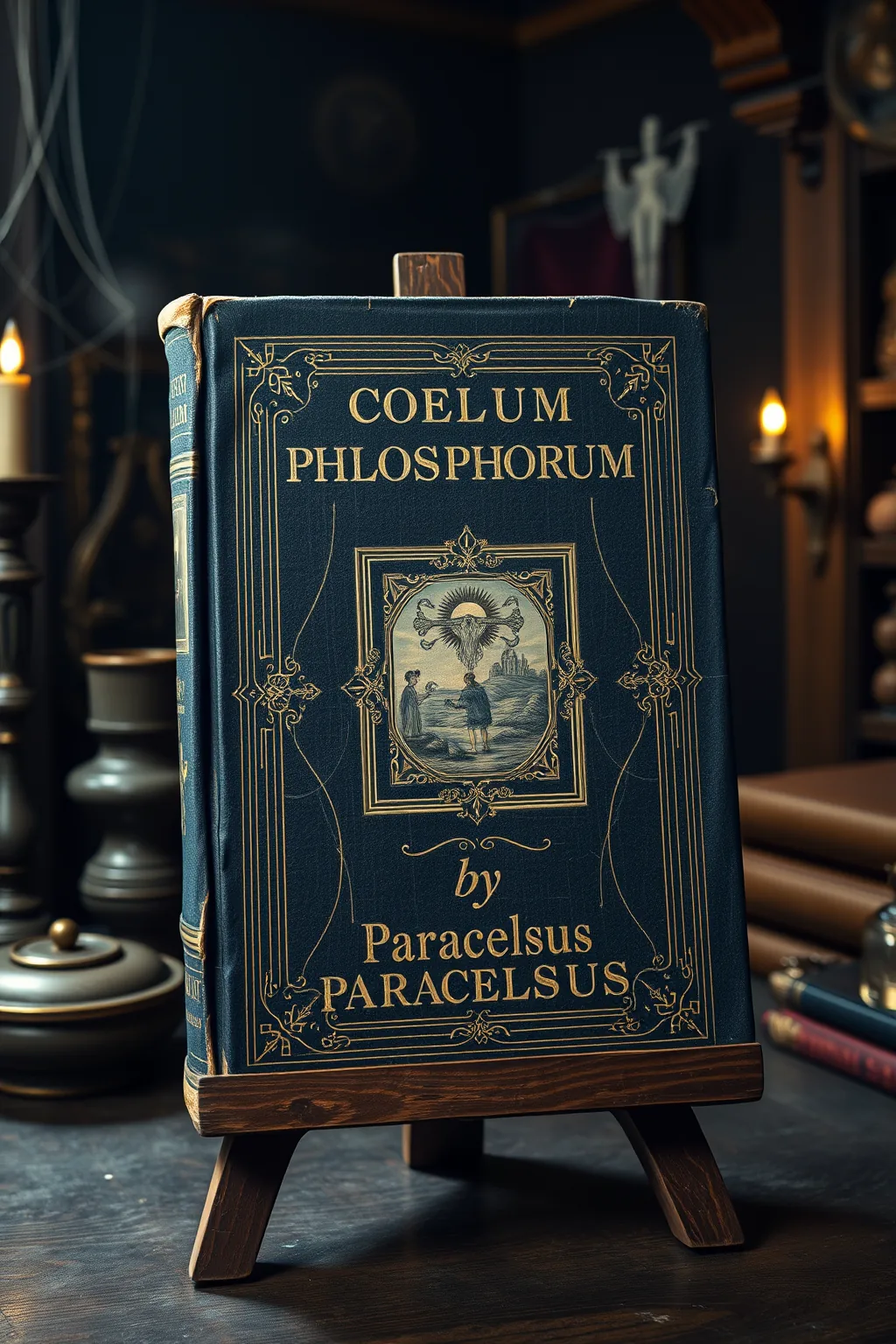
Coelum philosophorum by Paracelsus
 81
81

Coelum philosophorum by Paracelsus



Silas Hawthorne (Hermetic Studies Editor) — "Coelum Philosophorum" stands as a cornerstone of Hermetic literature, offering Paracelsus' unvarnished perspective on the alchemical Art. He masterfully bridges the material and spiritual, demystifying the processes while elevating them to a sacred science. His emphasis on the 'inner' work, the purification of the self as a prerequisite for external transmutation, is particularly insightful. This text is essential for serious students of alchemy and Hermetic philosophy, providing foundational concepts often obscured by later interpretations. It’s a challenging yet immensely rewarding read for those ready to engage with the profound wisdom of the Swiss master.
📝 Description
81
Paracelsus wrote Coelum Philosophorum (The Book of the Philosophers' Stone) in 1525, detailing his alchemical theories.
Paracelsus's Coelum Philosophorum, originally written in Latin, explains his alchemical principles. He presents alchemy not just as a precursor to chemistry, but as a philosophical and spiritual pursuit. The book discusses the connections between the human body (microcosm) and the wider universe (macrocosm).
Paracelsus examines the fundamental elements and the unseen forces that influence them. He discusses the divine essence present in all material substances. The text encourages a shift in perspective, leading readers to recognize the subtle realities beyond the physical world. It is an invitation to grasp the celestial knowledge associated with the philosopher's stone, for those seeking to comprehend the core of existence and their role within it.
Coelum Philosophorum is a key text within Renaissance Hermeticism and Paracelsianism. It reflects the era's synthesis of Neoplatonic philosophy, Christian mysticism, and practical alchemy. Paracelsus, breaking from earlier alchemical traditions, emphasized the spiritual and philosophical dimensions of the Great Work, viewing it as a path to understanding divine creation and achieving personal purification. His approach integrated medical theory with cosmological speculation, positioning alchemy as a means to both heal the body and elevate the soul.
💡 Why Read This Book?
Embark on a journey into the foundational principles of alchemy as laid out by one of its most visionary proponents. 'Coelum Philosophorum' offers a unique glimpse into the spiritual and philosophical underpinnings of transmutation, moving beyond mere material manipulation to explore the soul's role in the Great Work. Ideal for seekers of hidden knowledge, scholars of esoteric traditions, and practitioners aiming to deepen their understanding of alchemical symbolism and its universal applications.
⭐ Reader Reviews
Honest opinions from readers who have explored this book.
❓ Frequently Asked Questions
What is the primary focus of "Coelum Philosophorum"?
The book primarily focuses on the philosophical and spiritual aspects of alchemy, exploring its principles, nature, and the necessary mindset for understanding the Art of transmutation.
Is this book a practical guide to chemical experiments?
While it discusses alchemical processes, "Coelum Philosophorum" is more of a philosophical treatise than a step-by-step laboratory manual. Its emphasis is on understanding the underlying principles and spiritual preparation.
Who is Paracelsus?
Paracelsus (Philippus Aureolus Theophrastus Bombastus von Hohenheim) was a Swiss physician, alchemist, astrologer, and occultist of the Renaissance, renowned for his revolutionary medical theories and mystical writings.
What does "Coelum Philosophorum" mean?
The title translates to "The Philosophers' Heaven" or "The Celestial World of the Philosophers," suggesting a divine or elevated realm of understanding accessible through the alchemical pursuit.
What is the 'Art' Paracelsus refers to?
The 'Art' is a term used by alchemists to denote the Great Work, the process of spiritual and material transformation, aiming for purification, perfection, and the creation of the Philosopher's Stone.
🔮 Key Themes & Symbolism
The Divine Nature of Alchemy
Paracelsus posits alchemy not as a mere craft, but as a divine art, mirroring the creative forces of the universe. He elucidates how the principles of alchemy are woven into the fabric of existence, from the smallest seed to the grandest celestial bodies. This perspective elevates the alchemist's pursuit from material gain to a spiritual communion with the divine essence inherent in all things, emphasizing the sacredness of transformation and the pursuit of purity.
Microcosm and Macrocosm
A central tenet is the profound connection between the human being (microcosm) and the universe (macrocosm). Paracelsus asserts that understanding the laws governing the larger cosmos is essential for comprehending the inner workings of the human soul and body, and vice versa. This reciprocal relationship is key to the alchemical process, as the purification and transformation of the self are seen as mirroring and influencing the transmutation of base matter, leading to a unified understanding of existence.
The Inner Work of Transmutation
Beyond the physical manipulation of substances, Paracelsus stresses the paramount importance of inner purification and spiritual development for the alchemist. He argues that the external Art cannot be mastered without first transforming the self. This involves cultivating virtues, understanding one's own nature, and aligning with divine principles. The 'Philosopher's Stone' is thus not only a material substance but also a symbol of perfected spiritual and material integration within the adept.
💬 Memorable Quotes
Direct passages from the work, attributed to the author.
“The art of alchemy is nothing else than the creation of man.”
— This profound statement suggests that the alchemical process is intrinsically linked to the development and perfection of the human being, mirroring the divine act of creation.
“Know well that nature is the best and most perfect alchemist.”
— Paracelsus highlights the inherent wisdom and processes within the natural world, suggesting that true alchemical understanding comes from observing and emulating nature's own transformative cycles.
“The physician must be able to see the invisible.”
— This emphasizes the esoteric nature of true healing and understanding, suggesting that perception must extend beyond the purely material to encompass subtle energies and forces.
“The true alchemist is a true physician.”
— This links the spiritual and material aspects of healing, implying that the alchemist's quest for perfection and purification directly translates to the ability to restore balance and health.
💡 Key Ideas
Editorial paraphrase of the work's core concepts — not direct quotes.
For the Art is not a thing of the Devil, but of God.
This quote refutes common misconceptions, asserting that alchemy, when pursued with pure intention, is a divine science, a path to understanding God's creation and principles.
🌙 Esoteric Significance
Tradition
This work is deeply rooted in the Hermetic tradition, drawing heavily from the principles of Hermes Trismegistus and the 'as above, so below' philosophy. It is a core part of Western esoteric alchemy, emphasizing the spiritual and philosophical dimensions of transmutation, aligning the microcosm (man) with the macrocosm (universe) through a process of purification and divine union.
Symbolism
Paracelsus employs detailed symbolism, transforming common elements and processes into metaphors for spiritual and psychological development. The stages of alchemical work—calcination, dissolution, separation, conjunction, fermentation, distillation, and coagulation—are not just chemical steps but represent the purification of the soul, the dissolution of ego, the separation of the essential from the non-essential, and eventual reintegration into a perfected state.
Modern Relevance
In an age often characterized by materialism and fragmentation, Paracelsus's "Coelum Philosophorum" offers a timeless perspective on the interconnectedness of all things and the profound potential for inner transformation. Its emphasis on the spiritual dimension of science and the importance of self-purification speaks to contemporary seekers interested in holistic well-being, mindfulness, and the integration of spiritual practice into daily life.
👥 Who Should Read This Book
This text is a vital resource for dedicated students of Alchemy and Hermeticism, offering foundational insights directly from one of its most influential figures. Scholars of Renaissance esotericism will find invaluable historical and philosophical context. Seekers of profound spiritual truths will discover a path to understanding the universe and themselves as interconnected, divinely designed entities. Practitioners of esoteric arts can deepen their theoretical understanding of transmutation and its spiritual implications, enriching their personal Great Work.
📜 Historical Context
Written during the vibrant intellectual ferment of the Renaissance, "Coelum Philosophorum" emerges from a period where the boundaries between science, philosophy, and mysticism were fluid. Paracelsus, a controversial yet influential figure, challenged the established medical and alchemical orthodoxies of his time. His work reflects a synthesis of ancient Hermetic traditions, Neoplatonism, and emerging empirical observations. This era saw a renewed interest in classical texts and a desire to unlock the hidden secrets of nature, often through allegorical and symbolic interpretation. Paracelsus's writings, including this treatise, contributed significantly to the development of esoteric thought and laid groundwork for later alchemical and proto-chemical investigations, influencing thinkers and practitioners for centuries.
📔 Journal Prompts
Reflect on Paracelsus' assertion that 'nature is the best and most perfect alchemist.' How do you observe nature's transformative processes in your own life?
Consider the relationship between the microcosm (yourself) and the macrocosm (the universe) as described by Paracelsus. What are the parallels you can identify?
Paracelsus emphasizes the 'inner work' of transmutation. What aspects of your own 'base matter' (negative traits, limiting beliefs) do you feel called to purify?
How does the concept of alchemy as a 'divine art' influence your perception of your own life's purpose or potential for growth?
Explore the idea that the 'true alchemist is a true physician.' In what ways can the principles of spiritual and material purification contribute to holistic well-being?
🗂️ Glossary
Alchemy
An ancient philosophical and proto-scientific tradition focused on the transmutation of base metals into noble ones, often understood as a metaphor for spiritual purification and perfection of the soul.
Hermeticism
A religious, philosophical, and esoteric tradition based primarily upon writings attributed to Hermes Trismegistus, emphasizing divine wisdom, occult knowledge, and the interconnectedness of the universe.
Microcosm
The human being, considered as a miniature or small world, reflecting the order and principles of the greater universe (macrocosm).
Macrocosm
The universe or the greater world, seen as a unified whole, whose principles are reflected in the microcosm.
Philosopher's Stone
A legendary alchemical substance said to be capable of turning base metals into gold or silver, and also believed to hold the secret to eternal life and spiritual perfection.
This book appears in 3 collections
🔮 Readers Also Liked
Browse all →









From the “Hermeticism” Collection
View all →









More Free Alchemy & Hermeticism Books
View all →