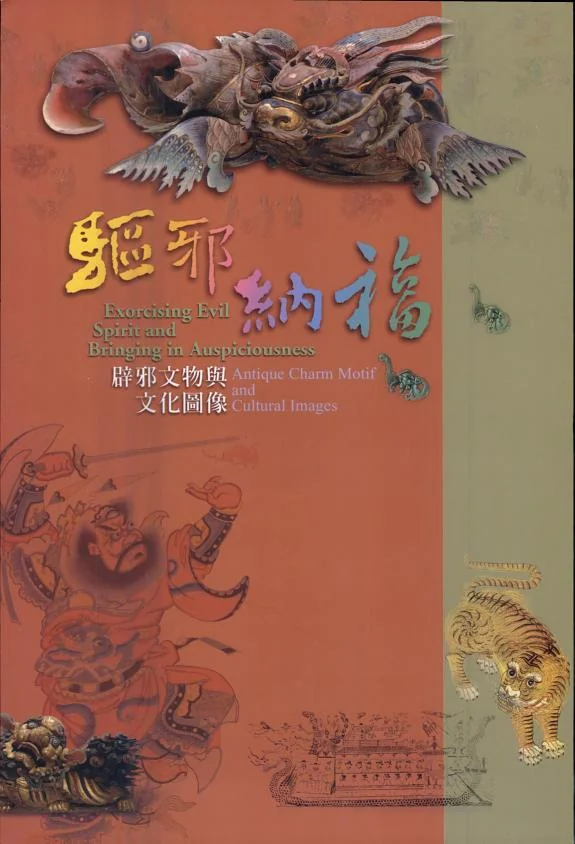
驅邪納福
 83
83

驅邪納福
The clarity with which 驅邪納福 presents its rituals for spiritual house-cleaning and fortune-attraction is its primary strength. Unlike more theoretical grimoires, this text offers direct, actionable guidance. For instance, the section detailing the cleansing of a dwelling using specific herbs and incantations provides a step-by-step process that feels immediately applicable. However, its primary limitation lies in its very specificity; without prior knowledge of Chinese cultural cosmology, some ritualistic actions might appear arbitrary or lack deeper resonance. The efficacy of the talismans described, particularly the '五雷符' (Wǔ Léi Fú - Five Thunder Talisman), hinges on an understanding of their symbolic language that the text assumes the reader already possesses. It serves as an excellent manual for the initiated, but a challenging primer for the uninitiated.
This work is a potent, if insular, guide to traditional Chinese spiritual hygiene.
📝 Description
83
Published in 2004, 'Expel Demons, Welcome Blessings' details Chinese folk esoteric practices.
This anonymous text, 驅邪納福 (Qū xié nà fú), outlines methods for spiritual purification and the invocation of auspicious energies. It draws from a long lineage of Taoist and Buddhist-influenced folk rituals, aiming to help practitioners harmonize their environments and personal lives with benevolent cosmic forces. The work is a practical compendium for adherents seeking direct instruction on spiritual cleansing and blessing within a traditional Chinese context.
It is intended for practitioners of Chinese folk religion, those interested in Taoist exorcism rituals, and scholars of East Asian esotericism. The book appeals to individuals who engage with practices such as Feng Shui, amulet creation, and spirit appeasement, providing detailed instructions and theoretical underpinnings. Its direct, instructional style is valuable for dedicated students of practical occultism.
The practices in 驅邪納福 have roots stretching back centuries, evolving alongside Taoism and Chinese Buddhism. While this compilation appeared in 2004, its methodologies reflect traditions often transmitted orally or through manuscripts within specific communities. This publication reflects a late 20th and early 21st century resurgence of interest in traditional folk arts and spiritual practices in China and its diaspora. Earlier works like the *Daozang* contain precursor elements to the rituals described.
💡 Why Read This Book?
• Gain practical techniques for energetic purification, learning specific incantations and methods for clearing negative influences, directly from the ritual instructions presented in the 2004 edition. • Understand the traditional Chinese approach to attracting prosperity and good fortune, exploring the symbolic actions and blessings detailed within the '納福' sections of the text. • Acquire knowledge of specific folk esoteric symbols and their application, such as the use and interpretation of '符' (fú) talismans for protection and invoking spiritual aid.
⭐ Reader Reviews
Honest opinions from readers who have explored this book.
❓ Frequently Asked Questions
What does the title '驅邪納福' literally translate to?
The title '驅邪納福' (Qū xié nà fú) literally translates from Chinese as 'Expel Demons, Welcome Blessings'. This succinctly captures the book's dual focus on spiritual purification and the attraction of positive energies.
Is this book a translation of an ancient text or a modern compilation?
While the practices described draw from ancient traditions, the specific publication date of 2004 indicates that this is a modern compilation or systematization of older folk esoteric knowledge.
What kind of rituals are described in the book?
The book details folk esoteric rituals for exorcism, purification of spaces and individuals, and the invocation of blessings and good fortune, often involving talismans, incantations, and symbolic actions.
Who is the intended audience for 驅邪納福?
It is intended for practitioners of Chinese folk religion, students of Taoism and Buddhism, and those interested in practical East Asian esoteric arts and spiritual cleansing techniques.
Does the book explain the theory behind the rituals?
Yes, it explains key concepts like 'qi', Yin/Yang balance, and the nature of spiritual influences, providing a theoretical basis for the practical rituals presented.
Are there specific symbols or tools discussed?
The book discusses various esoteric symbols and tools, including '符' (fú) talismans for protection and spiritual influence, and likely mentions other ritual implements common in Taoist practices.
🔮 Key Themes & Symbolism
Spiritual Purification
The core of '驅邪納福' lies in its detailed methods for expelling negative influences, referred to as '邪' (xié). This encompasses not just literal demonic entities but also ambient negative energies that can affect health, prosperity, and peace of mind. The text provides practical instructions for cleansing homes, objects, and individuals using specific incantations ('咒', zhòu), symbolic gestures, and the application of potent talismans ('符', fú). The aim is to restore energetic equilibrium and create a sanctuary free from spiritual disturbances, a concept central to Taoist and folk religious worldviews.
Invocation of Blessings
Complementing the purification aspect is the '納福' (nà fú), or welcoming of blessings. This involves actively inviting positive energies, good fortune, and auspicious circumstances into one's life and environment. The book outlines rituals designed for this purpose, often involving the veneration of deities, ancestral spirits, or the manipulation of 'qi' (vital energy) through focused intent and specific practices. These rituals are not merely passive requests but active engagements aimed at aligning oneself with benevolent cosmic forces to foster prosperity and well-being.
Talismans and Incantations
Central to the practical application of the book's teachings are its sections on talismans ('符', fú) and incantations ('咒', zhòu). These are presented not as mere superstition but as potent tools for spiritual intervention. The talismans are often intricate diagrams imbued with spiritual power, used for protection, warding off spirits, or attracting specific benefits. The incantations are verbal formulas, spoken with precise intent and pronunciation, believed to activate spiritual forces or communicate with unseen realms. Understanding their construction and correct usage is paramount to the efficacy of the rituals described.
Energetic Harmony
The overarching philosophy presented in '驅邪納福' emphasizes the importance of maintaining energetic harmony between the individual, their environment, and the cosmos. It posits that disharmony, whether from internal imbalances or external spiritual influences, leads to misfortune and suffering. The rituals and practices described are therefore tools for achieving and sustaining this vital equilibrium. By understanding and manipulating 'qi' and the forces of Yin and Yang, practitioners aim to create a balanced state conducive to health, happiness, and spiritual progress.
💬 Memorable Quotes
Direct passages from the work, attributed to the author.
“The impure spirit flees before the pure word.”
— This concise statement captures the power attributed to spoken incantations ('咒', zhòu) in driving away malevolent energies ('邪', xié). It suggests that the correct articulation and intent behind the words hold inherent spiritual force.
“Where the talisman is placed, the shadows dare not linger.”
— This highlights the protective function of talismans ('符', fú). It implies that these sacred diagrams create a consecrated space, a boundary that disruptive spiritual forces cannot penetrate.
“Balance the breath, balance the home.”
— This speaks to the interconnectedness of personal energetic state ('breath', often referring to 'qi') and the ambient energy of one's living space. It implies that internal harmony is key to external environmental harmony.
“The ritual completed with sincere heart is half done.”
— This emphasizes the crucial role of the practitioner's mental and emotional state. Sincerity and focused intent are presented as vital components for the successful execution of any ritual described in the text.
💡 Key Ideas
Editorial paraphrase of the work's core concepts — not direct quotes.
Open the gate for the Five Grains, close the door to poverty.
This proverb, likely paraphrased from the text's '納福' (nà fú) sections, clearly illustrates the dual purpose of attracting prosperity ('Five Grains' symbolizing sustenance and wealth) while simultaneously repelling financial hardship.
🌙 Esoteric Significance
Tradition
驅邪納福 is firmly rooted in Chinese folk esoteric traditions, heavily influenced by Taoism and, to a lesser extent, Buddhism. It represents a practical, ritualistic expression of these philosophies, focusing on direct intervention in the spiritual and energetic realms. Unlike more philosophical or meditative Taoist schools, this work prioritizes tangible results through codified actions and spiritual technologies. It fits within the lineage of texts that provide practical guidance for interacting with the spirit world, managing 'qi', and maintaining cosmic balance, often serving lay practitioners rather than monastic orders.
Symbolism
Key symbols include '符' (fú), or talismans, which are graphic representations of spiritual forces and commands, often incorporating calligraphy and specific geometric patterns. These function as conduits for spiritual power. Another motif is the concept of '氣' (qi), vital energy, which must be managed and balanced. Rituals often involve symbolic actions, specific arrangements of objects, and the use of elemental correspondences (e.g., specific herbs representing wood, fire, earth, metal, water) to harmonize the environment and invoke desired spiritual influences.
Modern Relevance
Contemporary practitioners of Chinese folk religion, Feng Shui consultants, and those exploring Taoist-derived spiritual practices often reference or employ methods similar to those found in 驅邪納福. Its clear, actionable format makes it accessible to modern adherents seeking to engage with traditional spiritual technologies for personal well-being and environmental harmony. It also serves as a valuable resource for scholars studying the persistence and adaptation of indigenous spiritual practices in the face of modernization and globalization.
👥 Who Should Read This Book
• Practitioners of Chinese folk religion seeking to deepen their understanding and application of purification and blessing rituals. • Students of Taoism and comparative religion interested in the practical, ritualistic aspects of East Asian esotericism. • Individuals interested in home cleansing and energetic balancing techniques grounded in traditional cultural frameworks.
📜 Historical Context
The publication of 驅邪納福 in 2004 occurred during a period of significant cultural and spiritual resurgence in China. Following decades of state-imposed atheism, there was a notable revival of traditional religious and folk practices, including Taoism and Buddhism, alongside a burgeoning interest in esoteric arts. This text, while appearing modern, taps into a lineage of ritualistic practices that have circulated for centuries, often transmitted through oral tradition or handwritten scrolls within specific communities. Its emergence reflects a broader societal trend of reclaiming and codifying indigenous spiritual knowledge. While not directly engaging with Western esoteric movements of the time, it existed within a global context where interest in spiritualism and alternative practices was growing. The reception was likely within established communities of practitioners and those seeking to reconnect with traditional beliefs, rather than widespread academic or public discourse, mirroring the often localized nature of folk religious transmission.
📔 Journal Prompts
The concept of '邪' (xié) in relation to personal energetic blockages.
Reflecting on the symbolic meaning of the '五雷符' (Wǔ Léi Fú) and its potential application.
How the practice of '納福' (nà fú) can be integrated into daily life.
The role of sincere intent in executing spiritual rituals.
Comparing the text's approach to purification with personal experiences.
🗂️ Glossary
驅邪 (Qū xié)
Literally 'expel evil/demons'. Refers to the practice of removing malevolent spirits, negative energies, or harmful influences from a person, place, or object.
納福 (Nà fú)
Literally 'welcome blessings/fortune'. The practice of attracting positive energies, prosperity, good luck, and auspicious circumstances.
氣 (Qì)
Vital life force or energy that permeates all things. Maintaining its smooth flow and balance is crucial in Chinese esoteric practices for health and well-being.
符 (Fú)
Talismans or charms, typically inscribed on paper or cloth with special characters and diagrams. Believed to possess spiritual power for protection, healing, or invoking deities/spirits.
咒 (Zhòu)
Incantations or magical spells. Spoken formulas believed to have the power to influence spiritual forces or manifest desired outcomes when recited correctly.
陰陽 (Yīn Yáng)
The fundamental Taoist concept of complementary, interconnected opposites. Their balance is essential for harmony in the universe and within individuals.
五雷符 (Wǔ Léi Fú)
Literally 'Five Thunder Talisman'. A powerful type of talisman, often associated with Taoist celestial masters, believed to command the powers of thunder and lightning for exorcism or protection.
This book appears in 1 collection
🔮 Readers Also Liked
Browse all →









From the “Talismans” Collection
View all →



More Free Occult Philosophy Books
View all →