Der Tarot des Golden Dawn
 75
75

Der Tarot des Golden Dawn
Robert Wang's 'Der Tarot des Golden Dawn' is less a gentle introduction and more a deep dive into the intricate architecture of a specific magical system. Its strength lies in its uncompromising commitment to the Golden Dawn's structural approach, presenting the Tarot as a Qabalistic and astrological map. The detailed breakdown of the 78 cards, their Hebrew letter attributions, and their placement on the Tree of Life is exceptionally thorough. However, this very specificity can be a limitation for newcomers. The text assumes a pre-existing familiarity with Golden Dawn principles and Qabalistic concepts, making the initial stages quite dense. The section detailing the astrological correspondences for the Minor Arcana, for instance, is precise but requires focused study. While lacking the narrative flair of some esoteric authors, its scholarly rigor is undeniable. It is an essential, if demanding, reference for those committed to the Golden Dawn path.
📝 Description
75
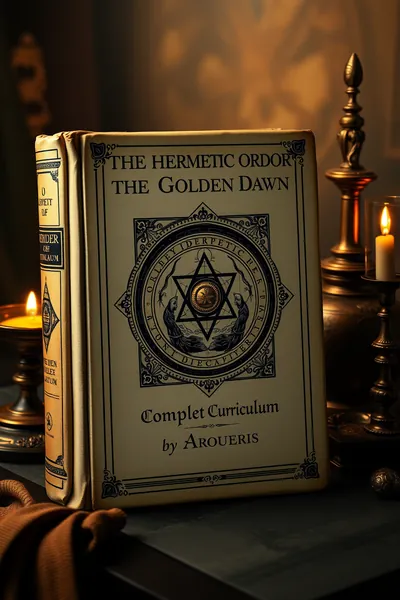
Published in 1988, Der Tarot des Golden Dawn details the Tarot deck through the lens of the Hermetic Order of the Golden Dawn.
Authored by Robert Wang and Peter Hamann, this 1988 text thoroughly examines the Tarot deck as it was understood and utilized by the Hermetic Order of the Golden Dawn. The book goes beyond basic divinatory meanings, presenting each card's symbolism, Qabalistic connections, and astrological attributions. It frames the Tarot as a vital component within a larger magical and spiritual system intended for personal development and initiation. The work systematically details the structure of the 78 cards, including their correspondence with the Tree of Life and Hebrew alphabet. It addresses the initiatory symbolism of both the Major and Minor Arcana, positioning the Tarot as a symbolic language for understanding cosmic principles. This approach aims to move readers past simple interpretations toward a deeper symbolic comprehension.
This book is most valuable for serious students of Western Esotericism, especially those focused on the Golden Dawn tradition. Practitioners seeking to understand how Tarot integrates with Qabalah, astrology, and ceremonial magic will find substantial content. Historians of occultism and those working with magical systems will also benefit from this specific configuration of the Tarot. It emerged in 1988, a time of renewed interest in esoteric studies, offering a structured presentation of the Golden Dawn's Tarot curriculum.
The Hermetic Order of the Golden Dawn, a late 19th and early 20th-century magical order, significantly shaped modern Western Esotericism. Its members developed complex systems integrating Qabalah, astrology, alchemy, and Tarot for spiritual advancement. Robert Wang's work, published decades after the Order's original influence, systematically presents the Golden Dawn's specific interpretation of the Tarot. This contrasts with earlier, more generalized approaches to Tarot divination and positions it within a structured magical framework for initiation.
💡 Why Read This Book?
• Gain a structured understanding of the 78-card Tarot as a Qabalistic system, learning how each card maps to the Tree of Life and Hebrew alphabet, a core tenet of the Golden Dawn's curriculum. • Explore the specific astrological and elemental attributions assigned to each Tarot card by the Hermetic Order of the Golden Dawn, moving beyond generic interpretations. • Appreciate the Tarot as a tool for spiritual development and initiation, as conceived by a foundational esoteric order active in the late 19th and early 20th centuries.
⭐ Reader Reviews
Honest opinions from readers who have explored this book.
❓ Frequently Asked Questions
What is the primary focus of Der Tarot des Golden Dawn?
The book meticulously details the 78-card Tarot deck as interpreted by the Hermetic Order of the Golden Dawn, focusing on its Qabalistic, astrological, and divinatory correspondences within a magical system.
When was Der Tarot des Golden Dawn first published?
Der Tarot des Golden Dawn was first published in 1988, offering a detailed look at the Golden Dawn's specific Tarot system.
Is this book suitable for beginners in Tarot reading?
While comprehensive, the book assumes some familiarity with Qabalah and Western Esotericism. Beginners might find its depth challenging without prior foundational knowledge.
What makes the Golden Dawn's Tarot system unique?
Its uniqueness lies in its rigorous integration with the Qabalistic Tree of Life, Hebrew alphabet, and astrological principles, viewing the Tarot as a map for spiritual initiation.
Who are the authors associated with this work?
The primary author is Robert Wang, with Peter Hamann contributing to its publication history, building upon the teachings of the Hermetic Order of the Golden Dawn.
Does the book discuss the historical origins of the Tarot?
The book focuses on the Golden Dawn's specific interpretation and systemization of the Tarot, rather than a broad historical survey of the Tarot's origins.
🔮 Key Themes & Symbolism
Qabalistic Correspondences
The work meticulously maps each of the 78 Tarot cards onto the Qabalistic Tree of Life, assigning Hebrew letters and astrological attributions. This creates a dense symbolic framework where the cards are not isolated images but interconnected points on a cosmic map, revealing deeper layers of meaning for practitioners engaged in magical work or spiritual contemplation.
Tarot as a Magical System
Beyond simple divination, the book presents the Tarot as an integral part of the Golden Dawn's magical curriculum and initiatory system. Each card is imbued with spiritual and magical significance, intended to guide the adept through stages of consciousness and understanding, mirroring the progression through the Sephiroth on the Tree of Life.
Symbolic Language of the Cosmos
Der Tarot des Golden Dawn treats the Tarot deck as a visual representation of universal principles and divine knowledge, often referred to as the 'Book of Thoth.' The intricate symbolism of both the Major and Minor Arcana is explored to unlock a deeper understanding of creation, consciousness, and the path of return to the divine source.
Astrological and Elemental Attributions
A significant portion of the text is dedicated to the precise astrological and elemental attributions for every card. This detailed correlation allows practitioners to integrate Tarot readings with astrological charts and elemental magic, providing a multi-layered approach to interpretation and ritual work consistent with Golden Dawn practices.
💬 Memorable Quotes
Direct passages from the work, attributed to the author.
“The Tarot is the key to the Qabalah.”
— This statement captures the book's core thesis: that the Tarot, when understood through the Golden Dawn's systematic lens, serves as a practical and accessible gateway to comprehending the complex structure and principles of Qabalistic cosmology.
“Each card corresponds to a Hebrew letter and a path on the Tree of Life.”
— This highlights the foundational methodology of the work, emphasizing the rigorous symbolic integration that elevates the Tarot from mere imagery to a structured esoteric map for spiritual advancement.
“The symbolism of the Tarot reflects the divine plan of creation.”
— This interpretation suggests that the Tarot cards are not arbitrary but are divinely inspired symbols representing the fundamental forces and processes involved in the unfolding of the universe, as understood within esoteric traditions.
“Understanding the Tarot requires study of its Qabalistic and astrological dimensions.”
— This points to the intellectual rigor demanded by the text, framing the Tarot as an academic and practical discipline requiring dedicated study of its interwoven esoteric systems.
“The Minor Arcana are the elemental expressions of the Sephiroth.”
— This interpretation clarifies the structural relationship between the numbered cards and the ten spheres of the Tree of Life, illustrating how the elements manifest through the Sephirothic influence on the cards.
🌙 Esoteric Significance
Tradition
This work is firmly rooted in the Western Esoteric tradition, specifically the Hermetic Qabalah as systematized by the Hermetic Order of the Golden Dawn. It represents a significant effort to codify and present the Order's intricate teachings on the Tarot, integrating it with Qabalistic cosmology, Hebrew mysticism, and astrological principles, thus serving as a foundational text for this lineage.
Symbolism
Key symbols include the Tree of Life, upon which the 78 Tarot cards are meticulously mapped, each corresponding to a Sephirah or a Qabalistic path. The Hebrew alphabet is also central, with each card assigned a specific letter. Astrological symbols and elemental attributions further enrich this symbolic language, presenting the Tarot as a comprehensive map of creation and consciousness.
Modern Relevance
Contemporary practitioners of Qabalah, Hermetic magic, and Golden Dawn-derived systems continue to rely on this work for its detailed structural analysis. Its influence can be seen in modern Tarot curricula that emphasize esoteric correspondences over purely intuitive or divinatory approaches, making it relevant for those seeking a deep, systematic understanding of Tarot's magical applications.
👥 Who Should Read This Book
• Students of Western Esotericism seeking a rigorous, systematic approach to the Tarot within the Golden Dawn framework. • Practitioners of Qabalah and Hermetic magic who require detailed correspondences and symbolic integration for their rituals and meditations. • Researchers of occult history interested in the specific codification of Tarot within influential magical orders of the late 19th and early 20th centuries.
📜 Historical Context
Published in 1988, 'Der Tarot des Golden Dawn' emerged during a burgeoning period for esoteric studies, significantly influenced by earlier works like Israel Regardie's publications on the Hermetic Order of the Golden Dawn. While the original Golden Dawn order flourished in the late 19th and early 20th centuries, its teachings gained wider accessibility in the latter half of the 20th century. This book provided a highly structured and detailed presentation of the Order's specific Tarot system, contrasting with more generalized or psychological interpretations of Tarot prevalent at the time. It offered a deep dive into the Qabalistic and astrological correspondences that formed the bedrock of the Golden Dawn's magical framework, positioning it as a key text for serious practitioners and scholars of Western Esotericism.
📔 Journal Prompts
The Qabalistic correspondences of the Ace of Wands and its relation to Kether.
The astrological attributions for the suit of Swords and their potential divinatory implications.
How the Hebrew letter assigned to The Fool might inform its meaning within a magical context.
Reflecting on the elemental nature of the Four of Pentacles as presented in the Golden Dawn system.
The symbolic journey represented by the paths on the Tree of Life as depicted through the Major Arcana.
🗂️ Glossary
Qabalah
A complex system of Jewish mysticism and esoteric philosophy concerning the nature of God and the creation of the universe, often visualized through the Tree of Life.
Tree of Life (Etz Chaim)
A diagram central to Kabbalistic thought, consisting of ten interconnected spheres (Sephiroth) and twenty-two paths, representing the structure of the cosmos and the divine emanations.
Sephirah
One of the ten divine emanations or spheres on the Qabalistic Tree of Life, each representing a distinct aspect of the divine and a stage in creation.
Hermetic Order of the Golden Dawn
A secret society founded in 1888, influential in the development of modern Western Esotericism, known for its synthesis of Qabalah, Tarot, astrology, and ceremonial magic.
Attribution
In esoteric contexts, the assignment of specific correspondences, such as Hebrew letters, astrological signs, or elements, to Tarot cards or other symbolic systems.
Major Arcana
The trump cards of the Tarot deck (typically 22 cards, numbered 0 to 21), representing significant spiritual lessons, archetypal forces, and stages of the soul's journey.
Minor Arcana
The 56 cards of the Tarot deck, divided into four suits (Wands, Cups, Swords, Pentacles), which typically represent everyday events, situations, and challenges.