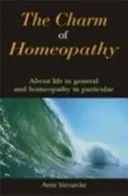
Charm of Homeopathy
 83
83

Charm of Homeopathy
Anne Vervarcke's 'Charm of Homeopathy' offers a compelling, albeit dense, exploration of the vitalistic underpinnings of homeopathic practice. The author's insistence on perceiving the 'coherent, symbolic pattern' of a patient's disturbance is its significant strength, pushing practitioners beyond a mere symptom-prescription model. Vervarcke's articulation of disease as a 'disturbance at the vital level' provides a conceptual anchor for those seeking deeper meaning in their work. However, the book's dense theoretical nature might present a hurdle for those not already deeply immersed in vitalistic thought. A limitation lies in its accessibility; while addressing practical aspects, the core concepts demand considerable prior knowledge. The discussion surrounding the 'eye of the disturbance' offers a particularly potent image, suggesting that direct perception of the disease's essence unlocks the therapeutic solution. Vervarcke's work serves as a focused treatise for the dedicated homeopath aiming to refine their diagnostic and therapeutic intuition.
📝 Description
83
Anne Vervarcke's 2011 book, 'Charm of Homeopathy,' argues disease is a vitalistic disturbance, not just symptom matching.
Anne Vervarcke's 'Charm of Homeopathy' proposes a view of illness that goes beyond matching symptoms to a remedy. She argues that disease originates as a disruption at the vitalistic level. The practice of homeopathy, in this view, involves recognizing the coherent, symbolic patterns a patient displays. By understanding these patterns, the homeopath can grasp the core nature of the disturbance and identify the way toward healing.
The book addresses practical aspects of case-taking and how to apply these principles in clinical settings. Its aim is to give practitioners a deeper theoretical grounding for their work. It is not a beginner's guide but a resource for those who already have some knowledge of homeopathy. Advanced students and practitioners looking to refine their understanding of vital energy and disease manifestation will find it particularly useful. The work also appeals to individuals interested in the philosophical foundations of complementary medicine, especially those familiar with vitalistic ideas.
Published in 2011, 'Charm of Homeopathy' continues a vitalistic philosophical tradition that began with Samuel Hahnemann. This perspective contrasts with materialistic or biochemical explanations of illness. Vervarcke's work engages with discussions within homeopathy about the vital force and interpreting patient cases. It seeks to connect theoretical insights with practical clinical results, reinforcing a lineage of thought that prioritizes the patient's whole expression over isolated symptoms.
💡 Why Read This Book?
• You will learn to identify the 'coherent, symbolic pattern' of a patient's vital disturbance, a concept central to Vervarcke's approach, offering a unique lens for diagnosis beyond simple symptomology, as discussed in the book's theoretical sections. • You will gain practical insights into 'case taking' and 'clinical practice' as presented by Vervarcke, enabling you to refine your methodology for eliciting and interpreting the subtle energetic expressions of illness. • You will deepen your understanding of disease as a 'disturbance at the vital level,' a philosophical cornerstone of the book that challenges conventional medical paradigms and highlights the energetic dimension of health.
⭐ Reader Reviews
Honest opinions from readers who have explored this book.
❓ Frequently Asked Questions
What is the primary focus of Anne Vervarcke's 'Charm of Homeopathy'?
The book focuses on understanding disease as a 'vital disturbance' and emphasizes the homeopath's ability to perceive the 'coherent, symbolic pattern' of a patient's condition to find the cure.
Who is the intended audience for 'Charm of Homeopathy'?
It is primarily addressed to professional homeopaths and advanced students seeking a deeper theoretical understanding of vitalistic principles in their practice.
When was 'Charm of Homeopathy' first published?
The first edition of 'Charm of Homeopathy' by Anne Vervarcke was published on April 1, 2011.
Does the book offer practical advice for homeopaths?
Yes, 'Charm of Homeopathy' addresses practical aspects of 'case taking' and 'clinical practice,' aiming to bridge theoretical concepts with real-world application.
What is the core philosophy behind Vervarcke's view on disease?
Vervarcke views disease not as a mere physical ailment but as a disruption at the vital level, which can be understood through its symbolic pattern.
How does this book differ from standard homeopathic texts?
It distinguishes itself by focusing on the perception of a 'coherent, symbolic pattern' as the key to understanding and treating the 'vital disturbance', rather than solely on symptom repertorization.
🔮 Key Themes & Symbolism
The Vital Disturbance
Vervarcke posits that disease is fundamentally a disturbance at the vital level, a concept central to the book. This perspective moves beyond a purely material understanding of illness, suggesting that the vital force, when disrupted, manifests symptoms. The work explores how this disturbance is not random but possesses a coherent structure. Understanding this vital imbalance is presented as the prerequisite for effective homeopathic intervention, forming the bedrock of Vervarcke's refined approach to practice and case analysis.
Symbolic Pattern Perception
A core tenet of 'Charm of Homeopathy' is the homeopath's ability to perceive a patient's 'coherent, symbolic pattern.' This pattern is not merely a collection of symptoms but a meaningful expression of the underlying vital disturbance. The book guides practitioners to look for this unifying theme, arguing that its recognition is akin to looking 'in the eye of the disturbance.' This symbolic interpretation is crucial, as it simultaneously reveals the nature of the illness and the direction for the cure.
Practical Case Dynamics
Beyond theoretical frameworks, Vervarcke's work explores the practical application of her philosophy. The book addresses 'case taking' and 'clinical practice,' offering guidance on how to elicit the vital disturbance and identify its symbolic pattern in real-world patient interactions. This focus on methodology ensures that the sophisticated concepts are grounded in actionable techniques, making the book a valuable resource for practitioners aiming to enhance their diagnostic acumen and therapeutic effectiveness.
The Essence of Cure
The ultimate aim presented in 'Charm of Homeopathy' is to achieve a cure by understanding the profound nature of the vital disturbance. Vervarcke suggests that once the 'coherent, symbolic pattern' is recognized, the path to healing becomes clear. This implies that the correct homeopathic remedy is intrinsically linked to the perceived essence of the disease. The book thus offers a vision where deep perception leads directly to effective therapeutic resolution, emphasizing the art and science of homeopathic healing.
💬 Memorable Quotes
Direct passages from the work, attributed to the author.
“Disease is nothing but a disturbance at the vital level.”
— This statement captures Vervarcke's fundamental premise, defining illness not as a mere physical malfunction but as a disruption within the body's essential life force, setting the stage for a vitalistic approach to healing.
“The challenge is to understand and perceive the coherent, symbolic pattern, displayed by the patient.”
— This highlights the diagnostic crux of homeopathy according to Vervarcke. It emphasizes that effective treatment requires recognizing an underlying, unified symbolic order within the patient's symptoms, rather than treating them in isolation.
“When we manage to recognise this pattern we are looking in the eye of the disturbance and at the same time, we have the answer for a cure.”
— This powerful interpretation suggests that direct perception of the disease's core pattern provides both the diagnosis and the prescription. It implies a profound connection between understanding the disturbance and finding the specific remedy.
“Practical aspects of case taking and clinical practice have been addressed in the book.”
— This indicates that Vervarcke's theoretical framework is intended to be practically applicable. It assures readers that the book offers guidance on how to implement these advanced concepts in their day-to-day work with patients.
“The author explains her view on the vital disturbance.”
— This is a straightforward declaration of the book's purpose, signaling that it offers a specific, personal perspective on a core homeopathic concept, inviting readers to engage with Vervarcke's unique insights.
🌙 Esoteric Significance
Tradition
Vervarcke's work draws heavily from the vitalistic tradition that underpins classical homeopathy, itself influenced by earlier esoteric and philosophical currents such as Hermeticism and Neoplatonism, which emphasize an animating principle or universal life force. This perspective posits that disease is not an invasion or material corruption but a disharmony within this vital essence. 'Charm of Homeopathy' fits within this lineage by focusing on the energetic and informational aspects of illness, seeking to perceive and correct disturbances at this subtle level, rather than merely addressing physical symptoms.
Symbolism
The concept of the 'coherent, symbolic pattern' is central to Vervarcke's approach. This pattern functions as a symbolic language through which the vital disturbance communicates its nature. In esoteric traditions, symbols are often seen as keys to understanding hidden realities or divine blueprints. Vervarcke's method implies that the patient's presentation, when viewed symbolically, reveals the underlying energetic imbalance, much like alchemical symbols represent profound transformations or astrological charts map cosmic influences. The 'eye of the disturbance' itself can be seen as a symbolic gateway to understanding.
Modern Relevance
Contemporary thinkers and practitioners in fields like quantum biology, consciousness studies, and energy medicine are increasingly exploring concepts that resonate with vitalism, such as the role of information fields and the interconnectedness of mind and body. Vervarcke's emphasis on perceiving subtle patterns and understanding disease as an energetic disturbance finds echoes in these modern inquiries. Practitioners of integrated medicine and those seeking holistic approaches may find her framework valuable for bridging the gap between traditional vitalistic healing and contemporary scientific explorations of consciousness and subtle energies.
👥 Who Should Read This Book
• Professional homeopaths seeking to deepen their theoretical understanding and refine their diagnostic intuition beyond symptom-based prescribing. • Advanced students of homeopathy ready to engage with the philosophical and vitalistic underpinnings of disease and healing as presented by Vervarcke. • Practitioners and researchers in complementary and alternative medicine interested in vitalistic philosophies and the symbolic interpretation of illness patterns.
📜 Historical Context
Anne Vervarcke's 'Charm of Homeopathy,' published in 2011, enters a contemporary landscape where homeopathy, founded by Samuel Hahnemann in the late 18th century, continues to be a subject of debate. Vervarcke's work aligns with the vitalistic tradition within homeopathy, which emphasizes the existence and importance of a life force (or vital energy) as distinct from purely biochemical or physiological processes. This perspective contrasts sharply with the mechanistic and reductionist approaches prevalent in mainstream Western medicine, which often seek explanations solely within the physical and chemical realms. The early 21st century saw ongoing discussions within the homeopathic community about refining theoretical models and improving clinical outcomes, often in response to external critiques and a desire for greater internal coherence. Vervarcke's contribution speaks to this internal dialogue, offering a deeper conceptualization of disease as a disturbance of this vital principle, seeking to provide a more nuanced framework for practitioners.
📔 Journal Prompts
The perception of the 'coherent, symbolic pattern' as a diagnostic tool.
Reflecting on the concept of 'disease as a vital disturbance'.
Identifying the 'eye of the disturbance' in personal or observed health challenges.
The practical application of recognizing symbolic patterns in case taking.
Exploring the relationship between vital force and physical manifestation.
🗂️ Glossary
Vital Disturbance
The central concept in Vervarcke's work, referring to a disruption or imbalance within the body's essential life force or vital energy, which manifests as disease symptoms.
Coherent, Symbolic Pattern
The underlying, meaningful structure or theme that Vervarcke argues is displayed by a patient's presentation, revealing the essence of the vital disturbance.
Vital Level
Refers to the plane of existence or energy where the vital force operates, distinct from the purely physical or material level, and where disease is understood to originate.
Case Taking
The process by which a homeopath gathers information from a patient, including symptoms, history, and overall state, to understand the vital disturbance and identify a remedy.
Clinical Practice
The application of homeopathic principles and techniques in treating patients, encompassing diagnosis, remedy selection, and follow-up care.
Perceive
In the context of Vervarcke's book, this implies a deeper, intuitive understanding and recognition of the vital disturbance and its pattern, beyond mere observation.
Cure
The complete restoration of health, achieved by addressing the root cause of the disease, which Vervarcke links to understanding and correcting the vital disturbance.