Zen Skin, Zen Marrow
 71
71

Zen Skin, Zen Marrow
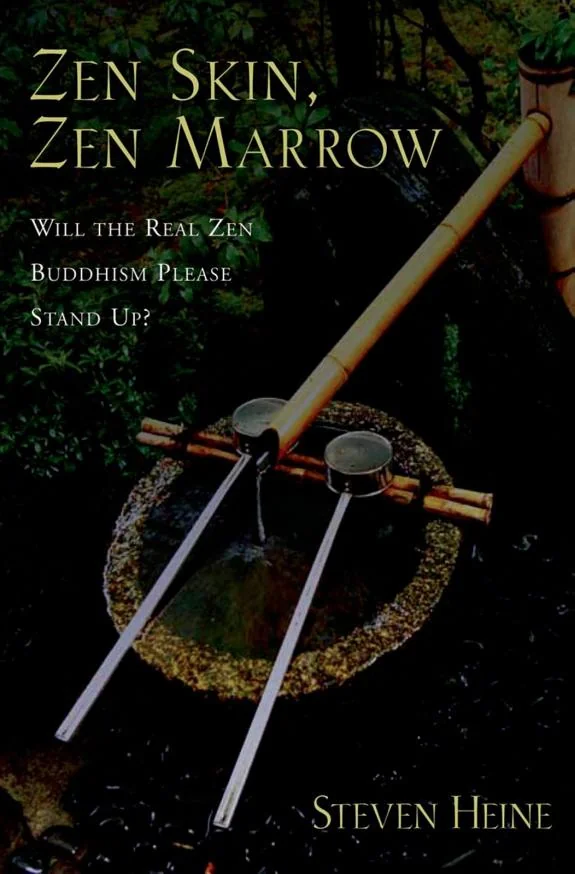
Steven Heine’s 2008 volume, Zen Skin, Zen Marrow, performs a necessary academic surgery on the idealized image of Zen Buddhism prevalent in Western discourse. Heine confronts the romanticized narratives, often traceable to early 20th-century interpreters like D.T. Suzuki, with a detailed historical and cultural critique. The book’s strength lies in its meticulous dissection of how Zen became a symbol for Western spiritual seeking, often detached from its East Asian roots. A notable passage examines the selective appropriation of Zen principles to fit Western existentialist or counter-cultural frameworks, highlighting the gap between actual monastic practice and its popular perception. However, the academic tone, while precise, can sometimes feel dense for readers without a background in religious studies. The work’s focus on deconstruction, while valuable, might leave some seeking a more constructive presentation of Zen's enduring spiritual dimensions. Ultimately, Zen Skin, Zen Marrow is a vital corrective for anyone seeking an unvarnished view of Zen’s historical and cultural journey.
📝 Description
71
Steven Heine's 2008 book, Zen Skin, Zen Marrow, dissects idealized Western views of Zen Buddhism.
Zen Skin, Zen Marrow, published in 2008, critically examines Zen Buddhism, moving past romanticized Western interpretations. Steven Heine scrutinizes the historical development and cultural embedding of Zen, challenging simplified notions that often obscure its complex realities. This work is for scholars, serious practitioners, and critical readers of Buddhism who seek a more thorough understanding of Zen.
Heine's book responds to a long-standing Western fascination with Zen, often framed by influential figures whose accounts sometimes prioritized spiritual ideals over historical accuracy. The work engages with scholarship that questioned these romanticized views, analyzing how Zen has been shaped by historical events and Western reception. It questions the idea of a pure, unchanging Zen essence by examining the interplay between doctrine, practice, and the social-cultural contexts that define Buddhist traditions.
This book engages with the academic study of Zen Buddhism, a tradition often subject to romanticized interpretations in the West. It situates Zen not as a static, pure essence, but as a dynamic tradition shaped by history, culture, and interpretation. Heine's work contributes to a scholarly understanding that seeks to demystify Zen, separating its historical reality from idealized perceptions that have circulated for decades, particularly through influential intermediaries.
💡 Why Read This Book?
• Gain a critical perspective on Zen Buddhism, moving beyond idealized Western portrayals by examining specific historical instances of its interpretation, as discussed in the section on the book's historical context. • Understand how Zen's image has been shaped by cultural exchange, learning about the selective appropriation of its principles in Western frameworks, a key concept explored in the 'Key Concepts' section. • Develop a more nuanced appreciation for the complexities of religious traditions by analyzing the historical development and cultural embedding of Zen, as detailed in the 'What It Is' section.
⭐ Reader Reviews
Honest opinions from readers who have explored this book.
❓ Frequently Asked Questions
What is the primary argument of Steven Heine's Zen Skin, Zen Marrow?
The book argues that Western perceptions of Zen Buddhism have been overly romanticized and idealistic. Heine examines the historical and cultural factors that have shaped these views, challenging traditional narratives and presenting a more critical perspective on Zen's development.
When was Zen Skin, Zen Marrow first published?
Zen Skin, Zen Marrow was first published in 2008, marking a significant contribution to the academic study of Zen Buddhism during that period.
Who is Steven Heine?
Steven Heine is a scholar specializing in Zen Buddhism and East Asian religions. His work often focuses on critical historical and cultural analyses of Buddhist traditions, challenging conventional interpretations.
How does Zen Skin, Zen Marrow differ from traditional accounts of Zen?
Unlike traditional, often romanticized accounts, this book employs historical and cultural criticism. It investigates Zen's development and reception, questioning idealized portrayals and emphasizing its situatedness within specific contexts.
What does the title 'Zen Skin, Zen Marrow' imply?
The title suggests a deep, essential examination of Zen, going beyond superficial appearances ('skin') to its core substance ('marrow'). It implies a dissection of Zen's true nature versus its perceived essence.
Is this book suitable for beginners in Zen practice?
While informative, the book's critical and academic approach might be challenging for absolute beginners. It is best suited for those with some existing knowledge of Zen or an interest in scholarly analysis of religious traditions.
🔮 Key Themes & Symbolism
Deconstructing Western Zen
This theme addresses how Zen Buddhism, upon arriving in the West, was frequently reinterpreted through a romantic and idealistic lens. Steven Heine scrutinizes this process, highlighting how Western seekers and scholars selectively adopted or modified Zen concepts to fit pre-existing philosophical or spiritual frameworks. The work aims to separate the historical reality of Zen in East Asia from its often-mythologized image in the West, exploring how figures like D.T. Suzuki played a role in shaping this perception from the early 20th century onward.
Historical and Cultural Contingency
Zen Skin, Zen Marrow emphasizes that Zen, like any tradition, is not static but evolved within specific historical and cultural circumstances. Heine investigates how institutional structures, political environments, and social changes in Japan and China influenced Zen doctrines and practices. This approach challenges the notion of a pure, unchanging Zen essence, instead presenting it as a dynamic tradition shaped by particular times and places, a departure from ahistorical spiritual claims.
The Role of Scholarship
The book itself is an example of critical scholarship applied to religious studies. Heine engages with existing academic debates surrounding Zen, building upon or challenging earlier works. By employing historical and cultural criticism, he advocates for a rigorous, evidence-based approach to understanding religious traditions, encouraging readers to question received narratives and to seek deeper, contextualized knowledge rather than relying on superficial spiritual interpretations.
Zen as Constructed Identity
This theme explores how the very concept of 'Zen' has been, in part, a construction shaped by both internal developments and external reception. Heine examines how certain practices, doctrines, or figures become emblematic of Zen, sometimes at the expense of others. The work probes the idea that 'Zen' functions as an identity that has been negotiated across different cultural and historical contexts, particularly in its encounters with Western thought and spirituality.
💬 Memorable Quotes
Direct passages from the work, attributed to the author.
“The dominant discourse about this sect has been romantic, idealistic, and utopian.”
— This statement directly addresses the book's central thesis: that popular Western understandings of Zen often present an unrealistically perfect spiritual path, detached from historical realities and complexities.
“Some scholars have begun to examine Zen through the lenses of historical and cultural criticism.”
— This highlights the methodological approach Heine adopts, signaling a shift in academic study towards contextualizing Zen within its specific historical and social environments, rather than treating it as a purely abstract spiritual system.
“This text investigates.”
— A concise declaration of intent, emphasizing the book's role as an analytical inquiry rather than a devotional text or simple exposition of Zen philosophy.
“Challenging the traditional view.”
— This phrase expresses the book's critical stance, indicating that it actively disputes prevailing or long-held interpretations of Zen Buddhism, particularly those that lean towards romanticism.
💡 Key Ideas
Editorial paraphrase of the work's core concepts — not direct quotes.
The work explores the interplay between doctrine, practice, and social-cultural context.
This paraphrase points to Heine's method of analyzing how Zen's teachings and rituals are inseparable from the societies in which they developed and were practiced, challenging notions of universal or timeless Buddhist truths.
🌙 Esoteric Significance
Tradition
While Zen Buddhism is primarily a Mahayana Buddhist tradition, its reception in the West has often intersected with esoteric and occult interests. Western esotericists, seeking alternative spiritual paths, sometimes viewed Zen as a direct, non-dogmatic route to enlightenment, aligning with esoteric ideals of experiential knowledge and inner transformation. Zen Skin, Zen Marrow, by critically examining these Western interpretations, offers a counterpoint to purely esoteric appropriations, grounding the tradition in its historical and cultural realities. It implicitly questions whether the romanticized 'Zen' often embraced by esoteric circles truly reflects the historical phenomenon.
Symbolism
Though not explicitly an esoteric text, Zen's practices and iconography can carry symbolic weight. The concept of 'emptiness' (śūnyatā), central to Mahayana Buddhism and Zen, can be interpreted esoterically as a void or primordial state from which all manifest reality arises. The koan, a paradoxical riddle used in Rinzai Zen, functions as a symbolic key to unlock deeper states of consciousness, bypassing rational intellect. The emphasis on direct experience, 'mind-to-mind transmission,' and the enigmatic nature of enlightened masters (roshi) can also resonate with esoteric notions of hidden knowledge and initiatory lineages.
Modern Relevance
Contemporary thinkers and practitioners interested in mindfulness, contemplative practices, and the psychology of consciousness often draw upon Zen concepts, sometimes without deep historical awareness. Steven Heine's critical approach in Zen Skin, Zen Marrow remains relevant for scholars and practitioners who seek to understand the origins and evolution of these practices. It provides a crucial corrective for those whose engagement with Zen is limited to its popular, often decontextualized, forms, encouraging a more historically informed and culturally sensitive approach to contemplative disciplines.
👥 Who Should Read This Book
• Scholars of East Asian religions and comparative religious studies seeking a critical, historically grounded analysis of Zen Buddhism beyond popular narratives. • Serious practitioners of Zen or mindfulness meditation who wish to understand the historical development and cultural reception of their chosen path, moving beyond idealized notions. • Critical readers interested in the sociology and anthropology of religion, particularly how spiritual traditions are adapted and transformed when encountering different cultural contexts.
📜 Historical Context
Published in 2008, Zen Skin, Zen Marrow emerged from a scholarly environment increasingly focused on the critical study of religion. The preceding decades had seen a growing academic pushback against the often romanticized portrayals of Eastern religions, particularly Zen Buddhism, which had gained significant traction in the West from the mid-20th century. Figures like D.T. Suzuki, influential in introducing Zen to Western audiences from the 1950s onward, were increasingly subject to critical re-evaluation for their selective emphasis and historical smoothing. Heine's work aligns with this critical turn, engaging with scholarship that sought to situate Zen within its specific East Asian socio-historical contexts, moving away from abstract philosophical interpretations. The book contributed to a broader academic conversation that questioned essentialist notions of religious traditions, emphasizing their constructed nature and historical contingency. It responded to, and participated in, a scholarly debate that challenged earlier, often uncritical, reception of Zen in Western intellectual and spiritual circles.
📔 Journal Prompts
The romanticized view of Zen versus its historical reality.
The construction of 'Zen' as an identity across cultures.
Zen's reception in the West and its impact on traditional forms.
The role of historical criticism in understanding religious traditions.
Examining the influence of figures like D.T. Suzuki on Western perceptions of Zen.
🗂️ Glossary
Zen Buddhism
A school of Mahayana Buddhism that originated in China, emphasizing meditation and direct experience of enlightenment rather than reliance on scripture or doctrine. Known for its rigorous practice and often paradoxical teachings.
Mahayana Buddhism
One of the two major branches of Buddhism, originating in India. It emphasizes the ideal of the Bodhisattva, who seeks enlightenment for all sentient beings, and incorporates a vast array of sutras and philosophical concepts.
D.T. Suzuki
A prolific Japanese scholar and author who played a key role in popularizing Zen Buddhism in the Western world, particularly in the mid-20th century. His writings significantly shaped Western perceptions of Zen.
Historical Criticism
A method of literary or religious analysis that examines a text or tradition by considering its historical origins, development, and social-cultural context, aiming to understand it as a product of its time.
Romanticism
An artistic, literary, and intellectual movement that originated in Europe toward the end of the 18th century. It emphasized emotion, individualism, and the glorification of the past and nature, often idealized.
Cultural Criticism
An approach that analyzes culture and its products (including religious traditions) by examining the social, historical, and political forces that shape them and their reception.
Utopianism
The belief in or the aim to create an ideal or perfect society. In the context of Zen, it refers to portrayals that present it as a flawless path to spiritual perfection.
This book appears in 1 collection
🔮 Readers Also Liked
Browse all →









From the “Zen Buddhism” Collection
View all →







More Free Occult Philosophy Books
View all →