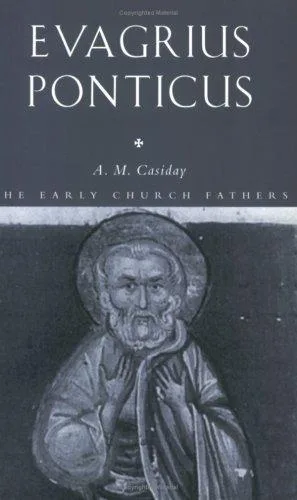
Evagrius Ponticus
 82
82

Evagrius Ponticus
Evagrius Ponticus’s treatise offers a starkly analytical approach to the spiritual life, far removed from sentimental piety. The strength lies in its systematic deconstruction of internal spiritual warfare; Evagrius’s categorization of the eight evil thoughts provides a framework for self-examination that remains remarkably potent. A notable limitation is the inherent difficulty in accessing the full nuance of his thought without extensive background in late antique philosophy and monastic practice, especially given the historical condemnations that have shadowed his legacy. The passage detailing the 'prayer of the mind' as a state beyond images and passions, a direct apprehension of God, is particularly arresting, though challenging to achieve. This work is a vital, if demanding, window into the origins of Western asceticism.
📝 Description
82
Evagrius Ponticus wrote of the 'eight evil thoughts' in the late 4th century.
This text examines the ideas of Evagrius Ponticus, a monk and philosopher active in the late 4th century. He taught ascetic practices and interpreted scripture allegorically. His classification of human vices became influential in Western monasticism. The book covers his spiritual teachings, which include battling demonic temptations systematized as eight principal thoughts. Evagrius's cosmology, influenced by Origen, describes a spiritual path towards contemplation. The concept of the 'nous', or intellect, returning to its divine source is central to his philosophy. The text also outlines stages of the ascetic life, moving from practical virtue to the contemplation of divine realities.
Evagrius's writings emerged during a time of significant philosophical and religious change in the Roman Empire. He engaged with prevailing Hellenistic philosophies like Neoplatonism as Christian doctrine was solidifying. While his work on the 'eight evil thoughts' deeply shaped monastic tradition, some of his more speculative ideas led to controversy. He was posthumously condemned in 553, requiring careful interpretation of his writings.
Evagrius Ponticus's thought is situated within late antique Christian mysticism, influenced by Origenist traditions and Neoplatonic philosophy. His systematic approach to spiritual warfare, detailing specific demonic temptations (logismoi), provided a framework for ascetical theology. His cosmology and emphasis on the intellect's journey towards divine union reflect a desire to understand the soul's relationship with the absolute, a common theme in esoteric traditions seeking direct experience of the divine.
💡 Why Read This Book?
• Gain a direct understanding of Evagrius Ponticus's foundational concept of the 'eight evil thoughts,' which directly influenced later Western moral theology and the understanding of temptation. • Explore the Neoplatonic underpinnings of early Christian asceticism by examining Evagrius's theories on the 'nous' and its journey toward God, a perspective distinct from later scholasticism. • Discover the historical context of monastic practices in the late 4th century, specifically Evagrius's role in refining ascetic disciplines and contemplative prayer as documented in his writings.
⭐ Reader Reviews
Honest opinions from readers who have explored this book.
❓ Frequently Asked Questions
What is Evagrius Ponticus's concept of the 'eight evil thoughts'?
Evagrius Ponticus identified eight primary categories of sinful thoughts or temptations that plague the human mind: gluttony, lust, avarice, sadness, anger, acedia (sloth/despair), vainglory, and pride. These were central to his ascetic teachings for combating spiritual disturbance.
How did Evagrius Ponticus influence later Christian thought?
Evagrius's systematic approach to asceticism and his classification of vices significantly shaped early monasticism. His ideas, particularly the 'eight evil thoughts,' were adapted by Pope Gregory the Great into the 'seven deadly sins,' becoming a cornerstone of Western Christian morality.
What is the significance of the 'nous' in Evagrius's philosophy?
The 'nous,' often translated as intellect or mind, is central to Evagrius's Neoplatonically influenced thought. He believed the 'nous' originated from God and could, through ascetic purification, return to direct contemplation of the divine, transcending material distractions.
Was Evagrius Ponticus's work always accepted by the Church?
No, Evagrius's writings faced controversy. Some of his theological speculations, particularly concerning the pre-existence of souls and the nature of the resurrection, led to his posthumous condemnation at the Fifth Ecumenical Council (Council of Constantinople) in 553.
What is 'acedia' as described by Evagrius?
Acedia, one of Evagrius's eight evil thoughts, is a complex state of spiritual torpor, weariness, and despair. It involves a lack of care for spiritual duties, a restless dissatisfaction, and an inability to concentrate on prayer, often leading to a desire to abandon the ascetic life.
What was Evagrius Ponticus's connection to Gregory of Nazianzus?
Evagrius Ponticus was a disciple of the renowned Cappadocian Father, Gregory of Nazianzus, one of the most influential theologians of the 4th century. Studying under Gregory provided Evagrius with a strong foundation in orthodox Christian theology and Greek philosophy.
🔮 Key Themes & Symbolism
The Eight Evil Thoughts
Evagrius meticulously cataloged eight principal logismoi, or evil thoughts, that assail the spiritual aspirant: gluttony, lust, avarice, sadness, anger, acedia, vainglory, and pride. This work offers a detailed analysis of each, explaining their origins and providing strategies for overcoming them through prayer, fasting, and vigilance. This systematic approach became a central to Western monasticism, later influencing the more familiar 'seven deadly sins'.
The Ascent of the Nous
Influenced by Neoplatonic philosophy, Evagrius posited that the 'nous' (intellect) is the highest part of the human soul, created in God's image. The spiritual life, for Evagrius, is the process of purifying the 'nous' from the corrupting influence of passions and worldly distractions. This purification enables the 'nous' to achieve 'pure prayer'—a state of direct, unmediated communion with the divine intellect.
Stages of Ascetic Practice
The text outlines a progression in the spiritual life, moving from practical asceticism ('praktike') to contemplative knowledge ('theoria'). Practical virtue involves mastering the passions and living according to the monastic rule. Contemplation is the ultimate goal, where the purified 'nous' apprehends divine truths and experiences the stillness of true prayer, free from distracting thoughts and images.
Monastic Discipline and Prayer
Evagrius provides guidance on the daily life of a monk, emphasizing solitude, manual labor, and constant prayer. He distinguishes between different types of prayer, culminating in the 'prayer of the mind,' a state of profound stillness and awareness achieved through rigorous spiritual discipline. This focus on the internal state and the disciplined pursuit of prayer is central to his legacy.
💬 Memorable Quotes
Direct passages from the work, attributed to the author.
“The monk should not think of any image when praying.”
— This statement points to Evagrius's ideal of pure prayer, a state of direct communion with the divine intellect (nous) that transcends sensory experience and mental imagery, aligning with Neoplatonic concepts of apophatic theology.
“Acedia is a distress of the soul, a weariness of the mind.”
— This definition captures the essence of acedia, a profound spiritual sloth and despair Evagrius identified as particularly dangerous. It signifies a loss of spiritual motivation and a restlessness that hinders progress in prayer and ascetic practice.
“If you wish to pray, abandon all things.”
— This concise instruction emphasizes the radical detachment required for authentic prayer according to Evagrius. True spiritual communion necessitates relinquishing worldly concerns, mental distractions, and even attachments to spiritual experiences.
“The passions are like a swarm of flies; they trouble the mind.”
— This vivid metaphor illustrates how disordered emotions and desires (passions) disrupt the contemplative mind. Evagrius's teaching focuses on understanding and subduing these internal disturbances to achieve mental clarity and spiritual peace.
💡 Key Ideas
Editorial paraphrase of the work's core concepts — not direct quotes.
The intellect is an image of God.
This paraphrase highlights Evagrius's view of the human 'nous' as divinely created. The goal of asceticism is to restore this intellect to its original purity, allowing it to reflect God's nature and achieve union with the divine source.
🌙 Esoteric Significance
Tradition
Evagrius Ponticus occupies a unique position bridging Patristic theology and esoteric philosophical traditions, particularly Neoplatonism. His work represents an early attempt to synthesize Christian asceticism with sophisticated philosophical concepts of the soul, intellect, and the divine. While firmly rooted in Christian monasticism, his exploration of the 'nous' and its ascent through stages of purification aligns with broader esoteric quests for Gnosis and spiritual liberation found in Hermeticism and Gnosticism.
Symbolism
The primary symbolic motif in Evagrius's work is the 'nous' (intellect), representing the divine spark within humanity. Its journey from a fallen, passion-clouded state back to its luminous origin symbolizes the esoteric path of spiritual return. The 'eight evil thoughts' function as symbolic representations of the obstacles—the demons or lower psychic forces—that must be confronted and overcome on this inward ascent.
Modern Relevance
Contemporary contemplative traditions, mindfulness practices, and certain schools of depth psychology draw implicitly or explicitly on Evagrius's insights. His systematic analysis of the mind's internal states and his methods for achieving mental stillness and self-awareness offer enduring relevance for those seeking inner peace and psychological integration, resonating with modern interests in contemplative spirituality and the psychology of religion.
👥 Who Should Read This Book
• Students of early Christian history and monasticism seeking primary source material on ascetic theology and the spiritual practices of the desert fathers. • Scholars of comparative religion and philosophy interested in the intersection of Neoplatonism and early Christian thought, particularly regarding the soul and contemplative practices. • Individuals engaged in contemplative prayer or spiritual direction looking for historical frameworks and systematic approaches to understanding and overcoming inner spiritual obstacles.
📜 Historical Context
Evagrius Ponticus (c. 345–399 AD) was a central figure in late antique Christian thought, operating during a period of intense theological formation and philosophical engagement. As a disciple of Gregory of Nazianzus, he absorbed both Nicene orthodoxy and the prevailing currents of Hellenistic philosophy, particularly Neoplatonism. His writings, such as the *Praktikos* and *Kephalaia Gnostica*, systematized ascetic practices and contemplative theology, profoundly influencing monastic traditions in both the East and West. He was also a contemporary of other desert fathers and influential Christian writers of the era. However, his thought was not without controversy; certain Origenist interpretations and speculative ideas led to his posthumous condemnation at the Council of Constantinople in 553, casting a long shadow over the reception of his work and necessitating careful historical contextualization.
📔 Journal Prompts
The nature of the 'nous' and its potential for divine contemplation.
Evagrius's 'eight evil thoughts' as a framework for self-examination.
The practice of 'pure prayer' beyond images and thoughts.
The concept of 'acedia' in contemporary spiritual life.
The relationship between practical virtue and contemplative knowledge.
🗂️ Glossary
Nous
Greek for 'intellect' or 'mind.' In Evagrius's philosophy, it is the highest faculty of the soul, created in God's image, capable of direct communion with the divine.
Logismoi
Greek for 'thoughts' or 'reasonings.' Evagrius used this term to denote evil thoughts or temptations that assail the mind, which he systematically categorized into eight types.
Praktike
The practical or ethical aspect of the spiritual life. It involves mastering the passions, practicing ascetic disciplines, and living according to the monastic rule.
Theoria
Contemplation or speculative knowledge. The highest stage of the spiritual life, where the purified intellect apprehends divine truths and experiences union with God.
Acedia
A spiritual malaise characterized by weariness, boredom, and despair. It is one of the eight evil thoughts, hindering spiritual progress and often leading to a desire to abandon the ascetic life.
Pure Prayer
Evagrius's ideal state of prayer, achieved through rigorous purification, where the 'nous' is free from all images, thoughts, and distractions, engaging in direct, unmediated communion with the divine.
Passions
Disordered emotional states and desires that disturb the mind and lead to sin. Evagrius taught that overcoming these passions is essential for spiritual progress.
🔮 Readers Also Liked
Browse all →









More by Evagrius Ponticus
All books →


More Free Occult Philosophy Books
View all →