Picture This
 84
84

Picture This
The initial premise of Picture This, linking modern visual analysis to ancient divinatory arts, is immediately intriguing. Its strength lies in the elegant simplicity of its 41 image-and-question pairings, which effectively bypasses the often-intimidating jargon found in many esoteric texts. I found the section on the image depicting a solitary figure on a vast plain particularly potent; the questions encouraged a direct confrontation with feelings of isolation versus self-reliance. However, the book’s brevity, while contributing to its accessibility, occasionally leaves one wanting more depth in the conceptual underpinnings. The connection to bibliomancy, for instance, feels more tangential than deeply integrated. Despite this, Picture This offers a refreshing, visually-driven approach to self-inquiry that is both engaging and unexpectedly revealing for its concise format.
📝 Description
84
Published in 2023, Picture This uses 41 images to spark personal reflection.
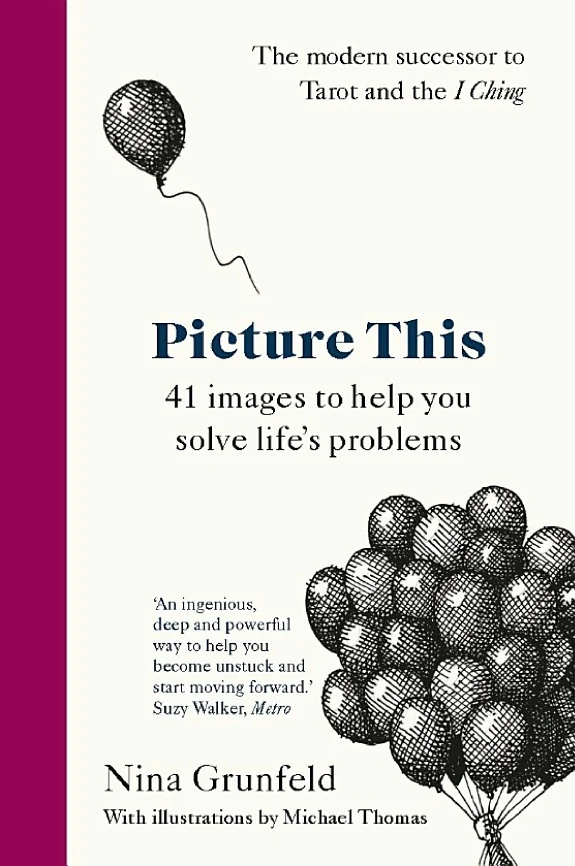
Picture This is a tool for self-inquiry that draws on older methods of divination. It presents users with 41 distinct images. Each image comes with seven guiding questions. The practice involves looking closely at an image and using these questions to prompt personal thought and find solutions. This book is for anyone who feels stuck and wants a new way to look at their situation.
It suits people looking for a simple yet deep way to understand themselves and solve creative problems. Readers who feel limited in their thinking or life circumstances will find a fresh perspective here. Those interested in their subconscious, gaining clarity on what they want, or simply engaging with pictures in a new way will find value in its approach.
The book's approach echoes practices like bibliomancy, the I Ching, and Tarot readings. These traditions use random selection and symbolic interpretation for insight. The I Ching, for example, is a Chinese philosophical text from the Zhou Dynasty. Using images for divination also appears in various folk magic practices. This book adapts these ideas for modern self-reflection.
💡 Why Read This Book?
• Gain a unique visual divination method that moves beyond traditional card spreads, directly engaging with 41 curated images and their specific seven-question prompts to foster unique insights. • Discover a practical approach to overcoming mental blocks, inspired by ancient practices like bibliomancy and the I Ching, applied to contemporary visual art. • Develop a personal interpretive framework by using the book’s structured visual prompts to identify desires or obstacles, offering a tangible tool for self-discovery.
⭐ Reader Reviews
Honest opinions from readers who have explored this book.
❓ Frequently Asked Questions
How does Picture This differ from using a Tarot deck?
Unlike Tarot, which uses established archetypes and meanings, Picture This relies on original imagery and user-generated interpretation via specific questions. It's less about predefined symbols and more about personal association with 41 unique visuals.
What is bibliomancy and how is it used in this book?
Bibliomancy is a form of divination involving random passage selection from a text. Picture This adapts this by using images as the 'text' and guiding questions as the method for 'reading' them for personal insight.
Is this book suitable for beginners in esoteric studies?
Yes, its straightforward approach with images and simple questions makes it highly accessible for those new to esoteric practices or seeking an easy-to-use tool for self-reflection.
Can Picture This be used for problem-solving?
Absolutely. The book is explicitly designed to help users identify what they want or don't want, find new perspectives, and overcome feeling stuck by prompting reflection on specific visual stimuli.
What is the significance of the 41 images?
Each of the 41 images serves as a focal point for contemplation. They are intentionally varied to evoke different emotional and psychological responses, acting as catalysts for the seven guiding questions.
Who are Nina Grunfeld and Annie Lionnet?
Nina Grunfeld and Annie Lionnet are the authors of Picture This, first published in 2022. They collaborated to create this modern interpretive guide drawing on ancient divinatory concepts.
🔮 Key Themes & Symbolism
Visual Contemplation as Divination
The work posits that images, when approached with focused intent and guided questioning, can serve as potent divinatory tools. This departs from traditional textual or symbolic systems by grounding insight in direct visual perception. The 41 unique images are designed not for pre-assigned meanings, but as catalysts for personal association and subconscious revelation, echoing principles found in contemplative traditions and modern art therapy.
Problem-Solving Through Perspective Shift
A core tenet is that current thinking can perpetuate problems. Picture This offers a method to break this cycle by engaging the visual cortex and subconscious mind. The seven questions accompanying each image are crafted to prompt users to identify desired outcomes, acknowledge unwanted elements, and foster a shift in perspective, thereby facilitating solutions or acceptance.
Bridging Ancient and Modern Methods
The book explicitly draws parallels with ancient practices like bibliomancy and the I Ching, demonstrating how their core principles of seeking guidance through external prompts can be applied in a contemporary context. It repackages these age-old wisdom traditions into an accessible, visually-oriented format suitable for the 21st century, making esoteric inquiry more tangible.
The Power of Guided Inquiry
Central to the book's efficacy is the structure provided by the seven questions. These prompts act as a form of guided inquiry, directing the user's attention and encouraging a systematic exploration of their feelings and thoughts in response to the visual stimuli. This structured approach ensures that the contemplation is not aimless but directed towards self-understanding and clarification.
💬 Memorable Quotes
Direct passages from the work, attributed to the author.
“You can't solve problems by using the same kind of thinking that created them.”
— This foundational quote, attributed to Albert Einstein, sets the stage for the book's entire premise: that conventional thought patterns are insufficient for overcoming difficulties, necessitating a different approach like the visual contemplation offered.
“The book includes 41 images, each accompanied by seven simple questions.”
— This statement highlights the core mechanics of the book: a defined set of visual stimuli (41 images) and a structured method (seven questions per image) for engaging with them for insight.
“As you look at each picture, you use the questions as prompts to help you identify what you want - or don't want.”
— This explains the practical application of the book's method, emphasizing its utility in clarifying desires and aversions through focused interaction with the visual prompts.
“Perhaps you are feeling stuck in some way.”
— This directly addresses a common reader need, positioning the book as a potential solution for those experiencing stagnation or a lack of progress in their lives or thinking.
“Picture This is a 21st-century concept that draws on the ancient practices of bibliomancy, Tarot and the I Ching.”
— This frames the book's innovation: updating ancient wisdom traditions for contemporary use, bridging historical esoteric practices with modern self-help and visual culture.
🌙 Esoteric Significance
Tradition
Picture This aligns with the Hermetic principle of correspondence ('As Above, So Below') by suggesting that internal states and external visual stimuli are interconnected. It draws from the divinatory traditions of bibliomancy and the I Ching, which rely on external catalysts to reveal inner truths or future possibilities. While not strictly adhering to any single established esoteric lineage, it offers a secularized, visually-driven approach to gaining gnosis (knowledge) about oneself, akin to contemplative practices found across various mystical traditions.
Symbolism
The book's primary 'symbols' are the 41 original images themselves. While the work does not assign fixed symbolic meanings in the way Tarot archetypes do, the images are intended to function as Rorschach-like stimuli. Their power lies in the personal symbolism they evoke in the viewer. The 'solitary figure' might symbolize isolation or independence; a 'fragmented landscape' could represent inner turmoil or a broken path forward. The user’s interpretation, guided by the questions, unlocks this personal symbolic resonance.
Modern Relevance
In an age of information overload and digital detachment, Picture This offers a tangible, analog method for slowing down and engaging deeply with visual information. Its principles are relevant to contemporary practices in mindfulness, art therapy, and even aspects of design thinking that leverage visual ideation. Thinkers and practitioners interested in non-linear problem-solving, intuition development, and the intersection of art and psychology find value in its approach.
👥 Who Should Read This Book
• Aspiring practitioners of esoteric arts: Individuals curious about divination and seeking an accessible entry point that bypasses complex symbolic systems like traditional Tarot. • Creative professionals and artists: Those looking for novel methods to break creative blocks, generate ideas, or explore the psychological impact of visual stimuli. • Individuals experiencing life transitions: People feeling stuck or seeking clarity on personal goals and challenges who desire a structured, introspective tool.
📜 Historical Context
Published in 2022, Picture This emerges in an era saturated with digital imagery and a renewed interest in mindfulness and self-exploration techniques. Its methodology taps into a lineage of divinatory practices that gained significant traction in the West during the late 19th and early 20th centuries, influenced by movements like Theosophy and the Hermetic Order of the Golden Dawn, which explored symbolic systems for spiritual growth. While contemporary psychology often utilizes art therapy and visual stimulus, Picture This directly engages with the esoteric tradition of seeking omens and insights through unconventional means. Its approach can be seen as a modern iteration of practices like I Ching divination, which dates back to ancient China, or the use of Tarot cards, popularized in Europe from the 18th century onwards. The book’s accessible format contrasts with more complex occult systems, positioning it for a broader audience than, for instance, the intricate symbolic language found in Aleister Crowley's work, a contemporary figure in esoteric thought during the early 20th century.
📔 Journal Prompts
The solitary figure on the plain: what aspects of its environment reflect your current inner landscape?
Reflect on the imagery of the fragmented path; how does this visual map to your perceived obstacles?
Consider the questions related to the 'open door' image: what potential futures are you hesitant to acknowledge?
Analyze the recurring motif of water across different images: what emotions or subconscious currents does it represent for you?
The contrast between light and shadow in the 'cityscape' image: how does this duality manifest in your decision-making process?
🗂️ Glossary
Bibliomancy
A form of divination that involves using a book, typically chosen at random, by opening it to a specific page and using the text found there to seek guidance or insight.
I Ching
An ancient Chinese divination text and wisdom book, often translated as the 'Book of Changes,' used for understanding the past, present, and future through hexagrams derived from coin or yarrow stalk methods.
Tarot
A deck of 78 cards, each with symbolic imagery, used for divination, self-exploration, and fortune-telling. It typically includes Major Arcana and Minor Arcana cards.
Divination
The practice of seeking knowledge of the future or the unknown by supernatural means or through interpretation of signs and omens.
Bibliomancy
A form of divination that involves using a book, typically chosen at random, by opening it to a specific page and using the text found there to seek guidance or insight.
Gnosis
In esoteric traditions, refers to intuitive or experiential knowledge, often of a spiritual or divine nature, as opposed to intellectual understanding.
Esoteric
Intended for or likely to be understood by only a small number of people with a specialized knowledge or interest.
This book appears in 1 collection
🔮 Readers Also Liked
Browse all →
From the “Bibliomancy” Collection
View all →


More Free Occult Philosophy Books
View all →