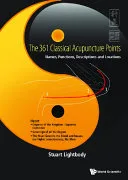
361 Classical Acupuncture Points, The: Names, Functions, Descriptions And Locations
 75
75

361 Classical Acupuncture Points, The: Names, Functions, Descriptions And Locations
Lightbody’s systematic approach to the 361 classical acupuncture points offers a much-needed clarity for students and practitioners alike. The book’s dual-page layout, presenting names and functions on the left and corresponding details on the right, is a genuinely practical innovation, allowing for quick cross-referencing during busy clinic sessions. Its conciseness is a significant strength, avoiding the verbosity that can plague some texts. However, for seasoned practitioners seeking deeper theoretical context or nuanced interpretations beyond the standard functions, the work might feel somewhat limited. The descriptions, while accurate, sometimes lack the evocative language that can help one truly *feel* the energetic qualities of a point, a dimension often explored in older texts. For instance, the entry for ST36 (Zusanli) accurately lists its digestive and qi-strengthening functions, but doesn't deeply explore its role as a major point for grounding and nourishing the Shen. Nevertheless, as a direct, functional reference, "361 Classical Acupuncture Points" is an indispensable tool for anyone serious about mastering point location and application.
📝 Description
75
Stuart T. Lightbody's 2020 catalog organizes the 361 classical acupuncture points.
Stuart T. Lightbody's "361 Classical Acupuncture Points" is a systematic reference detailing the standard points used in traditional acupuncture. Published in 2020, the book provides names, primary functions, descriptions, and anatomical locations for each of the 361 classical points. Its design features point data on the left pages and related information on the right, facilitating quick access for practical use. This volume is a working textbook intended for acupuncture students as they learn point selection. It also serves experienced practitioners needing a fast, reliable resource in their practice. The book aims to build user confidence in selecting appropriate points for patient conditions, simplifying clinical decisions.
The study of acupuncture points has a lineage stretching back millennia in China. Classical acupuncture, as codified in texts like the Huangdi Neijing, is the foundation of this practice. Lightbody's 2020 publication connects with this history by presenting the standardized 361 points, a framework largely established during the Ming Dynasty. This ensures continuity with established medical traditions. The work distills ancient knowledge for modern application.
This book addresses the standardized 361 acupuncture points, a system with roots in classical Chinese medicine. The selection and codification of these points, particularly as established during the Ming Dynasty, represent a specific framework within the broader esoteric tradition of Traditional Chinese Medicine. This tradition views the body as a network of energetic pathways (meridians) and specific points that can be stimulated to influence health and well-being. Lightbody's work focuses on the precise identification and functional understanding of these key energetic access points.
💡 Why Read This Book?
• Gain immediate, actionable knowledge of the 361 classical acupuncture points, enabling faster and more confident point selection in practice, as detailed in the book's efficient left/right page layout. • Understand the precise anatomical locations and primary functions of each point, moving beyond generalized concepts to the specific applications Lightbody outlines for ST36 (Zusanli) and others. • Acquire a foundational working textbook published in 2020 that directly supports acupuncture students by standardizing their learning of essential point data, mirroring the structure used in clinical settings.
⭐ Reader Reviews
Honest opinions from readers who have explored this book.
❓ Frequently Asked Questions
What is the primary advantage of the layout in "361 Classical Acupuncture Points"?
The book features a dual-page format, with point names, functions, and descriptions on the left, and corresponding detailed information on the right. This design facilitates quick cross-referencing and efficient information retrieval, crucial for students and practitioners.
Is this book suitable for beginners in acupuncture?
Yes, it is explicitly designed as a working textbook for acupuncture students, providing a concise and accurate reference for the 361 classical points. Its clarity aids in foundational learning.
Who is Stuart T. Lightbody?
Stuart T. Lightbody is the author of "361 Classical Acupuncture Points." He is recognized for his work in distilling complex information on acupuncture points into accessible formats for study and clinical use.
When was "361 Classical Acupuncture Points" first published?
The book was first published on January 15, 2020, making it a contemporary resource for acupuncture education and practice.
Does the book cover more than just the 361 classical points?
No, the title and content specifically focus on the 361 classical acupuncture points, providing detailed information on their names, functions, descriptions, and locations as per the traditional system.
Can practitioners use this book during treatments?
Absolutely. The book is designed for use in the treatment room, enabling practitioners to quickly and confidently select the most effective point(s) for their patients based on the provided information.
🔮 Key Themes & Symbolism
Point Efficacy & Selection
The central theme is the practical application of knowledge regarding the 361 classical acupuncture points. Lightbody emphasizes how understanding the specific names, functions, and exact anatomical locations empowers practitioners to select the most efficacious points for a given patient. This focus moves beyond mere memorization to strategic clinical decision-making, highlighting that precise point selection is paramount for successful therapeutic outcomes in acupuncture.
Standardization of Knowledge
This work addresses the need for a standardized, accessible reference for the core points in acupuncture. By presenting the 361 classical points in a consistent and accurate format, Lightbody provides a common ground for students and professionals. This standardization ensures that practitioners are working from a shared, reliable knowledge base, facilitating clearer communication and consistent treatment protocols across different practitioners and educational institutions.
Bridging Theory and Practice
A significant theme is the book's role in bridging the gap between theoretical study and practical application. The layout and content are specifically engineered to serve as a 'working textbook,' meaning it's intended for active use during study and in the clinical setting. This practical orientation aims to shorten the learning curve for students and enhance the efficiency of experienced practitioners, ensuring that theoretical knowledge translates directly into effective patient care.
The Classical Framework
The book anchors itself in the established framework of the 361 classical acupuncture points, a system with deep historical roots. By focusing on this specific, historically validated set of points, Lightbody connects contemporary practice to ancient wisdom. This adherence to the classical canon ensures that practitioners are grounded in the foundational principles of acupuncture, respecting the lineage and efficacy proven over centuries of use.
💬 Memorable Quotes
Direct passages from the work, attributed to the author.
“The format is such that on the left hand side are found the names, functions and descriptions of each point.”
— This highlights the book's deliberate structural design, prioritizing immediate access to core point data for ease of use during study and clinical practice.
“It is an essential working textbook for all acupuncture students.”
— This statement positions the book not just as a reference but as a fundamental educational tool, crucial for building a solid foundation in acupuncture point knowledge.
“designed for use in the treatment room”
— This emphasizes the practical, clinical utility of the work, indicating it's intended to be a go-to resource for practitioners making real-time treatment decisions.
“to enable the practitioner to quickly and confidently select the most effective point(s) for the patient”
— This articulates the core benefit for professionals: enhanced speed and certainty in choosing acupuncture points, directly impacting patient care quality.
“361 Classical Acupuncture Points”
— This phrase defines the book's scope, focusing on the universally recognized foundational set of points within the acupuncture system, ensuring comprehensive coverage of the essentials.
🌙 Esoteric Significance
Tradition
While acupuncture is fundamentally a medical system, its classical forms are deeply intertwined with Taoist philosophy and principles of energetic balance, aligning it with broader esoteric traditions focused on harmonizing the body's vital force (Qi). The precise mapping of meridians and points reflects a cosmological view where the human body is a microcosm of the universe, a common tenet in Hermetic and Taoist thought. Lightbody's work, by focusing on these classical points, serves as a conduit to this energetic understanding, implicitly connecting the practitioner to a lineage that views the body as a dynamic energetic system.
Symbolism
The number 361 itself carries symbolic weight, often seen as representing the days of the year plus one, suggesting a comprehensive or complete system. Each point, such as ST36 (Zusanli) or LI4 (Hegu), can be viewed as a locus of specific energetic potential and symbolic representation within the body's energetic map. Zusanli, for example, symbolizes grounding and nourishment, essential for sustaining life force, while Hegu represents the opening of passageways, facilitating the flow of Qi and clearing blockages, reflecting broader alchemical principles of transformation and release.
Modern Relevance
Contemporary thinkers and practitioners in fields like functional medicine, mind-body therapies, and even certain branches of sports science are increasingly recognizing the sophisticated physiological understanding embedded within classical acupuncture. Lightbody's book, by providing clear access to the foundational 361 points, supports modern practitioners who seek to integrate these ancient energetic principles into contemporary health and wellness approaches, bridging the gap between traditional knowledge and modern application.
👥 Who Should Read This Book
• Acupuncture students requiring a clear, structured textbook for mastering the names, locations, and primary functions of the 361 classical points. • Practicing acupuncturists seeking a quick-reference guide to enhance efficiency and confidence in point selection during treatment sessions. • Researchers or historians of traditional medicine interested in a precise catalog of the foundational points that form the bedrock of acupuncture practice.
📜 Historical Context
Lightbody's "361 Classical Acupuncture Points," published in 2020, enters a field with centuries of established literature. The standardization of the 361 classical points itself is largely attributed to developments during the Ming Dynasty (1368-1644), building upon foundational texts like the *Huangdi Neijing* (Yellow Emperor's Inner Canon) from the Han Dynasty. Contemporary to Lightbody's work, acupuncture scholarship continues to evolve, with ongoing debates in academic circles regarding the integration of classical theory with modern biomedical research and diverse global interpretations of Traditional Chinese Medicine (TCM). While not facing overt censorship, the field constantly navigates the challenge of maintaining fidelity to classical principles against evolving diagnostic paradigms. Lightbody's contribution engages directly with the enduring legacy of the *Jingluo* (meridian) system, a core part of acupuncture, providing a clear reference point for practitioners navigating this complex history.
📔 Journal Prompts
The precise anatomical locations of the 361 classical acupuncture points as detailed in the book.
The primary functions attributed to ST36 (Zusanli) versus LI4 (Hegu).
Stuart T. Lightbody's method for organizing point information.
The concept of 'working textbook' as applied to acupuncture resources.
The relationship between classical point names and their clinical applications.
🗂️ Glossary
Classical Acupuncture Points
The 361 specific locations on the body's meridians that have been identified and utilized in acupuncture practice for millennia, forming the foundational set of therapeutic points.
Meridians
Channels or pathways within the body through which Qi (vital energy) and Blood are believed to flow, connecting acupuncture points and internal organs.
Qi
The fundamental concept in Traditional Chinese Medicine representing vital energy or life force that animates the body and is essential for health and well-being.
Functions (of a point)
The primary therapeutic actions or indications for using a specific acupuncture point, based on its location, energetic properties, and traditional understanding of its effects.
Anatomical Location
The precise physical position of an acupuncture point on the body, often described in relation to anatomical landmarks, bones, or muscles, crucial for accurate needling.
Working Textbook
A resource designed for practical, active use during study or clinical practice, emphasizing accessibility and direct application of knowledge rather than purely theoretical discourse.
ST36 (Zusanli)
A widely used and important acupuncture point located below the knee, known for its broad functions related to digestion, strengthening Qi, and tonifying the body.