ESP
 74
74

ESP
Michael Martin's "ESP" offers a sober assessment of a field rife with sensationalism. The work's strength lies in its commitment to detailing the history of research, providing a factual backbone to often speculative discussions. Martin meticulously outlines early experiments, such as those conducted by J.B. Rhine at Duke University in the 1930s, a crucial anchor for understanding the field's development. However, the book occasionally suffers from a lack of direct engagement with more recent theoretical advancements in consciousness studies, sometimes feeling tethered to older research paradigms. The section discussing methodology, while thorough, could benefit from more contemporary examples to illustrate the persistent challenges of designing foolproof experiments. Despite this, "ESP" serves as a valuable, dispassionate primer for anyone seeking to understand the empirical efforts to quantify the unquantifiable.
📝 Description
74
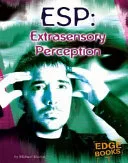
Michael Martin's 1993 book examines Extra-Sensory Perception through documented history and ongoing research.
This volume scrutinizes Extra-Sensory Perception (ESP), moving beyond personal stories to examine its recorded history and current investigations. It details the different forms ESP supposedly appears, such as telepathy, precognition, clairvoyance, and psychokinesis. The work lays out the scientific and parapsychological methods used to study these claimed abilities, noting the difficulties and disputes inherent in such research. The book is for people interested in the scientific and historical aspects of consciousness that fall outside standard understanding. It is suitable for students of parapsychology, researchers of psychic phenomena history, and critical thinkers who want a clear overview of the subject. Those curious about the philosophical questions of mind-body interaction will also find relevant information. The study of ESP has ancient roots, but organized research began in the late 19th and early 20th centuries with groups like the Society for Psychical Research. Martin's work follows this lineage, charting the changes in research methods and theories. It recognizes the intellectual environment of the time, which often swung between strong belief and strict skepticism, especially when spiritualism and psychic events drew attention.
The study of ESP sits within a long tradition of inquiry into consciousness and its potential to transcend physical limitations. This tradition, often termed parapsychology or psychical research, gained significant academic attention in the late 19th century. It sought to apply scientific methods to phenomena previously relegated to folklore or spiritualist claims. Michael Martin's work engages with this history, acknowledging the tension between empirical investigation and the deeply held beliefs about non-physical realities that characterize much esoteric thought.
💡 Why Read This Book?
• Gain an understanding of the historical arc of ESP research, from early 20th-century investigations by figures like J.B. Rhine to contemporary challenges. • Learn about the specific experimental designs and statistical analyses used to study phenomena like telepathy and precognition, appreciating the methodological rigor required. • Evaluate the ongoing scientific debate surrounding ESP, grasping the core arguments for and against its existence and the obstacles to widespread acceptance.
⭐ Reader Reviews
Honest opinions from readers who have explored this book.
❓ Frequently Asked Questions
When was the first systematic study of ESP conducted?
While anecdotal accounts exist for centuries, systematic scientific inquiry into ESP began to gain traction in the late 19th century, notably with the founding of the Society for Psychical Research in 1882.
Who was a key figure in early ESP research?
J.B. Rhine is a prominent figure, often considered the father of parapsychology, who conducted extensive card-guessing and dice-throwing experiments at Duke University starting in the 1930s.
What are the main types of ESP discussed?
The book typically covers telepathy (mind-to-mind communication), clairvoyance (perceiving distant objects or events), precognition (knowing future events), and sometimes psychokinesis (mind influencing matter).
What are the primary challenges in ESP research?
Key challenges include ensuring experimental controls, achieving replicability across different labs and researchers, and guarding against fraud or subtle forms of sensory leakage.
Does "ESP" by Michael Martin present definitive proof of psychic abilities?
The work generally focuses on presenting the history and research findings rather than offering definitive proof, exploring the evidence and the ongoing scientific debate.
What role do statistics play in ESP studies?
Statistics are crucial for determining whether observed results deviate significantly from chance expectations, forming the basis for claims of anomalous phenomena in ESP research.
🔮 Key Themes & Symbolism
Methodological Rigor
The book emphasizes the scientific methodologies employed in studying ESP, highlighting the critical importance of controlled experiments and statistical analysis. It explores the challenges of replicability and the various experimental designs used, from card-guessing tests pioneered by J.B. Rhine in the 1930s to more complex setups. The work scrutinizes potential flaws, such as experimenter bias and sensory leakage, underscoring the discipline's struggle to establish universally accepted protocols that satisfy mainstream scientific skepticism.
Historical Evolution of Research
Martin traces the lineage of ESP inquiry, beginning with early parapsychological societies and moving through significant periods of research. It contextualizes the work within broader shifts in scientific and public attitudes towards the paranormal. The narrative acknowledges influential figures and institutions that shaped the field, illustrating how research questions and approaches have transformed over decades, reflecting changing scientific paradigms and societal interests.
Theoretical Frameworks
Beyond empirical data, the book touches upon the theoretical explanations proposed for ESP phenomena. It explores concepts that attempt to bridge the gap between consciousness and the physical world, discussing ideas that fall outside conventional physics. The work examines how different theoretical models seek to account for anomalous information transfer or influence, acknowledging the speculative nature of these frameworks and their ongoing development.
Skepticism and Controversy
A significant thread throughout the book is the persistent skepticism and controversy surrounding ESP research. Martin addresses the criticisms leveled against parapsychology, including accusations of methodological weakness and confirmation bias. The work explores the scientific community's general reluctance to accept ESP claims and the criteria that would be necessary to overcome this entrenched skepticism, providing a balanced perspective on the debate.
💬 Memorable Quotes
Direct passages from the work, attributed to the author.
“The history of ESP research is a history of attempts to establish objective evidence for subjective experiences.”
— This statement captures the core challenge of parapsychology: translating personal, often elusive, psychic experiences into verifiable, repeatable scientific data that can be accepted by the broader scientific community.
“Statistical deviations from chance remain the primary indicator of potential psi phenomena.”
— This highlights the reliance on quantitative analysis in parapsychology. Researchers look for patterns in experimental results that are highly improbable under random chance, using statistics as the gatekeeper for identifying anomalous effects.
“Control is paramount; without rigorous controls, anomalies are indistinguishable from experimental error.”
— This emphasizes the critical need for meticulously designed experiments. Any deviation from strict controls can introduce artifacts or alternative explanations, rendering the results inconclusive for proving psychic abilities.
“The interpretation of 'psi' itself remains a point of contention, bridging psychology, physics, and philosophy.”
— This points to the interdisciplinary nature and conceptual ambiguity of psychic phenomena. Defining and explaining 'psi' requires drawing from multiple fields, none of which yet offers a universally accepted framework.
“Replicability is the bedrock of scientific validation, yet it remains elusive for many ESP findings.”
— This addresses a fundamental weakness in the field. The inability of independent researchers to consistently reproduce positive results casts doubt on the validity of initial discoveries, a common hurdle for ESP claims.
🌙 Esoteric Significance
Tradition
While not strictly aligned with a single esoteric lineage, "ESP" engages with themes central to Western esotericism, particularly those explored by movements like Theosophy and later parapsychology. It touches upon the idea of consciousness as a fundamental force, capable of interacting beyond the constraints of space and time, a concept explored in Hermetic and Gnostic traditions. The book fits within the esoteric endeavor to understand hidden laws of nature and the potential of the human mind, albeit through a lens of empirical investigation rather than purely mystical insight.
Symbolism
The book's exploration of concepts like telepathy can be seen as a modern interpretation of ancient ideas about interconnectedness or 'sympathy' between minds, echoing Hermetic principles. Precognition relates to notions of fate and divine foresight found in various mystical traditions. While "ESP" focuses on scientific terminology, these phenomena often carry symbolic weight, representing the potential for deeper, unseen connections and a reality that extends beyond observable matter.
Modern Relevance
Contemporary thinkers and practitioners in fields like consciousness studies, transpersonal psychology, and even certain branches of quantum physics research are revisiting the questions posed by ESP research. The book's detailed account of historical studies and methodological challenges remains relevant for anyone seeking to understand the empirical underpinnings of consciousness exploration, providing context for modern inquiries into non-local awareness and mind-matter interaction.
👥 Who Should Read This Book
• Students of parapsychology and the history of consciousness research seeking a comprehensive overview of empirical investigations into psychic phenomena. • Skeptical inquirers interested in understanding the scientific arguments, methodologies, and challenges involved in studying ESP, moving beyond sensationalized accounts. • Researchers in psychology and cognitive science looking to explore the fringes of human perception and the historical attempts to validate anomalous mental abilities.
📜 Historical Context
Michael Martin's "ESP" emerges from a long tradition of investigating anomalous mental phenomena, a field that gained academic structure with the establishment of the Society for Psychical Research in 1882. The book implicitly engages with the work of pioneers like J.B. Rhine, whose extensive card-guessing experiments at Duke University in the 1930s sought to quantify psychic abilities. This era was marked by intense interest in spiritualism and the potential for consciousness to transcend physical limitations, contrasting sharply with the strict materialism prevalent in much of mainstream science. Martin's work navigates this historical landscape, acknowledging the scientific community's general skepticism while detailing the persistent efforts to find empirical footing for ESP. The reception of such research has historically been mixed, often facing dismissal from established scientific circles due to methodological concerns and a lack of replicable, unambiguous results.
📔 Journal Prompts
The concept of statistical significance in ESP experiments.
J.B. Rhine's card-guessing experiments and their implications.
Challenges in achieving replicability in parapsychological research.
The historical reception of ESP claims by the scientific community.
Potential explanations for anomalous psychic phenomena.
🗂️ Glossary
Telepathy
The purported direct communication of thoughts or feelings from one person to another without the use of the senses.
Clairvoyance
The alleged ability to perceive objects, events, or information that is not accessible to the normal senses.
Precognition
The claimed ability to perceive or know future events before they happen.
Psychokinesis (PK)
The purported ability to influence physical objects or systems with the mind alone, without physical interaction.
Parapsychology
The branch of psychology that studies alleged psychic phenomena and other paranormal claims, such as telepathy, clairvoyance, and precognition.
Replicability
The ability of an experiment or study to be reproduced by other researchers under similar conditions, yielding similar results.
Sensory Leakage
Unintentional cues or information transfer through normal sensory channels that could be mistaken for or contribute to apparent psychic phenomena.