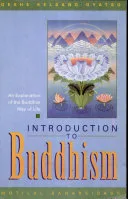
Introduction to Buddhism
 77
77

Introduction to Buddhism
Geshe Kelsang Gyatso's "Introduction to Buddhism" offers a commendably structured entry point into a vast philosophical landscape. Its strength lies in its methodical approach, breaking down intricate concepts like the Four Noble Truths into digestible components. The text excels at presenting Buddhist thought as a practical system for mental cultivation, a significant departure from purely academic or devotional interpretations. However, the pervasive framing through the lens of the New Kadampa Tradition, while providing a coherent viewpoint, might feel limiting to readers seeking a broader, comparative overview of Buddhist schools. A passage discussing the nature of suffering (dukkha) and its cessation provides a clear example of the book's direct, application-oriented style. Ultimately, it is a valuable primer for those aligned with its specific lineage, offering clarity and practical guidance.
📝 Description
77
Geshe Kelsang Gyatso's 1999 book introduces Buddhist philosophy for lasting peace.
Geshe Kelsang Gyatso's "Introduction to Buddhism" breaks down the essential principles of Buddhist thought and meditation. First published in 1999, the text aims to make complex Buddhist ideas understandable to a broad audience. It presents the Buddhist path as a practical system for cultivating inner peace and happiness through wisdom and compassion.
The book is suited for anyone curious about Buddhist philosophy, comparative religion, or contemplative practices. It assumes no prior background in Eastern thought, making it accessible for newcomers. Gyatso, a recognized scholar and teacher, wrote this work to meet the growing Western interest in Buddhism, offering a specific perspective from the New Kadampa Tradition.
This book situates itself within the New Kadampa Tradition, a lineage of Mahayana Buddhism. It frames Buddhist teachings as a science of mind, emphasizing practical application through contemplation and ethical living. The text aligns with the broader esoteric interest in Eastern spiritual traditions that grew in the late 20th century, offering a systematic approach to achieving inner well-being.
💡 Why Read This Book?
• Learn about the Four Noble Truths as presented by Geshe Kelsang Gyatso, understanding their systematic application to personal suffering and its cessation as detailed in the 1999 publication. • Grasp the principles of the Noble Eightfold Path, a core Buddhist doctrine, and how its components are integrated into daily life for spiritual progress, as explained in the text. • Explore the concept of karma and rebirth from a practical, mind-training perspective, gaining insight into Buddhist ethics and causality as articulated by the author.
⭐ Reader Reviews
Honest opinions from readers who have explored this book.
❓ Frequently Asked Questions
What is the primary focus of Geshe Kelsang Gyatso's "Introduction to Buddhism"?
The book's primary focus is to present the fundamental principles and practices of Buddhism as a practical path to happiness and enlightenment, emphasizing mind training and meditation.
When was "Introduction to Buddhism" first published?
The initial publication of "Introduction to Buddhism" by Geshe Kelsang Gyatso was in 1999.
Is this book suitable for absolute beginners to Buddhism?
Yes, the book is designed for beginners, offering a clear and systematic introduction to core Buddhist concepts and practices without assuming prior knowledge.
What distinguishes the Buddhist perspective in this book from other traditions?
This book presents the teachings from the perspective of the New Kadampa Tradition, emphasizing the integration of study, practice, and meditation for spiritual development.
Does the book cover Buddhist meditation techniques?
Yes, "Introduction to Buddhism" covers various meditation techniques as integral components of the Buddhist path to understanding the mind and achieving spiritual realization.
Are there specific philosophical schools of Buddhism discussed in detail?
While it introduces general Buddhist principles, the book primarily draws from and explains teachings within the framework of the New Kadampa Tradition's interpretation.
🔮 Key Themes & Symbolism
The Path to Liberation
This theme centers on the Buddhist understanding of suffering (dukkha) and its cessation, presenting the Noble Eightfold Path as a practical guide. The work details how ethical conduct, mental discipline, and wisdom are cultivated through meditation and contemplation, leading towards enlightenment. It frames Buddhist practice as a systematic method for transforming the mind, moving from states of ignorance and attachment to clarity and freedom, a core tenet within the New Kadampa Tradition's lineage.
Karma and Rebirth
Geshe Kelsang Gyatso explains karma not as fate, but as the law of cause and effect governing our actions and their consequences. The book elucidates how intentional actions, rooted in motivation, create karmic imprints that shape future experiences, including rebirth. This section emphasizes the ethical implications of our choices and provides a framework for understanding the cycle of existence (samsara) and the potential for liberation from it through understanding these principles.
The Nature of the Mind
A significant focus is placed on the mind as the locus of both suffering and happiness. The book explores the ordinary mind, its delusions, and its potential for purification. Through specific meditation techniques, readers are guided to observe the mind's workings, distinguish between conceptual thought and pure awareness, and cultivate positive mental states like compassion and wisdom. This exploration aligns with the Kadam tradition's emphasis on analytical meditation.
Compassion in Practice
The development of universal compassion (karuna) is presented as a vital aspect of the Buddhist path, inseparable from wisdom. The book outlines methods for extending altruistic love and concern to all sentient beings, recognizing their shared desire for happiness and freedom from suffering. This cultivation of compassion is shown to be transformative, dissolving self-centeredness and providing a powerful motivation for spiritual practice.
💬 Memorable Quotes
Direct passages from the work, attributed to the author.
“The mind is the root of all our suffering and happiness.”
— This statement highlights the central Buddhist idea that our internal state, not external circumstances, is the primary determinant of our experience. It suggests that by understanding and transforming the mind, one can achieve lasting peace.
“The Four Noble Truths are the foundation of all Buddha's teachings.”
— This emphasizes the foundational importance of understanding suffering, its cause, its cessation, and the path to that cessation. It frames the entire Buddhist system as a direct response to the problem of existential dissatisfaction.
“Ethical discipline is the basis for meditation.”
— This points to the interconnectedness of ethics and mental development. It suggests that a disciplined, virtuous life creates the necessary stability and clarity for effective meditation practice.
“The Noble Eightfold Path guides us towards liberation.”
— This interpretation positions the Eightfold Path as a practical roadmap. It signifies a structured approach to spiritual development, encompassing right understanding, thought, speech, action, livelihood, effort, mindfulness, and concentration.
“We must train our mind to see things as they really are.”
— This underscores the role of wisdom and insight in Buddhism. It implies that our ordinary perception is often clouded by delusion, and spiritual practice aims to reveal a more accurate, unadulterated reality.
🌙 Esoteric Significance
Tradition
This work aligns with the Mahayana Buddhist tradition, specifically within the lineage of the New Kadampa Tradition. While Mahayana Buddhism itself is often studied within broader esoteric contexts, Gyatso's presentation emphasizes a structured, systematic approach to practice and study that mirrors the methodical nature found in some Western esoteric orders. It departs from purely philosophical discourse by centering on practical application and mental transformation through meditation, a hallmark of many esoteric paths seeking direct experience.
Symbolism
The book frequently references core Buddhist symbols such as the Wheel of Dharma (Dharmachakra), representing the Buddha's teachings and the path to enlightenment, and the lotus flower, symbolizing purity and spiritual unfolding amidst the mud of samsara. The concept of the 'jewel in the lotus' or the 'wish-fulfilling jewel' also appears, signifying the inherent potential for enlightenment within all beings, a potent symbol of inner divinity and transformative power.
Modern Relevance
Contemporary thinkers and practitioners interested in mindfulness, secular ethics, and applied psychology often find resonance with the practical aspects of "Introduction to Buddhism." Schools of thought focusing on cognitive behavioral therapy (CBT) and acceptance and commitment therapy (ACT) indirectly echo Buddhist principles of mind observation and detachment from negative thought patterns. The book's emphasis on compassion and ethical conduct also connects with modern discussions on secular ethics and altruism.
👥 Who Should Read This Book
• Beginners to Buddhist philosophy seeking a structured, systematic overview of core concepts like the Four Noble Truths and the Noble Eightfold Path. • Individuals interested in meditation and mind-training techniques as practical tools for personal development and inner peace. • Students of comparative religion or comparative philosophy looking for a clear presentation of Mahayana Buddhist thought from a specific lineage.
📜 Historical Context
Geshe Kelsang Gyatso's "Introduction to Buddhism," first published in 1999, arrived at a time when Western engagement with Buddhist philosophy was rapidly expanding beyond academic circles. While figures like the Dalai Lama were becoming increasingly visible, and various Tibetan lineages were establishing centers, Gyatso's work offered a specific, systematic presentation aligned with the New Kadampa Tradition, which he founded. This approach synthesized elements from different Tibetan Buddhist traditions, particularly the Kadampa lineage, emphasizing a practical, integrated path of study, reflection, and meditation. The book's clarity and structured methodology distinguished it from more scholarly or devotional texts, aiming to make the Buddhist path accessible to a modern, Western audience seeking practical self-help and spiritual insight. Its publication predates some of the more widespread debates about the adaptation of Buddhist teachings in secular contexts, positioning it as an early effort to present a comprehensive, tradition-based introduction for global practitioners.
📔 Journal Prompts
The Four Noble Truths as a framework for personal suffering and its cessation.
Reflecting on the Eightfold Path's relevance to daily actions and intentions.
Observing the mind's habits in relation to the concept of karma.
Cultivating compassion towards oneself and others through guided contemplation.
The nature of mind and its potential for purification.
🗂️ Glossary
Dukkha
Often translated as 'suffering,' 'dissatisfaction,' or 'stress.' It refers to the inherent unsatisfactoriness of conditioned existence, encompassing physical and mental pain, as well as a subtle sense of unease.
Karma
The principle of cause and effect governing actions. Intentional actions create imprints that lead to future consequences, shaping one's experiences and rebirths.
Samsara
The cycle of birth, death, and rebirth driven by ignorance, attachment, and aversion. It is characterized by suffering and impermanence.
Nirvana
The ultimate goal of Buddhist practice; the cessation of suffering and the cycle of rebirth. It represents liberation and profound peace.
Noble Eightfold Path
The comprehensive path to liberation, comprising right understanding, right thought, right speech, right action, right livelihood, right effort, right mindfulness, and right concentration.
Bodhisattva
An enlightened being who delays their own final nirvana out of compassion to help all sentient beings achieve enlightenment.
Meditation (Samatha-Vipassana)
Practices aimed at calming the mind (Samatha) and developing insight into the nature of reality (Vipassana).