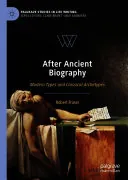
Die geheimen Herren-Worte des Thomas-Evangeliums

 80
80

Die geheimen Herren-Worte des Thomas-Evangeliums
Karl O. Schmidt’s "Die geheimen Herren-Worte des Thomas-Evangeliums" offers a focused, scholarly lens on a text that has long intrigued esoteric thinkers. Schmidt’s strength lies in his rigorous textual analysis, meticulously tracing the potential Gnostic underpinnings of Jesus’ sayings as preserved in the Gospel of Thomas. He avoids sensationalism, instead presenting a measured argument for viewing the text as a guide to inner gnosis. A notable limitation is the book's academic density; it assumes a significant prior knowledge of Gnostic literature and philosophy, which may alienate newcomers. The exploration of the "living Jesus" as an internal, awakened state of being, rather than solely a historical figure, is particularly compelling, though the work could benefit from broader comparative analysis with contemporaneous mystical traditions beyond Gnosticism. It is a valuable, if challenging, contribution for those dedicated to understanding the Gospel of Thomas's esoteric legacy.
📝 Description
80
Karl O. Schmidt's 1984 study examines the Gospel of Thomas as a source of Gnostic teachings.
Published in 1984, Karl O. Schmidt's "Die geheimen Herren-Worte des Thomas-Evangeliums" is an academic study that looks beyond conventional theological views of the Gospel of Thomas. Schmidt treats the text as a collection of Gnostic wisdom and mystical statements. He analyzes the sayings attributed to Jesus, searching for hidden meanings and spiritual allegories that later religious doctrines may have obscured. The book is intended for dedicated students of Gnosticism, early Christian mysticism, and comparative religion. Those familiar with texts from the Nag Hammadi library will find Schmidt's analysis particularly useful. It also suits scholars and practitioners interested in the historical Jesus outside the canonical Gospels. The work helps understand the philosophical basis of early spiritual movements focused on inner knowledge. Schmidt's research falls within a time of renewed academic and public attention to Gnostic writings, spurred by the Nag Hammadi discoveries. His focus on the Gospel of Thomas, often absent from mainstream biblical collections, matches a wider scholarly effort to understand alternative early Christian traditions. The intellectual atmosphere at the time encouraged re-evaluating texts that presented different ideas about Christ and salvation, distinct from developing orthodox beliefs.
Schmidt's work engages with the Gnostic tradition, particularly through its interpretation of the Gospel of Thomas. This Gospel, a non-canonical text discovered at Nag Hammadi, is viewed by Gnostics not as a historical account but as a source of secret spiritual knowledge. Schmidt focuses on the "Herren-Worte" or "Kyriac Letters," the authoritative sayings of Jesus within the text. He interprets these sayings as guides for awakening spiritual awareness, aligning with Gnostic emphasis on direct, experiential knowledge of the divine, often contrasted with the salvation through faith or works emphasized by emerging orthodox Christianity. The book situates these teachings within the broader context of early spiritual movements that prioritized personal revelation and inner enlightenment.
💡 Why Read This Book?
• Gain an understanding of the Gospel of Thomas as a Gnostic text, learning how Schmidt interprets Jesus' sayings as keys to inner awakening, a perspective distinct from canonical biblical study. • Explore the concept of the "Kingdom of Heaven" as an internal, psychological realization, as detailed in Schmidt's analysis of specific parables from the 1984 publication. • Discover the esoteric significance of the "Kyriac Letters" and their role in spiritual self-discovery, offering insights into early Christian mysticism not found in standard theological works.
⭐ Reader Reviews
Honest opinions from readers who have explored this book.
❓ Frequently Asked Questions
What is the primary focus of "Die geheimen Herren-Worte des Thomas-Evangeliums"?
The book focuses on an esoteric interpretation of the Gospel of Thomas, analyzing Jesus' sayings as Gnostic teachings aimed at spiritual awakening and inner knowledge, rather than historical accounts.
When was "Die geheimen Herren-Worte des Thomas-Evangeliums" first published?
The book was first published in 1984 by Karl O. Schmidt.
What kind of reader would most benefit from this book?
Students of Gnosticism, early Christian mysticism, comparative religion, and scholars interested in alternative early Christian traditions will find the book most beneficial.
Does the book discuss the Nag Hammadi library?
While not solely about the Nag Hammadi library, the book's exploration of the Gospel of Thomas is situated within the broader context of rediscovered Gnostic texts, significantly influenced by the Nag Hammadi discoveries.
What is a key theme explored in the book regarding the 'Kingdom of Heaven'?
Schmidt interprets the 'Kingdom of Heaven' not as a future or external place, but as an immediate, internal, psychological state of spiritual consciousness accessible through esoteric understanding.
Is this book suitable for beginners in esoteric studies?
The book is academically oriented and assumes some familiarity with Gnostic concepts and biblical scholarship, making it more suitable for intermediate to advanced students rather than absolute beginners.
🔮 Key Themes & Symbolism
The Kyriac Letters as Gnostic Keys
Schmidt posits that the "Herren-Worte" (Lord's Words) within the Gospel of Thomas function as esoteric keys, designed not for historical record but for direct spiritual transmission. These sayings are interpreted as veiled instructions for the aspirant seeking to awaken their inner divine potential. The work examines how these pronouncements, when understood through a Gnostic framework, bypass conventional religious structures to offer a path to direct gnosis, or knowing, of the self and the divine.
Internal Kingdom of Heaven
A central theme is the reinterpretation of Jesus' references to the 'Kingdom of Heaven.' Schmidt argues against a literal, future paradise, instead presenting it as an attainable inner state of consciousness. This internal kingdom is achieved through understanding and integrating the esoteric teachings, leading to a profound shift in perception and a recognition of the divine spark within oneself. The book meticulously analyzes parables to support this concept of immediate spiritual realization.
Spiritual Alchemy of the Self
The book frames the process of spiritual awakening described in the Gospel of Thomas as a form of inner alchemy. The sayings are presented as catalysts that help the individual transform their ordinary consciousness into a higher, illuminated state. This involves a process of introspection, self-knowledge, and the integration of seemingly paradoxical teachings. Schmidt highlights the individual's active role in their own salvation through the application of these secret words.
The Living Jesus Beyond Orthodoxy
Schmidt explores a conception of Jesus that transcends orthodox Christology. The 'living Jesus' presented in the Gospel of Thomas is depicted as a revealer of hidden truths, an embodiment of gnosis rather than solely a savior figure. This perspective emphasizes the experiential and mystical aspects of early Christianity, positioning the text as a vital counterpoint to the developing doctrines of the early Church and offering a path for those seeking a more direct, personal encounter with the divine.
💬 Memorable Quotes
Direct passages from the work, attributed to the author.
“The sayings are not pronouncements for belief, but exercises for the soul.”
— This concept suggests that the words attributed to Jesus in the Gospel of Thomas are intended as practical tools for spiritual development, designed to be applied and experienced rather than passively accepted.
“To find the kingdom, one must first recognize its presence within.”
— This highlights the Gnostic emphasis on immanence – the idea that the divine, or the spiritual realm, is not external but accessible within the individual consciousness, a core tenet explored by Schmidt.
“The seeker who understands the paradoxical nature of these words unlocks the hidden.”
— This interpretation emphasizes that the esoteric meaning of the sayings requires a mind open to paradox and non-dualistic thinking, a common characteristic of Gnostic teachings.
“Each Herren-Wort is a seed planted in fertile ground, awaiting inner cultivation.”
— This metaphor illustrates how the sayings require active engagement and internal work from the reader to yield spiritual insight and growth, rather than being mere historical or theological statements.
💡 Key Ideas
Editorial paraphrase of the work's core concepts — not direct quotes.
The true disciple seeks not salvation from without, but awakening from within.
This paraphrased concept contrasts the book's Gnostic perspective with traditional salvation narratives, focusing on personal gnosis and self-realization as the ultimate spiritual goal.
🌙 Esoteric Significance
Tradition
This work is firmly rooted in the Gnostic tradition, specifically interpreting the Gospel of Thomas as a key Gnostic document. It aligns with Gnostic principles emphasizing direct, experiential knowledge (gnosis) of the divine, often through esoteric interpretations of scripture. Schmidt's approach departs from orthodox Christian theology by viewing the text not as heresy but as a transmission of authentic, albeit hidden, spiritual teachings from Jesus, focusing on the inner spiritual awakening of the individual.
Symbolism
Central to the symbolism is the concept of the "Kyriac Letters" (Herren-Worte) themselves, which are treated as symbolic keys to unlock inner spiritual understanding rather than mere historical records. The "Kingdom of Heaven" is presented symbolically as an internal state of consciousness, a realized spiritual dimension within the individual. Furthermore, parables are reinterpreted symbolically, moving beyond their literal or allegorical meanings to represent stages or aspects of the Gnostic path of self-realization and divine recognition.
Modern Relevance
Schmidt's analysis continues to inform contemporary Gnostic studies and esoteric Christianity. Thinkers and practitioners interested in the historical Jesus beyond the canonical narratives, or those exploring psychological interpretations of spiritual texts, find resonance in his work. Modern esotericists studying comparative mysticism or seeking non-dualistic spiritual paths often reference the Gospel of Thomas and interpretations like Schmidt's to understand the potential for direct spiritual experience and inner transformation outside of mainstream religious dogma.
👥 Who Should Read This Book
• Students of Gnosticism and early Christian mysticism seeking scholarly interpretations of the Gospel of Thomas and its esoteric message. • Comparative religion scholars interested in alternative spiritual traditions and the historical Jesus outside of canonical accounts. • Esoteric practitioners and spiritual seekers looking for texts that emphasize inner knowledge, self-realization, and direct experience of the divine.
📜 Historical Context
Published in 1984, Karl O. Schmidt's "Die geheimen Herren-Worte des Thomas-Evangeliums" emerged during a significant period of Gnostic revival in academia and esoteric circles. The decades preceding its release saw the extensive study and dissemination of the Nag Hammadi library, unearthed in 1945. This discovery provided scholars with primary Gnostic texts, including versions of the Gospel of Thomas, prompting a reassessment of early Christianity beyond the canonical New Testament. Schmidt's work engaged with this burgeoning field, offering a specific German-language analysis of the Thomasine sayings. He operated within an intellectual landscape where scholars like Elaine Pagels were also bringing Gnostic perspectives to wider attention, though often with different methodological approaches. While Schmidt's focus remained on textual exegesis, the broader context involved debates between traditional biblical scholarship and those exploring mystical and alternative Christianities, with Gnosticism representing a significant, often controversial, area of study.
📔 Journal Prompts
The meaning of the "Kyriac Letters" as personal spiritual keys.
Reflecting on the "Kingdom of Heaven" as an internal state.
Identifying paradoxes within the Gospel of Thomas's sayings.
The concept of spiritual awakening through self-knowledge.
Jesus as a revealer of hidden truths versus a savior figure.
🗂️ Glossary
Gnosis
A Greek term meaning 'knowledge,' central to Gnosticism. It refers to a special, intuitive, or experiential knowledge of spiritual truths, often leading to salvation or liberation.
Herren-Worte
German for 'Lord's Words.' In the context of Schmidt's work, it specifically refers to the authoritative sayings attributed to Jesus within the Gospel of Thomas.
Gospel of Thomas
An ancient collection of Jesus' sayings, discovered as part of the Nag Hammadi library. It is considered a non-canonical text and is often studied for its Gnostic elements.
Internal Kingdom
The concept, explored by Schmidt, that the 'Kingdom of Heaven' is not an external place or future event, but a realized state of spiritual consciousness within the individual.
Esoteric Interpretation
An interpretation that seeks hidden, inner, or mystical meanings within a text, often accessible only to initiates or those with specific spiritual understanding.
Spiritual Alchemy
A metaphorical process of transforming the lower, material aspects of the self into higher, spiritual qualities, leading to spiritual purification and enlightenment.
Orthodoxy
The set of beliefs and doctrines that are officially accepted as true by a particular religious body, often contrasted with heterodox or heretical views.
This book appears in 1 collection
🔮 Readers Also Liked
Browse all →








From the “Gospel of Thomas” Collection
View all →






More Free Occult Philosophy Books
View all →