Your Word is Fire
 77
77

Your Word is Fire
The compilation 'Your Word is Fire' attempts to distill the essence of Hasidic contemplative prayer from a scattered body of teachings. Its strength lies in presenting otherwise elusive concepts from masters like the Ba'al Shem Tov and Dov Baer of Meidzyrzec in a more accessible format. The editors have done commendable work in culling texts that speak to the *practice* of prayer, rather than mere theology. However, the absence of a truly systematic approach, as acknowledged in the blurb, is felt. Readers unfamiliar with the dense Kabbalistic and Hasidic milieu might find themselves adrift without more foundational introductions to terms like 'Kavanah' or 'Devekut'. A particularly striking section, though brief, hints at the transformative power of simply speaking one's truth to the Divine, moving beyond rote recitation. While valuable for the initiated, its utility for the absolute novice is somewhat limited by its source material's inherent complexity. It offers a window, not a doorway, into a profound spiritual discipline.
📝 Description
77
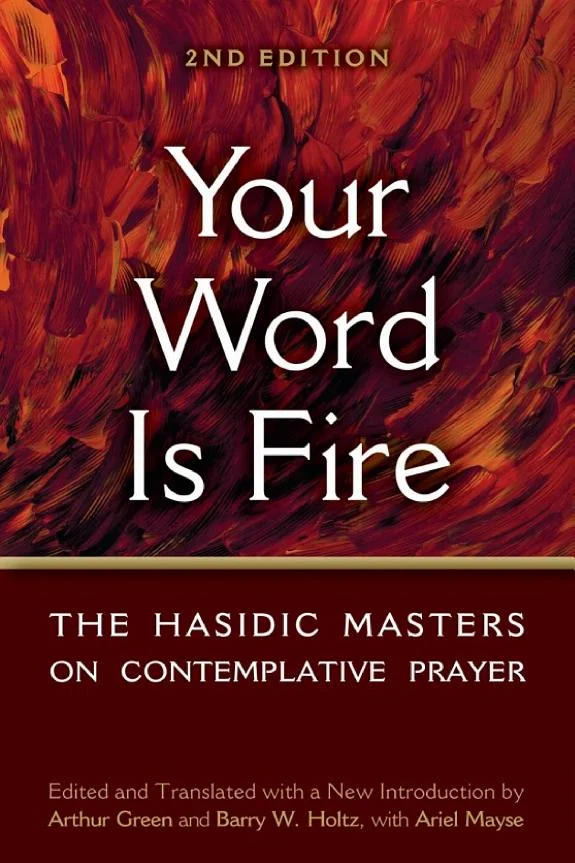
Published in 2017, Your Word is Fire compiles Hasidic teachings on Jewish contemplative prayer.
This volume gathers primary texts and teachings related to Jewish contemplative prayer, drawing specifically from the Hasidic tradition. It functions as a curated compilation rather than a systematic manual, aiming to shed light on prayer practices for spiritual renewal. The material comes from the teachings of significant Hasidic Masters and their students, offering insights into their methods of connecting with the Divine. The work highlights prayer's capacity for transformation, a concept familiar across many spiritual disciplines.
This book targets individuals interested in the contemplative and mystical aspects of Jewish prayer, especially those drawn to Hasidic thought. It is suitable for students of Kabbalah, those seeking deeper spiritual connection through prayer, and researchers of Jewish mysticism's history. Readers desiring practical instruction on meditative prayer within a Jewish context, separate from standard prayer books, will find it valuable. The intended reader approaches religious texts for potential pathways to inner experience, not just for dogma.
The compilation arose from a noticed lack of easily available, structured guides to contemplative prayer within the Hasidic movement. Hasidism, which became prominent in the 18th century, stressed fervent prayer, or 'hitbodedut,' and direct divine experience. However, its teachings were often passed down orally or within larger theological frameworks, leaving the practice less defined than its theoretical basis. This collection aimed to consolidate various sources for a more unified perspective on Hasidic prayer for contemporary readers.
Your Word is Fire is situated within the rich tradition of Kabbalah and Jewish mysticism. It specifically focuses on the devotional practices that emerged from the Hasidic movement, which gained momentum in the 18th century. This movement emphasized an experiential and emotional connection to God, often through ecstatic prayer and meditation. The book draws from this lineage, presenting methods for achieving direct divine experience through disciplined contemplative prayer, a practice central to the esoteric dimensions of Judaism.
💡 Why Read This Book?
• Gain insight into 'hitbodedut,' a specific form of spontaneous prayer emphasized in Hasidic tradition since the 18th century, offering a path to direct communion with the Divine. • Understand the concept of 'Kavanah,' the crucial element of focused intention and concentration that animates Jewish prayer, as gleaned from the teachings of early Hasidic Masters. • Explore the spiritual goal of 'Devekut' (cleaving to God) and how the practices compiled here are presented as a means to achieve this elevated state of spiritual closeness.
⭐ Reader Reviews
Honest opinions from readers who have explored this book.
❓ Frequently Asked Questions
What is the primary focus of 'Your Word is Fire' regarding Jewish prayer?
The book focuses on the contemplative and mystical aspects of Jewish prayer, particularly within the Hasidic tradition. It aims to illuminate prayer as a tool for spiritual renewal and personal transformation, drawing from the teachings of Hasidic Masters.
Who are some of the key figures whose teachings are included in this book?
The teachings compiled in 'Your Word is Fire' are primarily drawn from Hasidic Masters such as the Ba'al Shem Tov, the Maggid Dov Baer of Meidzyrzec, and their immediate disciples.
Is 'Your Word is Fire' a systematic guide to prayer?
No, the book is described as a collection of texts culled from various sources rather than a systematic manual. It offers glimpses and hints into contemplative prayer practices within Hasidism.
What is 'hitbodedut' as discussed in the context of this book?
'Hitbodedut' refers to a form of spontaneous, personal prayer or meditation where one withdraws to speak directly with God. This practice is central to the contemplative approach presented in the book.
What does 'Kavanah' mean in the context of Hasidic prayer?
'Kavanah' signifies intention, concentration, or devotion. In Hasidic prayer, it refers to the focused mental and spiritual state one brings to prayer to imbue it with spiritual energy and meaning.
When was 'Your Word is Fire' first published?
The book 'Your Word is Fire' was first published on September 5, 2017, as a fully updated and revised edition.
🔮 Key Themes & Symbolism
Prayer as Transformation
The central theme is the inherent power of prayer not just for supplication, but for profound personal and spiritual transformation. The texts collected emphasize how sincere, focused prayer can alter one's inner state, leading to deeper self-understanding and closeness to the Divine. This concept moves beyond ritualistic observance to view prayer as an active, dynamic force capable of reshaping the practitioner's reality and consciousness, a core tenet explored through the wisdom of figures like the Ba'al Shem Tov.
The Art of Hitbodedut
This theme unpacks the practice of 'hitbodedut,' a method of spontaneous, unscripted prayer. It involves setting oneself apart to speak directly with God from the heart, often in one's own language. The book presents this as a vital pathway within Hasidic spirituality for achieving authentic communion, distinct from formal liturgy. It highlights the personal and intimate nature of this practice, encouraging a direct, unmediated dialogue with the Divine Presence.
Kavanah and Devekut
The importance of 'Kavanah'—intention and concentrated focus—is a recurring motif. This theme explores how the quality of one's intention transforms prayer from mere words into a potent spiritual act. Closely linked is 'Devekut,' the state of cleaving or profound communion with God. The collected teachings suggest that cultivating proper Kavanah is the essential bridge to experiencing Devekut, illustrating the intricate connection between mental discipline and spiritual attainment.
Wisdom of the Hasidic Masters
This theme centers on the practical and spiritual guidance derived from early Hasidic leaders. It showcases how figures like the Ba'al Shem Tov and Dov Baer of Meidzyrzec articulated profound truths about the spiritual life through their interpretations of prayer and devotion. The work presents their teachings not as abstract philosophy, but as actionable wisdom for achieving spiritual depth and connection, making their insights accessible to contemporary seekers.
💬 Memorable Quotes
Direct passages from the work, attributed to the author.
“Prayer is the soul's direct address to its Creator.”
— This captures the essence of contemplative prayer presented in the book: it is not about intermediaries or rote recitation, but a direct, personal dialogue intended to foster intimacy and understanding between the individual soul and the Divine.
“True intention (Kavanah) elevates spoken words into spiritual sparks.”
— This highlights the critical role of mental focus and heartfelt sincerity in prayer. It suggests that the power of prayer lies not just in the words themselves, but in the conscious, directed energy the practitioner invests.
“To set oneself apart for prayer is to enter a sacred space.”
— This refers to the practice of 'hitbodedut,' emphasizing the creation of a distinct, hallowed time and mental state dedicated solely to communion with God, thereby transforming ordinary moments into sacred encounters.
“The goal is not merely to speak to God, but to cleave to Him.”
— This points towards 'Devekut,' the ultimate aim of spiritual practice. It differentiates the book's focus from simple petitionary prayer, emphasizing a deeper state of sustained spiritual union and presence with the Divine.
“Even a simple heartfelt plea carries immense spiritual weight.”
— This interpretation suggests that authenticity and sincerity in prayer are paramount, often outweighing complex theological knowledge or elaborate ritual. It validates the power of genuine human emotion directed towards the Divine.
🌙 Esoteric Significance
Tradition
This work is firmly rooted in the Kabbalistic and Hasidic traditions of Jewish mysticism. It departs from purely intellectual or theological explorations of Kabbalah by focusing on the practical application of its principles through prayer. Within this lineage, it emphasizes the experiential and devotional aspects that became hallmarks of Hasidism, particularly the concept of 'Devekut' (cleaving to God) as the ultimate goal of spiritual striving, achieved through dedicated practice.
Symbolism
Key symbols include 'fire' in the title, representing Divine presence, inspiration, and the burning desire for God. 'Word' signifies the power of speech and intention in prayer, aligning with the Kabbalistic concept of creation through divine utterance. The collected teachings often allude to light and darkness as metaphors for spiritual awareness and ignorance, with prayer acting as a conduit to bring Divine light into the practitioner's inner world.
Modern Relevance
Contemporary thinkers and practitioners in Jewish renewal movements, as well as those interested in comparative mysticism, draw upon these teachings. The emphasis on personal, heartfelt prayer and direct experience speaks to modern seekers looking for authentic spiritual connection beyond institutionalized religion. Practices like 'hitbodedut' are explored by mindfulness practitioners and psychotherapists interested in the intersection of contemplative practice and well-being.
👥 Who Should Read This Book
• Students of Jewish mysticism and Kabbalah seeking to understand the practical devotional methods of Hasidism beyond theoretical texts. • Individuals interested in contemplative prayer practices from various traditions who wish to explore a specific Jewish approach. • Scholars of religious history and comparative spirituality examining the evolution of prayer and mystical experience in different cultural contexts.
📜 Historical Context
The compilation of 'Your Word is Fire' addresses a specific need within the study of Hasidism, a spiritual revival movement that emerged in 18th-century Eastern Europe. While Hasidism emphasized fervent prayer and direct communion with God ('Devekut'), its teachings on the *practice* of contemplative prayer were often embedded within a wide range of mystical lore and homiletics, rather than presented in systematic manuals. This contrasts with earlier Kabbalistic texts, which, while foundational, could be highly technical. The book, first published in 2017, seeks to bridge this gap by extracting practical insights from the teachings of luminaries like the Ba'al Shem Tov and his disciples. At the time of its writing, the academic and popular interest in Jewish mysticism was growing, yet accessible guides to the *experiential* aspects of Hasidic prayer remained relatively scarce. This work contributes to understanding how Hasidic masters translated esoteric principles into accessible devotional practices.
📔 Journal Prompts
The nature of 'hitbodedut' and its potential for personal revelation.
Cultivating 'Kavanah': How can intention shape the efficacy of my prayers?
Reflecting on 'Devekut': What does profound spiritual communion mean in my life?
The Ba'al Shem Tov's approach to prayer and its application today.
Identifying moments where my own words have felt like 'fire' directed towards the Divine.
🗂️ Glossary
Hitbodedut
A Hebrew term meaning 'seclusion' or 'setting oneself apart.' In Hasidic practice, it refers to spontaneous, personal prayer or meditation, often conducted in solitude, where one speaks directly and intimately with God.
Kavanah
Hebrew for 'intention,' 'direction,' or 'concentration.' In Jewish prayer, it signifies the focused mental and spiritual state required to imbue the prayers with sincerity, devotion, and spiritual purpose.
Devekut
A Hebrew term meaning 'cleaving,' 'adhesion,' or 'communion.' It refers to a state of profound spiritual closeness and attachment to God, often considered the ultimate goal of mystical practice.
Ba'al Shem Tov
Rabbi Israel ben Eliezer (c. 1700–1760), the founder of Hasidism. He is revered as a spiritual leader who emphasized joy, faith, and the accessibility of God through prayer and simple devotion.
Maggid Dov Baer of Meidzyrzec
A prominent disciple of the Ba'al Shem Tov and a central figure in the early development of Hasidism. He was known for his deep mystical insights and intellectual leadership in spreading Hasidic thought.
Hasidism
A spiritual movement within Orthodox Judaism founded in 18th-century Eastern Europe by the Ba'al Shem Tov. It emphasizes a mystical relationship with God, joy in worship, and the spiritual significance of everyday life.
Tzaddik
A righteous person; in Hasidism, often refers to the spiritual leader (Rebbe) of a Hasidic community, believed to serve as a conduit for Divine influence.
This book appears in 1 collection
🔮 Readers Also Liked
Browse all →








From the “Contemplative Prayer” Collection
View all →







More Free Mysticism & Contemplation Books
View all →