Yoga, youth, and reincarnation
 77
77

Yoga, youth, and reincarnation
Jess Stearn’s 1968 offering, "Yoga, Youth, and Reincarnation," attempts to bridge the chasm between Eastern spiritual concepts and a Western audience often skeptical of reincarnation or viewing yoga solely as physical exercise. Stearn’s strength lies in his earnest attempt to demystify these traditions, drawing connections between yogic principles and the desire for lasting vitality. He presents the idea of past lives not as a dogmatic assertion but as a lens through which to understand present challenges and potentials. A notable passage discusses how yogic philosophy suggests a continuous stream of consciousness, which could be interpreted as a spiritual antecedent to later New Age ideas about interconnectedness. However, the book occasionally suffers from a lack of rigorous academic sourcing, relying more on anecdotal evidence and generalized interpretations of complex philosophical systems. While accessible, it sometimes simplifies intricate doctrines. Nevertheless, for its time, it served as a valuable, if unpolished, introduction to concepts that were still largely considered fringe in mainstream Western discourse.
📝 Description
77
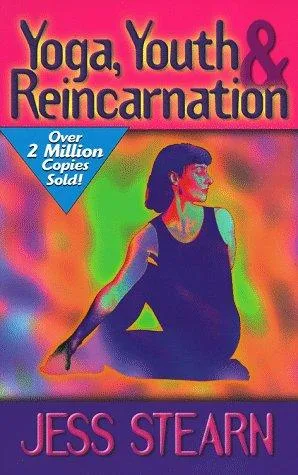
Published in 1968, Jess Stearn's "Yoga, Youth, and Reincarnation" questioned Western norms through Eastern philosophy.
Jess Stearn's 1968 book examines spiritual practices and beliefs that challenge conventional Western thought. It looks at the potential for spiritual growth and self-discovery using yoga and the idea of past lives. Stearn investigates how ancient philosophies offer insights into modern human concerns, especially the pursuit of vitality and understanding personal history.
The work is for readers interested in the intersection of Eastern spiritual disciplines and Western psychological inquiry. It appeals to those curious about reincarnation, the therapeutic potential of yoga beyond physical exercise, and the idea that personal development can be informed by ancestral memory. Individuals exploring alternative paths to well-being and self-knowledge will find Stearn's investigations useful.
"Yoga, Youth, and Reincarnation" emerged during a period of significant Western interest in Eastern spirituality. The 1960s saw a widespread questioning of traditional Western paradigms, leading many to explore alternative philosophies and practices. Stearn's book contributed to this cultural milieu by presenting yogic philosophy and reincarnation in an accessible format.
This book appeared when Western interest in Eastern spirituality grew, influenced by figures like Swami Vivekananda and Theosophy. The 1960s fostered a questioning of established Western ideas, driving exploration of alternative philosophies. Stearn's work fit this trend by presenting yogic philosophy and reincarnation accessibly, bridging esoteric traditions and a wider audience seeking deeper meaning.
💡 Why Read This Book?
• You will learn how yoga was presented in the 1960s as more than physical postures, with Stearn emphasizing its spiritual and psychological dimensions as explored in "Yoga, Youth, and Reincarnation." • You will gain an understanding of how reincarnation was framed as a potential tool for self-discovery and understanding personal history, as presented in the book's exploration of past lives. • You will feel a connection to the cultural shift of the 1960s, understanding how works like this introduced Eastern philosophies to a Western audience seeking alternative spiritual paths.
⭐ Reader Reviews
Honest opinions from readers who have explored this book.
❓ Frequently Asked Questions
When was Jess Stearn's "Yoga, Youth, and Reincarnation" first published?
Jess Stearn's "Yoga, Youth, and Reincarnation" was first published in 1968, a period marked by growing Western interest in Eastern spiritual traditions.
What is the main focus of "Yoga, Youth, and Reincarnation"?
The book focuses on the spiritual aspects of yoga and the concept of reincarnation, exploring how these ideas relate to personal vitality and self-understanding.
Does the book present yoga solely as physical exercise?
No, Stearn presents yoga as a comprehensive spiritual discipline, emphasizing its philosophical and psychological benefits beyond the physical Asanas.
What is Stearn's perspective on reincarnation in the book?
Stearn explores reincarnation as a framework for understanding personal development and karmic patterns, rather than a strict religious dogma.
Who might find "Yoga, Youth, and Reincarnation" most interesting?
Readers interested in comparative spirituality, the history of New Age thought, and the early Western reception of Eastern philosophies will find this book engaging.
Was this book part of a larger movement in the 1960s?
Yes, "Yoga, Youth, and Reincarnation" was part of the broader cultural interest in Eastern spirituality that gained momentum in the 1960s, influencing counter-culture and alternative lifestyle movements.
🔮 Key Themes & Symbolism
The Spiritual Dimension of Yoga
Stearn emphasizes that yoga, as presented in his work, extends far beyond physical postures (Asanas). He connects it to ancient Indian philosophies aimed at spiritual enlightenment and mental discipline. The book explores how yogic practices were believed to cultivate inner peace, heightened awareness, and a deeper connection to the self and the universe. This perspective was particularly novel for Western audiences in 1968, who were often only exposed to the physical aspects of yoga emerging at the time.
Reincarnation as a Framework
The concept of reincarnation is presented not as a rigid doctrine but as a lens through which to understand the continuity of consciousness and personal evolution across lifetimes. Stearn suggests that acknowledging past lives can provide context for present challenges and opportunities, fostering a sense of purpose and interconnectedness. This exploration aligns with a broader spiritual seeking that questioned linear notions of time and existence prevalent in Western thought.
Youth as Spiritual Attainment
The "youth" in the title refers not merely to physical age but to a state of spiritual aliveness and continuous renewal. Stearn posits that through dedicated spiritual practice, such as yoga, and an understanding of one's soul's journey (informed by reincarnation), individuals can achieve a vibrant, enduring vitality that transcends the limitations of the physical body. This concept links spiritual discipline directly to the aspiration for lasting well-being and energetic presence.
Bridging East and West
A significant theme is Stearn's effort to translate and contextualize Eastern spiritual concepts for a Western audience in the late 1960s. He seeks to demonstrate the relevance of yogic philosophy and the idea of reincarnation to modern life, addressing common Western concerns about meaning, health, and personal growth. The book acts as an intermediary, making esoteric ideas more accessible and less alien to readers unfamiliar with these traditions.
💬 Memorable Quotes
Direct passages from the work, attributed to the author.
“The yogi seeks not merely a healthy body, but a healthy soul.”
— This statement expresses the core spiritual aim of yoga as presented by Stearn, differentiating it from purely physical fitness regimes and highlighting its pursuit of inner well-being and consciousness.
“Vitality stems from inner harmony, not external circumstance.”
— This idea, central to Stearn's exploration, links genuine youthfulness and energy to a balanced inner state achieved through spiritual practices, rather than solely relying on external factors like age or lifestyle.
“Consciousness is not confined to a single physical form.”
— This is an interpretation of the book's stance on reincarnation, implying that the essence of an individual, their consciousness, persists beyond the physical body and its singular lifespan.
💡 Key Ideas
Editorial paraphrase of the work's core concepts — not direct quotes.
Our present life is but a chapter in a much larger story.
This paraphrased concept speaks to the idea of reincarnation, suggesting that individual existence is part of a continuous spiritual narrative spanning multiple lifetimes, offering a broader perspective on life's journey.
The wisdom of the ancients holds keys to modern anxieties.
This paraphrased concept suggests that ancient philosophies, particularly those found in yoga and reincarnation beliefs, offer valuable insights and solutions for contemporary psychological and spiritual struggles.
🌙 Esoteric Significance
Tradition
Stearn's work draws broadly from Hindu philosophical traditions, particularly Vedanta and Yoga, and engages with concepts that became popularized within Theosophy and later New Age movements. It attempts to synthesize these ancient Indian ideas with a Western psychological framework, presenting reincarnation and yogic discipline as tools for personal growth and spiritual understanding. It departs from strictly orthodox interpretations by emphasizing accessibility and practical application for a modern, Western audience.
Symbolism
The "youth" referenced can be seen as a symbol of spiritual renewal and enduring vitality, a state achieved through inner discipline rather than mere physical appearance. The concept of "reincarnation" itself acts as a symbol for the cyclical nature of existence and the soul's journey, suggesting a continuity of consciousness that transcends individual lifetimes and offers a grander perspective on personal development.
Modern Relevance
Contemporary spiritual seekers and practitioners continue to engage with Stearn's approach. His accessible framing of yoga as a holistic discipline and reincarnation as a framework for understanding life's patterns speaks to modern mindfulness movements and discussions on past-life regression therapy. Thinkers and authors exploring conscious evolution and the interconnectedness of consciousness find value in these early attempts to integrate Eastern wisdom into Western life.
👥 Who Should Read This Book
• Aspiring practitioners of yoga interested in its philosophical and spiritual underpinnings beyond physical Asana, as explored in the book's examination of yogic discipline. • Individuals curious about the concept of reincarnation and its potential role in understanding personal history and life purpose, as presented in Stearn's explorations. • Readers interested in the history of spiritual and counter-cultural movements in the 1960s, seeking to understand how Eastern philosophies were introduced to Western audiences.
📜 Historical Context
Published in 1968, "Yoga, Youth, and Reincarnation" landed amidst a cultural epoch ripe for spiritual exploration. The 1960s saw a significant surge in Western interest in Eastern philosophies, partly catalyzed by the Beat Generation's embrace of Zen Buddhism and the growing influence of Theosophy and figures like Paramahansa Yogananda. This period marked a departure from rigid post-war materialism, with many seeking alternative frameworks for understanding existence. Stearn’s work contributed to this burgeoning counter-culture fascination, offering accessible narratives on yoga and reincarnation. While authors like Alan Watts were already popularizing Eastern thought, Stearn focused specifically on the practical and personal implications of yoga and the continuity of life, aiming to clarify these concepts for a mainstream audience. The book's reception reflected the era's openness to such ideas, though it also existed alongside more academic explorations of comparative religion and psychology, such as those emerging from figures like Joseph Campbell.
📔 Journal Prompts
The yogic pursuit of inner harmony as a source of vitality.
Reincarnation as a narrative framework for personal evolution.
The concept of "youth" as a spiritual state of being.
Bridging yogic philosophy with Western psychological concerns.
The 1968 cultural context for exploring Eastern spirituality.
🗂️ Glossary
Asana
A physical posture or pose in yoga, typically practiced as part of a sequence. In "Yoga, Youth, and Reincarnation," Stearn emphasizes that Asana is only one part of a much broader spiritual discipline.
Reincarnation
The philosophical or religious concept that the non-physical essence of a living being starts a new life in a different physical form or body after biological death.
Vitality
The state of being strong, active, and energetic. Stearn links this to spiritual and mental well-being, suggesting it can be cultivated through yogic practices.
Consciousness
The state of being aware of and responsive to one's surroundings; the totality of one's thoughts, feelings, and experiences. The book explores its continuity beyond physical life.
Yogic Discipline
The comprehensive practice of yoga, encompassing not only physical postures (Asana) but also meditation, breathing techniques (Pranayama), ethical principles, and philosophical study.
Karmic Patterns
The recurring themes, behaviors, or consequences that individuals experience, often understood within the context of reincarnation as results of actions from past lives.
Vedanta
A school of Hindu philosophy that originated in the Upanishads. It explores themes of ultimate reality (Brahman) and the self (Atman), often informing yogic thought.
🔮 Readers Also Liked
Browse all →









More by Jess Stearn
All books →





More Free Occult Philosophy Books
View all →