Yoga, youth, and reincarnation
 83
83

Yoga, youth, and reincarnation
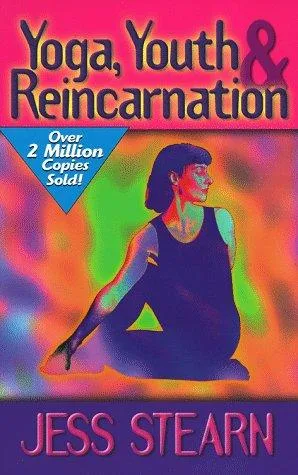
Jess Stearn's 1993 exploration, *Yoga, Youth, and Reincarnation*, attempts to bridge the chasm between the physical discipline of yoga and the metaphysical doctrine of reincarnation. The book’s strength lies in its earnest effort to connect the practicalities of asana and breathwork with the abstract notion of past lives, suggesting a tangible pathway to understanding spiritual continuity. However, its limitation is a tendency towards broad assertions without always providing rigorous evidence, a common pitfall in works of this nature. A notable passage discusses how deep meditative states, cultivated through yoga, might allow glimpses into former existences, positing a direct link between disciplined mind-body practice and access to karmic memory. Ultimately, Stearn offers an accessible, if sometimes speculative, perspective on integrating physical discipline with profound spiritual inquiry.
📝 Description
83
Jess Stearn's 1993 book connects yoga practices with reincarnation and spiritual growth.
Jess Stearn's *Yoga, Youth, and Reincarnation*, published in 1993, examines how yoga serves as a discipline for both physical vitality and spiritual insight into the soul's continuation across lifetimes. Stearn integrates ancient yogic traditions with contemporary metaphysical thought, proposing reincarnation as a framework for personal development and self understanding. The book is for readers interested in yoga's esoteric aspects, particularly its philosophical foundations. It addresses those curious about reincarnation, karma, and their application to modern spiritual life. Individuals aiming to unify physical health with metaphysical awareness, and who are open to Western interpretations of Eastern spiritual ideas, will find its arguments relevant.
Published during a time of growing interest in New Age spirituality and Eastern philosophies in the West, Stearn's work situates itself within late 20th century explorations of consciousness, alternative healing, and reincarnation. The book engages with these broader currents, specifically focusing on yoga's role in spiritual evolution and the cyclical nature of existence. This period also saw increased academic and popular attention to comparative religion and mysticism, providing a backdrop for Stearn's unique synthesis.
This book emerged in the early 1990s, a period where Western interest in Eastern spiritual traditions, including yoga and concepts like reincarnation, was significant. It connects to a broader esoteric milieu influenced by figures and movements that explored consciousness, karma, and the cyclical nature of existence. Stearn's work offers a specific lens through yoga's physical and spiritual disciplines, framing them as tools for understanding the soul's journey across multiple lives within this wider spiritual inquiry.
💡 Why Read This Book?
• Gain a unique perspective on yoga as a tool for spiritual exploration, moving beyond physical fitness to understanding the soul's journey as detailed in Stearn's 1993 work. • Explore the concept of reincarnation through the lens of yogic philosophy, learning how practices might be seen to facilitate karmic understanding and spiritual continuity. • Discover a framework for personal growth that integrates physical discipline with metaphysical beliefs, offering a path to inner vitality informed by ideas like karma.
⭐ Reader Reviews
Honest opinions from readers who have explored this book.
❓ Frequently Asked Questions
What is the primary focus of Jess Stearn's 'Yoga, Youth, and Reincarnation'?
The book focuses on the interconnectedness of yoga practices, maintaining vitality (youth), and the spiritual concept of reincarnation, suggesting yoga can aid in understanding past lives and spiritual evolution.
When was 'Yoga, Youth, and Reincarnation' first published?
Jess Stearn's 'Yoga, Youth, and Reincarnation' was first published in 1993.
Does the book suggest yoga can help recall past lives?
Yes, the work explores the idea that through dedicated yogic practices and meditative states, individuals may become more receptive to impressions or memories from previous existences.
What is the relationship between yoga and reincarnation in this book?
Stearn posits that yoga is not merely physical but a spiritual path that purifies the mind and body, making them suitable vessels for understanding the continuous journey of the soul through reincarnation.
Is 'Yoga, Youth, and Reincarnation' a practical guide to yoga?
While it discusses yogic practices, its primary aim is philosophical and metaphysical, exploring the spiritual implications of yoga rather than providing step-by-step instructions for physical poses.
What role does karma play in the book?
Karma is presented as a fundamental principle driving the cycles of reincarnation. The book suggests that yogic discipline can help individuals understand and potentially work through their karmic patterns.
🔮 Key Themes & Symbolism
Yoga as Spiritual Discipline
The book posits yoga as a profound spiritual path, transcending mere physical exercise. Stearn argues that the discipline inherent in yogic practices—asana, pranayama, and meditation—serves to purify the practitioner's mind and body. This purification is presented as essential for opening oneself to subtler realities, including the understanding of one's soul's journey across multiple lifetimes. The emphasis is on yoga as a method for spiritual evolution and self-realization, directly linking physical control with metaphysical awareness.
Reincarnation and Karmic Cycles
Central to Stearn's thesis is the concept of reincarnation as a fundamental aspect of existence. The work explores how the law of karma dictates the experiences and circumstances encountered in each life. Reincarnation is framed not as punishment but as an opportunity for the soul to learn, grow, and resolve karmic debts. The book suggests that a deeper understanding of these cycles, facilitated by yogic insights, can lead to a more meaningful and purposeful life.
Vitality and Enduring Youth
The theme of 'youth' extends beyond mere physical appearance to encompass a state of spiritual vitality and receptivity. Stearn suggests that by harmonizing the body, mind, and spirit through yoga and by understanding the continuous nature of existence through reincarnation, one can cultivate an enduring sense of aliveness. This vitality is seen as a byproduct of living in accordance with spiritual principles and addressing one's karmic path consciously.
Integration of East and West
The book represents an effort to bridge Eastern spiritual traditions, specifically yoga and the concept of reincarnation, with Western modes of inquiry and belief systems. Stearn seeks to make these ancient concepts accessible and relevant to a contemporary audience, often framing them within psychological and philosophical terms understandable in a Western context. This integration aims to provide a holistic worldview that accounts for both material and spiritual dimensions of human experience.
💬 Memorable Quotes
Direct passages from the work, attributed to the author.
“Yoga offers a path to purify the body and mind, making them receptive to the soul's journey.”
— This statement captures the book's core argument: that the physical and mental disciplines of yoga are not ends in themselves, but tools to enhance spiritual awareness and facilitate understanding of concepts like past lives.
“The cycle of reincarnation provides opportunities for karmic resolution and spiritual growth.”
— Here, Stearn presents reincarnation not as a passive fate but as an active process of learning and evolution, driven by the principle of karma, offering a framework for understanding life's challenges.
“Youthfulness is a state of being, cultivated through inner harmony and spiritual understanding.”
— This expands the notion of youth beyond the physical, suggesting that a vibrant, engaged spirit—achieved through practices like yoga and an awareness of one's spiritual path—is key to sustained vitality.
“Meditative states achieved through yoga can unlock latent memories of past existences.”
— This intriguing claim directly links the practice of yoga to the potential for accessing information from former lives, proposing a tangible connection between disciplined consciousness and karmic recollection.
“Understanding reincarnation helps frame life's experiences within a larger spiritual context.”
— This highlights the book's aim to provide a comprehensive worldview, suggesting that belief in reincarnation offers a more complete picture of existence, imbuing everyday life with deeper spiritual significance.
🌙 Esoteric Significance
Tradition
The work draws heavily from the broader Hindu yogic traditions and the concept of reincarnation, which are foundational in Hinduism, Buddhism, and Jainism. It attempts to interpret and integrate these concepts within a framework accessible to a Western audience, aligning with the general aims of 20th-century esoteric movements that sought to synthesize Eastern wisdom with Western spiritual and psychological thought. It doesn't strictly adhere to a single esoteric lineage like Hermeticism or Kabbalah but rather engages with universalist spiritual ideas prevalent in the New Age movement.
Symbolism
The primary symbols are implicit: the **Yogi** represents the disciplined seeker on a path of self-realization and spiritual evolution; **Youth** symbolizes not just physical age but a state of vibrant spiritual energy and receptivity; **Reincarnation** itself acts as a symbol for the continuous journey of the soul, the cyclical nature of existence, and the unfolding of karmic lessons across lifetimes. The **breath (prana)**, central to yogic practice, symbolizes the vital life force connecting the physical and spiritual realms.
Modern Relevance
Contemporary practitioners of yoga who are interested in its philosophical and spiritual dimensions often find resonance with Stearn's approach, seeking to deepen their understanding beyond the physical. The book's exploration of reincarnation and karma continues to be relevant for those involved in comparative spirituality, New Age thought, and personal development circles seeking integrated models of well-being. Thinkers and writers in the wellness and consciousness studies fields may reference such works as foundational texts in the popularization of Eastern spiritual concepts in the West.
👥 Who Should Read This Book
• Individuals new to the spiritual aspects of yoga: Those seeking to understand yoga as more than a physical practice and explore its connection to deeper metaphysical concepts like reincarnation. • Seekers interested in reincarnation: Readers curious about the concept of past lives and how it might be integrated with a disciplined spiritual or philosophical framework. • Comparative spirituality enthusiasts: Those who enjoy exploring the intersection of different religious and philosophical traditions, particularly the bridging of Eastern thought with Western perspectives.
📜 Historical Context
Published in 1993, *Yoga, Youth, and Reincarnation* arrived during a period of significant Western engagement with Eastern philosophies and New Age spirituality. The preceding decades had seen figures like Paramahansa Yogananda popularize Kriya Yoga and spiritual concepts like reincarnation through influential works. Stearn's book emerged within this milieu, which was also marked by widespread interest in the Theosophical Society's teachings, particularly those of Helena Blavatsky, which extensively discussed reincarnation and yogic philosophy. While Stearn focused on yoga's practical and spiritual applications for reincarnation, other contemporary authors explored similar themes through different lenses, such as Shirley MacLaine's autobiographical accounts of past-life regressions. The book contributed to a broader discourse on consciousness, alternative healing, and the search for spiritual meaning that characterized the late 20th century, offering a synthesized view of yoga's potential beyond physical fitness.
📔 Journal Prompts
The yogic purification of body and mind, as discussed in the book, and its potential for spiritual receptivity.
Reflections on the concept of karma and how it might inform current life circumstances.
Exploring the idea of 'youthfulness' as spiritual vitality, beyond physical age.
The connection between disciplined practices and the potential for accessing inner knowledge or past-life impressions.
How the cyclical nature of reincarnation might offer a new perspective on personal challenges.
🗂️ Glossary
Yoga
An ancient Indian discipline aiming at integrating mind, body, and spirit through physical postures (asana), breath control (pranayama), meditation, and ethical principles, often pursued for spiritual realization.
Reincarnation
The philosophical or religious concept that the non-physical essence of a living being begins a new life in a different physical form or entity after biological death.
Karma
In many Indian religions, the principle of cause and effect where intent and actions of an individual influence their future, often spanning across multiple lifetimes (reincarnation).
Asana
The physical postures or poses practiced in yoga, intended to prepare the body for meditation and promote physical health and flexibility.
Pranayama
The practice of breath control or regulation in yoga, considered a vital element for managing life force (prana) and influencing mental states.
Vitality
The state of being strong, active, and energetic; in the context of the book, it refers to a deep, enduring aliveness that encompasses physical, mental, and spiritual well-being.
Spiritual Evolution
The process of growth and development of the soul or consciousness over time, often through multiple lifetimes, guided by spiritual principles and experiences.
🔮 Readers Also Liked
Browse all →









More by Jess Stearn
All books →





More Free Occult Philosophy Books
View all →