Eleusis and Athens

 78
78

Eleusis and Athens
Cavanaugh's Eleusis and Athens offers a meticulous, if somewhat dense, exploration of the Eleusinian Mysteries and their deep integration into the fabric of Athenian civic and intellectual life. The author’s strength lies in her careful synthesis of archaeological findings and fragmented literary evidence, constructing a coherent picture of the rites and their significance. A particular passage detailing the potential symbolism of the kykeon, the ritual drink, provides a tangible anchor for understanding the initiates' experience, moving beyond mere speculation. However, the work occasionally suffers from a lack of explicit engagement with more recent scholarship published after its 2000 release, potentially overlooking advancements in the field. The prose, while scholarly, can sometimes feel inaccessible to the general reader. Despite these limitations, Eleusis and Athens remains a valuable, albeit demanding, resource for serious students of ancient mystery cults.
📝 Description
78
Maureen B. Cavanaugh's 2000 book connects the Eleusinian Mysteries to Athenian philosophy and religion.
Maureen B. Cavanaugh's Eleusis and Athens examines the connections between the Eleusinian Mysteries and the intellectual and spiritual life of ancient Athens. The book looks at the rituals, symbolism, and theological ideas of these ancient cults, with a specific focus on the Eleusinian Mysteries and their effect on Athenian society. It is suitable for students of classical religion, comparative mythology, and ancient mystery traditions. Readers interested in the esoteric aspects of Greek civilization and the philosophical meanings of initiation ceremonies will find it engaging.
Scholars and independent researchers will appreciate its detailed analysis of the Eleusinian cult. The work is situated within the late 20th-century renewed interest in ancient paganism and esoteric studies. Cavanaugh addresses the difficulties in reconstructing ancient practices from scarce textual evidence, a common challenge for those studying ancient religions. The book engages with scholarly discussions that have developed since the mid-20th century.
Published in 2000, this study emerges from a period of renewed academic and popular interest in ancient paganism and esoteric traditions. It engages with scholarly debates that followed foundational works on Greek religion and mystery cults from the mid-20th century. The book addresses how ancient initiates understood concepts such as divine revelation and the cycles of life, death, and rebirth, placing the Eleusinian experience within a broader context of spiritual quests.
💡 Why Read This Book?
• Gain a nuanced understanding of the Eleusinian Mysteries, moving beyond popular myth to explore their ritualistic and initiatory aspects as detailed in the text's analysis of Demeter and Persephone. • Discover the direct influence of these ancient cults on Athenian philosophy and religious practice, understanding concepts like divine revelation as presented in the book's examination of the rites. • Appreciate the symbolic significance of elements like the kykeon, a specific ritualistic item discussed, and how its interpretation offers a window into the esoteric worldview of ancient Greece.
⭐ Reader Reviews
Honest opinions from readers who have explored this book.
❓ Frequently Asked Questions
When was Eleusis and Athens first published?
Eleusis and Athens was first published in the year 2000, marking a contribution to the study of ancient mystery traditions at the turn of the millennium.
What is the primary focus of Maureen B. Cavanaugh's book?
The book's primary focus is the intricate relationship between the Eleusinian Mysteries and the broader religious and philosophical landscape of ancient Athens, exploring their rituals and symbolism.
Who would benefit most from reading Eleusis and Athens?
Students of classical religion, mythology, and esoteric traditions, as well as scholars interested in ancient Greek initiation rites and their societal impact, will find this work particularly beneficial.
Does the book discuss specific rituals of the Eleusinian Mysteries?
Yes, the book delves into the known aspects of the Eleusinian rituals, analyzing their potential meanings and their connection to the myth of Demeter and Persephone.
What is the 'kykeon' mentioned in discussions of the Eleusinian Mysteries?
The kykeon was a ritualistic drink consumed by initiates at Eleusis. The book explores its potential symbolic and psychoactive properties within the context of the mystery rites.
How does Eleusis and Athens connect to Athenian philosophy?
The work connects the Mysteries to Athenian philosophy by exploring how the experiences and beliefs fostered by the rites may have influenced philosophical thought on life, death, and the divine.
🔮 Key Themes & Symbolism
The Eleusinian Initiation
The core of the book revolves around the initiation process within the Eleusinian Mysteries. Cavanaugh examines the structure of the rites, the progression from the Lesser to the Greater Mysteries, and the transformative psychological and spiritual impact on participants. The emphasis is on the experiential nature of the initiation, moving beyond mere intellectual understanding to a profound, personal encounter with the divine, particularly through the mythic narrative of Demeter's search for Persephone.
Myth and Ritual Interplay
This theme investigates how the myth of Demeter and Persephone was not just a story but a living framework for the Eleusinian cult. Cavanaugh illustrates how the ritual reenactment and symbolic representation of the myth provided initiates with a blueprint for understanding life, death, and rebirth. The book explores how the Athenian polis integrated these sacred narratives into its cultural identity, reinforcing societal values and offering a path to spiritual renewal.
Symbolism of the Kykeon
The book dedicates significant attention to the kykeon, the sacred beverage offered to initiates. Cavanaugh analyzes its potential ingredients and, more importantly, its symbolic function. It is presented not merely as sustenance but as a crucial element in the initiatory experience, possibly containing psychoactive substances or representing a symbolic union with the divine, facilitating the visionary or ecstatic states associated with the Mysteries.
Athens and the Mysteries
Eleusis and Athens details the symbiotic relationship between the Eleusinian cult and the city-state of Athens. The work elucidates how the Mysteries were central to Athenian religious life, influencing its art, philosophy, and civic festivals. The book demonstrates how the polis provided the infrastructure and protection for these sacred rites, while the Mysteries, in turn, offered a unique spiritual dimension that contributed to Athens' cultural prestige and its citizens' worldview.
💬 Memorable Quotes
Direct passages from the work, attributed to the author.
“The Eleusinian Mysteries offered a profound encounter with the divine, shaping the spiritual outlook of its initiates.”
— This interpretation highlights the transformative power attributed to the Eleusinian rites, suggesting they provided participants with a direct, personal experience of the sacred that had a lasting impact on their understanding of existence.
“The myth of Demeter and Persephone served as the narrative and symbolic foundation for the cult's rituals.”
— This points to the inseparable link between the Eleusinian myth and its practices. The story of the goddess's grief and reunion was not just recounted but ritually enacted and embodied by the initiates.
“The kykeon, a ritualistic beverage, played a significant role in the initiatory experience at Eleusis.”
— This emphasizes the importance of the kykeon, a specific element within the Eleusinian ceremony. Its inclusion suggests a deliberate use of sensory or symbolic elements to facilitate the profound spiritual transformation sought by the initiates.
“The cult's secrets were guarded, yet their influence permeated Athenian religious and philosophical discourse.”
— This highlights the paradoxical nature of the Eleusinian Mysteries: while their specific doctrines remained hidden, their broader impact on the spiritual and intellectual life of Athens was undeniable and widespread.
💡 Key Ideas
Editorial paraphrase of the work's core concepts — not direct quotes.
Initiation into the Mysteries provided a framework for understanding the cyclical nature of life and death.
This paraphrase suggests that the Eleusinian rites offered initiates a spiritual map or paradigm through which they could comprehend the processes of mortality and regeneration, possibly offering solace or insight.
🌙 Esoteric Significance
Tradition
This work fits within the broad tradition of Western Esotericism by examining ancient mystery cults that offered transformative spiritual experiences outside mainstream public religion. While not directly aligned with Hermeticism or Gnosticism, it explores a lineage of ecstatic and initiatory practices that informed later esoteric movements. The focus on direct experiential knowledge and symbolic interpretation aligns with perennialist philosophies that seek universal truths across different traditions.
Symbolism
Central symbols include the cycle of death and rebirth, embodied by Persephone's descent and return, representing spiritual transformation and the promise of an afterlife. The kykeon, the ritual drink, symbolizes nourishment and possibly altered states of consciousness necessary for divine communion. The torch, often associated with Demeter, signifies illumination and the dispelling of ignorance, a key goal of initiation.
Modern Relevance
Contemporary practitioners of Neo-Paganism and various esoteric orders often draw inspiration from the Eleusinian Mysteries for their own initiatory rites and symbolic systems. Thinkers interested in archetypal psychology, particularly Carl Jung's concepts of individuation and the shadow, find parallels in the initiatory journey described. The book's exploration of ritual efficacy also speaks to modern therapeutic and spiritual practices seeking transformative experiences.
👥 Who Should Read This Book
• Students of comparative religion and classical antiquity seeking a scholarly yet accessible examination of ancient mystery cults and their societal role. • Practitioners of modern esoteric traditions interested in the historical roots of initiatory practices and symbolic interpretation, particularly concerning themes of death and rebirth. • Researchers in mythology and ancient philosophy who wish to understand the tangible impact of religious experience on intellectual discourse in classical Athens.
📜 Historical Context
Published in 2000, Maureen B. Cavanaugh's Eleusis and Athens emerged during a period of sustained academic interest in ancient Greek religion and its esoteric dimensions. The late 20th century saw scholars like Walter Burkert and Marcel Detienne rigorously re-examine Greek cult practices, often moving away from purely mythological interpretations towards analyses grounded in anthropology and sociology. Cavanaugh's work builds upon this foundation, particularly engaging with the ongoing scholarly effort to reconstruct the rituals and meanings of the Eleusinian Mysteries, a cult whose secrecy posed significant challenges. Unlike earlier, more speculative approaches, this book aims for a synthesis of archaeological evidence, fragmented literary sources, and comparative religious studies. While specific contemporary reception events like major reviews or awards are not widely documented for this particular title, its contribution lies in its detailed exploration of the Mysteries' integration into the Athenian civic and intellectual sphere, a topic that remained central to debates in classical studies.
📔 Journal Prompts
The Eleusinian Mysteries' focus on Demeter and Persephone: how does this mother-daughter archetype manifest in personal spiritual quests?
Reflecting on the kykeon: what contemporary rituals or substances facilitate altered states for spiritual insight?
The concept of initiation: how does the journey from ignorance to illumination, as potentially experienced at Eleusis, apply to current learning paths?
The intertwining of civic life and mystery cults in Athens: consider parallels in modern community spiritual practices.
Symbolism of descent and return: explore personal experiences of 'descent' into challenging circumstances and subsequent 'return' or transformation.
🗂️ Glossary
Eleusinian Mysteries
Ancient Greek initiation rites celebrated annually at the sanctuary of Demeter and Persephone near Eleusis. They promised initiates a better afterlife and were central to Athenian religious life.
Kykeon
A ritualistic beverage, likely consisting of barley, water, and mint, consumed by initiates during the Eleusinian Mysteries. Its exact composition and effects are debated.
Demeter
Greek goddess of agriculture, harvest, and fertility. Her sorrow over her daughter Persephone's abduction and her subsequent reunion form the core myth of the Eleusinian Mysteries.
Persephone
Queen of the Underworld and goddess of spring growth. Her annual descent into the underworld and return to the surface symbolizes death and rebirth.
Initiation
A process of admission into a group or a state of knowledge, often involving ritualistic practices, symbolic acts, and the revelation of sacred teachings or experiences.
Telesterion
The large hall at Eleusis where the main rites of the Mysteries were performed. It was a sacred space capable of holding thousands of initiates.
Homerica Hymn to Demeter
An ancient Greek poem recounting the myth of Demeter's search for Persephone and her role in establishing the Eleusinian Mysteries. It provides key narrative elements for understanding the cult.
🔮 Readers Also Liked
Browse all →








More by Maureen B. Cavanaugh
All books →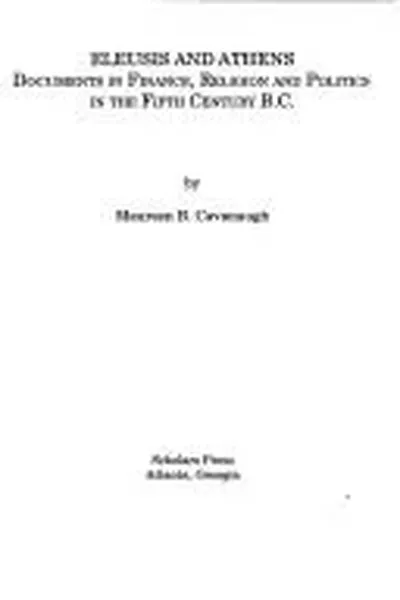
More Free Occult Philosophy Books
View all →