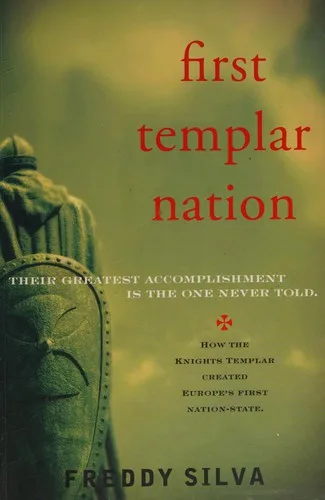
First templar nation
 71
71

First templar nation
Freddy Silva's "First Templar Nation" attempts to redefine the Knights Templar from a medieval military order into a proto-national entity. Silva presents a compelling, albeit speculative, thesis that the Templars acted as a unifying force, laying groundwork for European statehood. The strength of the work lies in its synthesis of historical accounts with esoteric interpretations, particularly concerning the order's financial innovations and its transnational reach. However, the book occasionally strains credulity; the assertion that the Templars were a "nation" relies heavily on interpreting their organizational structure and influence as prefiguring modern statehood, a leap that may not satisfy strict historians. A particularly intriguing section explores the symbolic language embedded in Templar architecture, suggesting a hidden cosmology. While lacking the rigorous academic apparatus of some historical texts, Silva's work offers a provocative alternative perspective for those interested in the mystical underpinnings of Western history.
📝 Description
71
Freddy Silva's 2006 book argues the Knights Templar shaped early European nations.
Freddy Silva's "First Templar Nation" examines the historical and esoteric connections between the Knights Templar and the formation of early European national identities. The book traces the order's rise from its founding around 1119 AD through its suppression in the early 14th century, moving beyond standard accounts of their military and financial roles. Silva posits the Templars actively influenced the governance, economy, and spiritual outlook of developing states, with effects that lasted for centuries.
This work challenges readers to see the Templars not just as a military group but as a significant force in Western civilization's development. It is aimed at serious students of esoteric history, medieval studies, and alternative historical views. Those interested in the hidden forces of power and belief that shaped Europe will find considerable material. The book appeals to individuals who question mainstream historical interpretations and want to understand links between religious orders, political structures, and mystical traditions. It is suitable for those with a basic knowledge of the Crusades and medieval Europe ready for more speculative and symbolic interpretations.
Silva places the Templars within a tradition of esoteric groups that influenced historical events, often operating outside conventional power structures. This perspective aligns with authors who explore hidden histories and secret societies that may have played a larger role in shaping civilization than official records suggest. The book engages with ideas about sacred geometry, ancient knowledge, and the transmission of spiritual traditions, common themes in esoteric literature concerning medieval orders.
💡 Why Read This Book?
• Understand the Templars as a political and economic force beyond their military role, by examining their banking innovations and transnational network established around the 12th century. • Explore the esoteric dimensions of the Templar order, including their potential Gnostic connections and symbolic language, as presented in Silva's analysis. • Gain a new perspective on early European state formation, recognizing how the Templars' unique structure and influence, particularly their alleged role in governance, may have shaped nascent national identities.
⭐ Reader Reviews
Honest opinions from readers who have explored this book.
❓ Frequently Asked Questions
When were the Knights Templar founded, and what was the initial purpose of the order?
The Knights Templar were founded around 1119 AD. Their initial stated purpose was to protect Christian pilgrims traveling to the Holy Land after its conquest during the First Crusade.
What is the central argument of Freddy Silva's 'First Templar Nation'?
Silva argues that the Knights Templar functioned as a proto-national entity, significantly influencing the political, economic, and spiritual development of early European states.
What historical period does 'First Templar Nation' primarily focus on?
The book focuses on the period of the Knights Templar's rise and influence, roughly from their founding around 1119 AD through their suppression in the early 14th century, particularly around 1307.
Does the book discuss the suppression of the Templars?
Yes, the book touches upon the eventual downfall of the Templars, which culminated in their suppression by King Philip IV of France in 1307, a significant event marking the end of their public existence.
What esoteric traditions are explored in relation to the Templars?
The work explores potential connections between the Templars and Gnostic traditions, as well as examining their symbolic language and possible possession of hidden knowledge.
What financial innovations are attributed to the Templars in the book?
Silva discusses the Templars' role in developing early banking systems, including methods for transferring funds securely across long distances, which facilitated trade and pilgrimage.
🔮 Key Themes & Symbolism
Templars as Proto-State
The central thesis posits the Knights Templar as more than a military order; they are presented as a transnational "nation" that predated modern nation-states. This concept is explored through their organized governance structure, vast landholdings across Europe, and their unique ability to operate independently of singular royal or papal authority. Silva examines how their network facilitated early forms of international finance and communication, effectively creating a state-like entity within Christendom that influenced the development of subsequent European political structures and national identities. The work suggests a deliberate blueprint for organization that transcended traditional feudal allegiances.
Esoteric Knowledge and Symbolism
Silva studies the possibility that the Templars were custodians of ancient esoteric knowledge, potentially linked to Gnostic traditions or other mystery schools. This theme focuses on the interpretation of Templar symbols, such as the Cross Pattee, their architectural designs, and alleged ritual practices. The book suggests these elements were not merely decorative or religious but contained coded messages about their beliefs and objectives. The work implies that understanding this symbolic language is key to unlocking the order's true purpose and its influence on later esoteric movements that sought to revive or continue their legacy.
Economic and Financial Influence
A significant aspect of the book is the examination of the Templars' revolutionary impact on medieval finance. Silva details how the order established sophisticated banking practices, including the use of letters of credit and secure transfer systems, which were essential for managing their vast wealth and facilitating long-distance trade and pilgrimage. This economic power gave them considerable leverage, influencing monarchs and popes alike. The work suggests their financial acumen was integral to their perceived threat and a key factor in their eventual suppression, highlighting how economic control intertwined with political and spiritual ambitions.
Shaping European Identity
The book explores how the Templars, through their actions and influence from around 1119 AD onwards, contributed to the formation of early European national consciousness. By establishing a unified, albeit unofficial, structure across different territories and fostering a shared sense of purpose and identity among their members, they inadvertently laid groundwork for later national aspirations. Silva suggests their transnational operations and their role in financing crusades and royal ventures helped to forge connections and dependencies that shaped the evolving map of Europe and the nascent identities of its peoples.
💬 Memorable Quotes
Direct passages from the work, attributed to the author.
“The Templars created a kingdom of the mind before they had a kingdom of the land.”
— This statement suggests that the order's primary influence was not territorial conquest but the establishment of a conceptual framework and a shared identity that guided their actions and exerted power.
“Their financial system was the engine that drove the machinery of nascent European states.”
— This highlights the critical role of the Templars' banking and financial innovations in supporting the economic infrastructure necessary for the growth and stability of emerging European kingdoms.
“The symbols they left behind were not mere decoration, but a language waiting to be deciphered.”
— This interpretation points to the belief that Templar iconography and architecture hold hidden meanings, serving as a coded communication system for their esoteric doctrines and spiritual insights.
“They were a nation within nations, a power that answered to no single crown.”
— This emphasizes the unique, transnational status of the Templars, operating with a degree of autonomy and authority that challenged existing political structures and royal prerogatives.
“The suppression in 1307 was not an end, but a forced transformation.”
— This suggests that the official dissolution of the Templar order did not extinguish their influence or knowledge, but rather drove them underground or led to their ideas and practices being absorbed by other groups.
🌙 Esoteric Significance
Tradition
Silva's work situates the Templars within a lineage that touches upon Gnostic traditions and Western mystery schools. He suggests the order may have been guardians of ancient, hidden knowledge, potentially inherited from earlier esoteric groups or acquired during their presence in the Holy Land. This perspective departs from purely historical or religious interpretations by positing a deliberate, hidden agenda rooted in spiritual or philosophical doctrines. The book implies that the Templars were part of a continuous stream of esoteric transmission, aiming to establish a new spiritual and political order based on their concealed wisdom.
Symbolism
Central to the esoteric interpretation are the symbols associated with the Templars. Silva likely explores motifs such as the Baphomet, the Cross Pattee, and specific architectural elements found in Templar churches and commanderies. These symbols are presented not as mere religious imagery but as carriers of deeper meaning, possibly related to dualistic cosmologies, alchemical processes, or Gnostic principles. The book suggests that understanding this symbolic language is crucial for grasping the order's true purpose and its potential influence on subsequent esoteric movements that sought to decode and revive this hidden lore.
Modern Relevance
The ideas presented in "First Templar Nation" resonate with contemporary interest in hidden histories and alternative interpretations of power structures. Thinkers and groups exploring ancient mysteries, Gnosticism, and the roots of Western esotericism often draw upon interpretations of the Templars. Modern esotericists and conspiracy theorists frequently reference the Templars as a clandestine force that has continued to influence global events from the shadows. Silva's work contributes to this ongoing narrative, providing a framework for understanding the Templars' legacy not as a closed chapter of history but as a foundational element influencing contemporary esoteric thought and secret society lore.
👥 Who Should Read This Book
• Students of Western Esotericism: Individuals interested in the lineage of secret knowledge, Gnosticism, and the symbolic language of mystery traditions will find Silva's interpretations clear. • Medieval History Enthusiasts: Readers curious about the Knights Templar beyond their military role, particularly their economic influence and potential political machinations in the 12th and 13th centuries, will appreciate this perspective. • Alternative History Researchers: Those who question mainstream narratives and seek to uncover hidden connections between religious orders, political power, and esoteric philosophies will find ample material for consideration.
📜 Historical Context
Freddy Silva's "First Templar Nation," published in 2017, enters a long-standing discourse on the Knights Templar that gained significant momentum in the late 18th and 19th centuries, fueled by Romanticism and early esoteric societies. The order, founded around 1119 AD, existed during the height of the Crusades and the burgeoning development of European monarchies. Its rapid rise to power and wealth, followed by its dramatic suppression in 1307 under King Philip IV of France, has made it a subject of enduring fascination and speculation. Silva's work engages with this history by challenging conventional narratives, proposing the Templars functioned as a "nation" before the modern state. This perspective implicitly contrasts with purely military or economic analyses and aligns with esoteric interpretations that flourished in the 19th century, such as those found in the writings of Éliphas Lévi, who explored the Templars' connection to secret traditions. While academic historians largely focus on documented evidence of their military campaigns and financial dealings, Silva's approach incorporates speculative elements often found in the broader field of esoteric studies.
📔 Journal Prompts
The Templar "nation" concept and its influence on early statehood.
Analysis of Templar symbols as carriers of esoteric meaning.
The economic engine of the Templars and its impact on medieval Europe.
Reflecting on the Gnostic connections proposed for the Templar order.
The suppression of the Templars in 1307 and its lasting esoteric implications.
🗂️ Glossary
Knights Templar
A Catholic military order founded around 1119 AD, initially to protect Christian pilgrims in the Holy Land. They became immensely wealthy and powerful, developing sophisticated banking systems before their suppression in 1307.
Gnosticism
A complex set of religious and philosophical ideas and systems originating in the first centuries AD. Gnosticism typically involves a dualistic worldview, emphasizing secret knowledge (gnosis) for salvation and often viewing the material world as flawed or evil.
Cross Pattee
A type of cross with arms that are wide at the end and taper towards the center. It is a symbol associated with the Knights Templar and has various interpretations in Christian and esoteric contexts.
Philip IV of France
King of France from 1285 to 1314. Known as 'Philip the Fair,' he was instrumental in the arrest and suppression of the Knights Templar in 1307, driven by a desire to seize their wealth and consolidate royal power.
Proto-state
An entity or organization that exhibits characteristics of a state but predates or exists outside the formal definition of a modern nation-state. In this context, it refers to the Templars' quasi-governmental structure and transnational influence.
Esoteric
Relating to or intended only for a small number of people with a specialized knowledge or interest. In the context of philosophy and religion, it refers to inner, hidden teachings or practices.
Baphomet
A symbolic representation, often depicted as a goat-headed figure, that became associated with the Knights Templar during their trials. Its origins and meaning are debated, with interpretations ranging from a demonic idol to a symbol of balance or heresy.
🔮 Readers Also Liked
Browse all →








More by Freddy Silva
All books →



More Free Occult Philosophy Books
View all →