The Secret Tarot
 83
83

The Secret Tarot
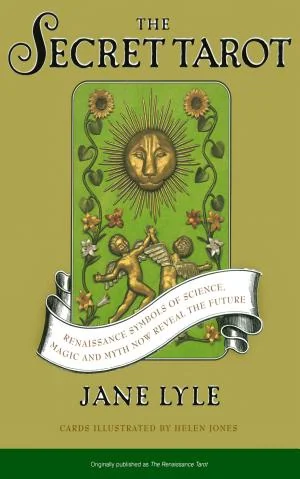
Jane Lyle’s *The Secret Tarot* attempts a noble goal: to strip away the accumulated dogma and encourage direct intuitive engagement with the cards. The strength lies in its consistent focus on personal resonance; Lyle guides the reader to trust their gut reactions to Helen Jones’s evocative, if somewhat generalized, artwork. The accompanying 192-page handbook, while informative, occasionally feels like it’s trying to impose structure onto a system designed to be fluid. For instance, the section on the Major Arcana, while detailing traditional associations, sometimes struggles to reconcile these with the book's core premise of pure intuition. One wishes for more explicit examples of how to bypass learned meanings entirely and simply *feel* the card. Despite this, Lyle’s emphasis on the personal journey makes *The Secret Tarot* a worthy, albeit imperfect, companion for those seeking a less rigid path in their tarot practice.
📝 Description
83
Jane Lyle's 2001 book, The Secret Tarot, guides readers to intuitive tarot interpretation.
Published in 2001, The Secret Tarot by Jane Lyle, with illustrations by Helen Jones, offers a method for connecting with the tarot's intuitive core. The book moves away from memorizing card meanings, instead encouraging readers to use the cards as reflections of their inner selves. Lyle's writing is intended to work in tandem with Jones's artwork, which updates traditional tarot imagery with a contemporary feel.
This book is for those seeking a deeper, more personal engagement with tarot divination. It is particularly useful for readers who find complex systems daunting or who wish to strengthen their natural psychic abilities. Individuals interested in the psychological and symbolic aspects of the cards, rather than solely predictive readings, will find this approach valuable. The Secret Tarot aims to help readers build confidence in their own intuitive insights.
The Secret Tarot acknowledges the tarot's origins in 15th-century Italy, a period when the cards first emerged. Lyle's focus on intuition aligns with early interpretations of the deck, where the symbolic images served as prompts for personal reflection and allegorical understanding. This approach predates the more formalized systems that later became common in tarot practice.
💡 Why Read This Book?
• Develop a more personal and intuitive approach to tarot, moving beyond memorized meanings to trust your own inner guidance when interpreting card spreads. • Cultivate a deeper connection with the symbolic language of the cards by focusing on your immediate emotional and visual responses to the artwork. • Explore the psychological and introspective potential of tarot as a tool for self-discovery, uncovering subconscious patterns and personal insights.
⭐ Reader Reviews
Honest opinions from readers who have explored this book.
❓ Frequently Asked Questions
What is the publication history of Jane Lyle's The Secret Tarot?
The Secret Tarot by Jane Lyle was first published on October 30, 2001. It is part of a tradition of tarot literature that emerged prominently in the late 20th and early 21st centuries, focusing on intuitive interpretation.
What makes The Secret Tarot different from other tarot books?
This book emphasizes developing personal intuition over memorizing traditional meanings. It encourages readers to connect with the imagery and their own feelings, using the cards as a mirror for self-reflection, rather than solely for prediction.
Who illustrated the tarot deck associated with this book?
The illustrations for The Secret Tarot deck were created by Helen Jones. Her artwork is noted for drawing inspiration from traditional tarot imagery while presenting a fresh visual style intended to spark intuitive responses.
Is The Secret Tarot suitable for beginners?
Yes, it is particularly suitable for beginners who feel intimidated by complex systems. It offers a gentler introduction by focusing on intuition, making the learning process feel more accessible and less academic.
Does the book provide specific card meanings?
While the book provides a 192-page illustrated handbook, its primary goal is not to offer definitive meanings. Instead, it guides readers on how to discover their own meanings through intuition and personal connection with the card imagery.
What historical period does the tarot deck in this book reference?
The artwork in The Secret Tarot is inspired by traditional tarot imagery, acknowledging the deck's origins during the Renaissance period in 15th-century Italy. It seeks to recapture some of that original sense of mystery and symbolism.
🔮 Key Themes & Symbolism
Intuitive Connection
The core of The Secret Tarot lies in fostering a direct, intuitive link between the reader and the cards. Lyle advocates for bypassing learned interpretations and engaging with the artwork on an emotional and subconscious level. This approach suggests that the most potent meanings arise not from memorized definitions but from the immediate resonance felt when contemplating an image, allowing personal experience to unlock the card's message. The book guides readers to trust these internal responses as the primary tool for divination.
Symbolic Resonance
The work emphasizes the power of symbols within the tarot deck to act as keys to inner understanding. Rather than presenting a fixed symbolic lexicon, Lyle encourages readers to explore how archetypal imagery—such as the Fool, the High Priestess, or the Wheel of Fortune—evokes personal associations and reflections. The book posits that these symbols, rooted in collective human experience and dating back to the Renaissance origins of the tarot, serve as potent catalysts for introspection and self-discovery when approached with an open, intuitive mind.
Personalized Divination
The Secret Tarot champions a personalized method of tarot reading, moving away from rigid, universal interpretations. It empowers individuals to develop their unique relationship with the cards, viewing the tarot as a tool for personal growth and psychological exploration. By focusing on intuition, the book suggests that each reading becomes a unique dialogue between the querent, the cards, and the specific question at hand, resulting in insights that are deeply relevant to the individual's life circumstances.
Renaissance Origins
While focusing on modern intuition, The Secret Tarot implicitly acknowledges the tarot's historical roots in 15th-century Italy. The deck's imagery draws inspiration from these early forms, suggesting a return to the spirit of the original cards, which were likely used for games and allegorical contemplation before widespread divinatory use. This connection to the Renaissance provides a sense of historical depth, framing the intuitive approach as a way to recapture an earlier, perhaps more direct, engagement with the tarot's symbolic power.
💬 Memorable Quotes
Direct passages from the work, attributed to the author.
“Draw on your own intuition when you read the cards.”
— This directive expresses the book's central philosophy, urging readers to prioritize their inner knowing over external interpretations when engaging with tarot imagery.
“Images inspired by the traditional tarot.”
— This highlights the visual foundation of the deck, indicating that while familiar archetypes are present, the artwork offers a contemporary interpretation designed to elicit personal responses.
“Recapture the Enchantment of the Original Tarot.”
— This phrase suggests a return to a more mystical and less systematized understanding of the tarot, akin to its early days, focusing on wonder and personal discovery.
“Everything you will need, including 192-page illustrated handbook.”
— This points to the comprehensive nature of the package, designed to be a self-contained resource for learning and practicing the intuitive tarot method presented by the author.
“A source of pleasure and mystery.”
— This frames the tarot experience not just as a divinatory tool but as an engaging and intriguing practice that offers enjoyment and sparks curiosity.
🌙 Esoteric Significance
Tradition
While not explicitly tied to a single esoteric lineage like Hermeticism or Kabbalah, *The Secret Tarot* draws from the broader Western Esoteric tradition's use of symbolic systems for self-knowledge. It leans into the psychological and archetypal interpretations popularized in the 20th century, influenced by figures like Carl Jung, but prioritizes a more direct, less codified approach. Its emphasis on intuition aligns with certain mystical currents that value inner gnosis over external dogma.
Symbolism
The deck's symbolism, inspired by traditional tarot, likely references archetypes such as The Fool, representing new beginnings and innocence, and The High Priestess, symbolizing intuition and the subconscious. Lyle encourages readers to find personal meaning in these figures, suggesting their power lies in their ability to mirror the querent's inner state rather than adhering to fixed, historical interpretations. The aim is for the reader's own symbolic associations to emerge, fostering a unique dialogue with the cards.
Modern Relevance
Contemporary practitioners of intuitive divination, modern witchcraft, and psychological tarot reading often find resonance with Lyle's approach. Thinkers and artists who explore archetypal psychology or advocate for personalized spiritual practices may draw inspiration from its emphasis on inner authority. The book's focus on direct experience over established doctrine appeals to those seeking to bypass complex theoretical frameworks in their spiritual or divinatory work.
👥 Who Should Read This Book
• Individuals new to tarot who feel overwhelmed by extensive decks and complex systems, seeking a gentle entry point focused on personal connection. • Experienced tarot readers looking to deepen their intuitive skills and move beyond rote memorization, rediscovering a fresh perspective on familiar archetypes. • Those interested in the psychological and self-exploratory aspects of divination, who view tarot as a mirror for inner reflection rather than solely a predictive tool.
📜 Historical Context
Published in 2001, *The Secret Tarot* emerged during a period of significant growth in the popular interest surrounding tarot and esoteric studies. The late 20th century saw a move away from rigid, occultist interpretations towards more psychological and self-help-oriented approaches to divination. Jane Lyle's work aligns with this trend, emphasizing personal intuition over strict adherence to systems like those developed by the Hermetic Order of the Golden Dawn in the late 19th century. The book's focus on intuitive connection can be seen as a reaction to, or evolution from, the more complex divinatory frameworks that had become prevalent. Its publication date places it within a wave of accessible tarot guides that aimed to explain the cards for a broader audience, distinguishing itself by advocating for a deeply personal, rather than purely academic, engagement with the deck's symbolism.
📔 Journal Prompts
Which card image initially sparks the strongest emotional reaction in you, and why?
How does your interpretation of a card differ from its traditional meaning, and what does that reveal?
Reflect on a time your intuition guided you correctly; how can the tarot cards amplify this ability?
What 'mystery' does the tarot hold for you personally, beyond simple fortune-telling?
Consider the 'enchantment' mentioned; how can you bring more wonder into your card readings?
🗂️ Glossary
Divination
The practice of seeking knowledge of the future or the unknown by supernatural means. In the context of tarot, it involves interpreting card spreads to gain insight into questions.
Archetype
A universal, inherited pattern of thought or imagery derived from the collective unconscious, as described by Carl Jung. Tarot cards often represent archetypal figures and situations.
Intuition
The ability to understand something immediately, without the need for conscious reasoning. Lyle emphasizes intuition as the primary tool for tarot interpretation.
Querent
The person for whom a divination reading is performed. In tarot, the querent asks the questions and receives the insights from the cards.
Major Arcana
The 22 trump cards of the tarot deck, representing significant life lessons, spiritual archetypes, and major events. They are often seen as the core structure of the tarot.
Minor Arcana
The 56 cards of the tarot deck divided into four suits (Wands, Cups, Swords, Pentacles), representing everyday events, challenges, and situations encountered in life.
Symbolism
The use of symbols to represent ideas or qualities. Tarot cards are rich in symbolism, with each image carrying multiple layers of meaning.
This book appears in 1 collection
🔮 Readers Also Liked
Browse all →
From the “Tarot” Collection
View all →
More Free Occult Philosophy Books
View all →