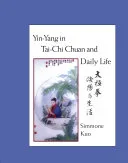
Yin-Yang in Tai-Chi Chuan and Daily Life
 83
83

Yin-Yang in Tai-Chi Chuan and Daily Life
Simmone Kuo’s "Yin-Yang in Tai-Chi Chuan and Daily Life" attempts to bridge the gap between the physical practice of Tai-Chi and its profound philosophical underpinnings. The book's primary strength lies in its author's evident deep immersion in both the martial art and the Eastern philosophies it draws upon. Kuo’s inclusion of student accounts provides a valuable, albeit brief, glimpse into the experiential impact of her teachings. However, the work occasionally feels more like a collection of lecture notes and observations than a cohesive narrative. The transition between philosophical exegesis and anecdotal evidence could be smoother, and the exploration of specific movements, such as the "push hands" practice, feels somewhat underdeveloped in relation to the broader philosophical discourse. Nevertheless, the book offers a useful perspective for those seeking to contextualize their Tai-Chi practice within Taoist and Buddhist frameworks. It serves as a competent, if not entirely revelatory, guide to the philosophical landscape of Tai-Chi.
📝 Description
83
Simmone Kuo's 2004 book analyzes the philosophical roots of Tai-Chi Chuan.
Simmone Kuo's "Yin-Yang in Tai-Chi Chuan and Daily Life" examines the philosophical foundations of Tai-Chi Chuan. First published in 2004, the work details the influence of Taoist, Buddhist, and Confucian traditions on the martial art's practice and philosophy. Kuo, who conducted research in China and taught at San Francisco State University, moves beyond physical technique to discuss the theoretical framework that informs Tai-Chi's movements.
This book is suited for Tai-Chi practitioners seeking a deeper grasp of its philosophical origins, aiming to move past simple memorization of forms. It will also interest students of comparative religion, Eastern philosophies, and those curious about applying Yin-Yang theory to daily life. Readers interested in the combination of martial arts, spiritual traditions, and everyday living will find significant content.
The early 21st century saw growing global engagement with traditional Eastern practices, with Tai-Chi Chuan gaining considerable popularity. Kuo's book appeared at a time when both scholars and practitioners sought connections between physical disciplines and their historical and philosophical contexts. Her method, blending personal accounts from students with academic research, reflects a trend toward experiential scholarship.
This book situates itself within the study of Chinese internal martial arts and their philosophical underpinnings. It connects the physical practice of Tai-Chi Chuan to the broader traditions of Taoism, Buddhism, and Confucianism, demonstrating how these systems inform its energetic principles and ethical dimensions. Kuo's work highlights the integration of contemplative practices with martial discipline, reflecting a lineage of thought that views physical training as a path to self-cultivation and understanding universal principles.
💡 Why Read This Book?
• Gain a deeper philosophical context for Tai-Chi Chuan practice, moving beyond physical forms to understand the integration of Taoist, Buddhist, and Confucian thought as explored through Kuo's research, including her work at San Francisco State University. • Understand the practical application of Yin-Yang theory in daily life, as illustrated through Simmone Kuo's observations and synthesized from her yearly research trips to China. • Appreciate the impact of philosophical instruction on practitioners, evidenced by the student accounts included within the book, offering a unique perspective on learning.
⭐ Reader Reviews
Honest opinions from readers who have explored this book.
❓ Frequently Asked Questions
What is the primary philosophical focus of Simmone Kuo's "Yin-Yang in Tai-Chi Chuan and Daily Life"?
The book's primary focus is on the integration of Taoist, Buddhist, and Confucian philosophies with the practice of Tai-Chi Chuan, particularly through the lens of Yin-Yang theory. Simmone Kuo explores how these traditions inform the martial art's movements and principles.
When was "Yin-Yang in Tai-Chi Chuan and Daily Life" first published?
The book was first published on December 7, 2004. This date marks the initial release of Simmone Kuo's exploration into the philosophical dimensions of Tai-Chi.
What academic background does the author, Simmone Kuo, bring to this subject?
Simmone Kuo draws on her extensive experience, including yearly research trips to China and her role as a lecturer in Advanced Tai-Chi Chuan at San Francisco State University, to inform her analysis.
Does the book only discuss Tai-Chi Chuan, or does it have broader applications?
While Tai-Chi Chuan is the central practice explored, the book emphasizes the application of Yin-Yang theory and Eastern philosophies to daily life, suggesting broader relevance beyond martial arts.
What kind of supporting material is included in the book?
The work includes accounts from Simmone Kuo's students, offering personal perspectives on the impact of her teachings and the philosophical concepts discussed, illustrating the practical reception of the theories.
What are the main philosophical traditions discussed in relation to Tai-Chi?
The book specifically examines the influence of Taoist, Buddhist, and Confucian traditions. These are presented as foundational to understanding the philosophical context of Tai-Chi Chuan as taught by Simmone Kuo.
🔮 Key Themes & Symbolism
Yin-Yang Dynamics
The core of Kuo's work lies in the practical application of Yin-Yang theory. This isn't merely an abstract concept but a dynamic interplay of forces that governs movement in Tai-Chi Chuan, energy flow (Qi), and the balance required in daily existence. The book illustrates how understanding the complementary and opposing natures of Yin and Yang can lead to greater harmony and effectiveness in both physical practice and life decisions, drawing parallels between the slow, deliberate movements of Tai-Chi and the cyclical nature of Taoist principles.
Synthesis of Traditions
Simmone Kuo adeptly demonstrates how Tai-Chi Chuan serves as a nexus for several major Eastern philosophical and spiritual traditions. The work meticulously unpacks the influence of Taoism, emphasizing concepts like 'wu wei' (non-action) and naturalness. Buddhist principles, such as mindfulness and the impermanence of form, are shown to inform the practitioner's mental state. Confucian ethics, focusing on social harmony and self-cultivation, are also presented as integral to the holistic development fostered by Tai-Chi. This synthesis offers a multi-layered understanding of the art's origins and purpose.
Experiential Learning
A significant aspect of "Yin-Yang in Tai-Chi Chuan and Daily Life" is its incorporation of firsthand accounts from Simmone Kuo's students. These narratives provide tangible evidence of how the philosophical teachings translate into personal growth and altered perceptions. They highlight the transformative potential of integrating intellectual understanding with physical practice, showcasing how students experienced profound shifts in their approach to both Tai-Chi and their everyday lives, underscoring Kuo's effectiveness as an educator since her tenure at San Francisco State University.
Application Beyond the Form
Kuo extends the principles of Tai-Chi Chuan and Yin-Yang theory beyond the confines of the martial art itself, applying them to the broader context of daily life. The work suggests that the balance, awareness, and adaptability cultivated through Tai-Chi are transferable skills. Whether in personal relationships, professional endeavors, or simply reading through the complexities of modern existence, the philosophical framework presented offers practical guidance for achieving greater equilibrium and understanding, a perspective honed through her research trips to China.
💬 Memorable Quotes
Direct passages from the work, attributed to the author.
“The philosophy of Tai-Chi Chuan is inseparable from its practice.”
— This statement highlights the central thesis of Kuo's work: that understanding the underlying philosophical principles, such as Yin-Yang theory, is crucial for a complete and meaningful engagement with the martial art, moving beyond mere physical execution.
“Student accounts reveal the profound impression Mme. Kuo made.”
— This indicates that the book includes testimonials from individuals who studied under Simmone Kuo, demonstrating the practical and personal impact of her teachings on their understanding and experience of Tai-Chi and its related philosophies.
“Yearly research trips to China informed the exploration of Taoist influence.”
— This points to the author's dedication to primary research and firsthand observation in China, suggesting that the book offers insights grounded in direct experience and cultural immersion, particularly concerning the Taoist roots of Tai-Chi.
“Advanced Tai-Chi Chuan was taught at San Francisco State University.”
— This fact anchors the author's academic credentials and teaching experience, lending credibility to her analysis and suggesting a pedagogical approach that integrates rigorous study with practical instruction.
💡 Key Ideas
Editorial paraphrase of the work's core concepts — not direct quotes.
The application of Yin-Yang theory extends to everyday situations.
This paraphrased concept emphasizes that the book's relevance is not limited to martial artists; it provides a framework for understanding and navigating general life challenges by applying the principles of balance and interplay inherent in Yin-Yang philosophy.
🌙 Esoteric Significance
Tradition
This work aligns with the Neo-Theosophical and New Age interpretations of Eastern philosophies that gained traction in the late 20th and early 21st centuries. While not strictly belonging to an ancient lineage, it draws heavily from Taoism and Buddhism, traditions often studied within esoteric circles for their cosmological and psychological insights. Kuo’s approach emphasizes the practical, embodied application of these principles, characteristic of how esoteric traditions seek to integrate spiritual knowledge into daily life and personal transformation, moving beyond purely theoretical study.
Symbolism
The central symbol is naturally the Taijitu (Yin-Yang symbol), representing the fundamental duality and interconnectedness of all phenomena. Kuo explores its manifestation in the circular, flowing movements of Tai-Chi Chuan, where opposing forces continuously transform into one another. Other symbolic motifs likely include the concept of Qi (vital energy) as the animating force, and the natural world imagery often used in Taoist texts to illustrate philosophical points, such as the balance of water and mountain, reflecting the harmony sought in both practice and life.
Modern Relevance
Kuo's work remains relevant for contemporary practitioners and scholars interested in the intersection of mind, body, and spirit. Thinkers and schools focusing on embodied cognition, mindfulness-based practices, and the integration of Eastern wisdom into Western psychology find value in her approach. The book’s emphasis on practical application speaks to modern wellness movements and the growing desire for holistic approaches to health and self-development, bridging ancient philosophy with contemporary life challenges.
👥 Who Should Read This Book
• Dedicated practitioners of Tai-Chi Chuan seeking to deepen their understanding beyond physical technique, particularly those interested in the philosophical roots informing their practice. • Students of comparative religion and Eastern philosophies, especially those studying Taoism, Buddhism, and Confucianism, who want to see how these traditions manifest in a concrete discipline. • Individuals interested in the practical application of Yin-Yang theory and holistic principles to improve balance, awareness, and effectiveness in their daily lives.
📜 Historical Context
Published in 2004, "Yin-Yang in Tai-Chi Chuan and Daily Life" emerged during a period of heightened global interest in traditional Eastern practices, including martial arts and philosophies. Simmone Kuo's work arrived as Western audiences were increasingly seeking deeper understanding beyond the physical forms, looking for the spiritual and philosophical roots. Her approach, integrating Taoist, Buddhist, and Confucian thought, mirrored a broader academic and popular trend of comparative religion and the study of embodied philosophies. While contemporary authors like Stephen Mitchell were making Taoist texts accessible, Kuo focused specifically on their application within the structured discipline of Tai-Chi. Her academic standing at San Francisco State University provided a platform for this synthesis. The book's reception likely contributed to the ongoing discourse on the holistic nature of martial arts, positioning it as a bridge between scholarly analysis and practical application in the early 21st century.
📔 Journal Prompts
The interplay of Yin and Yang in your daily routines.
Connecting Buddhist mindfulness principles to your Tai-Chi forms.
How Confucian ethics influence your interactions.
The philosophical context of a specific Tai-Chi movement.
Simmone Kuo's research trips to China and their impact on understanding.
🗂️ Glossary
Tai-Chi Chuan
A Chinese martial art practiced for both its defense training and its health benefits. It involves slow, flowing movements, deep breathing, and mental focus, rooted in Taoist philosophy.
Yin-Yang
The Taoist concept of dualism, describing how seemingly opposite or contrary forces are actually complementary, interconnected, and interdependent in the natural world, and how they give rise to each other as they interrelate.
Taoism
A philosophical and religious tradition originating in ancient China, emphasizing living in harmony with the Tao (the 'Way'), the fundamental principle that underlies the reality of existence.
Buddhism
A religion and philosophy originating in ancient India, focused on personal spiritual development and the attainment of enlightenment through practices like meditation, mindfulness, and ethical conduct.
Confucianism
An ethical and philosophical system developed from the teachings of Confucius in ancient China, emphasizing personal and governmental morality, correctness of social relationships, justice, kindness, and sincerity.
Qi (Chi)
The vital life force or energy believed to flow through all living things in traditional Chinese culture and medicine. Its cultivation is central to practices like Tai-Chi Chuan.
Wu Wei
A central concept in Taoism, often translated as 'non-action' or 'effortless action.' It refers to a state of acting in accordance with the natural flow of the universe without forcing or striving.