Yeti Greets the World
 75
75

Yeti Greets the World
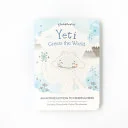
The simplicity of Yeti Greets the World is its greatest asset, allowing the core message of mindfulness to shine without unnecessary embellishment. Oriard and Christensen have crafted a narrative that gently nudges young readers toward present-moment awareness by framing sensory input as an adventure. The Yeti’s encounters, such as feeling the wind or noticing the colors of berries, serve as concrete examples of mindful observation. A notable strength is its direct, uncluttered approach to complex ideas. However, the book occasionally leans towards a slightly didactic tone, which, while effective, might benefit from more implicit exploration of emotions connected to sensory experiences. The passage where Yeti simply *feels* the sun on its fur, rather than analyzing it, encapsulates the book's intent beautifully. Ultimately, Yeti Greets the World offers a charming and accessible primer on mindfulness for the youngest audiences.
📝 Description
75
Published in 2021, Yeti Greets the World introduces mindfulness to young children through a Yeti's sensory encounters.
Kelly Oriard and Callie Christensen wrote Yeti Greets the World in 2021 as an introduction to mindfulness for young readers. The story follows a Yeti as it experiences the world through its senses, offering children a simple way to practice being aware of the present moment. The book aims to help children pay closer attention to their surroundings and their own feelings with curiosity.
This book is for parents, teachers, and anyone caring for children aged roughly three to seven. It provides a way to help young children manage their emotions, notice sensory input, and find calm. The writing is easy to understand, and the story is engaging, making it suitable for reading aloud at bedtime, using in classrooms, or for quiet personal reflection.
Yeti Greets the World appears within a contemporary global movement focused on mental wellness and contemplative practices. While secular mindfulness programs often draw from Buddhist traditions, this book adapts those ideas for a very young audience. It reflects a modern trend in destigmatizing mental health and offering tools for well-being early in life, aligning with the growth of child-focused wellness initiatives.
💡 Why Read This Book?
• You will learn to guide children in identifying and appreciating sensory input, mirroring the Yeti’s exploration of wind and berries, fostering present-moment awareness. • You will gain practical techniques for encouraging curiosity in children, using the book's narrative structure as a model for present-moment engagement. • You will discover an accessible method for introducing mindfulness, leveraging the 2021 publication date and its focus on sensory identification to connect with contemporary childhood education trends.
⭐ Reader Reviews
Honest opinions from readers who have explored this book.
❓ Frequently Asked Questions
What age group is Yeti Greets the World best suited for?
This book is ideal for children aged 3-7 years. Its simple language and engaging narrative are tailored to introduce mindfulness concepts to preschoolers and early elementary school students.
What is the main goal of Yeti Greets the World?
The primary goal is to introduce the concept of mindfulness to young readers, encouraging them to engage with their senses and the present moment with curiosity.
Who are the authors of Yeti Greets the World?
The book was written by Kelly Oriard and Callie Christensen. It was first published on September 25, 2021.
Does the book offer practical exercises for children?
Yes, the narrative itself acts as a gentle guide, encouraging children to notice their senses and surroundings, which are practical applications of mindfulness principles.
What makes this book different from other mindfulness books for kids?
Its strength lies in its straightforward, character-driven approach, using the Yeti’s journey to illustrate sensory awareness and present-moment focus without complex jargon.
Is Yeti Greets the World suitable for classroom use?
Absolutely. Educators can use the book to facilitate discussions on sensory awareness, emotional regulation, and the importance of being present, making it a valuable classroom tool.
🔮 Key Themes & Symbolism
Sensory Awareness
The narrative is built around the Yeti character actively engaging with its environment through its senses. Each encounter, whether feeling the crisp air or observing the textures of snow, serves as a practical demonstration of sensory input. This theme encourages readers, particularly young children, to pay closer attention to the details of their own sensory experiences, fostering a connection between internal perception and external reality. The book frames this not as a passive reception of stimuli, but as an active, curious exploration.
Present Moment Focus
Central to the book's message is the concept of being 'here and now.' The Yeti's actions and observations are depicted as occurring in the immediate present, without dwelling on the past or anticipating the future. This theme is crucial for introducing mindfulness, teaching children to anchor their attention to current experiences. By following the Yeti’s simple, moment-by-moment discoveries, readers are implicitly guided to practice a similar form of focused attention, reducing distraction and cultivating a sense of calm.
Curiosity and Observation
The Yeti's journey is characterized by a spirit of gentle inquiry. The character approaches new sensations and sights with an open, non-judgmental attitude. This theme encourages readers to cultivate their own sense of wonder about the world around them. The book suggests that by observing closely and with genuine curiosity, one can discover the richness in ordinary experiences. This approach counters passive consumption, promoting an active and engaged way of interacting with one’s surroundings.
Emotional Regulation Introduction
While not explicit, the practice of mindfulness, as introduced through sensory awareness and present-moment focus, inherently supports emotional regulation. By learning to observe experiences without immediate reaction, children can begin to develop a greater capacity to manage their feelings. The calm, measured pace of the Yeti’s exploration implicitly models a way of being that is less prone to impulsive emotional responses, laying a foundational understanding for later emotional intelligence development.
💬 Memorable Quotes
Direct passages from the work, attributed to the author.
“Yeti felt the wind on his face.”
— This simple statement highlights the direct engagement with a physical sensation. It serves as a prime example of noticing tactile input, a fundamental aspect of sensory awareness and a core practice in mindfulness.
“He saw the bright red berries.”
— This emphasizes visual observation, encouraging readers to notice colors and details in their environment. It's an invitation to engage with the visual world actively and curiously, much like the Yeti.
“Yeti listened to the quiet.”
— This phrase introduces the concept of mindful listening, even to subtle or absent sounds. It suggests an awareness of one's auditory environment that goes beyond loud noises, promoting a deeper connection to surroundings.
“He was happy to be here now.”
— This directly connects the Yeti's positive emotional state to the practice of present-moment awareness. It suggests that being grounded in the 'now' can foster contentment and well-being.
“Yeti wiggled his toes in the snow.”
— This is a concrete example of proprioception and kinesthetic awareness. It encourages readers to pay attention to the sensations within their own bodies, a key component of embodied mindfulness.
🌙 Esoteric Significance
Tradition
While not overtly tied to a specific esoteric lineage like Hermeticism or Gnosticism, Yeti Greets the World aligns with the broader esoteric principle of 'Know Thyself' through direct experiential awareness. Its emphasis on sensory perception and present-moment focus echoes contemplative practices found across many mystical traditions, including Zen Buddhism, contemplative Christianity, and Sufism, which all advocate for cultivating awareness of the immediate experience as a path to inner understanding or divine connection.
Symbolism
The Yeti itself can be interpreted as a symbol of the untamed, primal self, or the 'inner hermit' often depicted in esoteric traditions – an entity dwelling in remote places, observing the world from a unique vantage point. The act of 'greeting the world' symbolizes an outward expansion of consciousness from this inner space. The sensory elements—wind, snow, berries—represent the tangible manifestations of the material world that the developing consciousness learns to perceive and interact with.
Modern Relevance
This work is highly relevant to contemporary secular mindfulness movements, therapeutic practices (like ACT - Acceptance and Commitment Therapy), and positive psychology. It serves as a foundational text for modern pedagogical approaches that integrate mindfulness into early childhood education. Thinkers and practitioners in fields focusing on emotional intelligence, trauma-informed care, and resilience-building in children often draw upon such accessible introductions to core mindfulness principles.
👥 Who Should Read This Book
• Parents and caregivers seeking gentle, age-appropriate methods to introduce mindfulness and emotional awareness to children aged 3-7. • Early childhood educators and therapists looking for engaging resources to foster focus, sensory exploration, and calm in young students or clients. • Individuals interested in the secular application of contemplative practices for children, appreciating a narrative-driven approach over abstract instruction.
📜 Historical Context
The publication of Yeti Greets the World in 2021 places it within a contemporary landscape heavily influenced by the late 20th and early 21st-century surge in mindfulness and contemplative practices. While mindfulness has ancient roots, its secularization and widespread adoption in Western contexts accelerated dramatically from the 1970s onward, notably with figures like Jon Kabat-Zinn popularizing MBSR (Mindfulness-Based Stress Reduction). By the 2010s, this trend had extended significantly into education and child psychology, aiming to equip younger generations with tools for emotional regulation and focus. This book reflects that movement, offering a simplified, accessible entry point for children. It emerged in an era where mental wellness for children was increasingly prioritized, moving beyond traditional behavioral psychology to embrace mind-body integration, a shift that saw many authors like Daniel Siegel also advocating for early mindfulness education.
📔 Journal Prompts
Yeti's feeling of the wind. What sensations do you notice right now?
The bright red berries. Describe one color you see around you with curiosity.
Yeti listening to the quiet. What subtle sounds can you perceive?
The Yeti wiggling toes in snow. Explore a physical sensation in your body.
Yeti being happy to be here now. Reflect on a simple moment of present contentment.
🗂️ Glossary
Mindfulness
The practice of paying attention to the present moment, non-judgmentally. It involves focusing awareness on current thoughts, feelings, bodily sensations, and surrounding environment.
Sensory Engagement
Actively using one's senses (sight, sound, smell, taste, touch) to experience and understand the world. This book encourages readers to notice these inputs.
Present Moment Awareness
The state of being fully attentive to and aware of what is happening in the current moment, without dwelling on the past or worrying about the future.
Curiosity
A strong desire to know or learn something. In mindfulness, it involves approaching experiences with openness and interest, rather than judgment or expectation.
Observation
The act of noticing or perceiving something carefully. This book prompts readers to observe their sensory experiences and surroundings.
Non-judgmental
Observing thoughts, feelings, or experiences without labeling them as 'good' or 'bad,' 'right' or 'wrong.' Simply acknowledging their presence.
Yeti
A mythical ape-like creature said to inhabit the Himalayan region of Nepal and Bhutan. In this book, the Yeti serves as a character introducing mindfulness concepts.
This book appears in 1 collection
🔮 Readers Also Liked
Browse all →









From the “Mindfulness” Collection
View all →






More Free Occult Philosophy Books
View all →