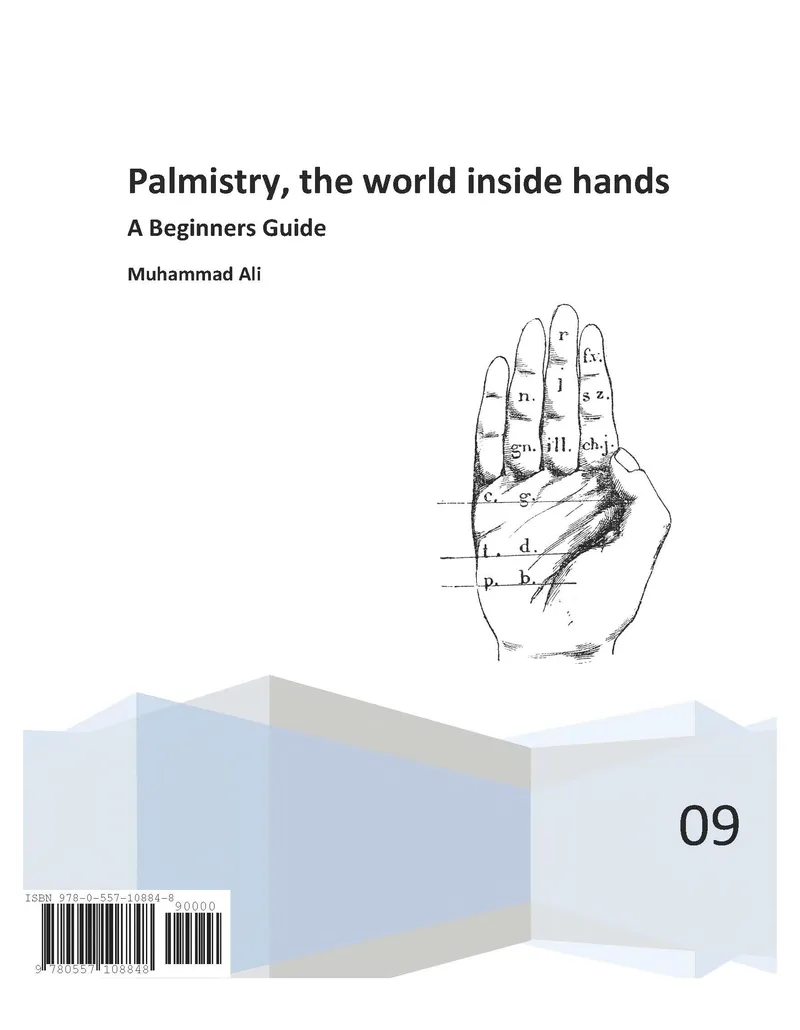
Palmistry, the world inside hands
 80
80

Palmistry, the world inside hands
The unnamed author of Palmistry, the world inside hands presents a remarkably structured approach to chiromancy, moving beyond superficial prognostication. Its strength lies in its systematic cataloging of hand features—from the subtle undulations of the mounts to the precise contours of the major lines. For instance, the detailed differentiation between various types of Head Lines offers a nuanced view of cognitive styles. However, the work suffers from a lack of specific historical attribution for its system; while it implies ancient origins, it offers no concrete anchor points like the dates or specific Greek philosophers it might draw upon. A particularly insightful passage discusses the significance of the Rascette lines, interpreting them as indicators of vitality and constitutional strength. Overall, it serves as a solid, if unattributed, manual for the dedicated student.
📝 Description
80
This book, 'Palmistry, the world inside hands,' presents palmistry as a cartography of the self.
Palmistry, the world inside hands details the system of interpreting lines, mounts, and shapes on the hand. It aims to understand an individual's character, potential, and life path. The text treats palmistry not as simple fortune-telling, but as a mapping of psychic predispositions and formative influences. The book breaks down the hand into distinct regions corresponding to planetary influences, such as the Mount of Venus and Mount of Saturn. It describes major lines like the Life Line, Head Line, and Heart Line, alongside minor lines, each with specific interpretations. Hand shapes, such as spatulate or square, are also analyzed as indicators of core temperament.
This work is for students of esoteric arts, occult history enthusiasts, and individuals interested in physiognomy and self-knowledge. It appeals to those who approach divination with a serious, analytical mindset. Readers interested in comparative symbolism across cultures will also find value in its analysis.
The practice of palmistry, or chiromancy, has roots in ancient India and Greece. Its prominence in Europe grew during the Renaissance, a time of renewed interest in esoteric subjects like astrology and alchemy. This period saw figures like Johannes Trithemius engage with various forms of divination. Works on chiromancy often circulated in manuscript form before wider printing, contributing to a broader discourse on physiognomy and hidden knowledge.
💡 Why Read This Book?
• Gain a comprehensive understanding of the hand's cartography, learning to interpret specific lines like the Apollo line and mounts such as the Mount of Mercury, as detailed in its systematic chapters. • Explore the historical context of chiromancy during the European Renaissance, understanding its place alongside other esoteric disciplines of that era. • Develop a framework for analyzing character and potential through hand shapes, differentiating between types like the ‘philosophical’ hand and the ‘practical’ hand as presented in the text.
⭐ Reader Reviews
Honest opinions from readers who have explored this book.
❓ Frequently Asked Questions
What is the origin of the term 'chiromancy'?
Chiromancy, the term for palmistry, derives from the Greek words 'cheir' (hand) and 'manteia' (divination). This reflects its ancient roots in predicting the future or understanding character through the examination of the hand.
How does this book connect palmistry to planetary influences?
The book maps specific areas of the palm, known as mounts, to celestial bodies. For example, the Mount of Jupiter is associated with ambition and leadership, reflecting the traditional astrological rulership of Jupiter.
Are there different hand shapes discussed in Palmistry, the world inside hands?
Yes, the work categorizes hands into distinct shapes, such as the spatulate, square, and conic types. Each shape is linked to a fundamental temperament and set of characteristics.
What are the primary lines examined in palmistry?
The core lines analyzed include the Life Line (vitality), Head Line (intellect), and Heart Line (emotions). Their length, depth, and formations offer insights into an individual's life journey and inner world.
Is this book a historical account or a practical guide?
It functions as both. While providing historical context for chiromancy, its primary aim is to serve as a practical guide for interpreting the hands, detailing specific markings and their meanings.
Does the book discuss the significance of minor hand lines?
Indeed, beyond the major lines, the book explores numerous minor lines, such as the Line of Apollo (creativity) and the bracelet lines (Rascettes), offering further layers of interpretation.
🔮 Key Themes & Symbolism
The Hand as Microcosm
The work posits the hand as a complete map of the individual, a microcosm reflecting the macrocosm of the universe. Each line and mount is presented as a symbolic representation of psychic energies, life experiences, and inherent potentials. This perspective elevates palmistry from simple prediction to a sophisticated system of self-understanding, aligning with Hermetic principles of correspondence where 'As above, so below'.
Planetary Mounts and Character
Central to the book's methodology is the interpretation of the fleshy mounds at the base of the fingers and palm. Each mount is assigned a planetary ruler—Jupiter for ambition, Saturn for wisdom, Venus for love—and its prominence or deficiency is seen as directly influencing the individual's core personality traits, desires, and challenges. This links chiromantic analysis directly to astrological archetypes.
Lines of Destiny and Development
The major lines—Life, Head, and Heart—are treated as the primary narrative threads of a person's existence. The book details how variations in their depth, clarity, and trajectory reveal aspects of physical vitality, intellectual capacity, and emotional landscape. Further analysis of minor lines, such as the Line of Apollo, adds nuance, indicating talents and avenues for fulfillment.
Hand Shapes and Temperament
Beyond specific markings, the overall shape of the hand and fingers is analyzed to determine fundamental temperament. The text likely categorizes hands into types—earth, air, fire, water, or variations thereof—linking them to elemental qualities and inherent psychological dispositions. This foundational classification provides a broad outline before studying finer details.
💬 Memorable Quotes
Direct passages from the work, attributed to the author.
“The lines upon the hand are not fixed decrees, but currents of energy.”
— This suggests that palmistry interprets tendencies and potentials rather than absolute fate. It implies that the lines represent dynamic forces that can be understood, and perhaps even influenced, by the individual's choices and awareness.
“Each mount is a range of desire, shaped by celestial influence.”
— This highlights the connection between the physical form of the hand's mounts and the underlying psychological drives and aspirations, directly linking them to astrological correspondences and archetypal energies.
“The width of the palm speaks of breadth of experience.”
— A concise observation suggesting that the physical proportions of the hand itself offer clues to the individual's capacity for engagement with the world and the scope of their life experiences.
“A clear Heart Line indicates emotional clarity or the pursuit thereof.”
— This interpretation focuses on the emotional core, suggesting that the state of the Heart Line reflects not only current emotional states but also the individual's fundamental approach to relationships and feelings.
“The thumb's flexibility reveals the measure of one's will.”
— This points to the thumb's significance as an indicator of personal agency and determination. Its degree of mobility is interpreted as a measure of adaptability and strength of purpose.
🌙 Esoteric Significance
Tradition
This work aligns with the Western esoteric tradition, particularly its Hermetic and Neoplatonic streams, which emphasize the concept of correspondence between the human body (microcosm) and the cosmos (macrocosm). It draws implicitly from ancient Greek and Roman practices, later synthesized and expanded during the Renaissance. It stands apart from purely predictive fortune-telling by framing palmistry as a symbolic language for understanding inherent character and potential, rather than a deterministic future predictor.
Symbolism
Key symbols include the planetary mounts (e.g., Mount of Jupiter representing authority and ambition, Mount of Luna signifying imagination and intuition) and the major lines (Life Line for vitality, Head Line for intellect, Heart Line for emotions). The shape of the hand itself (e.g., a 'spatulate' hand indicating an active, energetic nature) serves as another layer of symbolic interpretation, offering a holistic view of the individual's constitution.
Modern Relevance
Contemporary practitioners of psychological astrology and somatic psychology sometimes reference classical chiromancy, including texts like this, to understand embodied cognition and personality archetypes. Modern esoteric schools that focus on physiognomy and symbolic interpretation also find value in its systematic approach to reading the hand as a map of the self.
👥 Who Should Read This Book
['• Students of Western Esotericism: Those interested in the history and practice of divination arts within the Hermetic, Kabbalistic, or Renaissance occult traditions will find a structured, foundational text.', "• Comparative Symbolism Researchers: Individuals studying the use of symbolic systems across cultures and historical periods can analyze palmistry's unique language of lines and mounts.", '• Aspiring Chiromancers: Beginners seeking a systematic and detailed introduction to interpreting the hand, focusing on character analysis and life potential, will benefit from its comprehensive approach.']
📜 Historical Context
Palmistry, the world inside hands emerges from a rich, albeit often uncredited, tradition of chiromancy that saw a significant revival during the Renaissance. This period, roughly spanning the 15th to 17th centuries, was characterized by an intense intellectual ferment, blending rediscovered classical knowledge with burgeoning scientific inquiry and persistent esoteric beliefs. While figures like Paracelsus explored natural magic and alchemy, and astrology was widely practiced, palmistry occupied a space that was both popular and controversial. The work likely reflects the systematic approach to divination that characterized the era, seeking order and meaning in the natural world. Contemporary authors like Johannes Trithemius, while focusing on cryptography and monastic history, also engaged with occult traditions, indicating a general scholarly interest in hidden knowledge. Reception varied; while some saw it as a legitimate tool for understanding character, others, particularly within stricter religious frameworks, viewed it with suspicion, leading to intermittent censorship.
📔 Journal Prompts
The meaning of the Head Line's clarity on your own dominant hand.
Reflections on the relationship between the Mount of Venus and your emotional expression.
Interpreting the texture and color of your palm in relation to vitality.
The significance of the Apollo line's presence or absence in your creative pursuits.
Connecting the shape of your fingers to your approach to practical matters.
🗂️ Glossary
Chiromancy
The art or practice of divining character and future events by the examination of the hand, particularly the lines and mounds.
Mounts
The fleshy, raised areas on the palm, located at the base of the fingers and below the thumb, each associated with a planet and corresponding traits.
Life Line
The semi-circular line running from between the thumb and forefinger down towards the wrist, traditionally interpreted as indicating vitality and physical constitution.
Head Line
The horizontal line extending across the palm from the thumb mound side, typically interpreted as representing intellectual capacity, thinking patterns, and communication style.
Heart Line
The horizontal line closest to the fingers, usually starting below the little finger and extending across the palm, interpreted as relating to emotional nature, relationships, and romantic life.
Rascettes
The horizontal lines found on the wrist, often referred to as bracelet lines, believed to indicate health, longevity, and general fortune.
Spatulate Hand
A hand shape characterized by a palm that is broader at the base and tapers towards the fingers, often associated with an active, energetic, and inventive personality.