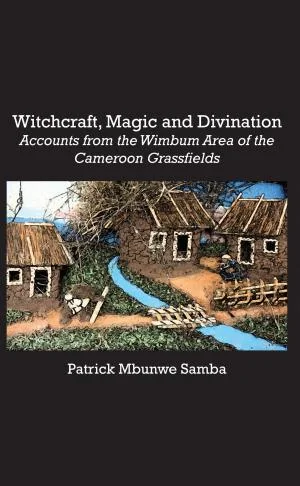
Witchcraft, Magic and Divination
 83
83

Witchcraft, Magic and Divination
Patrick Mbunwe-Samba's "Witchcraft, Magic and Divination" offers a compelling, unvarnished look at the lived reality of witchcraft beliefs in Binshua, Cameroon. Its strength lies in its deeply personal perspective, moving beyond detached academic analysis to convey the palpable impact these beliefs have on individual lives and community structures. The author's reminiscences of childhood, juxtaposed with observations of contemporary society, highlight the tenacity of these traditions. A notable passage details the social implications of accusations, demonstrating how belief systems can function as potent tools of social regulation. However, the work occasionally feels less like a structured academic treatise and more like a collection of personal experiences, which, while rich, can leave the reader yearning for broader theoretical frameworks or comparative analyses. Despite this, the book provides a valuable, grounded perspective on a subject often sensationalized or oversimplified. It is a vital contribution for understanding African spiritual landscapes.
📝 Description
83
Patrick Mbunwe-Samba's 2012 book examines how witchcraft beliefs shape life in Binshua, Cameroon.
Patrick Mbunwe-Samba's "Witchcraft, Magic and Divination" is an ethnographic account of his home village, Binshua, Cameroon. The book details how beliefs in witchcraft affect everyday life and social organization. Mbunwe-Samba argues these beliefs continue to be powerful forces in modern times.
This work is valuable for anthropologists, sociologists, and students of religion. It presents firsthand perspectives on African belief systems and offers primary source material for those studying the effect of spiritual ideas on communities and social control. The book was first published in 2012. Mbunwe-Samba uses his childhood memories to show how these traditions evolved and persist, influencing not only Binshua but also wider areas of Cameroon.
The main subject is the widespread influence of witchcraft belief. The book shows how these ideas affect social interactions, individual worries, and group dynamics. Magic and divination are also discussed as key parts of the cultural system Mbunwe-Samba analyzes, revealing a worldview where spiritual and physical realities are connected.
This book offers a grounded look at spiritual beliefs within a specific African cultural context. It details the practical application and social impact of concepts often categorized under witchcraft and paganism. By focusing on lived experience and community dynamics in Binshua, Cameroon, Mbunwe-Samba connects abstract notions of the spiritual world to concrete social structures and individual lives. The work shows how these beliefs are not just theoretical but actively shape social interactions and community organization.
💡 Why Read This Book?
• Gain an insider's perspective on the pervasive influence of witchcraft beliefs in Binshua, Cameroon, as detailed in the author's personal accounts, offering a cultural understanding distinct from generalized Western interpretations. • Understand the historical persistence of these beliefs from the author's childhood reminiscences to contemporary society, providing a unique temporal depth not found in synchronic studies. • Explore the interrelation of witchcraft, magic, and divination within a specific cultural context, offering concrete examples of how these practices shape social interactions and community life.
⭐ Reader Reviews
Honest opinions from readers who have explored this book.
❓ Frequently Asked Questions
What specific village does Patrick Mbunwe-Samba focus on in his study?
The book primarily focuses on the author's home village of Binshua, in Cameroon. This specific location serves as the central case study for understanding the pervasive nature of witchcraft beliefs.
When was 'Witchcraft, Magic and Divination' first published?
The book was first published in 2012, offering a contemporary analysis grounded in historical context and personal experience.
Does the book only cover historical beliefs about witchcraft?
No, while it includes historical accounts informed by the author's childhood, a significant portion of the book demonstrates that belief in witchcraft remains widespread and influential in present-day Cameroon.
What is the main subject matter of the book?
The book's main subject is the pervasive belief in witchcraft and its profound influence on society, particularly in the author's home village of Binshua and the broader context of Cameroon.
Is this book an academic study or a personal memoir?
It is largely a personal account and ethnographic study by Patrick Mbunwe-Samba, blending his own life experiences and reminiscences with observations of his community's enduring beliefs.
What other practices are discussed alongside witchcraft?
The book also provides accounts of experiences related to magic and divination, presenting them as interconnected elements within the belief systems of Binshua.
🔮 Key Themes & Symbolism
Pervasive Witchcraft Beliefs
The central theme is the overwhelming presence of witchcraft beliefs in daily life within Binshua, Cameroon. Mbunwe-Samba illustrates how these convictions are not mere folklore but active forces shaping social interactions, personal anxieties, and community structures. The work details how these beliefs permeate familial relationships, economic activities, and responses to misfortune, demonstrating a worldview where unseen forces wield significant power.
Social Influence and Control
Beyond personal belief, the book examines how notions of witchcraft function as mechanisms of social control. Accusations and suspicions can dictate social standing, influence decision-making, and even lead to ostracization. Mbunwe-Samba's account highlights the delicate balance individuals must maintain within a community where supernatural explanations are readily invoked to address social issues and personal conflicts.
Magic and Divination Practices
Intertwined with witchcraft are the practices of magic and divination. These are presented not as separate phenomena but as integral components of the same cultural fabric. The book explores how magic is employed, often defensively or offensively, and how divination serves as a means to identify sources of spiritual imbalance or malevolent influence, providing context for the broader spiritual landscape.
Endurance of Tradition
A significant aspect of the work is its focus on the continuity of these beliefs across generations. Mbunwe-Samba contrasts his childhood memories with the present day, underscoring that these spiritual frameworks remain potent and widespread. This endurance challenges assumptions about modernization necessarily eroding traditional belief systems, particularly in the area of the spiritual and the supernatural.
💬 Memorable Quotes
Direct passages from the work, attributed to the author.
“belief in witchcraft is very widespread.”
— This concise statement captures the book's core argument: that witchcraft is not a fringe belief but a dominant cultural force influencing daily life and social dynamics in Binshua and Cameroon.
“life in his home village of Binshua has been permeated throughout by belief in witchcraft.”
— This phrase highlights the immersive and all-encompassing nature of witchcraft beliefs as depicted by Mbunwe-Samba, suggesting it shapes virtually every facet of existence within the community.
“even today, belief in witchcraft is very widespread.”
— This emphasizes the contemporary relevance of the subject, countering any notion that such beliefs are purely historical relics. It underscores their active role in present-day society.
“Witchcraft exerts a profound influence on society in Binshua and in Cameroon in general.”
— This assertion frames witchcraft not just as a personal belief but as a powerful societal force with tangible effects on community structures and interactions.
“The book not only provides a historical account informed by his reminiscences of his childhood...”
— This indicates the blend of personal memory and objective observation, positioning the work as a unique ethnographic source rooted in lived experience and historical perspective.
🌙 Esoteric Significance
Tradition
This work does not align neatly with established Western esoteric traditions like Hermeticism or Kabbalah. Instead, it looks at indigenous African spiritual cosmology, specifically focusing on the social and personal implications of witchcraft beliefs within the Binshua community. Its significance lies in documenting a distinct worldview that operates on principles of spiritual causality, unseen forces, and communal interconnectedness, offering a non-Western esoteric perspective.
Symbolism
While not explicitly detailing symbolic systems in the manner of Western esotericism, the work implies deep symbolic meaning in everyday occurrences. Misfortune, illness, or social discord are often interpreted through the lens of witchcraft, imbuing these events with symbolic weight related to spiritual attack or imbalance. The concept of 'witchcraft' itself functions as a potent symbol for societal anxieties and the mechanisms of blame and control within the community.
Modern Relevance
Contemporary scholars of African spirituality, comparative religion, and cultural anthropology find Mbunwe-Samba's work valuable for its ethnographic depth. It informs discussions on the resilience of indigenous belief systems, the role of spirituality in community cohesion and conflict, and the ongoing negotiation between traditional worldviews and modern influences. Thinkers examining the sociology of belief and the psychology of fear often cite such grounded accounts.
👥 Who Should Read This Book
• Anthropologists and sociologists studying African cultures and belief systems, who will find detailed ethnographic data on the function of witchcraft beliefs in social structures. • Students of comparative religion seeking to understand diverse spiritual cosmologies beyond Western frameworks, offering a grounded look at indigenous African practices. • Individuals interested in firsthand accounts of cultural phenomena, providing an insider's perspective on how spiritual beliefs directly impact daily life and community dynamics.
📜 Historical Context
Published in 2012, "Witchcraft, Magic and Divination" emerged at a time when academic and popular interest in African spiritual systems was ongoing, though often filtered through colonial or post-colonial lenses. Mbunwe-Samba's work offers a counter-narrative by centering indigenous perspectives and personal experience, particularly from his village of Binshua. This contrasts with earlier anthropological studies that might have focused on broader regional patterns or imposed Western theoretical frameworks. While not directly engaging with specific contemporaries in its blurb, the book implicitly contributes to ongoing debates within African studies and religious anthropology concerning the persistence of traditional beliefs in the face of modernization and globalization. Its focus on lived experience provides a grounded counterpoint to more abstract theoretical discussions, offering a vital ethnographic record.
📔 Journal Prompts
The pervasive influence of witchcraft beliefs on daily life in Binshua.
Your childhood memories of community spiritual explanations.
The role of divination in understanding misfortune.
Social control mechanisms tied to supernatural beliefs.
The endurance of traditional spiritual frameworks in contemporary society.
🗂️ Glossary
Witchcraft
In the context of the book, witchcraft refers to a widespread belief system in Binshua and Cameroon where malevolent spiritual forces, often wielded by individuals, are believed to cause misfortune, illness, or harm to others.
Divination
The practice of seeking knowledge about the future or the unknown, often by interpreting omens or through supernatural means. In this work, it is presented as a method to identify the source of problems attributed to witchcraft.
Magic
Practices intended to influence events or people through supernatural means. The book discusses magic in relation to witchcraft, often as a defensive or offensive countermeasure within the community's belief system.
Binshua
The specific village in Cameroon that serves as the primary setting and focus for Patrick Mbunwe-Samba's ethnographic account of witchcraft beliefs and their societal impact.
Cameroon
The West African nation where the village of Binshua is located. The book contextualizes the specific beliefs of Binshua within the broader cultural range of the country.
Personal Account
A narrative or description based on the author's own experiences, memories, and observations. Mbunwe-Samba's work is largely structured as a personal account.
Social Structures
The patterned social arrangements in society that emerge from and determine the actions and relationships of individuals. The book explores how witchcraft beliefs influence these structures in Binshua.
This book appears in 1 collection
🔮 Readers Also Liked
Browse all →







From the “Divination” Collection
View all →







More Free Occult Philosophy Books
View all →