A Short History of (Nearly) Everything Paranormal
 84
84

A Short History of (Nearly) Everything Paranormal
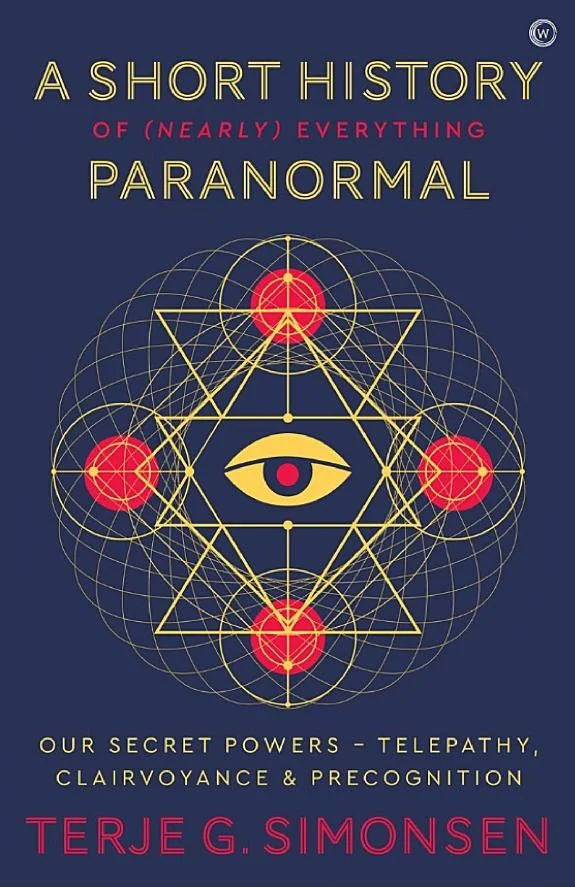
Terje G. Simonsen’s survey, published in 2020, attempts the ambitious task of cataloging the breadth of paranormal claims and the evidence, or lack thereof, supporting them. It commendably pulls from a wide array of sources, including scientific studies and testimonies from figures across disciplines, a strength that lends it an air of thoroughness. However, the sheer scope occasionally leads to a somewhat superficial treatment of complex topics. For instance, the discussion of anomalous phenomena encountered by physicists, while intriguing, feels compressed. The book excels in presenting a panoramic view, but readers seeking deep dives into any single area might find it wanting. Ultimately, Simonsen’s work is a valuable compendium for those beginning to explore the vast, often contradictory, terrain of the paranormal.
📝 Description
84
Terje G. Simonsen published "A Short History of (Nearly) Everything Paranormal" in 2020, surveying phenomena outside accepted knowledge.
This book examines a range of paranormal phenomena, from personal accounts to parapsychological research. Simonsen considers the possibility of an objective reality to psychic events, looking into the vastness of human consciousness that often goes against standard scientific views. The work is for anyone curious about the edge where science, philosophy, and the unexplained meet. It is suitable for people who question current ideas about reality and want clear discussions on topics such as ESP, foresight, and cryptids. Both doubters and believers will find material that encourages thoughtful consideration. The book places paranormal subjects within a larger history of investigation. It notes the work of earlier and current researchers, showing the paranormal not as a new thing but as a constant part of human experience and study. Simonsen looks at how these events are studied, using both controlled tests and studies of cultures. The book separates different kinds of paranormal experiences and carefully weighs the evidence for each, promoting a detailed view instead of simple agreement or rejection.
The book engages with a long tradition of exploring the unexplained, a current that runs parallel to mainstream scientific inquiry. This tradition often questions the limits of materialist explanations and seeks to understand experiences that defy easy categorization. Simonsen's work connects to historical figures and movements that investigated spiritualism, psychic abilities, and anomalous phenomena, viewing these not as mere curiosities but as persistent aspects of human belief and experience that warrant serious examination.
💡 Why Read This Book?
• Learn about the historical scientific investigations into psychic phenomena, such as those conducted by J.B. Rhine at Duke University in the mid-20th century, which provide concrete examples of early parapsychological research. • Understand the diverse methodologies employed to study the paranormal, from laboratory experiments on ESP to anthropological accounts of folklore, as presented in chapters exploring various categories of unexplained events. • Gain a balanced perspective on phenomena like precognition and telekinesis by examining the arguments and evidence presented by scientists and philosophers, allowing for informed personal conclusions.
⭐ Reader Reviews
Honest opinions from readers who have explored this book.
❓ Frequently Asked Questions
What is the primary focus of A Short History of (Nearly) Everything Paranormal?
The book provides a broad survey of paranormal phenomena, examining evidence from scientific experiments, historical accounts, and expert testimonies to explore the possibility of their objective reality.
Who is Terje G. Simonsen, the author?
Terje G. Simonsen is the author of A Short History of (Nearly) Everything Paranormal, first published in June 2020, who compiles research and perspectives on unexplained events.
What types of evidence does the book consider?
It considers evidence from parapsychological experiments, testimonies from scientists, archaeologists, anthropologists, psychologists, physicists, philosophers, and celebrities.
Does the book claim paranormal phenomena are real?
The book explores the possibility that paranormal phenomena may be objectively real, presenting evidence and arguments for consideration rather than making definitive pronouncements.
What is the publication date of this book?
A Short History of (Nearly) Everything Paranormal was first published on June 9, 2020.
What is the overall tone of the book?
The tone is described as both scientifically rigorous and entertaining, functioning as a travelogue through the less-understood aspects of human consciousness and experience.
🔮 Key Themes & Symbolism
The Objective Reality of the Paranormal
This work critically investigates the central question of whether phenomena like telekinesis, precognition, and hauntings possess an objective reality independent of human belief. Simonsen compiles evidence from diverse sources, including rigorous parapsychological experiments conducted throughout the 20th century and anecdotal reports. The exploration aims to move beyond mere superstition, engaging with scientific and philosophical arguments that attempt to bridge the gap between the accepted physical world and the persistent claims of the unexplained, inviting readers to consider the limits of current scientific understanding.
Interdisciplinary Evidence Synthesis
A hallmark of Simonsen's approach is the synthesis of evidence from a wide array of disciplines. The book draws upon findings and perspectives from physicists, psychologists, anthropologists, and archaeologists, alongside historical records and parapsychological research. This interdisciplinary methodology seeks to provide a holistic view, acknowledging that understanding the paranormal may require insights from fields traditionally considered separate from occult studies. The integration of these varied viewpoints challenges a singular, reductionist approach to the unexplained.
The Twilight Zone of Consciousness
The book frames its exploration as a journey into the 'twilight zone' of human consciousness, suggesting that the paranormal is intrinsically linked to our understanding of the mind. It examines how altered states, subjective experiences, and the very nature of perception might play a role in phenomena that defy conventional explanation. This perspective aligns with esoteric traditions that emphasize the power and mystery of consciousness as a primary field of inquiry, distinct from purely materialist viewpoints.
Historical Survey of Unexplained Phenomena
Simonsen offers a historical perspective on the study of the paranormal, tracing the evolution of belief and investigation from ancient lore to modern scientific inquiry. The work touches upon various historical periods and cultural contexts where unexplained events were recorded and interpreted. By contextualizing contemporary claims within this longer historical arc, the book highlights the enduring human fascination with the mysterious and the ongoing efforts to understand these persistent anomalies.
💬 Memorable Quotes
Direct passages from the work, attributed to the author.
“The paranormal phenomena may be - and that some most likely are - objectively real.”
— This statement expresses the book's central thesis, suggesting that the unexplained events discussed are not merely subjective illusions or mass hysteria, but potentially verifiable occurrences within the fabric of reality.
“A travelogue through the twilight zone of human consciousness.”
— This metaphor positions the book as an exploratory guide, inviting readers to venture into the less understood aspects of the mind and perception where paranormal experiences are often situated.
“Combining forgotten lore, evidence from parapsychological experiments...”
— This highlights the book's dual approach: it bridges ancient, often dismissed, knowledge with contemporary scientific investigation, seeking validation and understanding across historical and empirical domains.
“...and the testament of scientists, archaeologists, anthropologists, psychologists, physicists and philosophers...”
— This emphasizes the broad base of expertise the author draws upon, indicating a serious attempt to engage with the paranormal from multiple professional and academic perspectives.
“...both scientifically rigorous an”
— This fragment suggests the book aims for a high standard of evidence and analysis, even while tackling subjects that are inherently difficult to quantify and prove conclusively.
🌙 Esoteric Significance
Tradition
The work aligns broadly with the esoteric tradition of exploring consciousness and reality beyond the strictly material. While not overtly tied to a single lineage like Hermeticism or Kabbalah, it carries the Theosophical pursuit of hidden knowledge and the Gnostic quest to understand subjective experience as key to ultimate reality. Simonsen's approach, however, leans more towards empirical evidence and scientific inquiry than purely mystical revelation, positioning it as a bridge between modern parapsychology and older esoteric philosophies concerned with the mind's potential.
Symbolism
While the book itself may not focus on explicit esoteric symbols, the phenomena it discusses often carry symbolic weight. Concepts like precognition can symbolize destiny or free will, while accounts of hauntings might represent unresolved emotional energy or lingering consciousness – themes deeply embedded in various spiritual and occult traditions. The very idea of a 'twilight zone' of consciousness itself functions as a potent metaphor for the liminal spaces between the known and unknown, the physical and the psychic.
Modern Relevance
In contemporary esoteric circles, Simonsen's work is relevant for its comprehensive overview of phenomena that align with concepts of subtle energy, psychic abilities, and non-local consciousness. Thinkers and practitioners exploring fields like consciousness-based healing, remote viewing, or quantum consciousness theories can find a structured survey of related empirical research. The book provides a foundation for those seeking to integrate scientific investigation with spiritual or metaphysical understandings of reality, validating inquiry into subjective experience.
👥 Who Should Read This Book
• Inquisitive minds seeking a structured overview of paranormal claims, including those interested in the history of parapsychology and the scientific methods used to investigate phenomena like ESP. • Skeptics and open-minded individuals who want to understand the arguments and evidence presented by researchers across various disciplines, from physics to anthropology, regarding the unexplained. • Students of consciousness studies or comparative religion looking for a broad survey that touches upon the intersection of subjective experience, belief systems, and purported anomalies in the natural world.
📜 Historical Context
Published in June 2020, Terje G. Simonsen's survey emerges during a period of renewed interest in consciousness studies and alternative explanations for phenomena that challenge mainstream science. This era sees a growing discourse, often facilitated by online platforms, where formerly fringe ideas are debated more openly. Simonsen's work can be seen in dialogue with figures like Dean Radin, whose book 'The Conscious Universe' (1997) similarly explored scientific evidence for psi phenomena. While academic parapsychology, particularly through institutions like J.B. Rhine's Parapsychological Laboratory at Duke University in the mid-20th century, faced skepticism and methodological critiques from positivistic science, Simonsen's book reflects a later stage where the sheer volume of research encourages a broader, more inclusive overview. Its significance lies in its attempt to collate and present this diverse body of inquiry to a wider audience, bridging the gap between academic research and public curiosity.
📔 Journal Prompts
The 'twilight zone' of human consciousness and its relation to paranormal claims.
Evidence from parapsychological experiments versus forgotten lore.
The testimony of scientists regarding phenomena beyond current explanation.
How do concepts like precognition challenge our understanding of causality?
The role of objective reality in the study of the unexplained.
🗂️ Glossary
Paranormal Phenomena
Events or abilities that are considered outside the scope of normal scientific understanding, including telepathy, precognition, psychokinesis, and apparitions.
Parapsychology
The field of study that investigates alleged psychic phenomena (psi) and other paranormal claims, employing scientific methods and often drawing on experimental psychology.
ESP (Extrasensory Perception)
The purported ability to gain information not through the recognized senses but through other means, such as telepathy (mind-to-mind communication) or clairvoyance (perceiving distant objects or events).
Precognition
The alleged ability to perceive or know future events before they happen, often through dreams, visions, or a sudden sense of foreknowledge.
Psychokinesis (PK)
The purported ability to influence physical objects or systems through mental effort alone, without any physical interaction.
Objective Reality
The state of things as they exist independently of perception or belief; in this context, whether paranormal phenomena occur regardless of whether they are observed or believed.
Forgotten Lore
Ancient or obscure knowledge, traditions, and stories that have been largely disregarded by mainstream culture or academia, often pertaining to mystical or unexplained subjects.
This book appears in 1 collection
🔮 Readers Also Liked
Browse all →









From the “Precognition” Collection
View all →






More Free Occult Philosophy Books
View all →